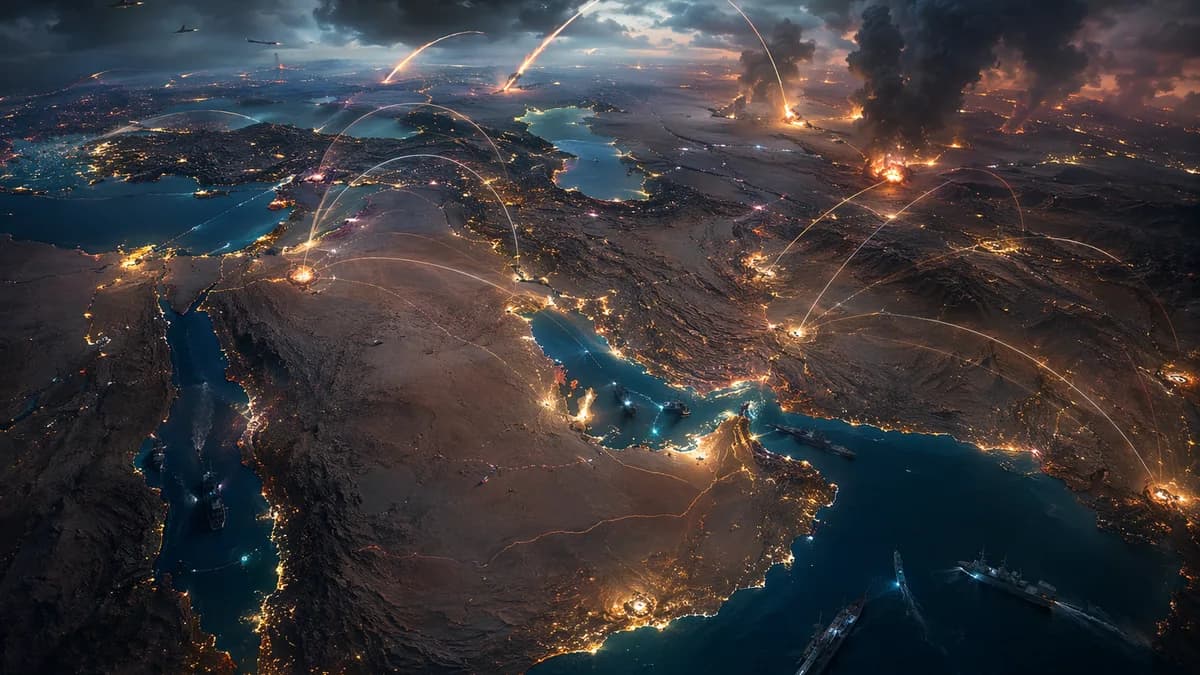
On Wednesday, the Iran-US strikes crisis widened from Iranian territory to US-linked bases in the region, with Tehran claiming attacks in Jordan, Kuwait and Bahrain after Washington hit military sites across Iran overnight.
XOOMAR Intelligence
Analyst Take
Explosions were heard across Iran and air defenses activated in Tehran, while Gulf governments reported incoming attacks shortly after the US strikes on Iran began, according to BBC World. The full scale of damage and casualties from the overnight exchange is not yet clear.
Overnight Iran-US strikes hit command centers, air defenses and Gulf bases
The latest Iran-US strikes unfolded on the sixth day of renewed hostilities, straining a preliminary deal meant to end the war. Washington said it launched a six-hour wave of strikes across multiple Iranian locations.
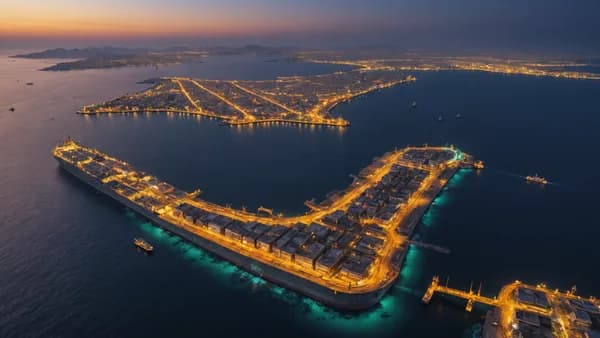
US Central Command (Centcom) said American forces targeted command centres, air defence sites and coastal surveillance facilities. The listed locations included the port city of Bandar Abbas and Greater Tunb Island, both tied to Iran’s military posture around the Strait of Hormuz.
The US military said the operation was intended to "degrade Iran's ability to threaten innocent mariners" in the Strait of Hormuz.
Iran then said it struck targets in the region, including in Jordan, Kuwait and Bahrain. Iranian officials also said they targeted US communication systems and fuel storage facilities in Jordan.
The sequence matters. This was not a contained strike inside Iran followed by rhetoric. It quickly became a regional exchange involving countries that host or sit near US military assets, energy infrastructure and shipping routes.
| Actor | Reported action | Stated or reported target |
|---|---|---|
| United States | Six-hour wave of strikes | Iranian command centers, air defenses, coastal surveillance sites |
| Iran | Fresh regional attacks | Targets in Jordan, Kuwait and Bahrain |
| Kuwait | Interceptions reported | Drone attacks, according to its military |
| Bahrain | Public safety warning | Citizens told to remain calm and go to the nearest safe place |
The US also carried out a tanker strike, disabling an unladen, Curacao-flagged oil tanker on Wednesday. Centcom said the vessel was trying to sail toward a blockaded Iranian port.
XOOMAR analysis: The operational focus is narrowing around Hormuz. The US says it is degrading Iran’s ability to threaten shipping. Iran’s top negotiator, Mohammad Bagher Ghalibaf, told state media Tehran had "no reason" to abide by any agreement that did not benefit the country, and linked Iran’s national security to maintaining what he called "Iranian arrangements" in the Strait of Hormuz.
That language points to the core fight: who controls movement through the strait, and at what cost.
Gulf alerts follow attacks on Kuwait, Bahrain and Jordan
Neighbouring states began reporting attacks soon after the US strikes. Kuwait’s military said it intercepted drone attacks, while Bahrain’s interior ministry urged citizens to remain calm and head to the nearest safe place.
Additional source material said air raid sirens sounded in Bahrain and Kuwait, and that Kuwait’s army described its air defenses as confronting "hostile" missile and drone attacks. The reported targets included Bandar Salman, Bahrain's Fifth Naval District and Ali Al Salem Air Base in Kuwait.
The Gulf is central because it concentrates the crisis into a narrow set of strategic chokepoints: US military facilities, export terminals, tanker routes and governments that cannot treat this as a distant war. As XOOMAR reported in Strait of Hormuz Standoff Pulls Iran and US Toward War, the strait has become the pressure valve for military escalation and economic coercion.
Emergency responses are already visible:
- Air defenses: Kuwait reported interceptions against drone attacks.
- Public warnings: Bahrain told residents to remain calm and seek safety.
- Military readiness: Regional bases are now part of the reported target set.
- Shipping risk: The US disabled a tanker it said was heading toward a blockaded Iranian port.
What is not yet confirmed matters just as much. The available source material does not establish the full damage at the targeted bases, whether any US personnel were harmed, or whether Gulf governments have closed airspace or issued new port restrictions.
The timing also lands after President Donald Trump warned Iran it had "better behave" or face more military action if it did not return to negotiations. On Tuesday, Trump threatened to target Iran’s energy infrastructure if Tehran failed to resume talks.
That threat raises the stakes around every new exchange. If attacks spread beyond Iranian territory and directly damage US-linked facilities in the Gulf, Washington will face pressure to answer. If the US expands target lists inside Iran, Tehran will face its own pressure to show it can still impose costs outside its borders.
This follows our earlier coverage of how the confrontation shifted from strikes to maritime control in Trump Turns Iran Strikes Into Strait of Hormuz Blockade.
The next signals: restraint, Hormuz access and the July 17 oil deadline
The immediate question is whether Washington presents the overnight operation as a finished response or the start of a rolling campaign. Centcom’s stated goal was to reduce Iran’s ability to threaten mariners, but the source material does not yet say whether further strikes are planned.
Tehran’s next move is just as uncertain. It has claimed regional attacks and tied its security to control arrangements in the Strait of Hormuz, but it has not publicly laid out a ceiling for retaliation in the BBC source material.
A separate pressure point is forming around oil sanctions. Additional source material says Washington revoked a license that had allowed Iran to sell oil on international markets, after earlier issuing a June 22 general license covering crude oil and petrochemical and petroleum products of Iranian origin through August 21. The revocation gave Iran until July 17 to wind down transactions.
That creates a second clock alongside the military one. The next week is not only about missiles and drones. It is also about whether the sanctions track hardens while negotiators remain stalled.
Markets, airlines, shipping firms and Gulf governments will be reading the same signals:
- White House language: Does Trump repeat the threat against energy infrastructure or soften it?
- Pentagon posture: Does Centcom announce completed strikes, or new targeting?
- Iranian statements: Does Tehran frame the attacks as retaliation, deterrence or the start of a wider campaign?
- Gulf security notices: Do Bahrain, Kuwait or others issue new public warnings, flight restrictions or port alerts?
- Hormuz traffic: Do tankers keep moving, reroute or pause after the disabled Curacao-flagged vessel?
The practical watch item now is whether both sides keep the fight calibrated around military and maritime targets, or whether the next exchange hits energy infrastructure, US personnel, or commercial shipping at scale. That line will determine whether this remains a dangerous coercive cycle or becomes a broader regional war.
The Stakes
- The crisis has expanded beyond Iran into countries hosting or near US-linked military assets.
- Strikes around the Strait of Hormuz raise risks for global shipping and energy flows.
- Unclear damage and casualties leave room for further escalation between Washington and Tehran.
Reported Actions in the Iran-US Strikes
| Actor | Reported action | Stated or reported target |
|---|---|---|
| United States | Six-hour wave of strikes | Iranian command centres, air defence sites and coastal surveillance facilities |
| Iran | Regional attacks claimed after US strikes | Targets in Jordan, Kuwait and Bahrain, including reported US communication systems and fuel storage facilities in Jordan |
Primary Sources & Disclosures

Written by
XOOMAR Insights Team
Research and Editorial Desk
The XOOMAR Insights Team pairs automated research with human editorial judgment. We track hundreds of sources across technology, fintech, trading, SaaS, and cybersecurity, cross-check the facts, and explain what happened, why it matters, and what to watch next. We do not just rewrite headlines. Every article is fact-checked and scored for reliability before it goes live, and we link back to the original sources so you can verify anything yourself.