
Apple is adding a new way to pay for its devices. With Apple Upgrade, a Klarna-powered lease, a new iPhone, Mac, iPad, or Apple Watch can feel more like a recurring bill than a one-time purchase.
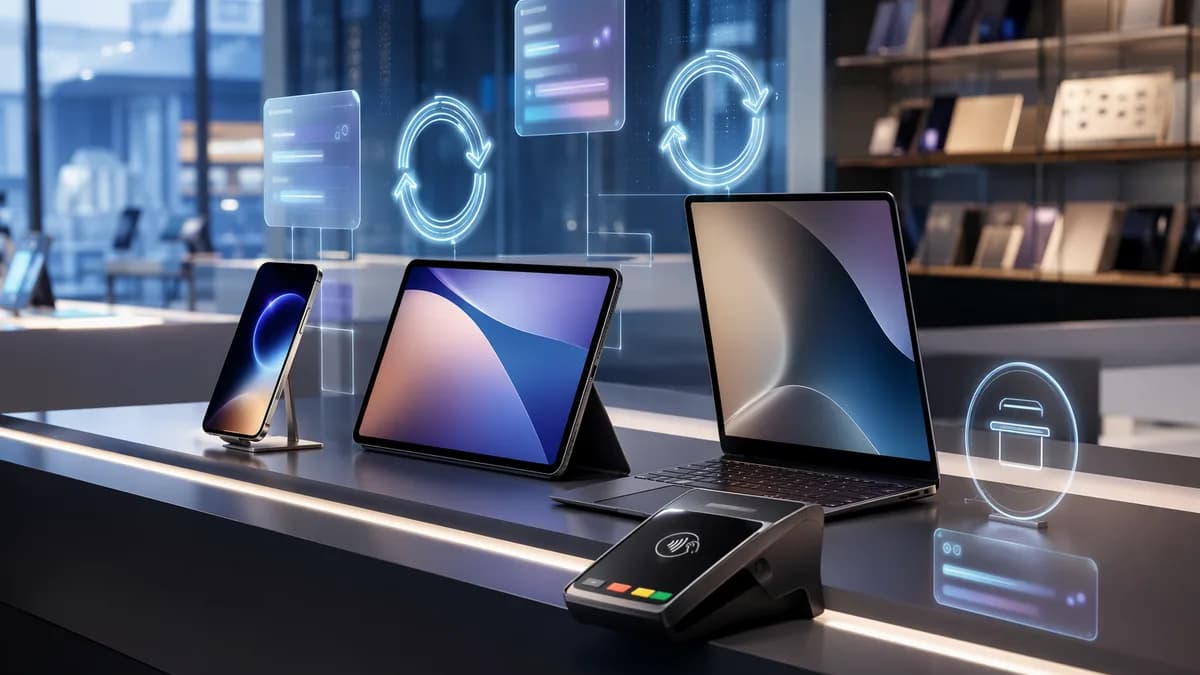
FintechJuly 28, 2026· 8 min read· By XOOMAR Insights Team
Apple Upgrade Turns iPhone Price Shock into Klarna Rent
Updated on July 28, 2026
XOOMAR Intelligence
Analyst Take
58/ 100
4 sources analyzedLow confidenceTrend10Freshness97Source Trust90Factual Grounding91Signal Cluster20
Apple Upgrade turns device purchases into a monthly payment pitch
The new Apple Upgrade program gives eligible U.S. customers monthly leasing options for iPhone, Apple Watch, Mac, and iPad, according to TechCrunch. It’s available through the Apple Store online, the Apple Store app, and physical Apple Store locations in the United States.
That makes Apple Upgrade look less like a simple checkout feature and more like a way to reframe device buying around predictable monthly payments.
Apple can keep the upfront purchase option intact while lowering the monthly entry point. Customers see $17.99 per month for an iPhone instead of a full upfront device price. That’s the psychological move. The purchase doesn’t disappear. It gets stretched, managed, and wrapped inside an upgrade path.
XOOMAR analysis: Apple is trying to reduce the shock of premium hardware purchases without weakening the premium positioning itself. That’s also the core tension in the Apple Upgrade model: the monthly payment may feel easier, but it also nudges buyers toward staying inside Apple’s replacement rhythm.
“Love it. Lease it. Upgrade it.”
That line, shown on Apple’s site, is blunt. Apple isn’t selling ownership as the main story here. It’s selling continuity.
Apple Upgrade pricing starts low, but the lease terms decide the real cost
The headline numbers are built for conversion.
| Device category | Starting lease price | Lease terms listed by Apple |
|---|---|---|
| iPhone | $17.99 per month | One-year and two-year options |
| Apple Watch | $11.99 per month | One-year and two-year options |
| Mac | $24.99 per month | Two-year and three-year options |
| iPad | $11.99 per month | Two-year and three-year options |
At the end of the lease, Apple says customers get three choices:
- Upgrade: Move to the latest generation of the device.
- Buy: Purchase the current device with a one-time payment.
- Return: Give it back and exit the program.
That structure is simple enough to market. The details are where buyers need to slow down.
The monthly price shown at entry won’t necessarily be the price a customer pays for the model they want. Actual payments can vary based on device category, configuration, lease length, trade-in value, and eligibility. TechCrunch also reports that customers can lower monthly lease payments by trading in an existing device through Apple Trade In.
Apple is keeping its own incentives tightly connected. Customers can earn 3% Daily Cash when they use Apple Card for lease payments. So the program links Apple hardware, Apple financing behavior, trade-ins, and Klarna management into one purchase flow.
XOOMAR analysis: this is where comparison shopping gets harder. A buyer now has to compare upfront purchase, lease payments, trade-in credit, Apple Card rewards, ownership at the end of term, and the option value of upgrading. That’s a lot of moving parts for what used to be a cleaner question: buy now or don’t.
Klarna gets more than a checkout button inside Apple’s retail flow
Klarna is not just a logo on the payment screen. TechCrunch reports that customers will manage the lease directly in the Klarna app, including billing schedules and remaining payments.
That matters because Apple is discontinuing its existing U.S. in-house financing and installment programs, including the iPhone Upgrade Program and iPhone Payments. In their place, Apple is putting a partner-led leasing model across multiple device categories.
Before and after, the shift is clear:
- Before: Apple had U.S. financing and installment programs centered heavily on iPhone.
- After: Apple Upgrade spans iPhone, Apple Watch, Mac, and iPad.
- Before: The old programs were in-house Apple offerings.
- After: Klarna handles the lease management experience.
- Before: Upgrading was tied to narrower device programs.
- After: Leasing becomes a broader hardware strategy.
XOOMAR analysis: Apple appears to be moving the operational burden of lease management to a fintech partner while keeping the customer acquisition moment inside Apple’s own stores and apps. That gives Apple more payment flexibility without turning Apple itself into the visible administrator of every lease account.
For Klarna, the upside is obvious from the facts supplied: it gets embedded into Apple device purchases in the United States. That is a far more valuable placement than a generic checkout option buried at the end of a cart.
The trade-off sits with Apple’s brand. Klarna brings payment flexibility, but it also inserts a buy now, pay later company into a retail experience Apple has long controlled carefully. If customers like the simplicity, Apple wins. If they find the lease terms confusing, the frustration still lands near Apple.
Apple Upgrade broadens the old iPhone upgrade idea into Macs and iPads
The most important change is not that Apple added another payment option. It’s that Apple Upgrade applies across Apple’s major personal device categories.
The old iPhone Upgrade Program was narrower. The new Klarna-backed program covers iPhone, Apple Watch, Mac, and iPad. That expansion matters because it brings leasing beyond Apple’s most familiar upgrade category and into devices customers may replace on different schedules.
This also changes how buyers think about future hardware. A Mac buyer who expects to keep a laptop for years may now face a different prompt: lease for two or three years, then upgrade, buy, or return. For readers following Apple’s hardware roadmap, future features matter differently when the customer is already inside a scheduled decision point.
XOOMAR analysis: financing is becoming part of the product design around the purchase, not just a payment method after the fact. Apple is not only selling the device. It’s shaping the next decision before the current device even ships.
Customers get lower friction, Apple gets cadence, Klarna gets placement
The program creates different incentives for each party.
For customers, the appeal is immediate. Monthly payments can make premium devices easier to fit into cash flow. The end-of-term options also create flexibility: upgrade, buy, or walk away.
The risk is also clear. A lower monthly number can hide the bigger question of whether the customer actually wants to own the device, keep paying for access, or keep upgrading because the path is easy.
For Apple, the benefit is not stated directly by the company in the source material, but the inference is strong. Apple Upgrade can give buyers another path into premium devices, keep them returning at defined intervals, and preserve Apple’s ability to sell hardware without relying only on upfront purchase decisions.
For Klarna, Apple is a prestige retail partner and a high-value device channel. The source does not provide economics of the partnership, so any revenue impact is unknown. But the placement itself is significant: lease management happens in Klarna’s app after the Apple sale begins.
The missing pieces are important. Apple has not disclosed adoption targets in the supplied material. The source also does not say how many customers are eligible, how approvals will break down, or how return conditions will be enforced in edge cases.
The next test is whether buyers treat Apple Upgrade as flexibility or lock-in
Apple Upgrade will succeed if customers see it as a clean way to manage expensive devices. It will create friction if buyers focus only on the entry price and miss the ownership trade-offs.
The evidence to watch is practical:
- Checkout behavior: Whether Apple promotes leasing more aggressively beside upfront purchase options.
- Trade-in usage: Whether customers use Apple Trade In to push monthly payments lower.
- Category mix: Whether Mac and iPad buyers adopt leasing alongside iPhone and Apple Watch customers.
- Program clarity: Whether customers understand the difference between upgrading, buying out, and returning devices.
The stronger signal would be Apple expanding or emphasizing Apple Upgrade after launch. The weaker signal would be quiet placement, customer confusion, or limited uptake outside iPhone.
For now, Apple has made the direction plain. The company is not trying to make premium devices cheaper. It’s trying to make the cost arrive in smaller pieces.
Disclaimer: This XOOMAR analysis is for informational and educational purposes only. It is not financial, investment, legal, tax, or professional advice. It does not provide buy, sell, hold, price-target, portfolio, or personalized recommendations. Verify information independently and consult qualified professionals before making decisions.
The Bottom Line
- Apple is making premium devices feel more affordable by shifting attention from upfront prices to monthly payments.
- The Klarna-powered lease model could keep customers more tightly tied to Apple’s upgrade cycle.
- Lower monthly entry points may boost hardware demand while raising questions about long-term ownership costs.
Apple Upgrade starting lease options
| Device category | Starting lease price | Lease terms listed by Apple |
|---|---|---|
| iPhone | $17.99 per month | One-year and two-year options |
| Apple Watch | $11.99 per month | One-year and two-year options |
Starting monthly lease prices
iPhone
$/month17.99
Apple Watch
$/month11.99
Sources
Disclaimer: Content on XOOMAR is produced using AI-assisted research, drafting, and verification workflows and is intended for informational and educational purposes only. It does not constitute financial, investment, legal, tax, medical, or professional advice of any kind. All analysis reflects available information at the time of publication and may not be current. Verify information independently and consult qualified professionals before making decisions. Editorial policy

Written by
XOOMAR Insights Team
Research and Editorial Desk
The XOOMAR Insights Team pairs automated research with human editorial judgment. We track hundreds of sources across technology, fintech, trading, SaaS, and cybersecurity, cross-check the facts, and explain what happened, why it matters, and what to watch next. We do not just rewrite headlines. Every article is fact-checked and scored for reliability before it goes live, and we link back to the original sources so you can verify anything yourself.
Explore More Topics
Related Articles
 Fintech
Klarna Pulls Apple Upgrade Deeper Into Lease Economy
Apple's Klarna-backed lease plan could make pricey devices feel cheaper while nudging buyers into endless upgrade cycles.
Jul 21, 20268 min
 Fintech
Apple Upgrade Grabs Control of Your Next iPhone Cycle
Apple Upgrade would replace iPhone financing with leases, giving Apple and Klarna more control over when customers swap devices.
Jul 28, 20267 min
 Fintech
Samsung Galaxy Card Takes Aim at Apple's Wallet Grip
Samsung is launching its first US credit card with Barclays and Visa, using its massive device base to challenge Apple Card.
Jul 21, 20266 min
 Fintech
Musk Turns Paid X Users Into X Money App Banking Test
X Money is live for paid U.S. subscribers, turning Premium users into Musk’s first real test of banking inside X.
Jul 28, 20268 min
 Fintech
Chime Invest Turns Banking Habits Into a Risky Stock Bet
Chime Invest puts $1 stock and ETF trading inside Chime’s banking app, chasing non-investors while raising fresh risk questions.
Jul 21, 20267 min
 Cybersecurity
App Store Crypto Scam Drags Apple Into $1.8M Fight
Apple faces a lawsuit after users say a fake Sparrow Wallet on the App Store drained $1.8M in Bitcoin, testing its safety pitch.
Jul 27, 20269 min
 Trading
Bitcoin Fed Meeting Threatens to Crack $65K Calm This Week
Bitcoin held near $65,000 after Nvidia's slide, but Fed week will test whether BTC's calm is real demand or just a macro pause.
Jul 27, 20268 min
 Trading
Safe-Haven Premium Cracks as Silver Price Slides Before Fed
Silver fell near $57.55 as geopolitical fear cooled, but the Fed decision and a stronger dollar keep XAG/USD exposed.
Jul 28, 20266 min
 Technology
Cheap JisuLife Handheld Fan Shames $150 Shark Rival
The $30 JisuLife Life10 S runs for 16 hours and makes premium handheld fans look harder to justify.
Jul 28, 20267 min
 Technology
25W Qi2 Charger Shrinks Twelve South Valet's Luxe Tray
Twelve South Valet gets 25W Qi2 charging and a smaller body, but it gives up tray space and cuts USB-C output while charging wirelessly.
Jul 28, 20266 min
Don't miss the signal
Get our weekly roundup of the stories that matter across tech, fintech, and trading. No noise, just signal.
Free forever. No spam. Unsubscribe anytime.