
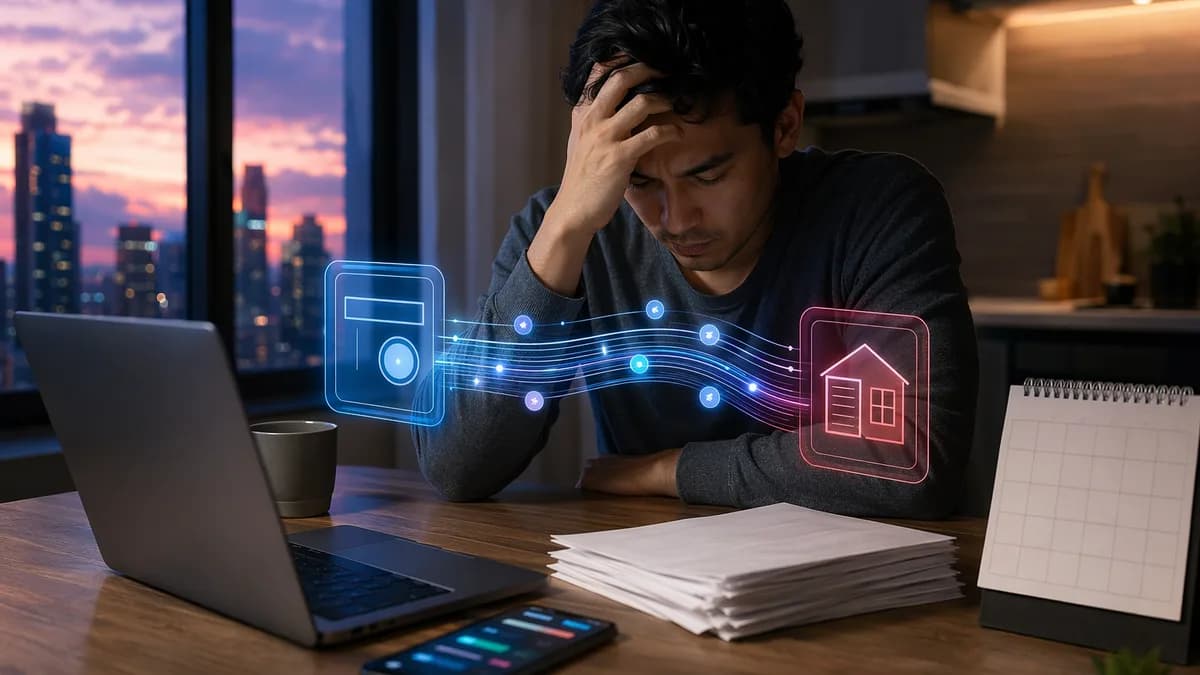
Rent BNPL is becoming a paycheck timing fix, not a shopping perk, and that shift says more about household cash flow stress than consumer appetite for financing. Rent is fixed. Paychecks often aren’t. That mismatch is pushing installment products into the largest recurring bill many households face.
FintechJune 11, 2026· 7 min read· By XOOMAR Insights Team
Rent BNPL Turns Paycheck Gaps Into a Risky Credit Bet
Updated on June 11, 2026
XOOMAR Intelligence
Analyst Take
72/ 100
4 sources analyzedMedium confidenceTrend10Freshness99Source Trust88Factual Grounding91Signal Cluster20
The move is visible in the latest rent-focused BNPL coverage from PYMNTS, which frames “rent now, pay later” as part of BNPL’s move beyond checkout carts and into household liquidity management. The thesis is straightforward: consumers aren’t only splitting purchases anymore. They’re trying to keep essential obligations from colliding with income timing.
BNPL’s “next act is not about helping Gen Z buy more sneakers. It is about becoming the everyday liquidity tool consumers use to keep the lights on, the pantry stocked and the bills current.”
That quote from PYMNTS CEO Karen Webster captures the change. The product is still installment credit. But when it enters rent, the use case changes. It becomes less about buying something optional today and more about smoothing the timing of money in and money out.
Rent BNPL is becoming a paycheck timing fix, not a shopping perk
The strongest signal in the PYMNTS piece is that BNPL is being pulled toward necessities. Affirm and Esusu partnered this year to let eligible renters split monthly rent payments, and PYMNTS cites other “rent now, pay later” offerings emerging as housing pressure rises.
That matters because rent is not a retail cart. A renter can abandon a cart. They can’t casually move the rent due date.
PYMNTS Intelligence data also complicates the old stereotype of the BNPL user. Households earning more than $150,000 use BNPL at roughly twice the rate of households earning less than $50,000, according to the May Pay Later Ecosystem Report cited by PYMNTS. That suggests installment demand is not only about lack of access to traditional credit. It’s also about control over timing.
Credit card installments outpaced BNPL by more than 2-to-1 across eight consecutive waves of tracking, per the same report. Translation: consumers increasingly like installment structures, even when the provider isn’t a pure-play BNPL firm.
XOOMAR analysis: rent BNPL should be read as a liquidity signal, not a confidence signal. A household can have income, a job, and access to credit, yet still need help matching fixed bills to pay cycles. That’s a very different story from discretionary financing.
Shelter inflation data shows why rent payment timing has become a monthly strain
The inflation backdrop is the anchor. The latest Consumer Price Index data, released Wednesday (June 10), showed shelter prices rose 3.4% over the past year. Food at home increased 2.7%, while food away from home climbed 3.5%.
Those categories are hard to postpone. When shelter and food absorb more of the monthly budget, timing gaps become more expensive to manage. A household may earn enough over a full month to cover rent, groceries, transport, and other obligations. The problem appears when the largest bill lands before the cash does.
That is the distinction between affordability and liquidity. Affordability asks whether income covers costs over a period. Liquidity asks whether the money is available at the moment the bill comes due.
PYMNTS points directly to workers paid biweekly, gig workers with fluctuating earnings, and households juggling multiple obligations. For those groups, rent timing can become a financial variable in its own right.
This is where rent BNPL fits. It doesn’t cut the rent bill. It changes the payment schedule. That can help when the problem is timing. It can’t solve a rent level that is structurally too high for the household.
Installment rent payments repackage cash flow risk, but the mechanics still matter
The appeal of rent installments is easy to understand. If eligible renters can split a monthly rent payment, they may be able to align repayments more closely with income dates. PYMNTS describes this as a shift from shopping tool to budgeting tool.
But the details are still thin. The source does not specify whether rent BNPL providers pay landlords upfront, how settlement works, what fees apply, or how missed repayments are handled. Those are not small details. They determine whether the product is primarily a timing tool, a new credit burden, or something in between.
The risk profile also changes when BNPL moves from one-time purchases to recurring obligations. PYMNTS Intelligence found that consumers using BNPL for recurring everyday expenses reported paying at least one installment late 76% of the time, compared with 43% among those using BNPL only for one-time purchases.
That gap is the key data point in the article. Recurring obligations create a different cadence. If a consumer is using installments to manage monthly essentials, every new month can stack another repayment schedule on top of the old one.
XOOMAR analysis: providers that treat rent like standard point-of-sale financing may misread the risk. Rent is larger, recurring, and less discretionary. Underwriting and repayment design need to reflect that.
Consumer credit keeps moving closer to essentials
BNPL’s scale is still modest compared with cards, but it’s growing. A Richmond Fed economic brief from February 2026 estimated total BNPL transaction value at roughly $70 billion in 2025, about 1.1% of total credit card spending. It also said real BNPL loan transaction value has grown roughly 20 percent per year since 2021.
That scale helps explain why rent is attractive as a category. It is recurring. It is large. It sits at the center of household payments.
Still, the Richmond Fed brief also cautioned that BNPL’s current impact on financial stability appears limited at present, given its scale, debt outstanding, and observed default rates. That’s important. The rent shift is not proof of systemic stress. It is evidence that installment credit is moving deeper into the household budget.
This follows a broader debate XOOMAR has tracked around rent BNPL and debt-trap risk. The concern is not that every installment product is harmful. The concern is that essential-bill financing can hide the difference between a temporary timing mismatch and a durable affordability problem.
Renters, landlords, BNPL firms, and observers see different products
| Stakeholder | What the product offers | The unresolved issue |
|---|---|---|
| Renters | More flexibility when rent timing and income timing don’t match | Late installment rates are higher for recurring everyday expenses |
| BNPL providers | Access to a large recurring payment category | Rent may require different underwriting than one-time retail purchases |
| Property managers | Potential payment flexibility for residents, if integrated into rent flows | PYMNTS does not specify settlement mechanics or operational terms |
| Market observers | A clearer view of BNPL as consumer working capital | It may blur liquidity management and repeat borrowing |
The product looks different depending on where you sit. For renters, it can mean breathing room. For providers, it can mean a bigger recurring category than retail purchases. For analysts, it is a stress test of whether BNPL can move into essentials without amplifying repayment strain.
The same recurring-payment question appears in other consumer finance models too, including XOOMAR’s coverage of monthly bank subscription fees. The common issue is not the wrapper. It’s whether recurring financial products help consumers plan, or quietly add another fixed obligation.
Rent payment apps face a harder test if housing costs stay elevated
Rent BNPL’s near-term test is measurable. Watch whether providers disclose more about fees, repayment terms, settlement timing, and late-payment behavior. Also watch whether late installment rates for recurring expenses narrow from the 76% figure PYMNTS cited, or move higher as adoption spreads.
Evidence that would strengthen the liquidity-tool thesis: renters use installment rent selectively, late repayments stay contained, and products clearly match repayment dates to income timing.
Evidence that would weaken it: repeat use rises alongside late installments, terms remain opaque, or consumers use rent BNPL because the monthly rent itself no longer fits income.
The central tension is simple. Rent BNPL can smooth cash flow. It can’t make high rent cheap. That’s why the next phase of this market won’t be judged by sign-ups alone. It will be judged by repayment behavior.
Disclaimer: This XOOMAR analysis is for informational and educational purposes only. It is not financial, investment, legal, tax, or professional advice. It does not provide buy, sell, hold, price-target, portfolio, or personalized recommendations. Verify information independently and consult qualified professionals before making decisions.
The Bottom Line
- Rent BNPL shows installment credit is moving from shopping carts into essential household bills.
- The trend points to growing cash flow stress as fixed rent dates clash with uneven paycheck timing.
- Higher-income households using BNPL at roughly twice the rate of lower-income households challenges assumptions about who relies on installment tools.
BNPL’s Shift From Retail Purchases to Rent Payments
| Dimension | Traditional BNPL | Rent BNPL |
|---|---|---|
| Primary use | Splitting discretionary purchases | Smoothing rent payment timing |
| Consumer need | Purchase flexibility | Household cash flow management |
| Risk signal | Optional spending financed over time | Essential bills colliding with paycheck timing |
Sources
Disclaimer: Content on XOOMAR is produced using AI-assisted research, drafting, and verification workflows and is intended for informational and educational purposes only. It does not constitute financial, investment, legal, tax, medical, or professional advice of any kind. All analysis reflects available information at the time of publication and may not be current. Verify information independently and consult qualified professionals before making decisions. Editorial policy

Written by
XOOMAR Insights Team
Research and Editorial Desk
The XOOMAR Insights Team pairs automated research with human editorial judgment. We track hundreds of sources across technology, fintech, trading, SaaS, and cybersecurity, cross-check the facts, and explain what happened, why it matters, and what to watch next. We do not just rewrite headlines. Every article is fact-checked and scored for reliability before it goes live, and we link back to the original sources so you can verify anything yourself.
Explore More Topics
Related Articles
 Fintech
74% of BNPL Users Split Checkout Credit Across Apps
BNPL loyalty is cracking. 74% of users now use at least two providers, turning checkout credit into a comparison-shopping fight.
Jul 20, 20268 min
 Fintech
UK BNPL Regulation Grabs 11 Million Borrowers at Checkout
UK BNPL lenders now face FCA supervision, turning fast checkout loans into regulated credit for roughly 11 million consumers.
Jul 13, 20266 min
 Fintech
Stablecoin Awareness Gap Threatens Credit Union Trust
Most credit union members still can't explain stablecoins, putting trust and digital payment adoption at risk.
Jul 21, 20268 min
 Fintech
OnePay Personal Loans Push Walmart-Backed App Into Credit
OnePay is adding $1,000 to $50,000 personal loans in its app, with Upgrade powering the credit engine.
Jul 20, 20266 min
 Fintech
Velera CEO Warns Credit Unions Their Trust Edge Is Fading
Chuck Fagan leaves Velera with a warning: credit unions need digital speed, not goodwill, to defend member trust.
Jul 20, 20268 min
 Technology
RAM Shock Slams Framework Laptop 13 Pro With $800 Hike
Framework built its best repairable laptop yet, but an $800 RAM-driven price jump may scare off the buyers it needs.
Jul 27, 20267 min
 Trading
Bitcoin Fed Meeting Threatens to Crack $65K Calm This Week
Bitcoin held near $65,000 after Nvidia's slide, but Fed week will test whether BTC's calm is real demand or just a macro pause.
Jul 27, 20268 min
 Cybersecurity
App Store Crypto Scam Drags Apple Into $1.8M Fight
Apple faces a lawsuit after users say a fake Sparrow Wallet on the App Store drained $1.8M in Bitcoin, testing its safety pitch.
Jul 27, 20269 min
 Global Trends
Zippy Puppeteer Ronnie Le Drew Dies at 78 After Illness
Ronnie Le Drew, the puppeteer behind Zippy and Labyrinth goblins, has died at 78 after a short illness.
Jul 27, 20266 min
 Global Trends
Logo Revolt Haunts Cracker Barrel CEO Masino's Exit
Julie Masino is leaving after Cracker Barrel's logo revolt became a culture-war test. David Deno inherits the bruised brand.
Jul 27, 20266 min
Don't miss the signal
Get our weekly roundup of the stories that matter across tech, fintech, and trading. No noise, just signal.
Free forever. No spam. Unsubscribe anytime.