
Framework Laptop 13 Pro is the strongest case yet for a repairable premium laptop, and the worst possible advertisement for buying one during RAMageddon.
TechnologyJuly 27, 2026· 7 min read· By XOOMAR Insights Team
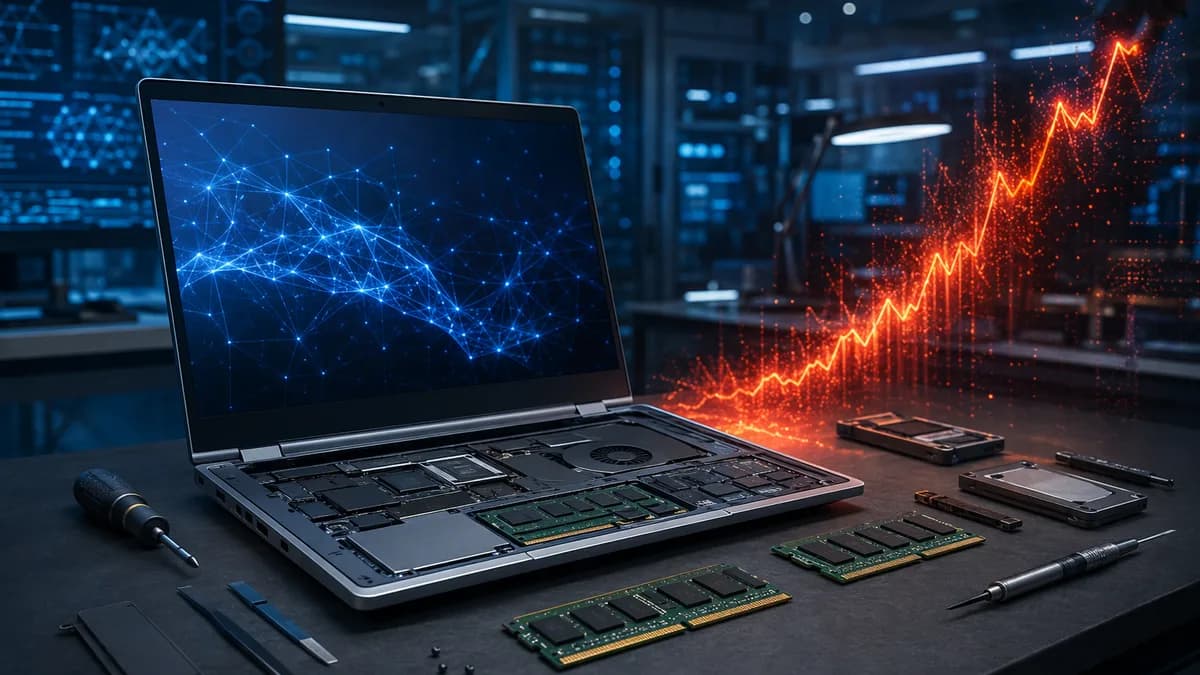
RAM Shock Slams Framework Laptop 13 Pro With $800 Hike
Updated on July 27, 2026
XOOMAR Intelligence
Analyst Take
82/ 100
3 sources analyzedHigh confidenceTrend10Freshness100Source Trust88Factual Grounding90Signal Cluster60
That tension is the whole story. Framework finally built the machine skeptics said it couldn’t: polished, black, rigid, fast, touch-enabled, modular, and genuinely desirable. Then memory prices shoved the reviewed Windows configuration from $2,299 to $3,099 before it reached a single customer, The Verge reported.
“An $800 price increase before reaching a single customer.”
That number hurts because this laptop isn’t a gimmick. It’s the most complete expression of Framework’s repairable-PC thesis so far. But if the future of notebooks arrives with an $800 surcharge at checkout, ordinary buyers won’t treat it as the future. They’ll treat it as boutique hardware.
Framework Laptop 13 Pro proves repairable laptops can feel truly premium
Framework’s usual deal has always been easy to understand: accept some rough edges, get something you can repair, upgrade, and customize. That bargain appealed to enthusiasts, Linux users, developers, and anyone tired of sealed machines aging into e-waste with a nice logo.
The Framework Laptop 13 Pro changes the pitch. Based on The Verge’s review, this isn’t a laptop you excuse because it’s modular. It’s a laptop you want first, then admire because it’s modular.
The review unit has a 13.5-inch 2880 x 1920 120Hz IPS touchscreen, Intel Core Ultra X7 358H, Intel Arc B390 integrated GPU, 32GB LPCAMM2 RAM, 1TB SSD, and four modular USB-C / Thunderbolt 4 ports. It also gets the tactile stuff right: a matte black finish, rigid chassis, strong keyboard, and what The Verge calls the best non-Apple haptic trackpad it has used.
That matters. Right-to-repair hardware has too often been sold as a moral purchase. Framework just proved it can be an aesthetic one too.
The Pro model fixes the old Framework trade-offs buyers had to tolerate
Earlier Framework machines asked buyers to make peace with compromises. The modular ports were clever. The repairability was real. But compared with sleeker competitors, the proposition often leaned on principle more than polish.
The Laptop 13 Pro closes much of that gap. The Verge describes it as “far from the hodgepodge erector set” of the larger Laptop 16 and better-built than the standard Laptop 13. The one-piece aluminum frame helps the keyboard feel slightly better, while the new haptic trackpad turns a previous category weakness into a selling point.
The screen upgrade is just as important. A brighter 700-nit touchscreen with a 3:2 aspect ratio makes the device feel current, not merely repairable. Until now, The Verge notes, a touchscreen on a Framework machine was only available on the cheaper Laptop 12.
The result is a rare kind of progress: Framework removed reasons to say “yes, but.” Yes, it’s modular. Yes, it’s repairable. Yes, it also feels like a premium laptop.
That’s why the price spike lands so badly.
RAMageddon turns Framework’s best feature into a painful checkout shock
RAMageddon, the shorthand PC buyers use for the current memory price spike, hits Framework in the most awkward place possible. Framework’s identity is built around replaceable parts. In the Laptop 13 Pro, that includes LPCAMM2 memory, a newer compression-mounted format that offers efficiency benefits similar to LPDDR5X without being soldered to the board.
That is exactly the kind of innovation repairable laptops need. It also makes memory a more visible line item.
The reviewed configuration was supposed to cost $2,299 with a Windows license. After memory price increases, it costs $3,099. Framework also raised prices across its devices, and The Verge says some reserved preorders were bumped from 32GB of RAM to 16GB while new preorders rose by as much as $800.
That is not a small adjustment. That is the difference between a premium purchase and a purchase many buyers will abandon.
Related component-market data supplied with this story shows why the pressure is spreading beyond DIY PC builders. The cheapest 32GB DDR5 kit hit around $439 on June 15, up from around $375 less than two weeks earlier, after costing $80 to $120 last year. Memory has become a volatile cost driver for complete laptops, not just desktop upgrades.
Modularity loses some romance when the upgrade path starts looking like a luxury tax.
Premium repairability needs better pricing discipline to beat sealed MacBooks and ultrabooks
The hard comparison is unavoidable because The Verge’s own benchmark table puts it in black and white.
| Laptop | Price as tested | Geekbench 6 CPU Multi | Premiere 4K export |
|---|---|---|---|
| Framework Laptop 13 Pro | $3,099 | 14430 | 6 minutes, 26 seconds |
| MacBook Pro 14 / Apple M5 | $1,949 | 17948 | 2 minutes, 47 seconds |
| MacBook Air 15 / Apple M5 | $1,499 | 16567 | 2 minutes, 53 seconds |
This is the knife edge for Framework. The Laptop 13 Pro offers modularity, repairability, and upgradeability that Apple’s sealed laptops do not. But most buyers still start with price, performance, display, battery life, thermals, and feel. Repairability becomes decisive only after the basics look competitive.
The Verge’s review gives Framework plenty of wins. Battery life was strong, with roughly 10.5 hours of use from full charge to 12 percent remaining under a workload that included Chrome tabs, Slack, Signal, and Apple Music at high brightness. The integrated graphics handled some 1080p gaming at low to medium settings, often delivering 50 to 60fps in titles including Cyberpunk 2077, Battlefield 6, and Helldivers 2 using Intel’s XeSS.
But the flaws remain visible. The speakers are rated C in The Verge’s component report card. The chassis can get hot under load, briefly hitting 57 degrees Celsius / 135 degrees Fahrenheit near the hinge.
Apple’s hardware choices keep pulling buyers in the other direction, especially as we’ve covered in MacBook OLED Risks Apple's Touch Bar Mistake Again. And for PC builders watching every dollar, even a case discount like $70 Price Cut Pulls Corsair Frame 4500X RS Into Play shows how sensitive upgrade decisions become when component costs move fast.
Framework can charge a premium. It just can’t let that premium drift into “only the faithful need apply.”
The fair defense: Framework didn’t create the memory crunch
The strongest counterargument is also true: Framework did not create RAMageddon.
The supplied market context points to AI data centers consuming a larger share of global memory output, while major suppliers shift wafers from commodity DDR5 toward higher-margin HBM. It also says 1GB of HBM can consume roughly three to four times the wafer area of standard DRAM. That makes the shortage structural, not just annoying.
So no, the $800 jump should not automatically be read as Framework gouging buyers. Smaller companies also have less room to absorb cost shocks than giants with broader product lines and deeper supply chains.
There’s another fair point: removable memory can protect buyers later. If prices fall, an owner can upgrade the Laptop 13 Pro instead of replacing the whole machine. Existing Framework Laptop 13 owners can also buy parts separately, including the Intel mainboard with LPCAMM2, the brighter touchscreen, and the haptic trackpad.
That is the whole promise. Buy less waste. Keep the machine longer. Replace what ages.
For the right buyer, that still works.
Framework should turn this price spike into a transparency test for the whole laptop industry
Framework now has a choice. It can treat the Laptop 13 Pro price shock as a temporary embarrassment, or it can turn it into a transparency advantage.
The company should be blunt about component costs, configuration trade-offs, and timing. If 16GB is the realistic entry point during RAMageddon, say so clearly. If buyers are better off choosing less memory now and upgrading later, say that too. If LPCAMM2 carries a premium because it preserves repairability without soldering memory to the board, make that cost visible rather than letting it feel like a surprise punishment.
Reviewers and buyers should also hold two ideas at once. Repairable laptops deserve credit. Hidden compromises and runaway pricing don’t.
The Framework Laptop 13 Pro should be the future of notebooks. It proves modular hardware can feel premium without apology. But that future can’t arrive if the buyer who believes in it gets priced out at the RAM selector.
The Bottom Line
- Framework has shown that a repairable laptop can also feel premium and desirable.
- The $800 price jump risks turning an accessible repairability pitch into a boutique purchase.
- Volatile memory pricing could make otherwise compelling laptops harder for ordinary buyers to justify.
Framework Laptop 13 Pro Pricing Before and After RAMageddon
| Configuration | Price |
|---|---|
| Reviewed Windows configuration before memory price hike | $2,299 |
| Same configuration after memory price hike | $3,099 |
| Increase | $800 |
Framework Laptop 13 Pro Price Change
Before RAMageddon
$2,299
After RAMageddon
$3,099
Sources

Written by
XOOMAR Insights Team
Research and Editorial Desk
The XOOMAR Insights Team pairs automated research with human editorial judgment. We track hundreds of sources across technology, fintech, trading, SaaS, and cybersecurity, cross-check the facts, and explain what happened, why it matters, and what to watch next. We do not just rewrite headlines. Every article is fact-checked and scored for reliability before it goes live, and we link back to the original sources so you can verify anything yourself.
Explore More Topics
Related Articles
 Technology
Less RAM Stings Framework Laptop 13 Pro Preorder Buyers
Framework has enough RAM for Laptop 13 Pro preorders, but not the right mix, so some buyers may get less memory or new pricing.
Jul 23, 20266 min
 Technology
Mobileye CEO Exit Jolts Its Robotaxi and Robotics Bet
Shashua is leaving the CEO seat while Mobileye asks Wall Street to buy a robotaxi and robotics future.
Jul 24, 202611 min
 Trading
Bitcoin Fed Meeting Threatens to Crack $65K Calm This Week
Bitcoin held near $65,000 after Nvidia's slide, but Fed week will test whether BTC's calm is real demand or just a macro pause.
Jul 27, 20268 min
 Cybersecurity
App Store Crypto Scam Drags Apple Into $1.8M Fight
Apple faces a lawsuit after users say a fake Sparrow Wallet on the App Store drained $1.8M in Bitcoin, testing its safety pitch.
Jul 27, 20269 min
 Global Trends
Zippy Puppeteer Ronnie Le Drew Dies at 78 After Illness
Ronnie Le Drew, the puppeteer behind Zippy and Labyrinth goblins, has died at 78 after a short illness.
Jul 27, 20266 min
 Global Trends
Logo Revolt Haunts Cracker Barrel CEO Masino's Exit
Julie Masino is leaving after Cracker Barrel's logo revolt became a culture-war test. David Deno inherits the bruised brand.
Jul 27, 20266 min
 Global Trends
53 Years Later, Chile Jails Víctor Jara Murder Fugitive
Chile jailed Nelson Haase Mazzei, the last fugitive in the Víctor Jara murder case, 53 years after the singer was killed.
Jul 27, 20268 min
 Technology
A $9 Autonomous Key Turns App Addiction Into Real Work
Autonomous Key uses a $9 NFC fob to make addictive apps harder to reopen, betting tiny friction can beat reflexive scrolling.
Jul 27, 20268 min
 Global Trends
Years on Run End As Police Catch Victor Jara Murder Fugitive
Nelson Haase, convicted in Victor Jara’s murder, was captured after fleeing a 25-year sentence in a landmark Pinochet-era case.
Jul 27, 20265 min
 Global Trends
Tariff Detours Crush the US Manufacturing Jobs Pitch
Tariffs haven't sparked a US factory jobs boom. Chinese inputs are taking longer routes, with higher costs and more automation.
Jul 27, 20268 min
Don't miss the signal
Get our weekly roundup of the stories that matter across tech, fintech, and trading. No noise, just signal.
Free forever. No spam. Unsubscribe anytime.