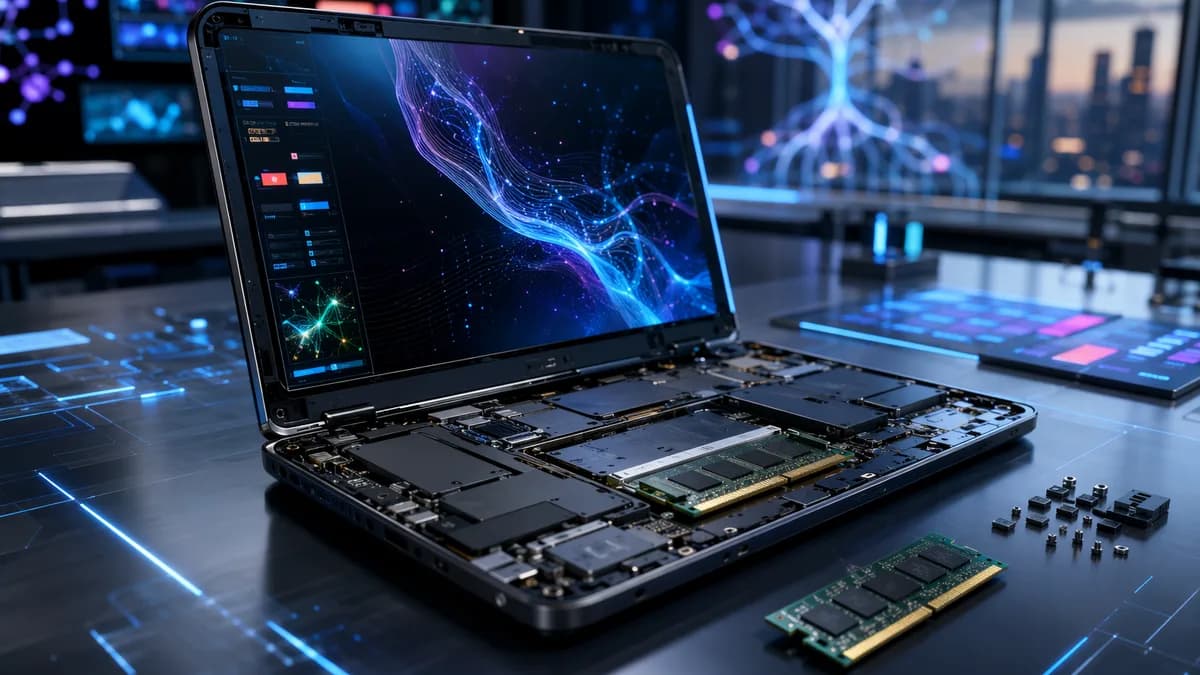
Framework Laptop 13 Pro buyers who preordered higher-memory configurations are now facing a launch-day compromise: the premium laptop may ship with less RAM than they selected.
XOOMAR Intelligence
Analyst Take
Framework said supplier pricing for LPCAMM2 memory came in “more than double” its prior inventory cost, forcing a “major and unfortunate” update to Laptop 13 Pro configurations and pricing, according to The Verge. The company says it has enough memory modules to cover existing preorders, but not in the right mix of 64GB, 32GB, and 16GB parts.
That distinction matters. Framework can build the laptops. It just can’t build every one in the RAM configuration customers already chose.
Framework Laptop 13 Pro preorders collide with the wrong RAM mix
Framework’s problem is not a total memory shortage for existing orders. It’s a mismatch between inventory and preorder demand.
The company has enough LPCAMM2 modules on hand to cover existing Laptop 13 Pro preorders, The Verge reported. But the available inventory does not line up with the exact split of 64GB, 32GB, and 16GB configurations customers selected.
Framework said its supplier cost updates for LPCAMM2 memory “are more than double that of the prior inventory.”
Framework is now notifying affected customers that their memory configuration, and in some cases the price attached to it, has changed. For a premium laptop launch, that’s a rough message to send after taking preorders.
The new public pricing has changed too. Framework’s site now lists the prebuilt Laptop 13 Pro starting at $1,599 with an Intel Core Ultra 5 325, 16GB of memory, and 512GB of storage, up $100 from the initial announcement, per The Verge.
Here’s the practical split:
- Expectation: Buyers selected a specific Laptop 13 Pro RAM configuration at preorder.
- Reality: Some orders are being updated because Framework lacks the right module mix.
- Cause given by Framework: LPCAMM2 supplier costs more than doubled versus prior inventory.
- Customer option confirmed: Framework is offering cancellations with full deposit preorder refunds.
That refund offer helps. It does not erase the core issue: some customers who ordered a premium configuration are being told the exact machine they picked is not available as planned.
Preorder buyers now face less RAM, cancellation, or a changed configuration
The clearest impact lands on customers who wanted the higher-end memory options. Tom’s Hardware, citing Framework CEO Nirav Patel, reported that Framework has enough 64GB modules for preorder batches through Batch 4 of laptops and Batch 7 of mainboards. Orders beyond that configured with 64GB are being changed to a 32GB module at the original 32GB module price.
The same pattern applies one tier down. Framework allocated remaining 32GB modules to certain DIY Edition and mainboard preorders through Batch 4 of laptops and Batch 7 of mainboards. Beyond that, some 32GB configurations are being changed to 16GB at the original 16GB price.
That creates a messy buyer choice. Accept less RAM than ordered. Cancel and take the deposit refund. Or wait for Framework to communicate a path to the configuration originally wanted, if one becomes available later.
Framework’s modular design softens the blow only to a point. A customer may be able to swap memory later, depending on part availability and pricing. But analysis: premium laptop buyers don’t usually preorder to become supply-chain shock absorbers. They expect the configuration they selected to be the one that ships.
The new pricing also shows how steep the memory shock is. Tom’s Hardware reported:
| LPCAMM2 module | Previous price | New price reported |
|---|---|---|
| 16GB | Not changed in the cited update | $239 |
| 32GB | $439 | $800 |
| 64GB | $849 | $1,600 |
Framework is also raising prices on systems and mainboards for new orders, with Patel citing higher costs for X7 and X9 chips, Windows license costs, and increases in memory, storage, and other silicon costs for some Ryzen AI 300 Series configurations, according to Tom’s Hardware.
Not every component is moving higher. Framework has reduced pricing on some parts, including 48GB DDR5 modules and certain SSDs, while increasing prices on others. Existing preorders with components that fell in price will have their prices reduced if they have not yet been fulfilled, while higher-price components will still be charged at the preorder price, according to the supplied source material.
For broader XOOMAR consumer hardware coverage, see Steam Deck Sales Plunge After Valve's Brutal Price Hike and Quitting Smartphones Now Costs $299 with Light Flip.
The memory crunch is now changing finished laptop specs
Framework has been unusually public about memory and storage pricing changes. That transparency is valuable because it shows how component repricing can move from supplier quote to customer order page fast.
The Verge places this update inside the broader “RAM price hikes” story and the global memory shortage. The provided source material does not substantiate a specific cause such as AI server demand, so XOOMAR is not treating that as a confirmed driver here.
What is confirmed is narrower and more important for buyers: Framework’s LPCAMM2 supplier raised prices beyond what the company expected and beyond what it says it can absorb without financial risk.
That matters more for Framework than for a larger PC vendor. Analysis: a smaller device maker has less room to absorb a sudden component spike, especially when it has already published preorder configurations and pricing. Framework’s statement makes clear it chose to alter configurations rather than eat the full increase.
The result is a rare case where a supply-chain problem is not just raising prices. It is changing the product some customers receive.
Framework now has to protect trust around the Laptop 13 Pro launch
Framework’s next challenge is not only restocking the right LPCAMM2 mix. It has to keep early buyers from feeling penalized for ordering first.
The company has already apologized and offered full deposit refunds for customers unhappy with the changed configuration. That is the minimum credible move. The harder part is explaining whether buyers who accept less RAM now will have a clear upgrade path later, and at what price.
The first batch of Laptop 13 Pro preorders is set to ship in July, according to Tom’s Hardware, leaving little room for confusion as customer notifications go out.
The watch item now is simple: whether Framework can turn transparency into trust. Its openness makes the supply shock visible. But shipping a premium laptop with less RAM than some customers ordered still creates reputational risk, especially for a brand built around repairable and upgradeable hardware.
The Bottom Line
- Some preorder customers may receive less RAM than they originally selected.
- Framework’s supplier memory costs rose to more than double prior inventory costs.
- The Laptop 13 Pro’s starting price has increased by $100 before launch fulfillment.
Framework Laptop 13 Pro preorder expectation vs. launch reality
| Category | Expectation | Reality |
|---|---|---|
| RAM configuration | Customers selected 64GB, 32GB, or 16GB at preorder | Some orders are being changed due to the wrong mix of LPCAMM2 inventory |
| Memory supply | Enough modules in the selected configurations | Enough total modules, but not in the right configuration split |
| Starting price | $1,499 at initial announcement | $1,599 now listed for the 16GB / 512GB model |
Framework Laptop 13 Pro starting price change
Primary Sources & Disclosures

Written by
XOOMAR Insights Team
Research and Editorial Desk
The XOOMAR Insights Team pairs automated research with human editorial judgment. We track hundreds of sources across technology, fintech, trading, SaaS, and cybersecurity, cross-check the facts, and explain what happened, why it matters, and what to watch next. We do not just rewrite headlines. Every article is fact-checked and scored for reliability before it goes live, and we link back to the original sources so you can verify anything yourself.