
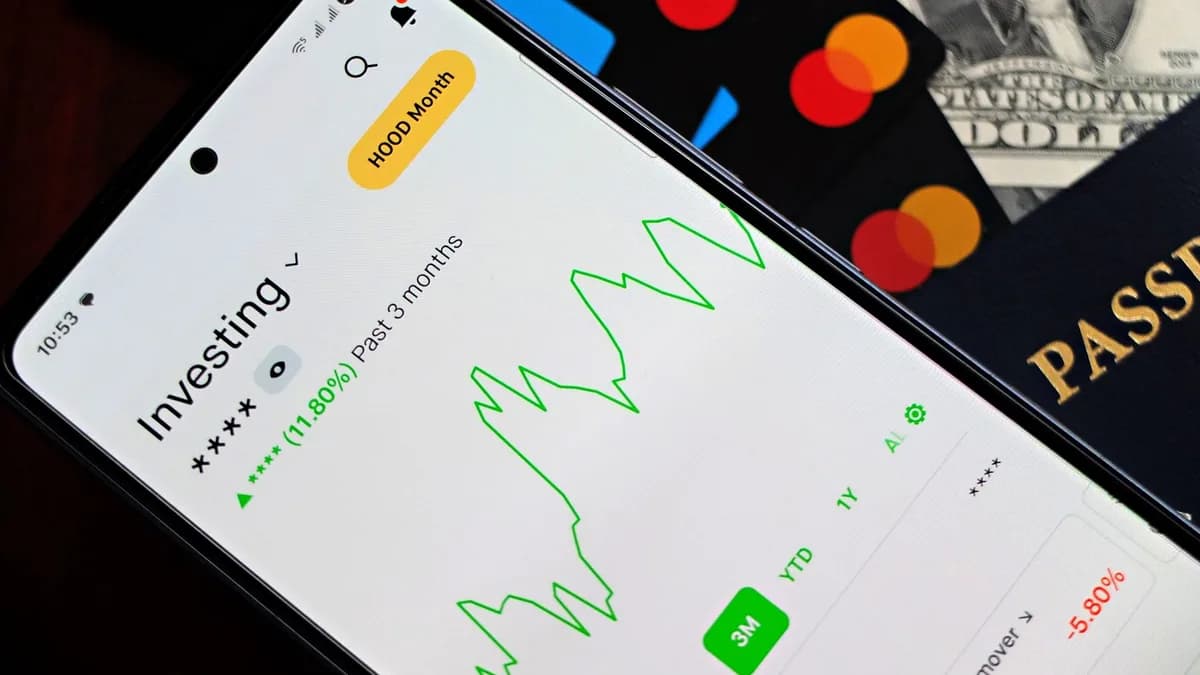
Hidden within TikTok's U.S. iPhone app is a clear signal: the social media giant isn't satisfied with just your attention. It wants to become your wallet. According to a Bloomberg report highlighted by PYMNTS, buried code points to a feature for peer-to-peer payments inside direct messages. This isn't a playful test or a hypothetical. It's the most direct evidence yet of TikTok's intent to capture not just cultural moments, but the financial transactions they inspire.
FintechAugust 18, 2026· 7 min read· By XOOMAR Insights Team
TikTok Buried Code Reveals P2P Payment Weapon
Updated on August 18, 2026
XOOMAR Intelligence
Analyst Take
72/ 100
4 sources analyzedMedium confidenceTrend10Freshness100Source Trust88Factual Grounding92Signal Cluster20
The move would use TikTok Pay, an existing tool for commerce in markets like Vietnam, Malaysia, and Thailand. The code suggests a familiar flow: a sender can include a message, a receiver can "tap to accept" before a payment expires, and status updates arrive via push notification. A TikTok spokesperson told Bloomberg the feature is "not currently being tested," confirming its early-stage development rather than its non-existence.
For XOOMAR readers, the mechanics are less important than the strategic intent. This is a direct lunge at the "final mile" of social interaction, aiming to transform the private chat where plans are made into the terminal where money changes hands.
Decoding TikTok's Payment Blueprint: What the Buried Code Reveals
The specific details in the app's code reveal a design for seamless financial action within a social environment. This isn't a standalone banking app. It's a feature woven into the fabric of direct messaging, designed to feel as casual as sending a video.
The proposed flow is purposefully simple:
- Contextual Payments: Senders can attach a message, mirroring the social utility of Venmo's captions. This ties the financial transaction directly to the social conversation that prompted it. Whether it's "for the Ubers" or "for the concert tickets you found," the "why" is built in.
- Explicit Consent: The "tap to accept" mechanic is crucial. It prevents accidental or unwanted transfers, giving the receiver full control. An expiration date on the offer adds a layer of urgency and helps clear unclaimed transactions.
- Existing Rails: The plan to utilize TikTok Pay is telling. It shows ByteDance intends to leverage its own payment infrastructure, already battle-tested for e-commerce in Southeast Asia, rather than rely solely on external partners. This suggests a long-term play to own the entire financial stack.
XOOMAR analysis: The elegance is in the integration. TikTok wouldn't need to educate users on a new payment app; it would simply extend an existing behavior. The inbox, already a place for sharing TikTok videos and coordinating plans, simply gains a new action button. This leverages TikTok's supreme advantage: the cultural and social context that existing fintech apps like Venmo or Cash App lack. They know you paid your friend. TikTok would know which video you both watched that led to the payment.
The Stakeholder Chessboard: Who Wins and Who Loses if TikTok Pays
Introducing peer-to-peer payments would rebalance power across the digital ecosystem, creating immediate winners and applying intense pressure elsewhere.
Creators and Micro-Entrepreneurs stand to gain a friction-free monetization channel. Beyond formal TikTok Shop product listings, imagine a creator offering a custom shoutout, a digital art file, or a recipe pdf. A patron could send payment directly within the same DM thread where the request was made. This circumvents platform cuts on gifts or the clunkiness of off-app payment links.
Users get ultimate convenience at a steep privacy cost. The appeal is obvious: one less app to open. But this convenience comes bundled with a deeper data integration. TikTok would gain the ability to link specific content consumption (which videos you watch and share) directly with spending behavior (who you pay and for what). This creates a financial identity profile of unparalleled detail, as we reported in our analysis of how X dangles cash in your feed to hijack your wallet.
Fintech Incumbents face a massive new threat. Venmo, Cash App, and Zelle compete on utility and social networks. TikTok competes on cultural centrality and daily habit. For a generation that lives inside the app, sending money there isn't a switch; it's a path of least resistance. It could particularly impact services like Cash App, which has been working to cut crypto's hurdle to a single tap, by making the primary payment action occur elsewhere.
Regulators are handed a new, complex dossier. This would trigger scrutiny under money transmission laws, demand robust anti-fraud and "know your customer" systems, and raise acute questions about financial protections for younger users. Mixing social graphs with payment networks creates novel risks for scams and coercion. TikTok's statement that it does not plan to implement end-to-end encryption for DMs | a policy it defends for safety enforcement | would become a major point of contention once real money is in the chat.
Forget Privacy, The Real Fight is for Your Financial Identity
The core battleground has shifted. While debates rage over data privacy and screen time, a quieter, more valuable war is being waged for financial identity. Social data reveals what you like. Payment data reveals what you value enough to buy. Combining the two creates a behavioral blueprint of frightening accuracy.
For platforms, this isn't just about charging a fee on a P2P transfer. The strategic prize is the data asset and the user lock-in.
- Superior Ad Targeting: An ad platform that knows you just sent money to a friend for "sushi" is infinitely more valuable than one that just knows you watched food videos.
- Credit and Lensing Potential: In markets like Brazil, where TikTok has applied for fintech licenses, this spending data could inform creditworthiness models for small loans, a service it is explicitly seeking to offer.
- Ecosystem Lock: Once your social circle adopts a payment method, switching costs soar. You become economically, not just socially, embedded.
This mirrors the trajectory of Chinese super-apps but applies it to Western markets fractured by single-purpose financial apps. TikTok's global owner, ByteDance, is executing a classic playbook: use a dominant, engaging social product as the top of the funnel, then systematically build out the utility layers (commerce, payments, services) beneath it to capture ever-greater slices of daily life.
The Domino Effect: How a TikTok Payment Button Could Rewire an Industry
If TikTok successfully launches peer-to-peer payments in a major Western market like the U.S., the ripple effects will reconfigure the fintech and social media landscape within months.
Expect a defensive M&A frenzy. Legacy payment processors and neobanks, suddenly facing a competitor with a billion-user distribution channel, would seek partnerships or acquisitions to bolster their own social features or content offerings. The valuation of any fintech with a strong, sticky social component would surge.
Social commerce will accelerate from novelty to norm. In-stream shopping is one thing. Enabling users to easily pay each other for goods, services, and shared experiences discovered on the platform removes the last point of friction. The line between "influencer recommendation" and "peer-to-peer sale" will blur entirely.
Regulatory battles will erupt on a new front. Antitrust arguments will evolve from "dominance in social media" to "dominance in social payments," with calls for data portability (being able to take your TikTok payment history to another service) and interoperability between walled-garden wallets. Scrutiny over how TikTok's American joint venture structure, where ByteDance retains a 19.9% share, handles sensitive financial data would be immediate and intense.
The measure of a platform's success will change. Wall Street already watches ad revenue and user growth. The next metric will be payment volume and wallet share. As we've seen with AI agents spending billions amid a payment security void, when new transactional layers emerge, they quickly become fundamental. A platform that becomes a primary financial touchpoint for Gen Z isn't just an app. It's a utility.
What to watch: The immediate signal won't be a splashy launch. Watch for ByteDance's hiring posts for financial services roles in the U.S. and other Western markets. Watch for expansions of TikTok Pay into new regions or for new use cases. And watch Brazil, where TikTok's fintech license applications could provide the first fully-fledged blueprint for how the company intends to blend social and financial services outside China. If those licenses are granted, the code hidden in the U.S. app will quickly transform from a speculative finding into a global roadmap.
Disclaimer: This XOOMAR analysis is for informational and educational purposes only. It is not financial, investment, legal, tax, or professional advice. It does not provide buy, sell, hold, price-target, portfolio, or personalized recommendations. Verify information independently and consult qualified professionals before making decisions.
Impact Analysis
- It signals TikTok's move from a content platform to a financial one, directly competing with established fintech giants.
- Integrating payments into DMs could capture the 'final mile' of social planning, turning chats into point-of-sale terminals.
- For users, it would centralize social interaction and payment into one app, increasing convenience but also platform lock-in.
Social Platform Payment Features
| Feature -> | TikTok's Potential | Venmo / Cash App |
|---|---|---|
| Primary Environment | Integrated within direct messages | Standalone messaging/transaction app |
| Social Context | Directly tied to DM conversation via message captions | Offers caption field for social sharing |
| Current Status | Early-stage development | Fully operational market leader |
Sources
Disclaimer: Content on XOOMAR is produced using AI-assisted research, drafting, and verification workflows and is intended for informational and educational purposes only. It does not constitute financial, investment, legal, tax, medical, or professional advice of any kind. All analysis reflects available information at the time of publication and may not be current. Verify information independently and consult qualified professionals before making decisions. Editorial policy

Written by
XOOMAR Insights Team
Research and Editorial Desk
The XOOMAR Insights Team pairs automated research with human editorial judgment. We track hundreds of sources across technology, fintech, trading, SaaS, and cybersecurity, cross-check the facts, and explain what happened, why it matters, and what to watch next. We do not just rewrite headlines. Every article is fact-checked and scored for reliability before it goes live, and we link back to the original sources so you can verify anything yourself.
Explore More Topics
Related Articles
 Fintech
Your Bank Is Dead, Your Wallet's Gone Digital, What's Next
Neobanks legally replace your bank, digital wallets are just a contactless terminal for your cards, and payment apps are for sending money to friends. Mix them
Aug 13, 202611 min
 Fintech
X Dangles Cash in Your Feed to Hijack Your Wallet
X is dangling financial incentives like high APY and cashback directly inside the social feed, a risky attempt to turn your scrolling time into transaction time
Aug 18, 20267 min
 Fintech
How These Fintech Apps Are Ending Awkward Bill Splits
In 2026, the best expense-sharing apps automate all the messy math and awkward chasing, finally putting an end to bill-splitting stress.
Aug 13, 202614 min
 Fintech
Cash App Cuts Crypto's Hurdle To A Single Tap
Cash App has partnered with MoonPay, enabling users to purchase crypto directly from their app balance, which mainstreams digital assets by embedding them in a
Aug 18, 20266 min
 Fintech
AI Agents Spend Billions Amid Payment Security Void
A coalition of payment giants led by Rain is racing to create a universal security standard for AI agents that could autonomously spend trillions of dollars, pr
Aug 18, 20269 min
 Technology
TikTok Kidnaps 'Peter Pan Girl' in Stalking Firestorm
A Disney fan's decade of online posts were edited by the algorithm into a stalker narrative, igniting a viral firestorm over where adoration ends and harassment
Aug 18, 20267 min
 Technology
Reddit AI Narrates Your Posts as Podcasts to Retain Users
Reddit is using AI voices to turn text posts into short videos and podcasts, a strategic push for passive engagement in a video-first internet.
Aug 18, 20266 min
 Technology
Apple Leaks AirPods With a Camera in Official macOS Build
Apple has leaked its own product, intentionally placing a demo for camera-equipped AirPods in a final macOS update to build hype for its upcoming Visual Intelli
Aug 18, 20265 min
 Global Trends
Sacrifice Found Underneath Modern Lima's Richest Suburb
The skeletal remains of a man, placed as an offering when a sacred canal was closed, were unearthed in a canal beneath an affluent Lima suburb, directly under m
Aug 18, 20267 min
 Cybersecurity
Fraud Ring Turns State Business Filings into $12 Million Weapon
Criminals stole nearly $12 million by hijacking legitimate companies and creating fake ones through New Jersey's public business registry, turning state documen
Aug 18, 20267 min
Don't miss the signal
Get our weekly roundup of the stories that matter across tech, fintech, and trading. No noise, just signal.
Free forever. No spam. Unsubscribe anytime.