
You can now send your biggest Venmo ever, and it goes directly to a bursar's office.
FintechAugust 19, 2026· 6 min read· By XOOMAR Insights Team
College Tuition Now Accepts Venmo Cash
Updated on August 19, 2026
XOOMAR Intelligence
Analyst Take
59/ 100
3 sources analyzedLow confidenceTrend10Freshness100Source Trust90Factual Grounding95Signal Cluster20
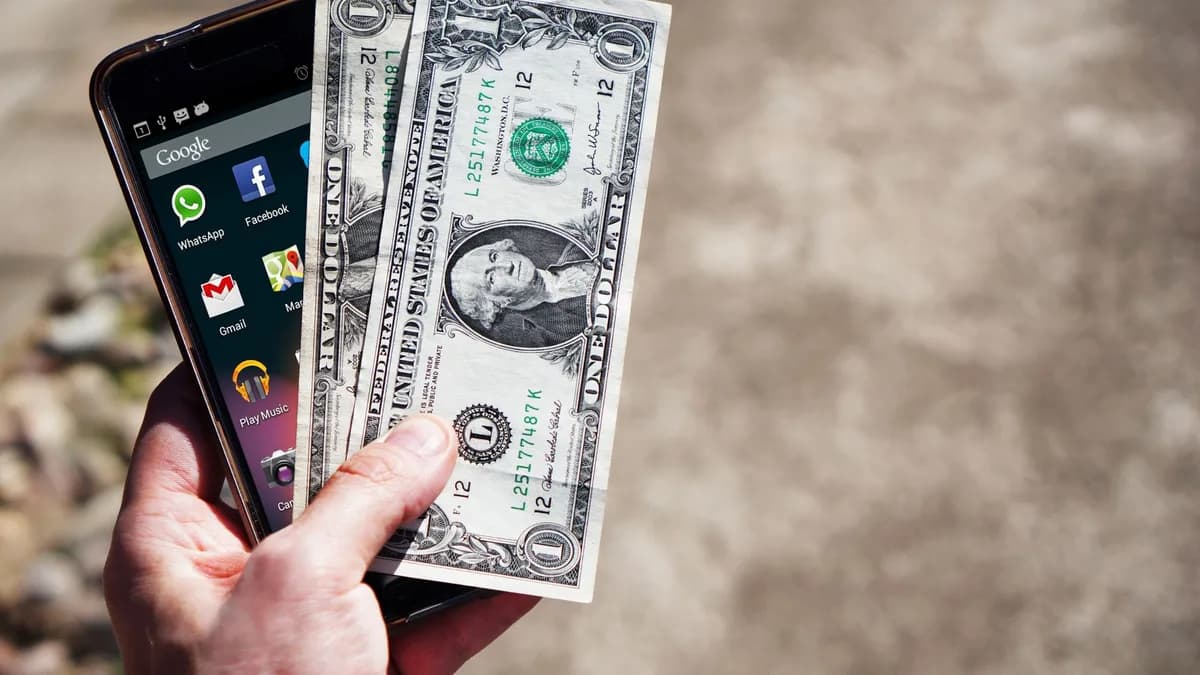
On Wednesday, August 19, PayPal announced that students and their families could use Venmo or PayPal to pay tuition and fees, according to a report in TechCrunch. Five schools, including Michigan State University and Texas Tech University, are the first to roll out the option, with more expected to follow throughout the year. It marks the most serious attempt yet to bring the casual, peer-to-peer experience of a social payment app into the high-stakes, bureaucratic world of institutional finance. The gap between these two worlds is exactly what makes this move so significant.
The Friction of a Five-Figure Bank Transfer
Paying for college is an archetypal high-friction financial event. It involves navigating a dedicated, often clunky university portal, initiating a wire transfer or ACH payment from a bank account, and waiting for confirmation that a large sum has safely traversed the digital void — a process that underscores the critical importance of reliable digital financial infrastructure, as highlighted when digital-only services like Monzo's backup banking experiment fail customers. For a generation that splits a dinner bill in 30 seconds on their phone, this process feels archaic.
The partnership targets this friction directly. Venmo and PayPal aren't becoming the bursar. Instead, they're integrating as payment rails within the existing systems run by three major education payment platforms: Illumia, Nelnet Campus Commerce, and TouchNet. These platforms serve thousands of colleges, meaning the potential reach is vast.
"Every payment option we add, including PayPal and Venmo, is about meeting them at that moment with more flexibility and less friction, so affordability isn't a barrier to staying enrolled," said Nelnet Campus Commerce president Jackie Strohbehn in a statement.
The core argument is psychological and practical. Reducing even minor administrative headaches at payment time could help with student retention. It’s a bet that convenience can marginally improve affordability.
This Isn't Your Friend's Venmo App
The most critical detail for understanding this launch is that students won't be searching for "@MichiganStateU" and sending a payment with a textbook emoji. This is a business-to-business (B2B) integration, not a peer-to-peer (P2P) hack.
How it works for the payer:
- A student or parent logs into their school's standard tuition payment portal.
- At checkout, PayPal or Venmo appear as new payment options alongside credit card or bank transfer.
- They select their preferred app, authenticate, and complete the payment using a linked bank account, debit card, credit card, or Venmo balance.
Why universities agreed: For the institution, this isn't about accepting casual app money. It's about gaining access to a modern, digital payment processor that meets strict requirements.
- Guaranteed Funds: The payment is finalized and settled reliably, unlike a personal Venmo payment that could be reversed.
- PCI Compliance: The systems handle sensitive data with the required security standards.
- Detailed Remittance: The university receives clear data on which student account to credit, eliminating the mystery of a plain cash transfer.
Jeremy Loch, president of TouchNet, framed it as an "integration [that] enables institutions to broaden choice and create a more frictionless payment experience." The key word is "institutions." This was built for them.
Splitting the Bill Becomes a Group Chat
The student and parent benefits go beyond a slightly nicer interface. The real utility emerges in complex, real-world payment scenarios that traditional portals struggle with.
Imagine a $15,000 semester bill. The student is responsible for $5,000 from their summer savings, a parent will cover $7,000, and a grandparent wants to contribute the remaining $3,000. The old way involved three separate checks, money orders, or convoluted logins to a single family bank account.
The new way, in theory, could be managed from a phone. The student initiates the payment in the portal, selects Venmo, and sees the total. They could then use Venmo's request feature to instantly ping the parent and grandparent for their specific shares. Each party pays from their own Venmo balance or linked account within seconds, and the full tuition is satisfied in one transaction. It turns a financial logistics problem into something as simple as settling up for a group vacation.
This capability for distributed, real-time funding taps directly into how modern families, and their finances, actually operate. It’s a feature that legacy banking transfers simply can't match. This push to become the financial hub for major life expenses mirrors strategic moves by other platforms, as we've seen in our analysis of how X Dangles Cash in Your Feed to Hijack Your Wallet.
From Coffee to College: Redefining the App's Purpose
This partnership is a clear signal of Venmo's strategic ambition. The app, known for its social feed and casual transactions, is aggressively pursuing a role in formal, high-value commerce. Capturing a recurring, five-figure transaction like tuition is a major step toward becoming an indispensable financial account rather than a social spending accessory.
The move blurs a line that has traditionally been sharp: the separation between informal P2P apps and the infrastructure of major institutional payments. If a university's finance office trusts the rail for tuition, it legitimizes the platform for every other large bill.
The open question is what's next. If Venmo can reliably handle tuition through an accredited university's payment system, what other major, bureaucratic payments are ripe for the same treatment?
- Apartment Rent: Already common informally, but could see formal integration with large property management companies.
- Medical Bills: A high-friction area where patients often get confusing invoices from multiple providers.
- Auto Loans or Insurance: Large, recurring payments to major corporations.
The success of this tuition initiative will be watched closely by other sectors. A smooth rollout with high adoption at the initial five schools will provide the case study needed to pitch other institutional payees. Conversely, if technical glitches, security concerns, or low student uptake plague the launch, it could chill similar ambitions.
For now, the message is simple. The app you use to pay your friend for pizza is now approved for a payment that defines your financial future. The fusion of social finance and serious commerce is officially here.
Disclaimer: This XOOMAR analysis is for informational and educational purposes only. It is not financial, investment, legal, tax, or professional advice. It does not provide buy, sell, hold, price-target, portfolio, or personalized recommendations. Verify information independently and consult qualified professionals before making decisions.
Key Takeaways
- Digital payment flexibility like Venmo may reduce student enrollment barriers by aligning with younger users' financial habits and expectations.
- Integrating with major education platforms (Illumia, Nelnet, TouchNet) allows rapid scaling, potentially influencing payment systems at thousands of colleges.
- Reducing payment friction—a known retention obstacle—could help institutions maintain enrollment, linking ease of payment to educational access.
Sources
Disclaimer: Content on XOOMAR is produced using AI-assisted research, drafting, and verification workflows and is intended for informational and educational purposes only. It does not constitute financial, investment, legal, tax, medical, or professional advice of any kind. All analysis reflects available information at the time of publication and may not be current. Verify information independently and consult qualified professionals before making decisions. Editorial policy

Written by
XOOMAR Insights Team
Research and Editorial Desk
The XOOMAR Insights Team pairs automated research with human editorial judgment. We track hundreds of sources across technology, fintech, trading, SaaS, and cybersecurity, cross-check the facts, and explain what happened, why it matters, and what to watch next. We do not just rewrite headlines. Every article is fact-checked and scored for reliability before it goes live, and we link back to the original sources so you can verify anything yourself.
Explore More Topics
Related Articles
 Fintech
X Dangles Cash in Your Feed to Hijack Your Wallet
X is dangling financial incentives like high APY and cashback directly inside the social feed, a risky attempt to turn your scrolling time into transaction time
Aug 18, 20267 min
 Fintech
TikTok Buried Code Reveals P2P Payment Weapon
Hidden app code confirms TikTok is building peer-to-peer payments, aiming to turn your DMs into a Venmo rival.
Aug 18, 20267 min
 Fintech
Your Bank Is Dead, Your Wallet's Gone Digital, What's Next
Neobanks legally replace your bank, digital wallets are just a contactless terminal for your cards, and payment apps are for sending money to friends. Mix them
Aug 13, 202611 min
 Fintech
How These Fintech Apps Are Ending Awkward Bill Splits
In 2026, the best expense-sharing apps automate all the messy math and awkward chasing, finally putting an end to bill-splitting stress.
Aug 13, 202614 min
 Fintech
Monzo's Backup Banking Experiment Fails Customers
Monzo's "fully independent backup bank," activated for 16 million customers during a core failure, reportedly malfunctioned, sparking doubts about its promise o
Aug 19, 20265 min
 Global Trends
Zelenskyy's Sacking Creates a Wartime Rival
Volodymyr Zelenskyy's firing of defense minister Mykhailo Fedorov has backfired, transforming a loyalist into a street-level political rival with mass rallies a
Aug 19, 20266 min
 Technology
Amazon Drone Swarm Targets 500 U.S. Cities by Late 2026
Amazon plans a massive sixfold expansion of its Prime Air drone delivery service, aiming to operate in nearly 500 U.S. cities by the end of 2026.
Aug 19, 20265 min
 Fintech
Fed Hawks Split as Economic Consensus Crumbles
New Fed minutes expose a significant internal divide, with three policymakers aggressively pushing for rate hikes despite the committee holding steady, revealin
Aug 19, 20265 min
 Global Trends
Trump's Secret Latin America Strategist Arrested for Murder Plot
Fernando Cerimedo, a shadow strategist credited with engineering the victories of far-right leaders across Latin America, has been arrested in Bolivia for alleg
Aug 19, 20267 min
 Trading
Silver Stalls as Inflation Threat Turns Against It
Silver's rally fizzled at $66.50 as the inflationary risks that typically boost it are now creating uncertainty, keeping buyers on the sidelines ahead of the Fe
Aug 19, 20266 min
Don't miss the signal
Get our weekly roundup of the stories that matter across tech, fintech, and trading. No noise, just signal.
Free forever. No spam. Unsubscribe anytime.