
Visa just spent $2.4 billion in cash to abandon a core principle of payments security. The company whose supremacy was built on authorizing the transaction itself is now betting its future on what happens long before a payment is ever initiated. Its acquisition of behavioral-intelligence firm BioCatch, announced Monday, August 3, signals a fundamental surrender: defending the "moment money moves" is no longer enough in a market where banks are redesigning core payment logic to capture new revenue streams. according to PYMNTS, artificial intelligence is forcing the entire industry to look further upstream. This isn't just a product expansion. It's a redrawing of the battlefield where the new moat isn't cryptography, but the subtle tremor in your mouse movement.
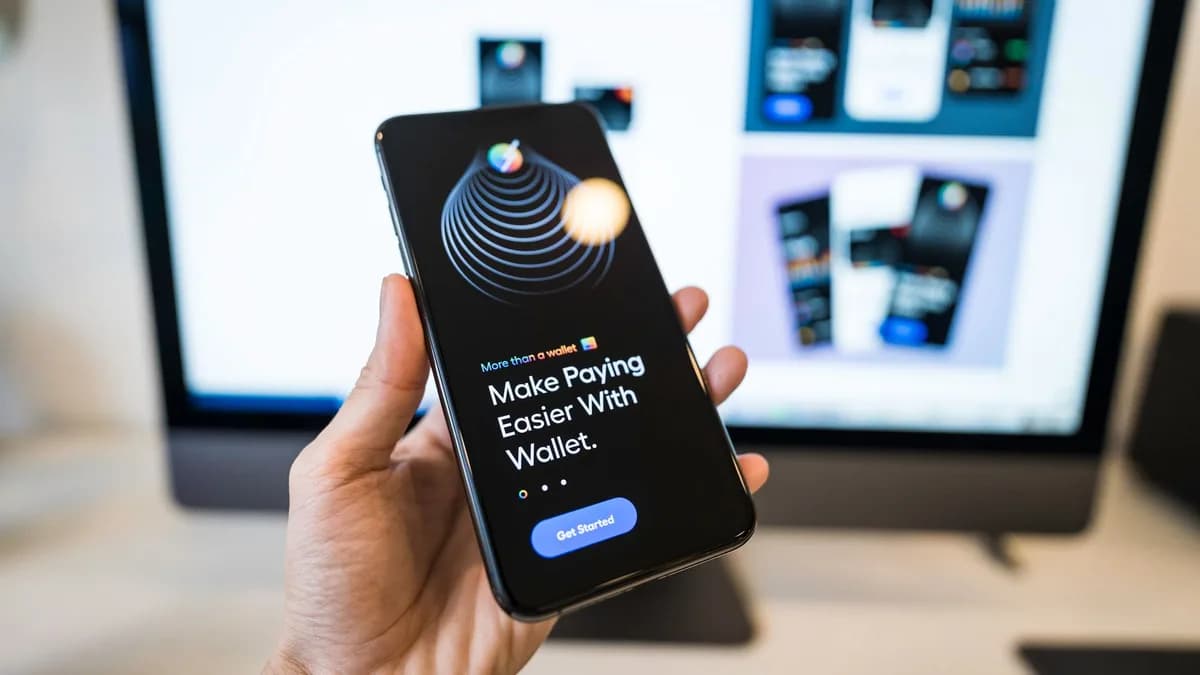
Visa Pays $2.4 Billion to Abandon Core Payments Security
XOOMAR Intelligence
Analyst Take
The Great Pivot: How Visa's $2.4 Billion Bet Signals the End of Payment Defense as Usual
For decades, Visa's power flowed from its position as the final arbiter. Its networks and algorithms assessed risk at the point of sale, approving or declining transactions based on amounts, location, and merchant history. That model assumed the point of attack was the payment itself. AI has shattered that assumption.
The new reality is that the most sophisticated fraud happens not at the transaction "door," but deep inside the "house," during the digital banking session where accounts are managed and transfers are set up. As this upstream fraud accelerates, traditional authorization checks become forensic tools, analyzing the aftermath of a breach that already occurred. By buying BioCatch, Visa isn't merely adding a feature. It's purchasing a new frontline: the continuous, invisible canvas of user behavior inside apps and browsers. The all-cash nature of the deal underscores a stark urgency. It's a premium paid to avoid being strategically outflanked, a move that redefines the company from a payment network to a continuous identity verifier.
Mapping the Upstream Fraud Economy: Where the Real Breach Happens Now
Upstream fraud is a timeline, not a location. It's the account takeover executed days before a fraudulent wire, the social engineering scam that convinces a legitimate user to approve a transfer, or the synthetic identity cultivated over months to appear credible. The source material details these shifts: criminals have moved "from targeting payment data to targeting account data," as Visa's Global Head of Fraud Services, Michael Jabbara, observes.
The new attack vectors are more insidious and expensive. They include:
- Session Hijacking: Where malware or a scammer takes control of an authenticated banking session in real-time.
- Authorized Push Payment (APP) Fraud: Where the customer is socially engineered to willingly send money to a criminal.
- Synthetic Identities: Fabricated personas built from stolen data points that can pass traditional credit checks.
- AI-Powered Spoofing: The industrialization of deepfakes and document forgery that can bypass know-your-customer checks.
The cost is no longer just a stolen card number and a chargeback. It's a completely gutted digital identity, protracted reputational damage for the bank, and a loss of consumer trust that extends far beyond a single transaction. Crucially, this shift also breaks the old security model that traded safety for friction—more passwords, more declined transactions. Defending upstream requires security to become invisible, assessing risk based on how you behave, not what you remember.
BioCatch's Behavioral Blueprint: The Invisible Friction Visa Just Paid Billions For
So what exactly did Visa buy for $2.4 billion? BioCatch's value proposition is a radical departure from static authentication. It doesn't analyze what you type (a password or account number), but how you interact with a device. It builds a continuous behavioral blueprint from thousands of signals.
Those details can reveal whether the person preparing to send money is a legitimate customer, an attacker who has taken control of an account, or even a genuine account holder being manipulated by a scammer.
This includes the micro-hestitations in mouse movement that differentiate a human from a bot, the unique cadence and pressure of typing or touchscreen swipes, and even how you navigate an application. This data is the new competitive moat. It is deeply personal, passively collected in real-time, and astronomically difficult for a fraudster to spoof at scale. It stands in direct contrast to knowledge-based authentication—passwords, security questions—which are mere static data points easily stolen, sold, and replicated. Visa's acquisition, detailed in our coverage of the Visa BioCatch Acquisition Pulls Fraud War Into Bank Apps, is a bet that this behavioral layer is the most defensible ground in the next decade of financial security.
The Stakeholder Chessboard: Who Wins, Who Loses, and Who's Scrambling
This acquisition reshuffles the board for every player in financial services.
| Stakeholder | Immediate Implication | Long-Term Pressure |
|---|---|---|
| Banks & Issuers | Clear beneficiaries of enhanced fraud tools, but become more dependent on Visa's ecosystem for core risk assessment. | Cede more control over the customer risk profile and behavioral data. Must integrate deeply or be left behind. |
| Merchants & PSPs | May see reduced false declines and chargebacks if upstream fraud is caught earlier. | Face new data-sharing complexities and potential for cost passthroughs as security becomes a premium service. |
| Competitors (Mastercard, Fintechs) | Forced to respond. The deal sets a $2.4 billion market price for behavioral intelligence. | Must decide to build, buy, or partner, accelerating consolidation in the fraud prevention space. |
| Consumers | Promised "frictionless security," largely unaware of the continuous behavioral profiling now underpinning their financial identity. | Become the subject of intense, passive data collection, walking a fine line between convenience and privacy. |
| Regulators | Will scrutinize the collection of continuous biometric and behavioral data under emerging privacy frameworks like GDPR and state-level laws. | Must evolve regulations designed for static data breaches to address the ethics of pervasive behavioral monitoring. |
The move also echoes a broader strategic expansion by card networks, a trend we've examined in how Card Networks Stretch Beyond Payments to Box In Rivals. By owning the behavioral layer, Visa isn't just selling fraud prevention, it's embedding itself deeper into the foundational trust mechanisms of digital finance.
From Magnetic Strip to Mouse Movement: The Historical Arc of Payment Security
Payment security has always been a game of escalation, with each new defense pushing criminal innovation to a softer target.
- Signature & Embossed Card: Trust was placed in in-person verification and a forged signature.
- Magnetic Stripe: Trust shifted to the data on the stripe, which was easily copied and sparked the first wave of card-not-present fraud.
- EMV Chip: Trust moved to dynamic cryptography embedded in a physical chip, killing cloned cards but pushing fraud online.
- Tokenization: Trust was placed in abstraction, replacing card numbers with useless digital tokens for online payments.
Each layer made fraud harder at its specific point of focus. Behavioral intelligence, as exemplified by BioCatch, is the next logical, inevitable layer: trust in continuous identity. The historical paradox is clear: every victory in securing the transaction has merely redirected the attack. Upstream fraud—targeting the account, the user's mind through social engineering, or the session itself—is the latest and most challenging manifestation. The defender's advantage has always been temporary. The central question now is how long this new behavioral moat, built on the unique way you hold your phone, will hold against increasingly sophisticated, AI-driven mimicry.
For the Industry: A Brutal New Calculus of Trust and Data
Visa's acquisition imposes a brutal new calculus on the entire payments industry.
The arms race is no longer about securing the transaction, but securing the user's entire digital session. Competitive edge will be measured in the breadth and depth of behavioral data points, not just transaction volume. This creates a stark tiered market. Giants like Visa and Mastercard can afford billion-dollar acquisitions to own the core intelligence layer. Smaller banks, neobanks, and payment processors will become reliant on API access to this intelligence, turning advanced fraud prevention into a security-as-a-service utility dominated by a few providers.
Furthermore, data silos will crumble. Effective upstream defense requires linking behavioral signals from a user's banking app, their e-commerce activity, and their digital wallet. This will force unprecedented collaboration—or, more likely, drive further consolidation as networks seek to unify these data vistas. The talent war follows suit, shifting from cryptography experts to data scientists, behavioral psychologists, and AI specialists who can model "normal" across billions of micro-interactions.
The 2028 Payments Landscape: Predictions Forged in a $2.4 Billion Fire
Visa's deal is the opening move, not the conclusion. Its ramifications will define the next five years.
- Behavioral Biometrics Becomes a Regulated Data Class: The passive, continuous collection of how users type and swipe will spark global regulatory debates. Consumers may gain rights to access, export, or even opt-out of their "behavioral profile," creating new compliance hurdles.
- 'Frictionless Security' Becomes a Primary Marketing Battleground: For high-value client segments, financial brands will compete less on reward points and more on promises of ironclad, invisible protection. A seamless, safe experience will be the premium offering.
- A Major Behavioral Spoofing Crisis Will Occur: It's not a matter of if, but when. A sophisticated fraud syndicate will successfully mimic behavioral patterns at scale, causing a short-term panic. This will, in turn, accelerate investment in multi-layered, adaptive AI systems that can detect the mimicry itself.
- Fraud Prevention and Personalization Will Blur: The same continuous identity data that spots a scammer could one day inform hyper-personalized financial advice, product offers, or credit decisions. Your unique interaction pattern may become a core asset—or liability.
The final, unsettling thought is this: Visa's $2.4 billion bet is a down payment on a future where your financial identity is not defined by what you know (your password), or what you have (your phone), but by the unconscious, intimate how of your being in the digital world. The game has moved upstream, and the stakes are no longer just your money, but the very pattern of your behavior.
Disclaimer: This XOOMAR analysis is for informational and educational purposes only. It is not financial, investment, legal, tax, or professional advice. It does not provide buy, sell, hold, price-target, portfolio, or personalized recommendations. Verify information independently and consult qualified professionals before making decisions.
Impact Analysis
- Shows a major industry shift from transaction-based security to continuous, behavioral identity verification.
- Highlights the escalating sophistication of fraud, forcing companies to invest billions to protect data before payments occur.
- Signals a redefinition of payment networks from simple transaction arbiters to proactive, data-driven security platforms.
Visa BioCatch Acquisition Deal Value
Sources
Disclaimer: Content on XOOMAR is produced using AI-assisted research, drafting, and verification workflows and is intended for informational and educational purposes only. It does not constitute financial, investment, legal, tax, medical, or professional advice of any kind. All analysis reflects available information at the time of publication and may not be current. Verify information independently and consult qualified professionals before making decisions. Editorial policy

Written by
XOOMAR Insights Team
Research and Editorial Desk
The XOOMAR Insights Team pairs automated research with human editorial judgment. We track hundreds of sources across technology, fintech, trading, SaaS, and cybersecurity, cross-check the facts, and explain what happened, why it matters, and what to watch next. We do not just rewrite headlines. Every article is fact-checked and scored for reliability before it goes live, and we link back to the original sources so you can verify anything yourself.
Explore More Topics
Related Articles
 Fintech
Visa BioCatch Acquisition Pulls Fraud War Into Bank Apps
Visa is paying $2.4B for BioCatch to move fraud checks deeper into bank apps, where behavior signals can flag scams before payment.
 Fintech
AI Shrinks Product Teams as Visa Layoffs Cut 2,600
Visa is cutting 2,600 jobs and says AI is helping smaller product teams ship faster. The labor squeeze is no longer theoretical.
 Fintech
Card Networks Stretch Beyond Payments to Box In Rivals
Card networks are turning tokens, fraud tools and payout rails into a wider growth machine beyond payments.
 Fintech
Banks Redesign Core Payment Logic to Capture $430B Market
Banks are rebuilding their core payment systems from the ground up to use contextual behavioral data. This shift aims to reduce false declines and capture billi
 Fintech
Click to Pay Spreads Abroad as U.S. Banks Lose Checkout
Click to Pay is spreading outside the U.S., but banks must win over shoppers and merchants before wallets lock in the habit.
 Technology
Grab CFO Credits AI For 30% Faster Shipping, 22% Revenue Jump
Grab CFO Peter Oey said AI is reducing core logistics costs by speeding up shipments over 30%, a metric tied directly to the company’s 22% revenue growth and a
 Trading
Eurozone Services Defy Slowdown Fears, Boost Currency
The euro held steady after the final Eurozone Services PMI was revised higher to 51.7, definitively ending a three-month contraction. This surprising resilience
 Fintech
Finance Staff Work Five Days a Month Copying Data
Most companies have automated accounts payable, but 67% still waste over a week monthly processing invoices because their systems can't talk to each other.
 Future Fiction
i2c CEO Warns Your AI Stack Is Already Obsolete
i2c CEO Amir Wain argues that most corporate AI investments are flawed because they're built on fragmented systems, making true autonomous action impossible wit
 Trading
Silver Smashes $60 Wall With Biggest Technical Rally in a Month
Silver prices surged past the critical $60 resistance level, hitting a one-month high in a technical breakout fueled by shifting Fed expectations and dollar wea
Don't miss the signal
Get our weekly roundup of the stories that matter across tech, fintech, and trading. No noise, just signal.
Free forever. No spam. Unsubscribe anytime.