Bangladesh landslides have turned the Rohingya camps’ worst design problem into a body count: heavy rain triggered the collapse, but families sleeping on unstable slopes made the disaster deadlier.
XOOMAR Intelligence
Analyst Take
At least eight Rohingya refugees, including five children, were killed after heavy monsoon rain set off landslides in southeastern Bangladesh’s Cox’s Bazar camps, according to ABC International. The same monsoon period has battered parts of India, where officials reported 13 deaths in rain-related incidents in Maharashtra over the past several days.
This is not just a storm story. It is a camp-safety story. The strongest reading of the evidence is blunt: the Rohingya camps are surviving the monsoon season, but they are not built to absorb it.
Cox’s Bazar deaths expose the price of keeping Rohingya families on unstable hillsides
Cox’s Bazar is carrying a humanitarian burden at a scale few places can manage cleanly. More than 1 million refugees who fled neighboring Myanmar live in camps in Bangladesh, according to the source material.
The reported mechanics are grim. Dollar Tripura, a Fire Service and Civil Defense official in Cox’s Bazar district, said rescuers recovered seven bodies, while refugees found an eighth after several hills collapsed from late Sunday to Monday morning. The bodies were handed over to families. Two children were found injured.
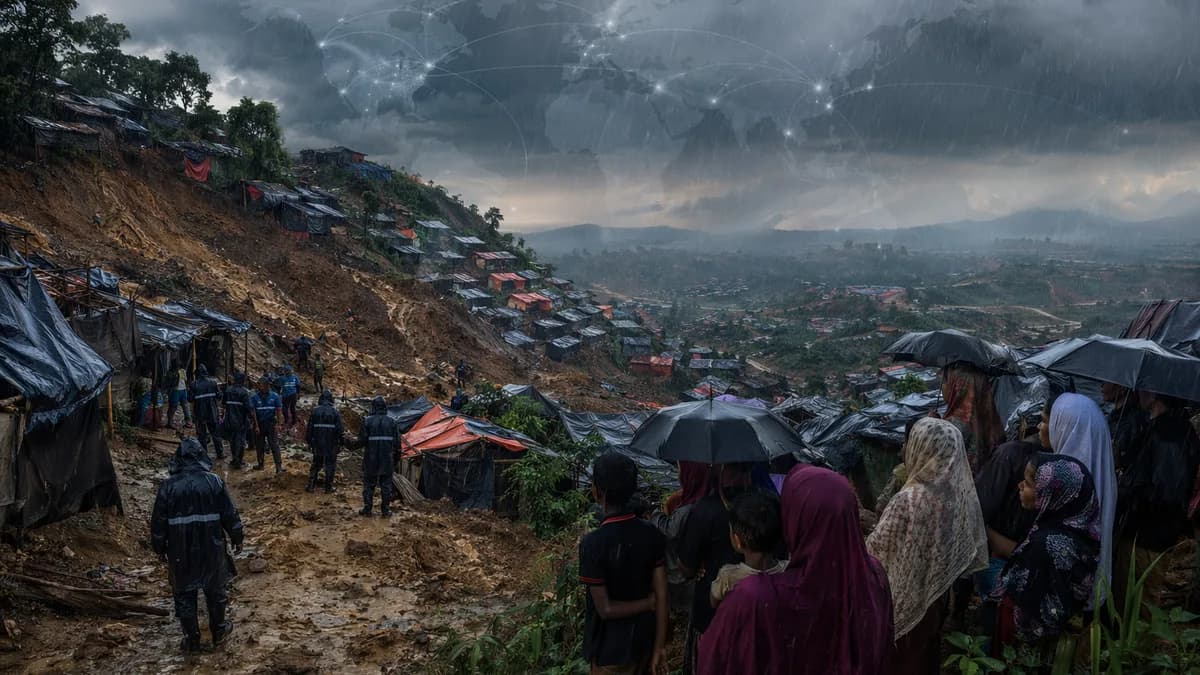
The landslides hit at least four locations across the camps. Shelters were buried under mud and debris while residents were asleep, leaving little time to escape once the slopes gave way.
The counterpoint is obvious: Bangladesh did not cause the monsoon. India is also absorbing heavy rainfall, flash floods and landslides. But that does not erase the camp-specific risk. XOOMAR analysis: when a dense refugee settlement sits on steep hillsides with makeshift shelters, the same rainfall that floods roads elsewhere can crush homes here.
The toll in Bangladesh sits inside a wider monsoon shock across India
The Bangladesh landslides were part of a broader South Asian monsoon episode, though the sources do not establish that Bangladesh and India were hit by one specific shared weather system. They do show simultaneous pressure across both countries.
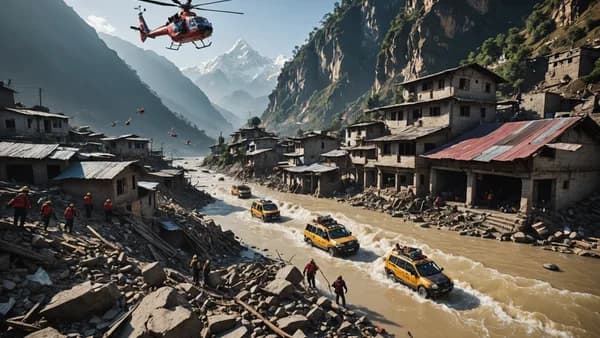
In India, torrential rain battered large areas on Tuesday. The source material says heavy monsoon rains triggered flash floods and landslides in northern Himalayan states, flooded roads, and forced schools to close in Mumbai. In Pune district, landslides triggered by heavy rain forced officials to temporarily close sections of the Mumbai-Pune Expressway, disrupting traffic between the two cities.
| Location | Reported impact | Source-supported detail |
|---|---|---|
| Cox’s Bazar, Bangladesh | 8 Rohingya refugees killed | Includes 5 children, with 2 children injured |
| Maharashtra, India | 13 deaths | Rain-related incidents over the past several days |
| Mumbai, India | Schools closed | Roads flooded as monsoon weather intensified |
| Jammu and Kashmir, Himachal Pradesh | Roads damaged, villages cut off | Flash floods and landslides disrupted public transport |
The operational numbers that matter now are not only deaths and injuries. They are relocation capacity, slope exposure and how many people remain in at-risk zones. Authorities said some 1,000 people have already been relocated from high-risk hill areas in the camps.
For readers tracking India’s broader risk and governance coverage, XOOMAR has separately covered institutional response stories such as Haldia Petrochemicals Fire Scorches Homes, Injures 20 and Two-Day ZEE5 Run Reopens Satluj Censorship Fight in India. Those are separate issues, but the common question is institutional capacity under stress.
Why monsoon rain turns bamboo-and-tarpaulin shelters into death traps
The source material gives enough detail to identify the failure chain. Continuous rain and hillside torrents loosened soil on slopes. Makeshift houses collapsed. Shelters were buried under mud and debris while residents slept.
The critical physical detail is the same: refugee families are living in makeshift shelters on vulnerable slopes during the annual monsoon season. That does not require dramatic rainfall to become dangerous. Once soil is saturated, slope strength drops. If mud moves quickly, lightweight shelter materials offer little resistance.
The strongest counterpoint is that authorities are acting. They are relocating refugees from at-risk hill areas, and officials said 1,000 people have already been moved.
Still, the thesis holds because the risk is recurring. According to UNHCR, 36 refugees died and at least 86 were injured in similar landslides at refugee camps between 2021 and 2026. This latest toll is not an isolated anomaly. It fits a pattern.
Bangladesh, Rohingya families and India face the same season from unequal positions
Bangladesh’s position is severe. It hosts more than 1 million Rohingya refugees while also facing annual monsoon hazards of its own. The government is now moving people from at-risk hillsides, but relocation inside crowded camps is not the same as building safe, permanent housing.
Rohingya families face the sharpest version of the problem. They fled Myanmar, live in fragile shelters, and have limited practical control over where danger reaches them. During heavy rain, the practical danger is immediate: families in makeshift homes on unstable slopes have little protection if saturated ground suddenly moves.
India’s monsoon disruption is different in scale and setting, but it shows the same season testing infrastructure. Maharashtra reported 13 deaths in rain-related incidents. The India Meteorological Department forecast more heavy rainfall across Maharashtra and warned of continued flooding in low-lying areas. Emergency crews were deployed in northern Himalayan regions after flash floods and landslides damaged roads and cut off villages.
XOOMAR analysis: the shared regional lesson is not that every place faces the same risk. It is that monsoon rainfall exposes the weakest local system first, whether that is a hillside camp, a mountain road, a low-lying city street or a crowded transport corridor.
From the 2017 Rohingya influx to today, camp survival has outpaced camp safety
The Rohingya camp crisis hardened after the 2017 military crackdown in Myanmar, when many Rohingya fled into Bangladesh. Cox’s Bazar is one of the world’s largest refugee settlements. The source material also says renewed fighting in Myanmar’s Rakhine state between the military government and the Arakan Army has raised concern over a fresh influx across the border.
That matters because temporary shelter has become a long-term condition. Early emergency priorities were basic: keep people alive, housed and fed. Years later, the same settlements are still exposed to floods and landslides. The materials do not provide a full engineering audit of drainage, retaining walls or evacuation routes, so those details should not be assumed. But the confirmed facts already show the core weakness: steep slopes, makeshift shelters and repeated deadly landslides.
What would weaken this analysis? Evidence that the majority of high-risk households have already been moved to safer ground, that slope failures are falling sharply over time, or that shelter upgrades now materially reduce deaths during heavy rain. The current record points the other way: 36 deaths and 86 injuries from similar landslides between 2021 and 2026, before this latest fatal event is fully absorbed.
Refugee protection now has to include monsoon adaptation, not only relief after burial
The practical policy menu is clear, even if the sources do not quantify every item: safer site planning, faster relocation from high-risk slopes, stronger drainage where feasible, slope stabilization, early warnings, and credible evacuation pathways before nighttime rainfall turns fatal.
The hard part is that each option competes with space, politics and money. Bangladesh is already carrying the camp burden. Aid groups, based on the supplied material, are dealing with repeated landslide and flood risk, while authorities are trying to move refugees in phases. Rohingya families are left judging danger in real time, often from shelters that cannot withstand fast-moving mud.
The Bangladesh landslides also show why disaster planning cannot be separated from displacement policy. If repatriation remains blocked by insecurity in Myanmar, camp safety becomes the immediate policy priority, not a secondary humanitarian upgrade. The weather office in Dhaka has forecast more rain in the coming days. The India Meteorological Department has also forecast more heavy rainfall across Maharashtra.
The next evidence to watch is concrete: whether relocations move beyond the initial 1,000 people, whether further landslides follow during this rain spell, and whether renewed fighting in Rakhine adds pressure at the border. If more rain falls before safer ground is available, the next crisis will not arrive as a surprise.
Impact Analysis
- The deaths highlight how unsafe camp conditions can turn seasonal rains into deadly disasters.
- More than 1 million Rohingya refugees remain exposed to monsoon risks in Cox’s Bazar.
- The broader regional rainfall shows South Asia’s growing vulnerability to floods and landslides.
Monsoon Impact in Bangladesh and India
| Location | Reported deaths | Main risk |
|---|---|---|
| Cox’s Bazar Rohingya camps, Bangladesh | At least 8, including 5 children | Landslides burying shelters on unstable slopes |
| Maharashtra, India | 13 | Rain-related incidents during heavy monsoon conditions |
Reported Monsoon-Related Deaths
Primary Sources & Disclosures

Written by
XOOMAR Insights Team
Research and Editorial Desk
The XOOMAR Insights Team pairs automated research with human editorial judgment. We track hundreds of sources across technology, fintech, trading, SaaS, and cybersecurity, cross-check the facts, and explain what happened, why it matters, and what to watch next. We do not just rewrite headlines. Every article is fact-checked and scored for reliability before it goes live, and we link back to the original sources so you can verify anything yourself.