
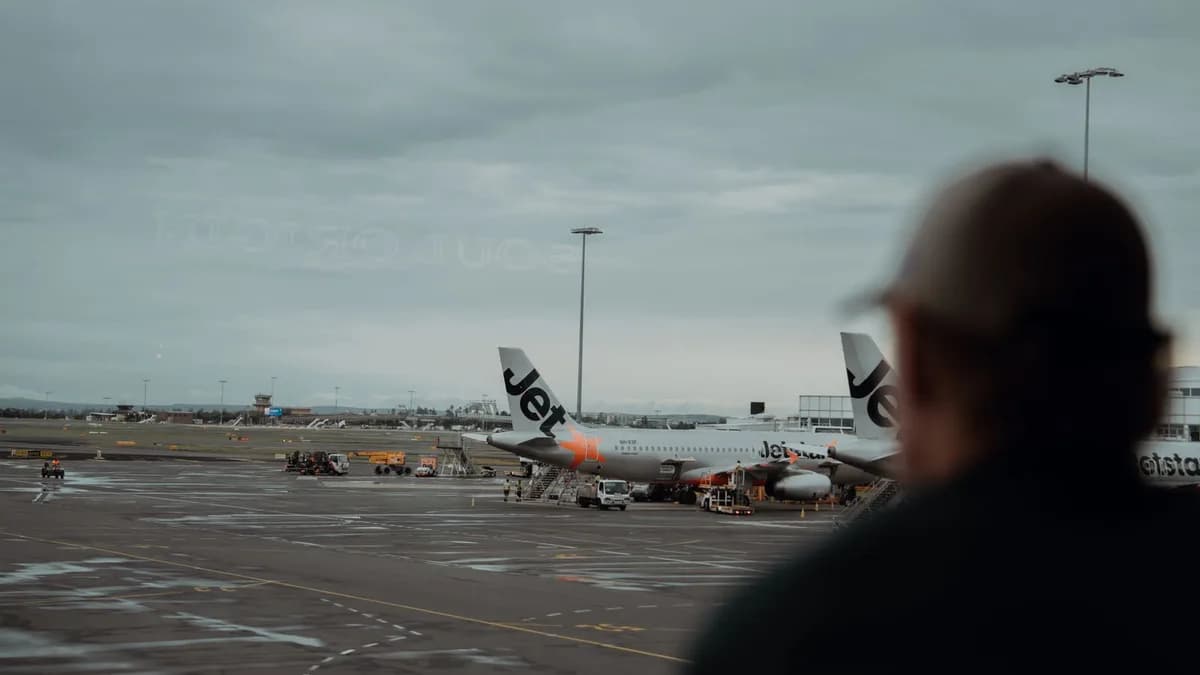
Jetstar will charge passengers up to $86 for a right that has been free since the dawn of commercial aviation: putting a standard carry-on bag in the overhead bin. The budget airline’s move, set for February 2027, isn't just a new fee. It's a deliberate attempt to monetize scarcity and fundamentally alter passenger behavior, triggering a battle for the last free real estate on a plane. according to Guardian World.
Global TrendsAugust 5, 2026· 10 min read· By XOOMAR Insights Team
Jetstar Will Tax Your Cabin Baggage Up to $108
Updated on August 5, 2026
XOOMAR Intelligence
Analyst Take
69/ 100
4 sources analyzedMedium confidenceTrend10Freshness95Source Trust90Factual Grounding95Signal Cluster20
Jetstar's new policy scraps the free 7kg carry-on allowance. All base fares will include only one underseat bag (max 40 × 30 × 20cm). To store a larger bag (max 56 × 36 × 23cm) overhead, you must buy "Priority Carry-on," which also grants priority boarding. The airline provided sample fees: $25 for Launceston to Sydney, $33 Sydney to Melbourne, and from $52 for Cairns to Tokyo. But real-time checks show higher prices; a Guardian Australia search found it would cost $86 for a Melbourne-Tokyo flight in February 2027, with a return flight fee of $108.
The stated goal is to reduce stress and delays. "We know that weighing carry-on bags at the gate can be frustrating for our customers and for our crew," said Jetstar CEO Stephanie Tully. The airline claims extensive research shows the scramble for locker space is a major pain point.
But the subtext is a revenue play dressed as customer service. As one travel agent quoted by the ABC put it, many see it as "just a money grab." Jetstar itself reported "continued strength in ancillary revenue" last year, though it didn't disclose the figure. This new fee creates a fresh, high-margin income stream from an asset – the overhead bin – that was previously a commons.
Jetstar Is Monetizing the Final Free Frontier of the Cabin
For decades, the rules were simple and chaotic. You could bring a small suitcase for free, but securing a spot for it was a frantic, first-come-first-served race during boarding. Jetstar's tactic eliminates that free-for-all by turning overhead locker space into a reserved privilege you pay for in advance.
This is more than a new line item on your booking. It's a strategic shift in the psychology of flying. The airline is directly attaching a price tag to the stress it identified. The message is explicit: if you want to avoid the anxiety of gate checks and bin jostling, you can now pay for the privilege. It transforms an unpredictable hassle into a purchasable commodity.
The move pressures passengers to make a critical choice earlier in the travel process: pack light into a personal item, pay for overhead access, or pay to check a bag. It aims to push more luggage out of the cabin and into the hold at the time of booking, which airlines prefer for operational efficiency. By removing the 7kg weight limit and only enforcing size, Jetstar signals it cares less about the weight of your bag and more about where you intend to put it. The space is the product.
For the broader industry, this is a signal flare. If successful, it pressures competitors like Virgin Australia and Rex to follow suit or risk leaving money on the table. It declares the era of complimentary overhead space on budget routes officially under review.
Why Overhead Bins Are the New Battleground for Revenue
The logic is coldly operational. Every minute a plane sits at the gate costs money. The chaotic boarding process, exacerbated by passengers wrestling for bin space, is a primary source of delay. Jetstar's own statement links the change to helping "more flights depart on time."
Consider the airline's math:
- Problem: Full overhead bins cause boarding delays. Gate-checking bags at the last minute is slow and frustrating for crew and passengers.
- Old Solution: Enforce weight/size limits at the gate, creating conflict and unpredictability.
- New Solution: Pre-sell the bin space. Those who pay get priority boarding to stow their bag first. The process becomes more predictable, and delays potentially decrease.
From a revenue perspective, this is low-hanging fruit. There is virtually no additional cost to the airline. The bins already exist. Selling access to them is pure margin. It's the next logical step in the industry's relentless "unbundling" of the airfare, akin to charging for seat selection, food, and checked bags. This move simply targets the last major element of cabin convenience that hadn't been fully monetized on budget carriers.
As we've seen in coverage of contentious corporate strategies, such as the developments detailed in our report on the Graphic Claims Jolt Alan Jones Trial in Sydney Court, companies often frame controversial decisions as necessary improvements. Jetstar is framing this as reducing stress. The financial benefit is the unspoken driver.
Who Wins, Who Loses, and Who Gets Stuck in the Middle
This policy creates clear tiers of winners and losers, reshaping the travel experience for each group.
The Infrequent or Unprepared Traveller Loses. This group is most likely to be hit with surprise fees at the airport. A family used to sharing a carry-on now faces multiple Priority Carry-on fees. As noted by Australian Traveller Media's Quentin Long, families with infants are disproportionately affected, as a baby on a lap doesn't come with its own underseat space, forcing an upgrade.
The Ultra-Light Packer Could Win (In Theory). If you can fit everything into a small backpack, your base fare might stay low. Jetstar's proposition is "travelling with less means paying less." But this relies on the airline actually lowering base fares, a claim the government is skeptical of. A spokesperson for Transport Minister Catherine King said, "Jetstar claim this change is to keep fares affordable, it will be up to them to demonstrate that to passengers."
Jetstar's Investors Are the Clear Winners. This is a textbook ancillary revenue play. It's a new fee applied to a high percentage of passengers with almost zero marginal cost. It will be celebrated in financial results as a direct boost to profitability.
Flight Crews Face a Mixed Bag. Gate agents and flight attendants might see less physical conflict over bin space, but they will become the enforcers of a new, unpopular rule. They'll bear the brunt of passenger frustration at the gate when someone's overstuffed "personal item" doesn't fit under the seat – a problem that will inevitably increase.
Competitors Get a Playbook. Rivals now have a clear decision: match Jetstar's fees and collectively shift the market norm, or market aggressively against them by promoting "free carry-on included" as a key differentiator. The lack of fierce competition in the Australian market, as highlighted by independent senator David Pocock, gives Jetstar significant leverage to set a new standard.
Your Next Flight: The Financial Calculus at Checkout
For travellers, post-2027 bookings will require a new kind of math. The question shifts from "can I carry this on?" to "where will I put it, and what's the cheapest path?"
The new decision tree looks like this:
- Can I fit everything into a 40 × 30 × 20cm underseat bag? If yes, you pay the base fare.
- If not, is my trip short enough that a checked bag is cheaper than overhead access? For a domestic return trip, a $25-$33 each-way overhead fee totals $50-$66. Checking a 20kg bag booked online typically costs $30-$45. Suddenly, checking a bag might be the more economical choice.
- If I need overhead access, should I buy Priority Carry-on for the early boarding perk? This becomes part of the value proposition.
This will trigger behavioral shifts. Expect a surge in sales for bags meticulously designed to maximize underseat bag dimensions. Also, anticipate "checkpoint inflation" – passengers cramming more into their personal item to avoid fees, potentially causing slower security screening as bags are overstuffed and need re-packing.
The creation of a "Priority Carry-on" class also subtly changes the boarding hierarchy. It's no longer just business class and frequent flyers boarding first; it's anyone who paid for bin space. This could make standard boarding later in the process even more of a lottery for remaining underseat space.
The Global Precedent and the Regulatory Wild Card
Jetstar claims its size-based model is "similar to other leading low-fares carriers around the world." This is a selective truth. While carriers like Spirit and Ryanair have similar fees, a powerful counter-trend is emerging in Jetstar's stated benchmark region: Europe.
The European Union has moved in the opposite direction. In January 2026, the European Parliament voted to give passengers the right to two free pieces of carry-on baggage. After airline pushback, a compromise was reached: airlines and booking sites must display airfares inclusive of carry-on luggage at the outset. This bans the practice of luring customers with a bare fare and adding essential fees later. This rule, driven by the European Council, makes true price comparison possible for consumers.
This is the regulatory risk for Jetstar. The Australian government's response has been cautious but pointed. Minister King's spokesperson emphasized the expectation for airlines to be "really clear" on what's included to avoid "surprises" at the airport. If consumer backlash is strong, calls for similar "all-inclusive fare" transparency laws will grow louder. Senator Pocock's criticism – "We've seen so little action from the government to hold airlines to account" – frames this as a competition and consumer rights issue.
Jetstar's gamble is that Australian regulators won't follow Europe's lead. Its February 2027 start date gives it a long runway to gauge public reaction and adjust before the rules take effect. The airline is also grandfathering in existing bookings, a standard tactic to soften initial blowback.
The Endgame: A Cabin Where Every Inch Is Pre-Sold
Jetstar's move is a bellwether. It points to a future where the cabin environment is increasingly tiered and transactional.
Watch for these trends next:
- Dynamic Pricing for Bins: The $52 to $108 range for the same Tokyo route suggests pricing isn't fixed. We may see locker space priced like airline seats – cheaper when booked early, more expensive as the flight fills up.
- The Demise of Free Overhead Space on Short Haul: By 2030, complimentary access to overhead bins on domestic and regional flights could become a premium feature, reserved for full-service airlines or their highest-tier frequent flyers.
- The Next Frontier – Legroom Tiers: If space above you can be monetized, can space around you be further segmented? We may see the same economy cabin formally split into sub-classes with different legroom guarantees, much as some US carriers already do with "Economy Plus."
- The Backlash Cycle: This model thrives in a market with limited competition. The ultimate check will be if a competitor sees a commercial advantage in championing the old way. If not, regulatory intervention, as seen in Europe, becomes the only potential circuit breaker.
For now, the message to passengers is clear. The overhead bin is no longer a shared resource. It's a premium asset. Your access to it will soon depend not on your boarding group or your agility, but on your willingness to pay before you ever reach the gate. The race is over. The auction has begun.
Impact Analysis
- This represents a major shift in budget travel, turning a free, universal right into a paid premium service.
- It will directly impact travel budgets and convenience for millions of passengers, requiring a new layer of planning.
- It signals a broader industry trend of airlines extracting more revenue from core travel components once included in fares.
Sample Jetstar 'Priority Carry-on' Fees
Launceston to Sydney
$25
Sydney to Melbourne
$33
Cairns to Tokyo (minimum)
$52
Melbourne-Tokyo (one way, Feb 2027)
$86
Melbourne-Tokyo (return, Feb 2027)
$108
Sources

Written by
XOOMAR Insights Team
Research and Editorial Desk
The XOOMAR Insights Team pairs automated research with human editorial judgment. We track hundreds of sources across technology, fintech, trading, SaaS, and cybersecurity, cross-check the facts, and explain what happened, why it matters, and what to watch next. We do not just rewrite headlines. Every article is fact-checked and scored for reliability before it goes live, and we link back to the original sources so you can verify anything yourself.
Explore More Topics
Related Articles
 Fintech
Ethereum Staking Ban Triggers If Value Hits $112 Billion
Ethereum researchers propose automatically burning all new ETH issuance if staked value reaches $112 billion, aiming to cap staking at half the supply to preven
Aug 5, 20268 min
 Trading
Dollar Cracks As Safe-Haven Premium Leaks From Middle East
The USD/CHF's break below a key support trendline signals the US dollar's safe-haven appeal is weakening, putting the critical 50-day Simple Moving Average in t
Aug 5, 20265 min
 Future Fiction
Broad Peak Avalanche Wipes Out Nepal's Top Mountaineers
An avalanche on Broad Peak killed six of Nepal's most accomplished mountaineering guides in a single event, a devastating loss to the industry's leadership and
Aug 5, 20265 min
 Global Trends
Grandmother's FGM Betrayal Forces Colombia Landmark Ban
A mother's fight for justice after her own grandmother subjected her baby to female genital mutilation led directly to Colombia passing a major new law banning
Aug 5, 20267 min
 Global Trends
Fifteen Elephants Die From Pesticide Cyanide Mystery
Fifteen elephants died with cyanide in their systems, but experts argue a simple pesticide poisoning story doesn't add up, revealing major gaps in understanding
Aug 5, 20267 min
 Technology
Pinterest's AI Rewire Rakes in Record Revenue
Pinterest's strategy of using cost-effective, open-source AI models to monetize non-branded searches has powered record user and revenue growth for the platform
Aug 5, 20266 min
 Technology
Samsung's $200 Zoom Gamble Leaves Camera Test Undecided
The Galaxy Z Fold 8 Ultra's telephoto lens offers superior zoom, but tests find its advantage inconsistent and often not decisive enough to justify a $200 price
Aug 5, 20269 min
 Technology
OpenAI Pays $3.2 Million in Worker Visa Bias Settlement
OpenAI paid $3.2 million to settle federal claims it systematically favored foreign visa workers over US applicants by making jobs nearly impossible for America
Aug 5, 20267 min
 Global Trends
Russian Ballistic Missile Pierces Kyiv Air Defenses
A Russian ballistic missile strike on Kyiv killed one person and wounded at least a dozen, exposing a critical escalation as these harder-to-intercept weapons t
Aug 5, 20265 min
 Fintech
LoanDepot Cuts Losses 88% With Higher-Margin Home Equity Loans
LoanDepot slashed its quarterly net losses by 88%, driven by a strategic surge into high-margin digital home equity lending that boosted revenues and profits.
Aug 5, 20265 min
Don't miss the signal
Get our weekly roundup of the stories that matter across tech, fintech, and trading. No noise, just signal.
Free forever. No spam. Unsubscribe anytime.