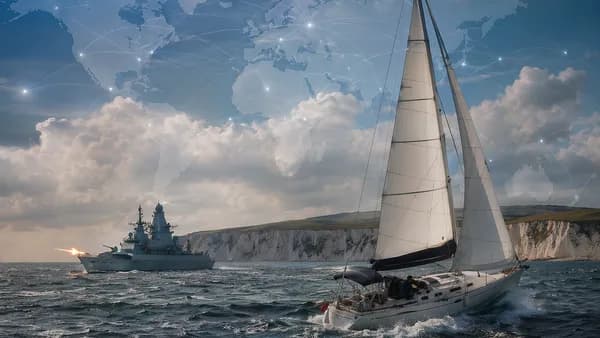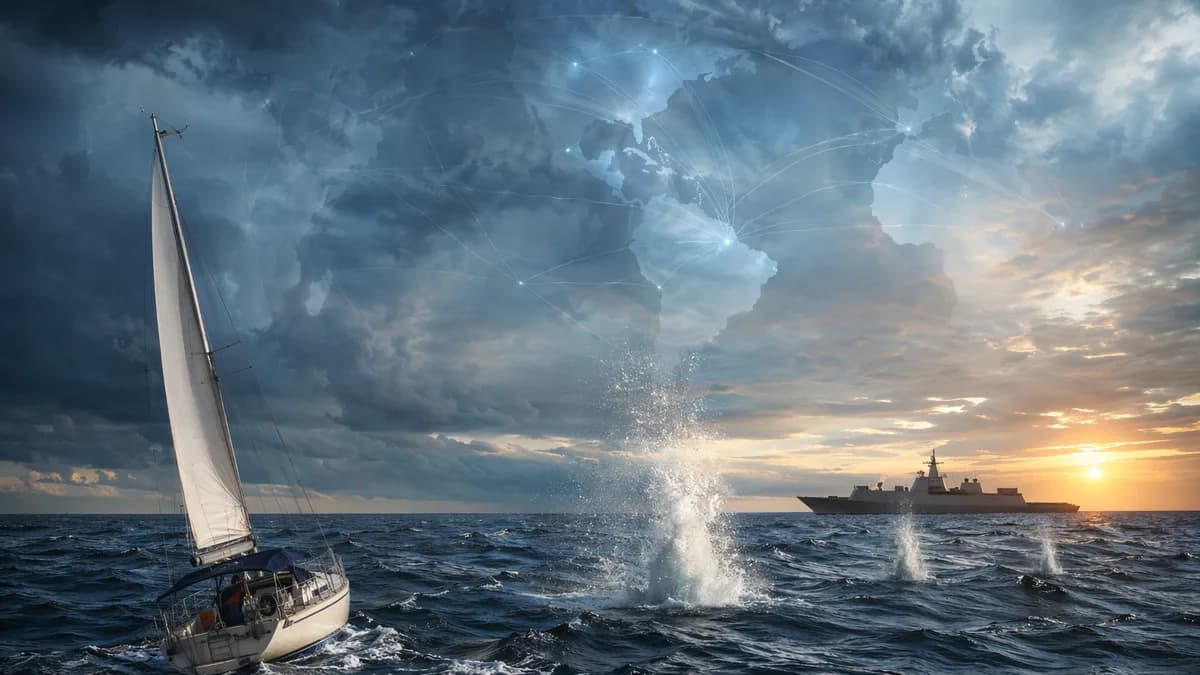
On Tuesday, Russian warship warning shots near a British yacht turned a routine Channel crossing into a test of restraint, truth-telling, and crisis management in one of Europe’s most politically sensitive sea lanes.
XOOMAR Intelligence
Analyst Take
Jane Kelvey, 69, and Alan Kelvey, 70, were sailing their 40ft yacht Bright Future from the south coast of England toward France when they came close to the Admiral Grigorovich, a 409ft Russian frigate, about 20 nautical miles south of the Isle of Wight, outside UK territorial waters, according to Guardian World.
The sharpest point is not that no one was hurt. It is that the couple and Russia give sharply different accounts of why shots were fired. The Kelveys say they were not on a collision course and were not contacted by radio or flares. Russia says the yacht was on a “dangerous approach” and that its sailors acted “in strict accordance” with international shipping regulations.
Jane Kelvey’s message was strikingly calm.
“We don’t want world war three to start because of this.”
That instinct is right. Panic helps no one. But neither does brushing off gunfire near civilians as maritime static.
Tuesday’s Channel crossing put a 409ft frigate beside a 40ft yacht
The confirmed facts are narrow but serious. Bright Future was heading from Lymington to Cherbourg, Jane Kelvey told the Guardian, at about five knots. The yacht encountered the Admiral Grigorovich, identified by the couple after seeing Cyrillic lettering on the side.
Jane said the Russian ship first sounded five blasts from its horn, then another five blasts, then fired four or five warning shots. She described the gunfire as sounding like “a whipcrack.”
The couple say they changed course after the horn signals, then put the engine on and turned about 90 degrees to port after the shots. Jane said the yacht was using AIS, while also saying the Russian vessel had “plenty of opportunity to warn us off, if that’s what they wanted.”
Russia’s version is different. A translated Russian defence ministry statement said the yacht had been on a “dangerous approach” and that warning shots came only after attempts to attract attention through signal flares and sound signals. Other reporting cited Russia saying radio contact had also been attempted.
The Ministry of Defence said the Russian vessel fired warning shots to prevent a possible collision after attempts to contact the British-flagged yacht. It also said the shots were not aimed at the vessel.
| Issue | Kelveys’ account | Russian account | UK MoD account |
|---|---|---|---|
| Collision risk | “We were not about to collide with them” | Yacht was on a “dangerous approach” | Shots were to prevent a possible collision |
| Warnings before shots | Horn blasts, no radio, no flares | Radio attempts, signal flares, sound signals | Attempts to contact yacht |
| Gunfire | Four or five warning shots, “completely unnecessary” | Fired after yacht failed to respond | Not aimed at yacht |
| Location | Channel crossing toward France | International waters context | About 20 nautical miles south of Isle of Wight |
The mismatch matters because Russian warship warning shots are not just a navigational detail when they happen near a civilian yacht under a UK flag.
The dispute after the shots became the real incident
For the Kelveys, the event did not become news until the gunfire. Jane told the Guardian: “Had it just been the five blasts on their horn, we wouldn’t have reported it, there would have been nothing to report.”
Her objection is not only to the shots. It is to Russia’s framing.
“They [the Russians] obviously realised that what they did was going to cause some concerns so I think they just got their statement out early and they wanted to frame it in a way that shifted the blame to us.”
That is the hinge of the story. A close pass at sea can be explained, logged, and moved past. Competing public accounts turn it into a credibility fight.
The Kelveys contacted the UK Coastguard, and a boat from HMS Tyne was sent to gather details and check they were safe. The Admiral Grigorovich was being monitored by Royal Navy vessels, with related reporting saying HMS Mersey had been shadowing it.
Prime Minister Keir Starmer called the incident “reckless” and “deeply concerning,” while the MoD described it as isolated. That combination is deliberate in tone: condemn the act, avoid language that implies a wider military clash.
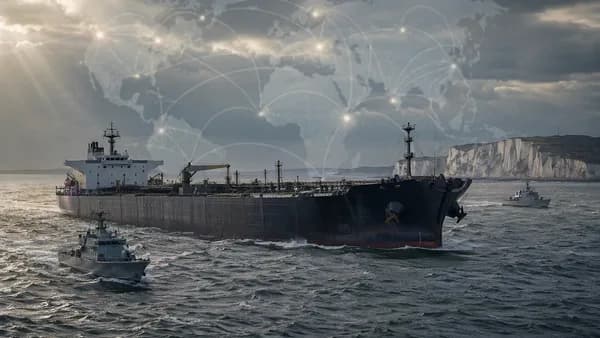
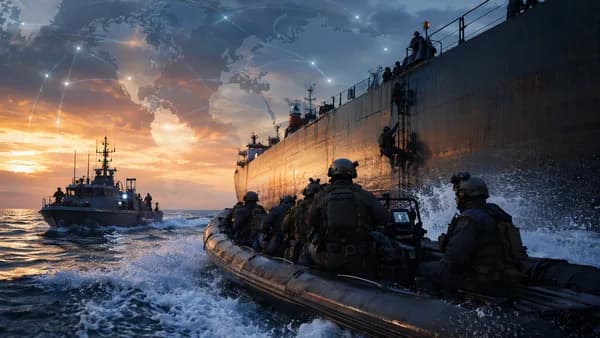
That caution sits beside a separate Channel flashpoint. Days earlier, Royal Marine Commandos intercepted a Russian shadow fleet tanker carrying sanctioned oil in the Channel, in what the BBC described as the first operation of its kind carried out by the British military. XOOMAR covered that wider pressure point in Russian Shadow Fleet Tanker Dares Britain in Channel.
The MoD said the yacht incident was not linked to the tanker seizure. That claim should be treated as the UK government’s assessment, not as proof that Russian naval behavior near the Channel is politically empty.
Moscow’s naval signaling now brushes against civilian normality
Russian warships regularly pass through international waters in the Channel and are monitored by Royal Navy vessels, according to the supplied reporting. That routine fact is what makes this episode more troubling, not less.
Routine military transit depends on predictability. Warning shots near civilians inject uncertainty.
XOOMAR analysis: the danger here is not necessarily deliberate escalation. The greater risk is the messy middle: a warship that says it is less manoeuvrable, a yacht crew that believes it has complied, poor or disputed communication, and gunfire introduced into a civilian setting. None of that needs malign intent to become dangerous.
The Admiral Grigorovich had reportedly been operating in the area for some time. Related reporting said a NATO source told BBC Verify that Moscow had ordered the frigate to escort shadow fleet vessels through the Channel. In April, the frigate was reported to have escorted six shadow fleet vessels through the waterway while being monitored by the Royal Navy.
That context does not prove Tuesday’s shots were retaliation or theater. It does show why the same action can be read in different ways:
- For the Kelveys: a frightening but survivable interruption to a sailing trip.
- For UK officials: another incident to assess against Russian activity near UK waters.
- For Moscow: a naval movement it presents as lawful and defensive.
- For the public: a vivid warship-versus-yacht story that can outrun the operational facts.
The Kelveys’ restraint is admirable. It also exposes the imbalance. A private yacht crew can choose calm. A frigate with weapons has the heavier duty to avoid ambiguity.
Wednesday’s public reaction split calm sailors from official caution
By Wednesday, Jane Kelvey was still trying to stop the story becoming bigger than the event itself. She said she did not want the incident to put off other British sailors, adding: “We all cross the Channel so often, it doesn’t need to be made into a big incident.”
That line deserves attention. Civilian confidence at sea depends on an assumption that professional vessels, especially naval ones, will communicate clearly before reaching for coercive signals.
The practical lesson for sailors is limited but real:
- Radio discipline: The dispute over whether calls were made shows why crews need continuous VHF monitoring in busy or militarized waters.
- AIS visibility: Jane said Bright Future was using AIS, making the yacht visible to others.
- Course changes: The Kelveys say they altered course after horn blasts, then made a much harder turn after gunfire.
- Reporting: They contacted the UK Coastguard, which triggered follow-up from HMS Tyne.
There is no sourced evidence yet of effects on marine insurers, charter firms, ports, or marinas. Claims about commercial fallout would be premature. The supported takeaway is narrower: if perceived risk rises, authorities will have to explain hazards clearly enough for leisure sailors without turning every naval transit into a scare event.
That balance is hard. XOOMAR has seen similar pressure in other security stories, where leaders warn against escalation while still trying to show resolve, including in Obama Says Iran War Burned Billions and Left US Worse Off. The common thread is not policy equivalence. It is the political cost of loose language when military force is already in view.
The next Channel close call will test whether restraint is enough
The next decision point is not a formal deadline. It is the next close encounter.
More scrutiny of Russian naval transits near UK waters now looks unavoidable. More public reporting of civilian encounters is likely if sailors believe official accounts understate what they experienced. Governments, meanwhile, have an incentive to keep language measured unless there is clear evidence of targeting or rule-breaking.
Evidence that would strengthen the calm-reading of this episode would include consistent maritime logs, clear communications records, and no repeat incidents involving civilian craft. Evidence that would weaken it would be another disputed warning shot, especially one closer to UK territorial waters or involving clearer failure of naval communication.
The Kelveys want to keep sailing. That is the healthiest response available to them. But the Russian warship warning shots near Bright Future show that calm by civilians is not enough on its own. The Channel also needs disciplined communication, transparent reporting, and restraint from the military hardware passing through it.
The Stakes
- The incident shows how quickly civilian encounters with military vessels can become diplomatic flashpoints.
- Conflicting accounts from the yacht crew and Russia make transparency and evidence crucial.
- The Channel remains a politically sensitive sea lane where restraint can prevent escalation.
Vessels Involved in the Channel Incident
| Vessel | Type | Length | Reported Role |
|---|---|---|---|
| Bright Future | British yacht | 40ft | Sailing from Lymington to Cherbourg |
| Admiral Grigorovich | Russian frigate | 409ft | Fired warning shots, according to the couple |
Vessel Length Comparison
Primary Sources & Disclosures
- [1]Guardian World
- [2]'It was surreal': British couple describe having warning shots fired near them by Russian warship
- [3]British couple say Russian warship firing warning shots near yacht was ‘scary’ - AOL
- [4]A Russian warship fired warning shots at an elderly British couple near the Isle of Wight. Now the couple says the UK is trying to hush it up. — Meduza

Written by
XOOMAR
Data desk
XOOMAR is a capital markets software and data company. Every brief on this site starts from a dataset the company collects itself from primary sources (CFTC, SEC EDGAR, FINRA, the Federal Reserve, exchange APIs) and names the numbers it is built on, with a link to the data page so you can check them. Briefs are reviewed before they go out and corrected in place when the data is revised.