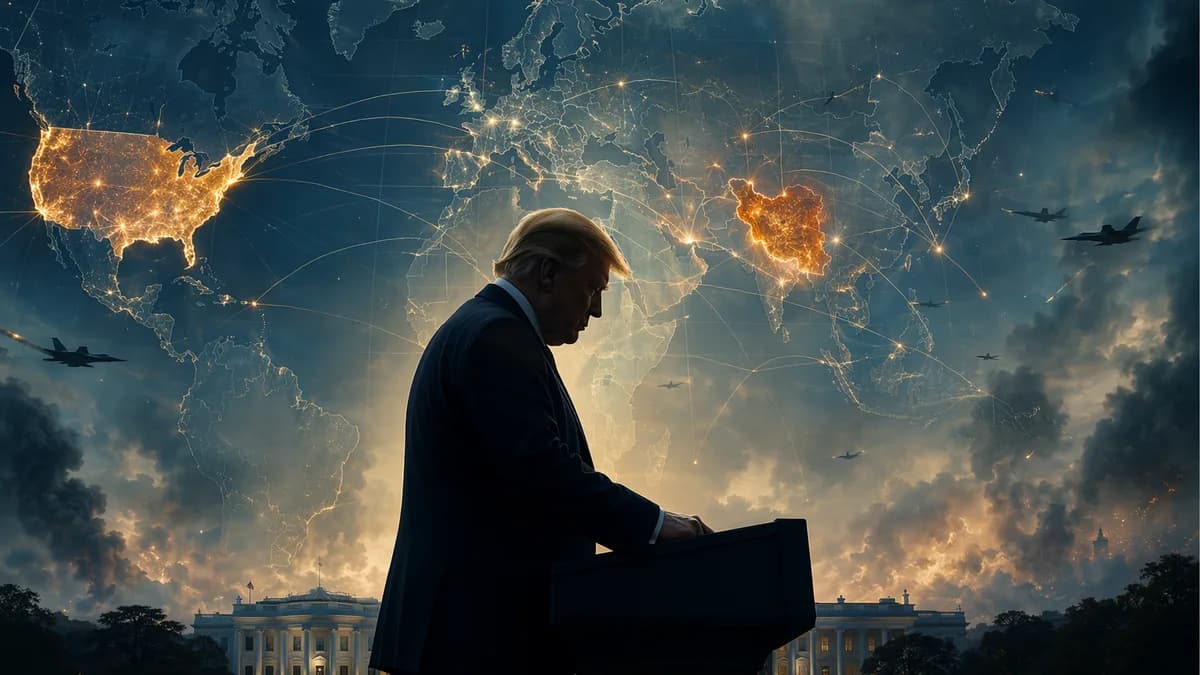
If the United States is “worse off” after 15 weeks of war with Iran, what exactly did Washington buy with the blood, money at the pump, and military strain?
XOOMAR Intelligence
Analyst Take
That is the question buried inside the Obama Iran war warning. Former President Barack Obama told NBC News that the US appears to be back near the starting line after the conflict, “except maybe a little bit worse off,” Guardian World reported. My view: the Iran ceasefire may stop the bleeding, but it does not rescue Washington from the central failure here. A war that ends by recreating the diplomatic problem it was supposed to solve is not a clean victory. It is damage control with a flag on it.
Did the Obama Iran war warning expose a victory story that does not add up?
Obama’s criticism lands because it is not built on theatrical outrage. It is a cost-benefit argument.
“We’ve now fought a war, spent billions and billions of dollars, you know, put enormous strain on our military. A lot of people have died. And it feels like we’re back where we were before we started the war, except maybe a little bit worse off,” Obama said.
That sentence should bother both parties. It says the war did not clearly improve America’s position. It says the ceasefire with Iran is welcome, but insufficient. Obama also said, “I am very happy to see a ceasefire. And I’m hopeful that it holds.”
Good. Everyone should be happy the shooting may stop.
But the harder question is whether the ceasefire validates the war or indicts it. The answer depends on whether the US now holds a stronger negotiating position than it had before February. The available record supports a ceasefire framework and a 60-day deadline for negotiators to reach something more permanent. It does not, on its own, prove Washington has secured a stronger end state.
That is not surrender by Tehran. That is unfinished business.
What did 15 weeks of war actually buy Washington?
The core contradiction is brutal: billions and billions of dollars, dead people, strained forces, and a return to negotiations over the same nuclear problem that existed before the war began.
Obama linked the current mess directly to the collapse of the 2015 Joint Comprehensive Plan of Action, or JCPOA, which his administration negotiated. Under that deal, he said, “Iran had agreed not to develop nuclear weapons.” He then argued that Trump “pulled out of it, which caused then Iran to develop more nuclear capacity.”
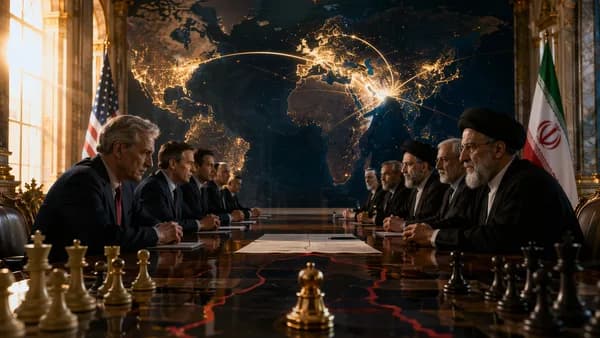
Supporters of the war will reject Obama’s framing. They will say the new memorandum proves pressure worked. They will point to Trump signing the memorandum during a dinner at the Palace of Versailles and Vance declaring at the White House that the peace plan was already “bearing fruit for America.”
Here is the problem. A ceasefire after large costs can be prudent and still reveal failure. If Washington had to fight for 15 weeks to land back in talks, then the war did not eliminate the need for diplomacy. It made diplomacy more urgent and more expensive.
That is why the Obama Iran war critique matters. It asks whether force created a better deal, or merely created a more dangerous path back to the table.
Can military pressure force Iran into a durable settlement?
Military pressure can punish. It can destroy assets. It can change timelines. The administration’s strongest case is that force may have changed Iran’s calculations enough to make a ceasefire possible.
But durable political settlement is different. The available source material does not establish that Tehran has accepted Washington’s terms or that the nuclear issue has been permanently resolved. A pause in fighting is not the same as a locked-in settlement.
That distinction matters. Even if military pressure imposed real costs, negotiators still have to turn the ceasefire into terms that can be verified, enforced, and sustained. That is a much harder test than proving America can strike.
XOOMAR analysis: the optics matter. A ceasefire can show pressure, but it can also show that punishment alone does not automatically translate into a political outcome Washington can lock in. Other capitals will study that lesson closely.
The question now is not whether America can hit hard. It can. The question is whether it can convert force into a settlement that holds after the cameras leave Versailles.
How much of the Iran deal’s price is hidden inside US military strain?
Obama’s phrase “enormous strain on our military” deserves more scrutiny than it will get in the daily news cycle.
The source material does not itemize readiness, deployments, munitions, or operational wear. So we should not pretend to know those details. But the former president’s claim is still concrete enough to matter. He is saying the cost of the war is not just fiscal. It is institutional.
A military stretched by a 15-week war carries that strain into the next crisis. That affects what future presidents can credibly threaten. It also affects how adversaries read American resolve when Washington says it still has options.
The diplomatic machinery looks strained too. The current framework still leaves Washington negotiating under a narrow timetable, with the political and strategic consequences of the war already locked in.
The hidden price is this: after war, Washington still has to negotiate, but now under a deadline, after casualties, with higher stakes if the ceasefire cracks.
Does the pro-war case deserve more credit than Obama gives it?
Yes, up to a point.
The best argument for the war is straightforward: Iran was dangerous, prior diplomacy had failed or been abandoned, and visible force may have pushed Tehran into accepting a ceasefire. A ceasefire is better than an expanding conflict. Deterrence sometimes needs to be seen, not merely described in a briefing room.
The administration will also argue that military pressure improved American leverage. If the campaign materially reduced Iran’s ability to threaten the region or accelerate its nuclear ambitions, that would be a meaningful tactical outcome. The memorandum may also create space for negotiators to hammer out a more permanent deal within the reported 60-day deadline.
But that case falls short because it does not answer Obama’s larger charge.
| Claim | Problem exposed by the current record |
|---|---|
| The war forced peace | The agreement is a memorandum, not a permanent settlement. |
| Iran was compelled | The record still shows a temporary framework, not final compliance. |
| America is stronger now | Obama says the US spent heavily, strained the military, and may be worse off. |
| Markets will benefit | Vance cited falling gas prices, while Neil Chapman of Exxon warned physical oil prices could hit $150 or $160 a barrel if stocks reach critical levels. |
The strongest pro-war argument is tactical. Obama’s objection is strategic. Those are not the same fight.
Why is the retreat political as much as military?
Obama’s interview was not only about Iran. He spoke before the opening of the Obama Presidential Center in Chicago and tied the moment to a broader civic diagnosis.
He said the US is going through “a period right now of disruption, polarization,” and acknowledged that people may feel “our democracy, our civic habits and virtues, our shared understanding of how we treat each other has started to crumble.”
That matters because wars do not land in a vacuum. They land inside political systems. They test whether elected officials can define goals, admit costs, and explain tradeoffs without pretending every setback is a win.
The retreat since 2025, as framed by the current peace deal, is not simply about Iran surviving US pressure. It is about Washington having to rediscover limits after acting as if escalation itself was strategy.
Obama’s warning is not that America is weak. It is sharper than that. He is saying power was spent without producing a clearly better position.
What should Washington do before the 60-day clock runs out?
Treat the Iran ceasefire as a verdict, not a pause before the next escalation.
That means negotiators should use the 60-day window to define achievable goals, not maximalist slogans. The administration should explain what compliance looks like, what verification looks like, and what the US will do if Iran contests the terms. It should also be honest about the cost already paid.
The forward watch item is simple: whether the memorandum becomes a durable nuclear settlement, or whether it becomes proof that Washington fought its way back to the same negotiating table.
Obama has given the country the right test. If America is worse off after the shooting stops, the lesson is not to fire harder next time. It is to stop mistaking war for strategy.
Impact Analysis
- Obama’s warning challenges claims that the Iran war produced a clear strategic win.
- The ceasefire may reduce immediate violence but leaves the core diplomatic dispute unresolved.
- The 60-day negotiating window will test whether the U.S. gained leverage or only absorbed costs.
U.S. Position Before and After the Iran War
| Before the war | After 15 weeks of war |
|---|---|
| Diplomatic problem with Iran remained unresolved | Ceasefire in place, but permanent deal still unresolved |
| No wartime military strain from this conflict | Obama cited enormous strain on the U.S. military |
| Negotiating challenge existed before February | Negotiators face a 60-day deadline for a more permanent framework |
Primary Sources & Disclosures

Written by
XOOMAR
Data desk
XOOMAR is a capital markets software and data company. Every brief on this site starts from a dataset the company collects itself from primary sources (CFTC, SEC EDGAR, FINRA, the Federal Reserve, exchange APIs) and names the numbers it is built on, with a link to the data page so you can check them. Briefs are reviewed before they go out and corrected in place when the data is revised.