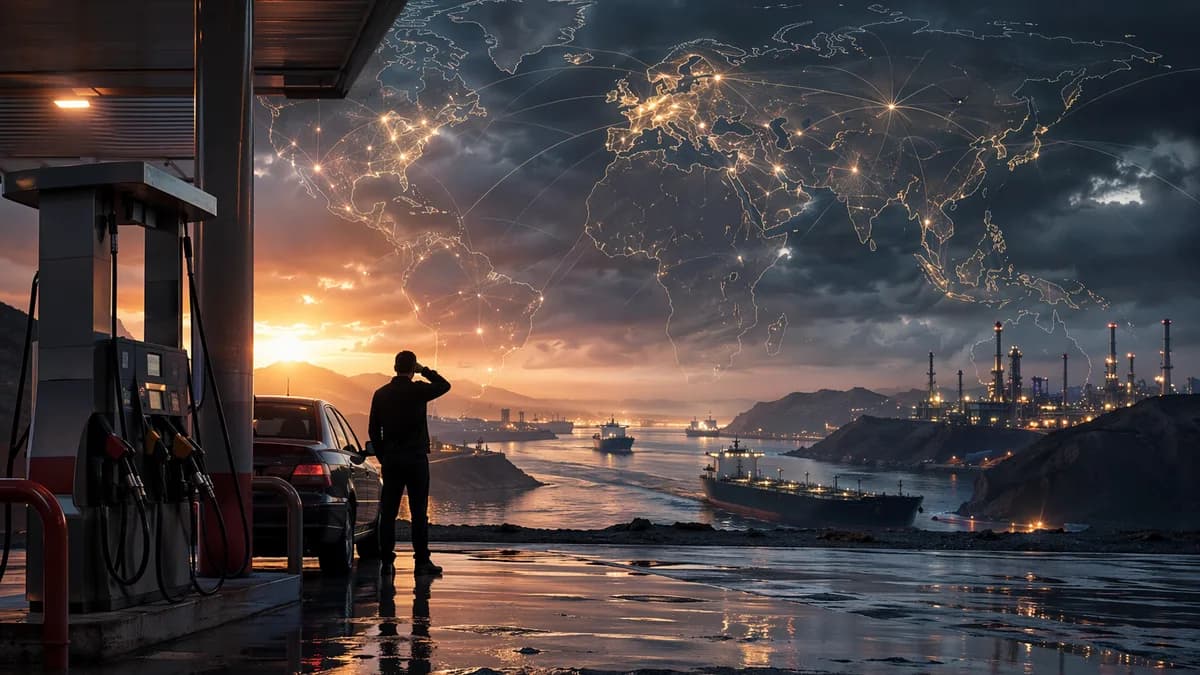
Gas prices Iran war fears have exposed America’s weakest energy habit: the country still lets a number on a roadside sign dictate its national mood.
XOOMAR Intelligence
Analyst Take
That is the real lesson from the recent spike at the pump. The months-long disruption of the Strait of Hormuz sent gasoline prices higher, rattled U.S. politics, and reminded drivers that a conflict-driven gasoline shock thousands of miles away can still show up in the family budget by dinner, according to Time. Prices have eased after the agreement to end the war in Iran, reopen the Strait, and begin a 60-day negotiation period. But the anxiety has not disappeared.
My view is blunt: America is not as energy secure as it tells itself if every crisis near an oil route can make households feel poorer, angrier, and less in control. The United States may produce more oil than ever. It may drive more efficient cars. Yet the pump still works like a national alarm bell.
Gas prices Iran war anxiety proves the pump still runs America’s mood
Gasoline has a strange power in American life because it is public, repeated, and unavoidable. Most prices hide inside invoices, apps, or monthly statements. Gasoline sits on elevated signs beside highways, screaming in giant digits at commuters who have no practical way to ignore it.
That visibility turns gas prices into something bigger than a commodity quote. A higher number at the pump feels like a daily deduction from freedom. It tells people that the commute costs more, the school run costs more, the weekend trip costs more, and the margin for error just got thinner.
The recent numbers explain the reaction. Time reports that the U.S. average has fallen from the recent $4.50 a gallon to about $4, still almost a dollar higher than this time last year. The average also hides a sharp state split: Indiana and Texas sit around $3.40, while California remains around $5.60.
That unevenness matters. It means gas-price anxiety is national, but the pain is local. A driver in Texas and a driver in California are living through the same geopolitical shock with very different receipts.
Pump numbers beat GDP charts because drivers feel them in real time
Economic data can explain a country. Gasoline prices can move one.
GDP, inflation indexes, bond yields, and crude benchmarks matter, but they arrive as abstractions for most voters. Pump prices arrive as a transaction. You stand there, hand on the nozzle, watching the cost climb. That is why gasoline becomes political faster than most economic indicators.
Time calls gasoline “both the most visible and also the most political price in America.” That line lands because it is obviously true. A voter does not need to understand refinery margins or tanker logistics to know that filling the tank now takes more cash than it did last year.
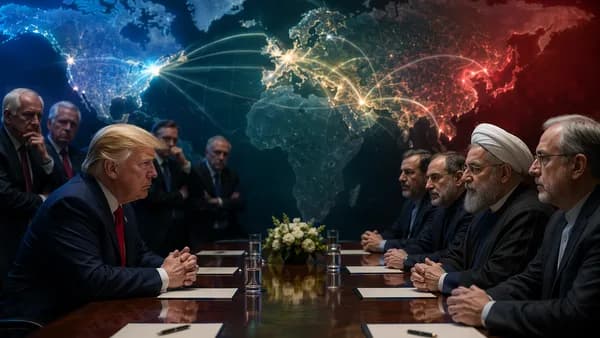
This is also why leaders get trapped by oil shocks. They do not fully control global crude prices, shipping chokepoints, refinery constraints, or war risk. Yet they still absorb the political heat because the public experiences the result as a domestic failure. For more on the broader political argument around the conflict, see XOOMAR’s coverage of criticism of the Iran war’s costs.
The deeper problem is psychological. High gas prices produce a sense of lost control. People may cut trips, combine errands, delay plans, or hunt for cheaper stations. Those are rational responses, but they also reinforce the same message: the household is adjusting to forces it did not choose.
America’s gasoline panic script was written long before this Iran crisis
The current gas-price panic is not new. Time traces the politics of gasoline back more than a century, when the automobile became central to American life and the drive-in gasoline station spread across the country.
The emotional split was there from the start. Advertising man Bruce Barton told gas station owners they were selling “the fountain of youth” that had “worked miracles” in people’s lives. He also admitted gasoline could become “a hated expense.” That is still the bargain. Cheap fuel feels like mobility. Expensive fuel feels like punishment.
The political ritual also has deep roots. Time cites a 1923 congressional hearing where Senator Robert “Fighting Bob” LaFollette warned that oil companies could “manipulate oil prices” and push gasoline to $1 a gallon, about $20 in today’s dollars. Instead, new oil discoveries created oversupply, and prices collapsed to about a tenth of that warning.
The pattern stuck anyway. Prices rise. Anger rises. Washington investigates. Oil companies are accused of collusion and manipulation. Then supply and demand reassert themselves.
By 2008, the ritual was so familiar that The New York Times described “the sweet, indelible signs of summer. Baseball. Backyard barbecues. And dramatic Congressional hearings over the rising price of gasoline.” That July, with gasoline at $4.10 a gallon, senators thundered. Within four months, Time notes, the price had fallen by half.
The lesson is not that price spikes are imaginary. They are real, and they hurt. The lesson is that America keeps responding with outrage after the shock, rather than reducing the system’s exposure before the next one.
Hormuz turned oil dependence into a Washington trap
The Strait of Hormuz crisis shows why oil dependence narrows America’s room to maneuver. In March, Iran closed the Strait, through which about 20% of the world’s oil had passed, along with natural gas, fertilizer, helium, and other commodities. Before the Iran War, 70 tankers a day crossed the Strait, which is 21 miles wide at its narrowest. By May, only five ships a day managed to get through.
Time describes the result as the largest disruption of world oil supplies since World War II. The U.S. faced no physical shortage because of its resources, but that did not protect drivers from global pricing. Oil moves through a global market. When buyers around the world compete for barrels, U.S. gasoline prices feel it.
Iran understood that pressure point. Mohammed-Baqer Qalibaf, Iran’s Speaker of the Parliament, aimed the message directly at American motorists:
“Enjoy the current pump figure,” Qalibaf said in April. “Soon you’ll be nostalgic for $4 to $5 gas.”
That quote captures the strategic reality. Gasoline is not just an economic variable. It is a pressure channel. It lets a foreign crisis reach American politics without a single U.S. gas station running dry.
The global damage was harsher elsewhere. Time reports that the closure hit Asia hardest because 80% of Persian Gulf oil flowed in that direction. Governments pushed work-from-home policies, rationed fuel, and prioritized limited supplies. Some businesses shut because energy was unavailable or too expensive. Some farmers could not plant because they lacked diesel or enough fertilizer, and one-third of the world’s traded fertilizer passes through the Strait.
Europe felt it through jet fuel. Airlines raised fares and canceled flights. That is the part Americans should not miss: the U.S. had a cushion, but not immunity. Related XOOMAR coverage has tracked the oil-market response after Hormuz reopened.
Cheap gasoline protects budgets today and stores risk for tomorrow
There is a serious counterargument, and it deserves respect. High gasoline prices punish people who cannot easily change their lives. Rural drivers, small businesses, truckers, commuters, and lower-income households cannot simply stop driving because a shipping lane turned dangerous.
Telling those people to buy an electric car or take transit can sound smug. In many places, those choices are expensive, limited, or unrealistic. The current U.S. fleet proves the point. Time reports that 97% of the entire U.S. car fleet runs on oil.
The EV numbers also show the gap between global change and U.S. behavior. Last year, according to S&P Global data cited by Time, one in four cars sold worldwide was an electric vehicle, most of them Chinese-made. In the United States, the EV share of new car sales has dropped from about 12% before the Trump administration canceled EV tax credits to around 7% today.
So yes, affordability matters. But pretending gasoline can be made permanently cheap through political pressure is a dead end. The bill does not vanish. It shifts into military exposure, tanker risk, emergency stockpile releases, inflation pressure, and recurring household shocks whenever a chokepoint tightens.
That is the trap. Cheap gasoline feels democratic because it supports mobility. But a society built around cheap gasoline becomes fragile when cheap gasoline disappears.
Resilience beats another ritual hunt for villains
America should stop treating each gas-price spike as a temporary political fire and start treating it as a diagnosis.
The prescription is practical, not ideological: more efficient vehicles, more credible alternatives to driving where they make sense, faster deployment of non-oil energy options, and targeted help for households hit hardest by energy shocks. Motorists can respond by driving less, carpooling, searching for cheaper fuel, buying more efficient cars, or considering EVs. Policymakers should make those choices less painful before the next crisis, not after.
The next watch item is simple: whether the Strait of Hormuz stays open and whether the 60-day negotiation period produces a durable settlement. Time notes that inventories must be refilled, more than a hundred oil-laden tankers have been sitting in the Gulf, and mines in the waters around the Strait complicate the exit.
A country that lets every crisis in an oil-producing region rattle its kitchen tables is not truly secure, no matter how much it drills.
Impact Analysis
- Gas prices remain a visible signal of economic stress for U.S. households.
- The Strait of Hormuz disruption shows how overseas conflicts can quickly affect domestic budgets.
- Even with high U.S. oil production, consumers remain exposed to global energy shocks.
Gas Price Benchmarks Cited
| Benchmark | Price |
|---|---|
| Recent U.S. average peak | $4.50 per gallon |
| Current U.S. average | About $4 per gallon |
| Indiana | Around $3.40 per gallon |
| Texas | Around $3.40 per gallon |
Gas Prices Mentioned in the Article
Primary Sources & Disclosures

Written by
XOOMAR
Data desk
XOOMAR is a capital markets software and data company. Every brief on this site starts from a dataset the company collects itself from primary sources (CFTC, SEC EDGAR, FINRA, the Federal Reserve, exchange APIs) and names the numbers it is built on, with a link to the data page so you can check them. Briefs are reviewed before they go out and corrected in place when the data is revised.