
Iran announced a shipping agreement with Oman on Wednesday, but it pointedly refused to call it a step toward opening the Strait of Hormuz. According to Tehran, this is a map, not a roadmap. Foreign Ministry spokesman Esmaeil Baqaei stated an agreement on the “geographical coordinates” for a transit passage was in its final stages, according to BBC World, but he immediately undercut it by warning the deal “cannot guarantee safe navigation” due to ongoing American hostilities.

Global TrendsAugust 5, 2026· 6 min read· By XOOMAR Insights Team
Iran Seizes Control Over Strait of Hormuz Via Secret Oman Deal
Updated on August 5, 2026
XOOMAR Intelligence
Analyst Take
61/ 100
4 sources analyzedLow confidenceTrend10Freshness98Source Trust92Factual Grounding94Signal Cluster40
This is not the diplomatic breakthrough oil markets want. It is a calibrated geopolitical maneuver. Iran is formalizing control over the world's most critical oil chokepoint while signaling that Washington, not Tehran, remains the primary obstacle to peace. The announcement creates a new, Iran-centric reality in the strait, setting the stage for the next crisis.
The Agreement That Isn't About Reopening
The core tension is stark. Global energy markets and the White House are focused on one outcome: reopening the Strait of Hormuz. Iran's Foreign Ministry, however, framed Wednesday's announcement differently. It is about establishing a route, contingent on other factors.
“The factors making the Strait of Hormuz insecure still exist on the part of the United States, particularly the naval blockade and other aggressive and threatening actions against Iran and its interests,” Baqaei said.
Iranian Deputy Foreign Minister Kazem Gharibabadi added that this new route would be temporary, lasting two to four months. The coordinates place large sections within Iran's territorial waters, with some passage through Omani waters, giving both states a formal role in managing traffic that was once considered international.
XOOMAR Analysis: This is Iran translating military control into administrative fact. By agreeing on coordinates with Oman, Tehran is building a bilateral framework that excludes the United States and the broader Gulf Cooperation Council. It legitimizes Iran's de facto blockade by presenting it as a temporary, security-driven measure that can only be lifted if the U.S. changes its behavior.
Oman's Neutrality Becomes a Strategic Asset
Oman’s role is critical. Unlike its Gulf neighbors, Muscat has maintained open channels with Tehran for decades. By partnering with Iran on this technical agreement, Oman performs its classic balancing act.
- For Oman: It secures its own coastline and shipping interests by being inside the tent, potentially gaining influence over the rules.
- For Iran: It gains a respected regional partner, lending an air of legitimacy to what would otherwise be a unilateral Iranian imposition.
- For the U.S.: It complicates the diplomatic picture, as a key regional ally is now co-authoring a plan Washington may fundamentally oppose.
The agreement allows Iran to claim it is working constructively with a neighbor, countering the U.S. narrative of Iranian intransigence. As we reported in Trump Iran Talks Turn Paused U.S. Strike Into Leverage, the Trump administration has sought to frame negotiations as a bilateral issue. Iran is now demonstrating it has other options.
The Stark Math of a Closed Strait
Why does this map matter so much? The numbers explain the leverage.
The Strait of Hormuz is only 21 miles wide at its narrowest point. Through this pinch point flows roughly one-fifth of the world's oil and liquefied natural gas, according to the source material. When Iran "largely blocked" the strait following U.S. and Israeli strikes in late February, the effect was immediate: "global oil prices have fluctuated wildly."
For context, the recent volatility triggered by mere talk of a deal has been severe, as seen in the 7% Rout Grips Brent Oil Prices as Trump Pauses Iran Strikes. An actual, codified closure under a new bilateral framework institutionalizes that risk, making it a permanent feature of shipping calculations rather than a temporary crisis.
Who Gains From a Drawn Map?
The stakeholders view this development through entirely different lenses.
| Party | Likely View & Objective |
|---|---|
| Iran | A victory. It codifies strategic control, creates a bargaining chip (the route can be "opened"), and splits the regional consensus by partnering with Oman. The goal is to "stabilise" its military achievement, as one Tehran researcher noted. |
| Oman | Risk management. It protects its interests and bolsters its reputation as an indispensable mediator, but walks a tightrope between Iran and its other allies, including the U.S. |
| United States | A direct challenge. The U.S. has stated it "would not accept any arrangement for the waterway that would leave Iran in control." This agreement does exactly that. President Trump's threat that Iran would be "hit very hard" if the strait isn't opened "very soon" now clashes with this new, Oman-blessed status quo. |
| Global Shippers | Heightened uncertainty. A clear, agreed route is better than chaos, but rules set by a state in conflict with the U.S. Navy are fragile. Insurance premiums and risk assessments become more complex. |
The Inevitable First Violation
The agreement's true test won't come during calm seas. It will come the first time a vessel—commercial or military—deviates from the "agreed coordinates."
Iran's position is clear: It has already "attacked vessels which have ignored the order" to seek clearance. Under this new framework, Iran could claim any unauthorized ship is violating a formally agreed, Oman-endorsed traffic scheme, not just a unilateral Iranian decree. This provides a thicker veil of legitimacy for interdiction or escalation.
The U.S. Navy's dilemma: Will the Fifth Fleet recognize and patrol this Iran-Oman corridor? Or will it continue operations as if the old rules of innocent passage apply? CENTCOM has already been active, having "redirected a total of 48 commercial vessels" as part of its blockade. A clash between U.S. freedom-of-navigation operations and Iran's "agreed route" enforcement becomes a tangible flashpoint.
This is why the agreement is so dangerous. It doesn't solve the security problem; it redefines the terms of the conflict. The next crisis in the Strait of Hormuz will involve one side accusing the other of violating a map that only half the world recognizes. For markets hoping for a quick reopening, that means the war premium in oil prices, which has recently collapsed on deal hopes, may have to be recalibrated for a new, protracted phase of managed tension. The real negotiation is no longer about opening or closing the strait. It's about who gets to draw the lines on the water.
Impact Analysis
- The Strait of Hormuz is a critical global oil chokepoint, with 20% of global oil supply passing through it, so any change to its governance affects energy prices worldwide.
- Iran is formalizing administrative control over the transit route with Oman, shifting from unilateral military posture to a bilateral framework that could complicate future international negotiations.
- The agreement's temporary nature (2-4 months) and Iran's warning that it 'cannot guarantee safe navigation' creates immediate uncertainty for shipping and insurance markets.
Sources

Written by
XOOMAR Insights Team
Research and Editorial Desk
The XOOMAR Insights Team pairs automated research with human editorial judgment. We track hundreds of sources across technology, fintech, trading, SaaS, and cybersecurity, cross-check the facts, and explain what happened, why it matters, and what to watch next. We do not just rewrite headlines. Every article is fact-checked and scored for reliability before it goes live, and we link back to the original sources so you can verify anything yourself.
Explore More Topics
Related Articles
 Global Trends
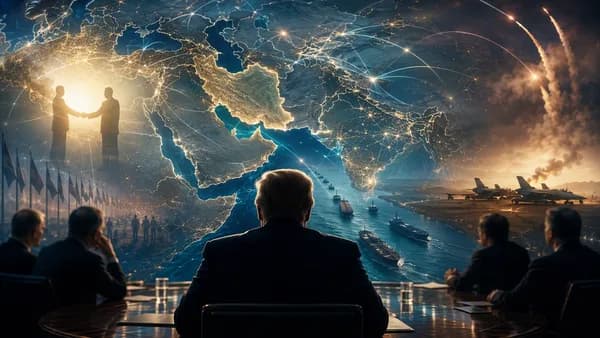
Trump Shelves Iran Strikes Unless a Deal Lands Fast
Trump says Iran strikes are shelved only if a rapid deal opens Hormuz and ends the nuclear threat. The pressure hasn't vanished.
Aug 2, 20265 min
 Global Trends
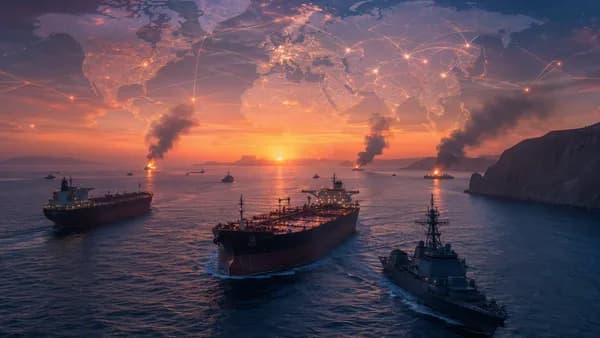
US-Escorted Tankers Hit as Strait of Hormuz Shuts Down
Iran says it struck two US-escorted tankers, nearly closing Hormuz and forcing Trump to weigh war strategy as energy prices jump.
Jul 31, 20267 min
 Global Trends
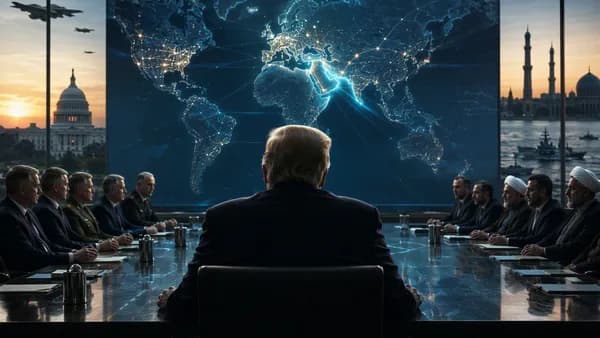
Trump Iran Talks Turn Paused U.S. Strike Into Leverage
Trump paused U.S. strikes to force Iran back to talks, but the threat could deepen the Hormuz and nuclear standoff.
Aug 3, 20267 min
 Global Trends
Oil Shock Exposes Germany Energy Drag Behind Ifo Jump
Germany’s Ifo jump may be stale. Commerzbank sees oil costs capping 2026 growth at just 0.6%.
Jul 28, 20267 min
 Global Trends
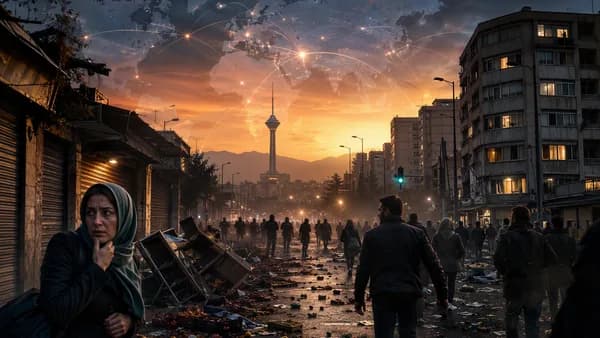
Bread and Fear Push Iran Internal Crises to the Brink
Iran’s war narrative is cracking as inflation, executions and public defiance turn daily life into Tehran’s most dangerous front.
Jul 30, 202611 min
 Trading
Dollar Cracks As Safe-Haven Premium Leaks From Middle East
The USD/CHF's break below a key support trendline signals the US dollar's safe-haven appeal is weakening, putting the critical 50-day Simple Moving Average in t
Aug 5, 20265 min
 Fintech
Asian FX Carry Trade Collapses Amid Currency War Fears
A global political shift is forcing Asian policymakers to abandon weak-currency strategies, ending a lucrative era for carry trades and creating new market inst
Aug 5, 20266 min
 Technology
Trump AI Framework Excludes Open Models in Cybersecurity Blind Spot
The Trump administration's AI testing framework excludes open models, creating a two-tier system that favors corporate labs and leaves a critical cybersecurity
Aug 5, 20267 min
 SaaS & Tools
X Product Chief Demotes Himself to 'Poster' Amid Shake-up
X's head of product Nikita Bier stepped down after one year, leaving no direct successor and handing his major projects to a new leadership team.
Aug 5, 20264 min
 Technology
Meta's Muse AI Makes 10,000-Line Refactors
Meta has launched Muse Code, an AI agent designed to autonomously handle complex, system-wide engineering tasks across large repositories by using agentic plann
Aug 5, 20266 min
Don't miss the signal
Get our weekly roundup of the stories that matter across tech, fintech, and trading. No noise, just signal.
Free forever. No spam. Unsubscribe anytime.