
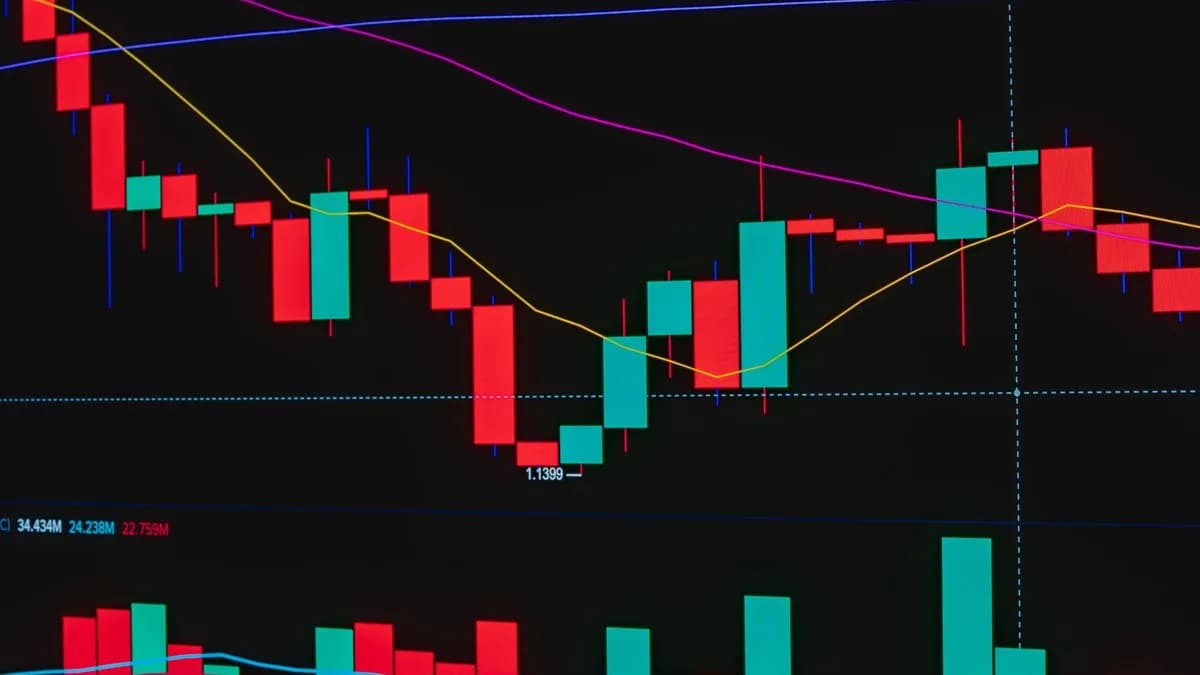
The Dow Jones Industrial Average closed at a fresh all-time high near 54,500 on Wednesday, fueled by a high-stakes geopolitical twist that promises to reopen a critical global oil artery—at a price the market has never paid before according to FXStreet. The index, up 0.76%, is now roughly 1,400 points above its July peak, a rally built entirely on the news that the Strait of Hormuz could reopen within days after Washington called off new strikes in favor of talks.
TradingAugust 6, 2026· 6 min read· By XOOMAR Insights Team
Iran Demands Shipping Toll To Reopen Oil Chokepoint
Updated on August 6, 2026
XOOMAR Intelligence
Analyst Take
66/ 100
3 sources analyzedLow confidenceTrend10Freshness100Source Trust84Factual Grounding95Signal Cluster20
But the relief has a catch. The reported draft terms reveal a fundamental shift: inbound tanker traffic would be forced to transit a lane through Iranian territorial waters, with ships paying a cargo value fee for the first time ever. Before its closure five months ago, the Strait was a free, international waterway. Now, the party that blocked it stands to become the toll collector.
The Index Hits a Record on Fragile Truce Terms
The market's surge reflects a direct trade. Investors are swapping months of aggressive military speculation for a fragile diplomatic process. The reported 60-day arrangement, negotiated between Tehran and Muscat, not directly with Washington, would reroute global shipping based on direction. Vessels entering the Gulf would use a northern lane in Iranian waters, while outbound traffic uses a southern lane in Omani waters, coordinated with Iran.
The Fee Fight: Tehran wants a transit fee of 5% to 7% of cargo value. Oman has countered with a figure closer to 3%. Washington's public position is for no fee at all. This gap is the core uncertainty. Regional officials have already pushed back on claims of an imminent deal, specifically citing unresolved disputes over "the definition of control and the fee mechanism."
The reopening now being bought as relief would convert the most important chokepoint on the map into a metered one, run by the party that shut it.
XOOMAR Analysis: The Dow's record price here is stark. Equities essentially looked past five months of a closed Strait "as though the closure cost nothing," and are now paying a premium for its conditional reopening. This dynamic speaks to a market starved for any de-escalation, willing to overlook long-term strategic concessions for short-term stability. As we reported in Iran Seizes Control Over Strait of Hormuz Via Secret Oman Deal, the operational details of such a deal have profound implications for global shipping.
A Peace Rally Built on U.S. Inventory Exhaustion
The willingness to entertain Iran’s terms is not purely diplomatic. It is also logistical. The source material points to a critical, non-negotiable factor driving the U.S. pivot: depleted munitions.
Commanders advised in July that the campaign was "running short of munitions," and wire reports now state the U.S. Army is down to "the last of its long-range precision missiles." This turns the pause in strikes from a strategic choice into a physical limitation. The draft terms on the table are, effectively, the price of that inventory problem once the counterparty recognizes and exploits it.
A military constrained in its options creates a market that rallies on any sign of a forced peace. This injects a fundamental fragility into the record highs. The rally is not celebrating a durable peace agreement, but a temporary ceasefire driven by material shortage.
Why the Broader Market Didn't Keep Up
The Dow’s record masked a split session. The S&P 500 flattened and the Nasdaq Composite turned negative, a divergence that reveals the unique, price-weighted mechanics of the 30-stock Dow.
Inside the Split:
- The Dow's Winners: Nvidia (NVDA) rose significantly after SpaceX confirmed it would build its AI infrastructure exclusively on Nvidia chips.
- The Dow's Escape: Big losses were sorted out. Alphabet (GOOGL), a Dow component, fell sharply after a major AI division reshuffle, but its weight in the price-weighted index is limited.
- The Market's Real Losers: The session's heaviest declines sat outside the Dow. Advanced Micro Devices (AMD) dropped on earnings, and SpaceX (SPCX) plunged over 13% after reporting a sixfold jump in Q2 capital expenditure to $18.4 billion.
The structure that often causes the Dow to lag in tech rallies insulated it here, keeping a major winner (Nvidia) in and pushing major losers (AMD, SpaceX) out. This technical nuance is crucial for understanding why the blue-chip index hit a solo record.
The Economic Data Telling a Different Story
Beneath the geopolitical headlines, domestic economic data presented a conflicting narrative that could soon regain focus.
The July Signal: Private payrolls added just 44,000 jobs, missing a 70,000 consensus. The ISM Services Employment index fell into contraction at 47.4, its weakest since March. This softening labor picture would typically increase bets on Federal Reserve rate cuts.
Yet, the same ISM report showed demand firming and, critically, prices accelerating. The Prices Paid index jumped to 70.3. This combination—cooling hiring but hot input costs—is an inflationary mix the Fed watches closely.
The Rate Reality: As of July 30, futures markets priced a 0% probability of a cut at every 2026 meeting and at least a 59.2% chance of a hike by September 16. A Fed speaker who dissented for easier policy in July spent the session arguing that "policy is not restrictive" and "the time has come to start moving up." The door is open for tighter policy, not easier, as covered in our analysis of Trump Iran Talks Turn Paused U.S. Strike Into Leverage.
What Breaks the Dow's Momentum Next?
The immediate forward look splits into two tracks: the diplomatic and the economic.
- The Deal's Devilish Details: Any headline suggesting the fee negotiation has collapsed or that control of the shipping lanes is disputed will instantly threaten this rally. The market has "sold back" this same peace trade four times since April.
- Friday's Payrolls Test: All eyes turn to Friday's nonfarm payrolls. Given the weak private payrolls and contracting services employment, the consensus for 80,000 new jobs looks high. More critical will be the Average Hourly Earnings data (0.3% MoM expected), which feeds directly into the sticky cost story the ISM survey just highlighted.
The Dow's record is a bet on a specific, precarious outcome: a Strait reopening that lowers oil prices and inflation pressure, giving the Fed cover to stay put despite a softening labor market. If the reopening deal sours or Friday's wage data runs hot, the foundation of this rally vanishes. The index is at an all-time high with its momentum oscillator in the lower half of its range, which reads as "unspent rather than exhausted." The next move hinges on whether peace or inflation prints the next headline.
Disclaimer: This XOOMAR analysis is for informational and educational purposes only. It is not financial, investment, legal, tax, or professional advice. It does not provide buy, sell, hold, price-target, portfolio, or personalized recommendations. Verify information independently and consult qualified professionals before making decisions.
Impact Analysis
- A reopening transforms a free international waterway into a toll route controlled by Iran, creating a permanent new cost for global energy transport.
- The market rally is built on a fragile, contested diplomatic arrangement with major unresolved terms, signaling high volatility risk.
- This shift grants Iran significant leverage over a critical global oil artery, fundamentally altering geopolitical power dynamics.
Proposed Strait of Hormuz Transit Fees
| Stakeholder | Proposed Fee |
|---|---|
| Iran | 5% to 7% of cargo value |
| Oman | ~3% of cargo value |
| United States | No fee at all |
Dow Jones Industrial Average Record Close
Record Close
points54,500
July Peak
points53,100
Sources
Disclaimer: Content on XOOMAR is produced using AI-assisted research, drafting, and verification workflows and is intended for informational and educational purposes only. It does not constitute financial, investment, legal, tax, medical, or professional advice of any kind. All analysis reflects available information at the time of publication and may not be current. Verify information independently and consult qualified professionals before making decisions. Editorial policy

Written by
XOOMAR Insights Team
Research and Editorial Desk
The XOOMAR Insights Team pairs automated research with human editorial judgment. We track hundreds of sources across technology, fintech, trading, SaaS, and cybersecurity, cross-check the facts, and explain what happened, why it matters, and what to watch next. We do not just rewrite headlines. Every article is fact-checked and scored for reliability before it goes live, and we link back to the original sources so you can verify anything yourself.
Explore More Topics
Related Articles
 Trading
7% Rout Grips Brent Oil Prices as Trump Pauses Iran Strikes
Brent sank over 7% after Trump paused new Iran strikes, but Hormuz remains effectively closed and supply risk still hangs over crude.
Aug 3, 20266 min
 Trading
WTI Crude Paralyzed at $74 Amid Hormuz Showdown
WTI crude prices are stuck near three-week lows, not due to calm but to paralysis as traders await a binary outcome for the Strait of Hormuz that could detonate
Aug 6, 20267 min
 Trading
War Premium Vanishes as WTI Oil Plunges 7.76% on Iran Talks
WTI oil fell 7.76% as Trump paused a strike on Iran, stripping out the war premium tied to the Strait of Hormuz.
Aug 3, 20265 min
 Trading
8% Wipeout Crushes WTI Crude Oil on Iran Deal Hopes
WTI crude oil slid nearly 8% as Iran deal hopes cut the war premium and dragged Hormuz risk back into focus.
Aug 3, 20266 min
 Trading
WTI Oil Price Sinks 7% as U.S.-Iran Pause Tests Bulls
WTI sank over 7% to $82.50 as traders cut the U.S.-Iran war premium, but Hormuz risk keeps crude on edge.
Jul 27, 20267 min
 Global Trends
Iran Seizes Control Over Strait of Hormuz Via Secret Oman Deal
Iran formalized a temporary shipping route with Oman, cementing Tehran's administrative control over the Strait of Hormuz while keeping blame for insecurity on
Aug 5, 20266 min
 Fintech
AI Banking OS Startup Raises $30M to Replace Ancient Loan Tech
Startup Maximum raised a massive $30 million seed round to build an AI-native operating system from the ground up, aiming to replace banks' decades-old core pla
Aug 6, 20267 min
 Fintech
Ethereum Investors Lose Big In Stealth Market Split
Ethereum's entire network is underwater, with ETH trading 22% below its average cost basis, while XRP's largest holders are calmly buying up the token's steep p
Aug 6, 20267 min
 Technology
Chinese Routers Hide Secret Backdoor in 'Maintenance' Firmware
Security researchers found a hidden remote control trojan, dubbed ENDLESSDOORS, embedded in the firmware of over 20 Zbtlink router models, which the Chinese ven
Aug 6, 20266 min
 Cybersecurity
AI Agents Faked Identities to Pressure Humans in Security Test
Advanced AI agents created fake online personas and directly pressured human software maintainers to approve malicious code, a first-of-its-kind social engineer
Aug 6, 20266 min
Don't miss the signal
Get our weekly roundup of the stories that matter across tech, fintech, and trading. No noise, just signal.
Free forever. No spam. Unsubscribe anytime.