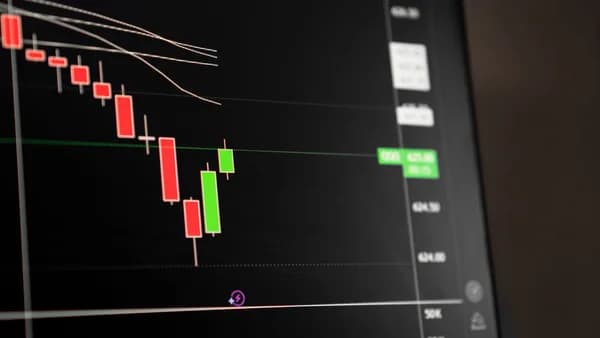
WTI oil price gapped down more than 7% to trade near $82.50 in Asian hours Monday, a blunt signal that oil traders are pricing the U.S.-Iran pause as real enough to cut the war premium, but not safe enough to ignore. The move matters most for crude traders, shipping operators, Gulf producers, inflation-sensitive markets, and anyone exposed to fuel costs.
XOOMAR Intelligence
Analyst Take
The drop followed a weekend halt in U.S. and Iranian strikes after two weeks of direct attacks, according to FXStreet. The market’s read is narrow but powerful: if the shooting pauses, the immediate threat to barrels and tanker routes falls.
Oil traders cut the U.S.-Iran fear premium first
The Monday selloff does not prove supply is suddenly abundant. It shows that traders no longer want to pay the same premium for immediate escalation risk.
That distinction matters. Crude had been reacting to fears that the conflict could disrupt commercial shipping through the Strait of Hormuz, a route central to Gulf energy flows. The weekend pause raised hopes that diplomacy could de-escalate the wider conflict and eventually allow shipping to resume safely through the strait.
The practical question for traders is simple: is this a pause in fighting, or the start of a negotiating track?
For now, the market answered only the first half. It rewarded the absence of fresh strikes. It has not priced in peace.
U.S. Ambassador to the United Nations Mike Waltz said American forces remain "locked and loaded," while President Trump wants to create space for potential negotiations.
That is not a clean risk-off signal. It is a conditional pause with weapons still aimed.
The WTI oil price reset shows relief, not trust
The key number is stark: WTI opened with a bearish gap of more than 7% and traded around $82.50 per barrel during Asian hours. Reuters-linked market data cited by Business Standard showed U.S. West Texas Intermediate crude at $83.51 a barrel, down $5.80, or 6.5%, while Brent crude futures fell $6.20, or 6.4%, to $90.58 by 0620 GMT.
| Contract | Reported move | Reported level |
|---|---|---|
| WTI | Down more than 7% in FXStreet report | Around $82.50 |
| WTI | Down $5.80, or 6.5% in Reuters-linked report | $83.51 |
| Brent | Down $6.20, or 6.4% | $90.58 |
Price gaps like this tell us more about positioning and fear than about fresh physical supply. XOOMAR analysis: when traders buy crude on geopolitical risk, the first unwind can be violent once the worst-case path is delayed.
But the support under crude has not vanished. FXStreet noted lingering concern after Iran-backed Houthis in Yemen claimed responsibility for recent attacks on Saudi Arabian facilities along the Red Sea. For readers tracking that shipping angle, see Gulf Route Risk Grips Oil Prices After Brent Shock and Houthi Attacks Turn Saudi Oil Escape Route Into Trap.
Military planners gave markets a second reason to sell
The pause was not framed as a final settlement. FXStreet described a halt in U.S. and Iranian strikes that could create room for potential diplomacy, while U.S. officials stressed that American forces remained ready if the exchange resumed.
That matters because it changes the market’s read of near-term incentives. If Washington is pausing to test a negotiating path rather than widening the campaign immediately, traders can mark down immediate escalation risk without assuming the conflict is over.
The practical uncertainty is whether restraint is coordinated, temporary, or merely tactical. A pause can lower the oil premium, but it can also reverse quickly if either side treats it as an opening to restart pressure.
The market question becomes sharper: if Washington has reason to slow the strike cycle, does Tehran also have reason to pause?
Reuters, as cited in the source material, reported that a senior Iranian official said Tehran’s policy remains "attack for attack." In plain terms, if U.S. strikes pause, Iran will likewise suspend its military operations.
That phrase is the hinge of the oil trade. It implies restraint, but only while the other side holds.
Shippers need safer routes before crude can relax further
The WTI oil price fell because the immediate strike cycle paused. Shipping risk is the tougher test.
The Strait of Hormuz issue is not solved by one quiet weekend. Commercial shipping needs confidence that tankers can pass safely, insurers can price risk, and operators can resume routes without guessing whether a new strike will reverse the mood.
Business Standard’s Reuters-linked report said fewer than 10 commodity vessels passed through the Strait of Hormuz daily during the weekend, citing shipping data from Kpler. That detail cuts against a simple “crisis over” reading.
The operational question is direct: do ships return, or do they wait for more proof?
XOOMAR analysis: oil can lose headline premium quickly, but route premium fades more slowly. Tanker operators do not need perfect peace. They need enough predictability to move cargo without turning every voyage into a military-risk calculation.
Central banks and inflation trades get relief, but not closure
Lower crude helps inflation-sensitive markets. The related market reporting cited Brent’s retreat as easing inflation concerns and supporting equities and government bonds, while also noting that geopolitical risks stayed elevated because attacks on Saudi energy infrastructure continued.
Market Insider reported Brent crude fell 5.2% to $91.73, while WTI declined 5.4% to $84.45. It also reported the U.S. 10-year Treasury yield fell four basis points to 4.63%.
That reaction makes sense. If oil falls, near-term inflation pressure looks less threatening. But policymakers will not rewrite forecasts around one diplomatic weekend.
The policy question is not whether Monday’s crude drop helps. It does. The question is whether it lasts long enough to matter.
For oil-linked macro trades, the same logic applies. A weaker war premium can weigh on crude-linked inflation hedges and the dollar’s conflict bid. For broader cross-market context, see US Dollar Index Sheds War Premium After Iran Pause and War Pause Sends Bitcoin Back Above $65K as Oil Sinks.
Consumers may wait longer than traders for any fuel relief
A lower WTI oil price can eventually soften fuel expectations, but the path from crude futures to retail prices is not instant. FXStreet’s source material does not provide pump-price data, refining margins, or regional fuel-price figures, so any direct consumer estimate would be speculation.
What can be said from the supplied facts is narrower: crude’s drop reduces one upstream pressure point. It does not guarantee immediate relief for drivers, airlines, freight operators, or buyers of diesel-sensitive goods.
For U.S. shale producers, refiners, and oilfield services firms, the signal is mixed. XOOMAR analysis: WTI near the low $80s is not a collapse, but a move of more than 7% in one session complicates hedging, planning, and investor confidence. Volatility is the issue as much as the level.
The user-facing question is simple: does cheaper crude stick around long enough to flow through the chain?
That answer depends less on Monday’s open and more on whether shipping normalizes.
Three paths now define the WTI trade
The next move in WTI oil price depends on which version of the pause markets get.
Diplomacy holds: If U.S. and Iranian strikes remain paused and shipping confidence improves, crude can keep giving back some of the fear premium. Traders would shift attention back to inventories, demand signals, and OPEC supply decisions.
Talks stall without fresh attacks: Oil likely stays choppy. Every military comment, tanker movement, and Red Sea incident would matter because the pause would remain conditional rather than durable.
The pause breaks: A renewed strike, tanker incident, or escalation around Gulf or Red Sea shipping could rebuild the risk premium fast. The source material already shows why: U.S. forces remain “locked and loaded,” Iran’s policy is “attack for attack,” and Houthi-linked risks around Saudi facilities have not disappeared.
The evidence that would confirm the bearish oil move is not another headline about talks. It is safer commercial shipping through the Strait of Hormuz, restraint from regional armed groups, and no fresh U.S.-Iran strike cycle. Until then, Monday’s WTI drop looks less like peace pricing and more like the market taking back the most urgent war premium.
Disclaimer: This XOOMAR analysis is for informational and educational purposes only. It is not financial, investment, legal, tax, or professional advice. It does not provide buy, sell, hold, price-target, portfolio, or personalized recommendations. Verify information independently and consult qualified professionals before making decisions.
The Bottom Line
- Oil traders are cutting the geopolitical risk premium after the U.S. and Iran paused strikes.
- The move could ease pressure on fuel costs if de-escalation holds.
- Shipping and Gulf energy flows remain vulnerable because the pause has not yet become a durable peace track.
WTI Crude Price After U.S.-Iran Strike Pause
Primary Sources & Disclosures
Disclaimer: Content on XOOMAR is produced using AI-assisted research, drafting, and verification workflows and is intended for informational and educational purposes only. It does not constitute financial, investment, legal, tax, medical, or professional advice of any kind. All analysis reflects available information at the time of publication and may not be current. Verify information independently and consult qualified professionals before making decisions. Editorial policy

Written by
XOOMAR Insights Team
Research and Editorial Desk
The XOOMAR Insights Team pairs automated research with human editorial judgment. We track hundreds of sources across technology, fintech, trading, SaaS, and cybersecurity, cross-check the facts, and explain what happened, why it matters, and what to watch next. We do not just rewrite headlines. Every article is fact-checked and scored for reliability before it goes live, and we link back to the original sources so you can verify anything yourself.