On Thursday night, after 13 consecutive nights of US strikes on Iranian targets, Houthi attacks in the Red Sea opened a second maritime pressure point that Saudi Arabia had been trying hard to avoid.
XOOMAR Intelligence
Analyst Take
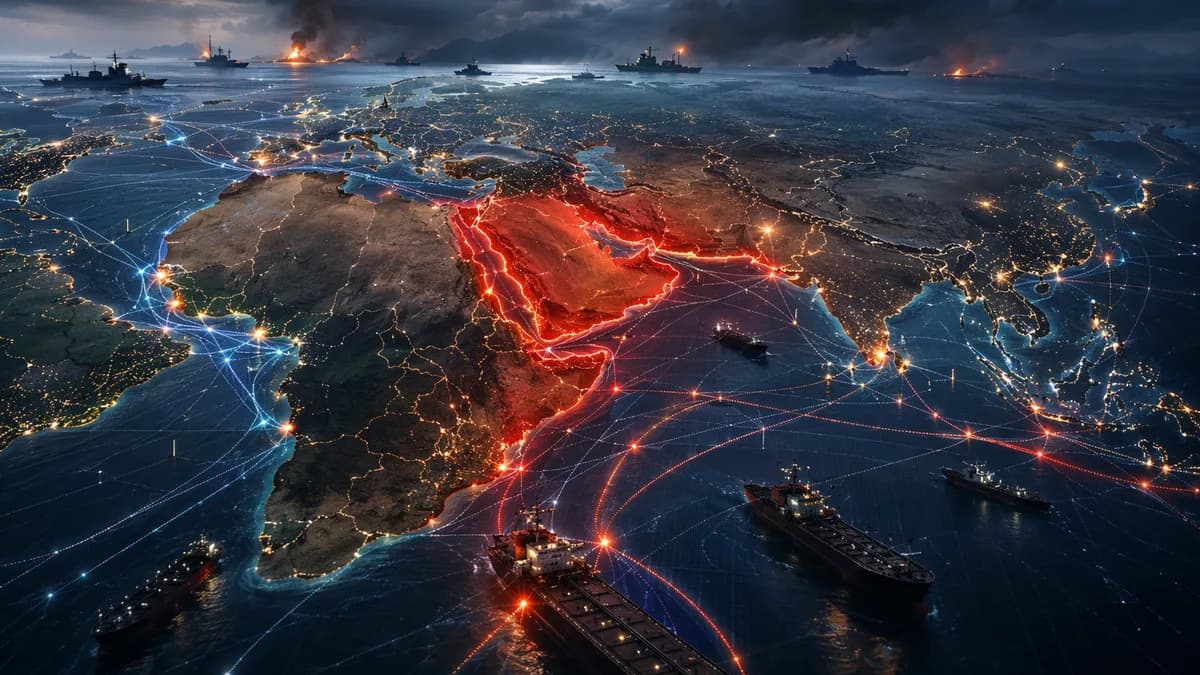
The Iran-backed group in Yemen claims it attacked shipping in the Red Sea, with two Saudi vessels hit by missiles this week and 10 others turned back after warnings to avoid Saudi ports, according to BBC World. The timing is the story. Iran is already accused of effectively closing the Strait of Hormuz, while the Houthis are now threatening the Bab El Mandeb Strait, the southern gateway of the Red Sea.
XOOMAR analysis: this is not just another Houthi maritime incident. It turns Saudi Arabia’s export workaround into a target.
Thursday night’s US strikes collided with a new Houthi attacks front
US Central Command said on Thursday night that its strikes hit Iranian targets after nearly two weeks of operations.
"Iranian military command centers, drone storage facilities, communication networks, coastal surveillance sites, and maritime capabilities to further diminish the threat Iran poses to civilian mariners and commercial vessels transiting the Strait of Hormuz," Centcom said.
That statement matters because the Red Sea flare-up is arriving while the US-Iran conflict is already hitting maritime traffic through Hormuz. The BBC reports that Gulf oil, gas, fertiliser and other essential products are being blocked from reaching markets through that route, putting pressure on supply chains, Germany’s energy drag and WTI oil prices.
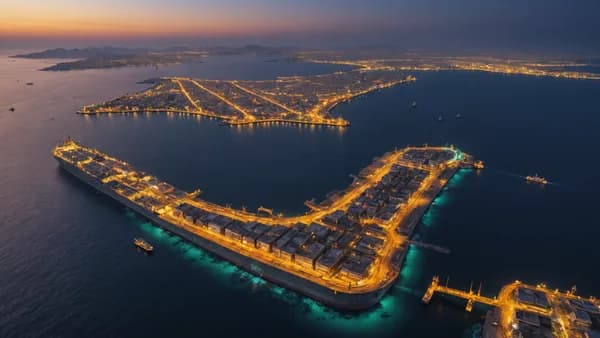
The Houthis’ move adds a different kind of pressure. Saudi Arabia had been using its East-West Pipeline to move oil from Eastern Province to the Red Sea export terminal at Yanbu' Al-Bahr, then sending tankers south past Yemen and through Bab El Mandeb into the Indian Ocean.
That route now looks exposed. As we covered in Red Sea Tanker Attacks Drag Saudi Oil Into Iran Fight, the Red Sea is no longer a side theatre when Saudi-linked shipping becomes the target.
This week’s Saudi vessel strikes put Bab El Mandeb back at the center
The Bab El Mandeb Strait links the southern end of the Red Sea with the Indian Ocean. The BBC describes it as part of the main maritime route from Europe to Asia. When ships are forced to turn back there, the effect moves well beyond Yemen.
The immediate facts are narrow but serious:
| Pressure point | Source-backed status | Economic relevance |
|---|---|---|
| Strait of Hormuz | Iran has effectively closed it, according to the BBC | Blocks Gulf oil, gas, fertiliser and other products |
| Bab El Mandeb Strait | Houthis are threatening vessels passing Yemen’s coast | Restricts the Red Sea route used for Europe-Asia trade |
| Saudi East-West Pipeline route | Used to partially mitigate Hormuz disruption | Depends on Red Sea tanker access from Yanbu' Al-Bahr |
The cost chain is simple. If tankers and cargo ships cannot use the preferred route, they must divert or wait. The BBC says the earlier Houthi campaign caused a major diversion of global shipping and higher shipping costs, and triggered US and UK military intervention to protect maritime commerce.
XOOMAR analysis: the danger is cumulative. One chokepoint can be absorbed for a while. Two chokepoints, Hormuz and Bab El Mandeb, start to narrow the choices for energy exporters, cargo carriers and governments at the same time.
For route-level context, see Tankers Flee Saudi Route After Houthi Shipping Threat.
Saudi Arabia’s 2015 Yemen war is back inside its oil export problem
Saudi Arabia went to war against the Houthis in 2015, backing Yemen’s ousted government because it did not want an Iranian-backed militia controlling territory on its southern border. The BBC notes that Riyadh expected its Western-supplied air force to push the Houthis to negotiations.
That did not happen. The Houthis stayed in power, despite horrific civilian casualties largely caused by years of air strikes, and now control most of Yemen’s populated areas, including the strategic port of Hodeidah.
Saudi Arabia’s current bind is sharper because it has been trying to distance itself from the US-Iran war. The BBC says the kingdom has been largely spared the Iranian drone and ballistic missile attacks that have hit Bahrain, Kuwait and Jordan this month.
Now Saudi vessels are being hit in the Red Sea.
XOOMAR analysis: Riyadh has three bad choices. It can keep its response quiet and risk looking vulnerable. It can coordinate more visibly with naval partners and become more directly associated with the US side of the conflict. Or it can hit back and risk reopening the Yemen war at a moment when regional maritime routes are already under stress.
The 2023 to 2025 Red Sea campaign is the warning signal
The Houthis have used maritime attacks before. From 2023 to 2025, they attacked what they claimed was Israeli-linked shipping in the Red Sea, saying the campaign supported Palestinians in Gaza. They also fired powerful modern missiles at US and British warships that tried to subdue them.
The terrain helps them. The BBC compares Yemen’s Red Sea coastal mountains with Iran’s coastline around Hormuz, noting caves, tunnels and hiding places where munitions can be concealed and brought out quickly.
That makes military suppression difficult. US President Donald Trump has vowed to "take care of the Houthis", but the BBC’s assessment is blunt: that has not worked before, and without a deal, it will not work this time.
This is where the Saudi nuclear file adds another layer. A deal announced on Wednesday would pave the way for US firms to help Saudi Arabia develop a domestic civil nuclear power programme. The BBC says there is no indication Saudi Arabia would use this as a first step toward a bomb, but fears remain that it could trigger a regional arms race, with Turkey and Egypt stepping up their own nuclear activities. For more on that pressure point, see Saudi Arabia Uranium Enrichment Puts Trump in a Bind.
Gulf states and shipping operators face different risks from the same missiles
The BBC frames the Gulf and Arabian Peninsula as the region causing analysts the most concern right now. Iraq and Syria are described as largely peaceful and stable compared with their recent civil-war periods. The Gaza war is technically in a ceasefire, though Gazans continue to be killed in air strikes, and Israel’s war with Hezbollah in Lebanon is on hold during negotiations.
The Gulf is different because the military and economic lines overlap. US bases sit in neighbouring Arab states. Iran’s Revolutionary Guard Corps has not given up control of Hormuz, despite repeated US air strikes, according to the BBC. With every strike, the IRGC hits back at neighbouring Arab states that host US bases, trying to drive a wedge between them and Washington.
For commercial shipping, diplomatic intent matters less than route reliability.
XOOMAR analysis, grounded in the reported facts:
- Energy exporters: Saudi Arabia’s Red Sea workaround loses value if tankers cannot safely pass Yemen.
- Gulf governments: Hosting US forces carries higher visible risk when Iranian retaliation spreads across Bahrain, Kuwait and Jordan.
- Cargo owners: Prior Houthi attacks already caused diversions and higher shipping costs, so renewed threats will be treated as operational risk.
- Washington: Protecting navigation without widening the war is becoming harder as two maritime corridors come under pressure at once.
The next decision point is whether this stays maritime or becomes regional
The immediate watch item is not only whether more ships are hit. It is whether Saudi Arabia, the US and Iran can prevent Red Sea attacks from merging with the Hormuz crisis into one broader trade shock.
Three source-grounded scenarios now matter:
- Contained disruption: Houthi attacks continue, some vessels avoid the route, and diplomacy prevents a direct Saudi-Houthi clash. Shipping costs stay under pressure, but the conflict does not fully widen.
- Saudi retaliation: Another Saudi-linked vessel is hit, Riyadh responds directly or through partners, and the Yemen ceasefire breakdown becomes a military front again.
- Broader maritime squeeze: Hormuz remains blocked, Bab El Mandeb becomes unsafe for an extended period, and the combined pressure on oil, gas, fertiliser and maritime trade feeds further into global economic damage.
The evidence that would confirm the worst version is clear: more Saudi vessels hit, more ships turned back, no US-Iran deal, and no durable arrangement with the Houthis. The evidence that would weaken it would be equally concrete: restored passage through Hormuz, reduced Houthi threats near Bab El Mandeb, and a negotiated channel that gives Saudi Arabia a way to protect trade without restarting a full Yemen war.
Impact Analysis
- The attacks risk turning two key maritime chokepoints into simultaneous supply-chain pressure points.
- Saudi Arabia’s alternative oil export route through the Red Sea may no longer be a safe workaround.
- Disruptions to Gulf energy and essential goods flows could add pressure to global prices.
Middle East Maritime Pressure Points
| Route | Current Threat | Why It Matters |
|---|---|---|
| Strait of Hormuz | Iran is accused of effectively closing the route amid US strikes on Iranian targets. | Gulf oil, gas, fertiliser and other essential products are being blocked from markets. |
| Bab El Mandeb / Red Sea | Houthis are threatening shipping, with Saudi-linked traffic targeted or turned back. | Saudi Arabia’s Red Sea export workaround via Yanbu' Al-Bahr now looks exposed. |
Reported Houthi Impact on Saudi-Linked Shipping
Primary Sources & Disclosures

Written by
XOOMAR Insights Team
Research and Editorial Desk
The XOOMAR Insights Team pairs automated research with human editorial judgment. We track hundreds of sources across technology, fintech, trading, SaaS, and cybersecurity, cross-check the facts, and explain what happened, why it matters, and what to watch next. We do not just rewrite headlines. Every article is fact-checked and scored for reliability before it goes live, and we link back to the original sources so you can verify anything yourself.