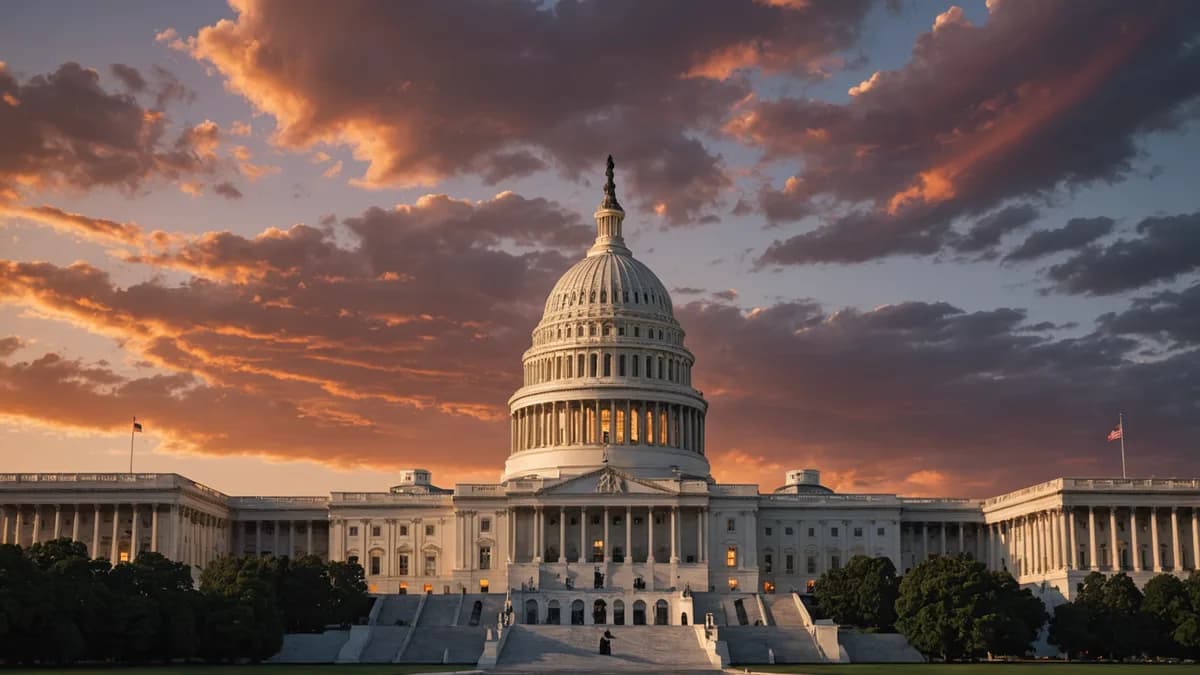
On Tuesday, September 1, 2026, the US House of Representatives voted 370 to 48 to punt the federal budget into December, avoiding a pre-election crisis in a classic political maneuver. The vote delivers a continuing resolution, a short-term funding bill, to President Donald Trump’s desk, according to Al Jazeera. It's a temporary fix that keeps the government operating while concealing a deeper struggle for power, all playing out under the shadow of a November 3 midterm vote.
XOOMAR Intelligence
Analyst Take
SEO Keyword: continuing resolution
How Congress Bought Itself Until December 11
The mechanics of this move are straightforward but critical. Without this bill, funding for the entire federal government would have expired on October 1, the start of the 2027 fiscal year. Congress has failed to pass any of the 12 annual spending bills needed to fund government operations for the fiscal year running through September 30, 2027.
This continuing resolution acts as a financial life raft. It extends current funding levels for all federal agencies through December 11. In effect, it hits the snooze button on a complex budgetary negotiation for another 15 weeks. The immediate, practical effect is simple: no shutdown.
Federal employees will continue to be paid, national parks will stay open, and agencies from the Department of Defense to Housing and Urban Development can keep spending at last year's levels. It's stability, purchased with procrastination.
The Midterm Election Delay Tactic
Why push the hard decisions three months down the road? The answer is etched on the political calendar: November 3. That’s the date of the midterm elections, which will decide which party controls the House and Senate.
A government shutdown is widely unpopular, and political analysts speculate a pre-election shutdown would "dampen the chances of re-election for sitting lawmakers." Both parties saw the trap and stepped around it.
“This will give Congress time to get past the November elections,” Republican House Appropriations Committee Chairman Tom Cole said during the debate.
The vote, with its overwhelming bipartisan majority, was a rare moment of tactical alignment. Democrats and Republicans locked in a fierce, multi-year battle have agreed on one thing: they don't want to face angry voters in November explaining why the government is closed. It's a pure, unadulterated political punt designed to clear the electoral field.
A History of Shutdowns Looming Over the Vote
The urgency behind this temporary fix is informed by recent, painful history. Since the start of Trump’s second term, disputes between the Republican majority and Democrats have resulted in three government shutdowns lasting a combined 161 days.
- The first, in October 2025, lasted 43 days, the longest in US history, centered on healthcare subsidies.
- A partial shutdown followed in January 2026 for roughly four days.
- A third shutdown targeting the Department of Homeland Security came weeks later after the deaths of Alex Pretti and Renee Good, who were shot by immigration agents in Minnesota. Democrats tried to withhold DHS funding to advance immigration agency reforms.
These events provide the tense backdrop. Critics call such shutdowns ineffective for policy change, and analysts note the Trump administration has used them to justify unilateral budget and staffing cuts. For Democratic Representative Rosa DeLauro, Tuesday's stopgap was about reclaiming legislative power.
“The power of the purse resides within the Congress. It is our exclusive responsibility,” DeLauro said. “The first step in exercising that authority is passing this bill today.”
The bill passed, but the fundamental disputes over spending priorities and policy remain entirely unresolved. For more on how government policy directly impacts financial technology, see our analysis on Crypto Seizes Federal Banking Charters in OCC Sprint.
The Debt Cliff Waiting in December
What happens when this temporary reprieve expires on December 11? Congress will have just over two months after the election to either pass full-year spending bills for fiscal year 2027 or pass another short-term extension.
The post-election landscape is the great unknown. The midterms could shift the balance of power in one or both chambers, dramatically altering the leverage and incentives in the room. Lawmakers will be negotiating in a "lame duck" session, where some members have already lost their seats or are retiring, which can create unpredictable dynamics.
Furthermore, the temporary measure does nothing to address the nation's broader fiscal challenges. The US national debt crossed $40 trillion last month, and voter concerns about affordability are high. Delaying decisions on spending priorities for 15 weeks means compressing a year's worth of budgetary debate into a frantic holiday-season timeline.
This sets up a high-stakes December where the same political brinksmanship, now freed from immediate electoral consequences, could easily return. The question will be whether a government freshly shaped by the November 3 results can function any better than the current divided one. The stability of federal operations, from cybersecurity initiatives to financial regulation, hangs in the balance. For insights into how government cyber operations are funded and managed, read our report CISA Reveals Government’s Secret Cyber Defense Playbook.
XOOMAR Analysis | The path from here is narrow and steep.
The continuing resolution is a tactical victory for political survival, not a strategic one for governance. It successfully dodges a pre-election shutdown, but it mortgages the nation's stability for a two-month loan.
The history of the last three shutdowns proves these parties are willing to let the government close over ideological fights. Come December, with the elections over, the incentive to avoid a shutdown weakens. The political calculus will be less about angry voters and more about positioning for the next Congress and a second-term Trump administration's priorities.
Watch for two things as the December 11 deadline approaches: the election results on November 3, and the early post-election statements from leadership. If the balance of power shifts significantly, December could see a mad scramble to either lock in priorities or obstruct the incoming majority. If it remains largely the same, we may simply see a repeat of the 2025-2026 cycle: short-term patches punctuated by disruptive shutdowns. The can has been kicked, but it now rests at the top of a very steep hill.
What This Means For You
- Avoids immediate disruption to federal services like national parks and agency operations.
- Postpones critical budget decisions until after midterm elections, influencing political strategies.
- Maintains current government spending levels, delaying potential fiscal policy changes.
Primary Sources & Disclosures

Written by
XOOMAR Insights Team
Research and Editorial Desk
The XOOMAR Insights Team pairs automated research with human editorial judgment. We track hundreds of sources across technology, fintech, trading, SaaS, and cybersecurity, cross-check the facts, and explain what happened, why it matters, and what to watch next. We do not just rewrite headlines. Every article is fact-checked and scored for reliability before it goes live, and we link back to the original sources so you can verify anything yourself.