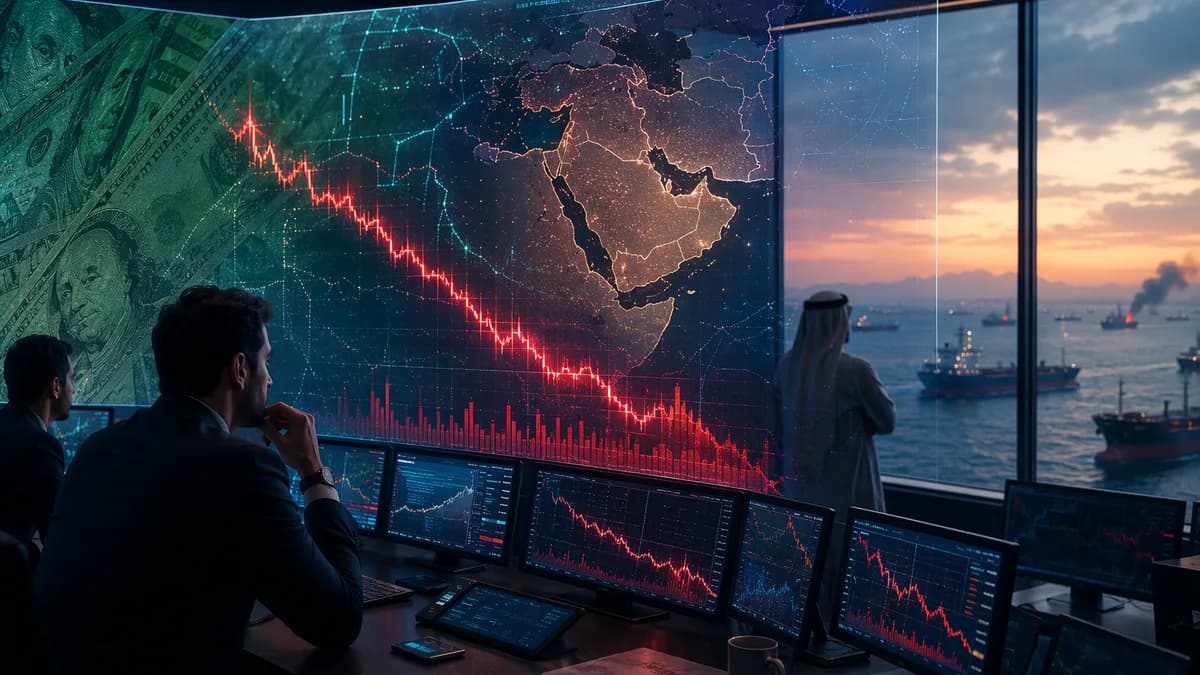
The US Dollar Index slipped to around 101.20 in Monday’s Asian session after posting minor losses, as traders weighed US-Iran tensions and the dollar’s safe-haven bid.
XOOMAR Intelligence
Analyst Take
That move, reported by FXStreet, does not look like a broad rejection of the US Dollar. It looks more like a fast repricing of geopolitical risk after 13 days of escalating conflict. The dollar had a reason to attract defensive demand. Then that reason appeared less certain.
Dollar Bulls Lose Some Conflict Premium as US-Iran Headlines Shift
The Greenback fell sharply as markets reassessed geopolitical risk around military tensions between the US and Iran, according to the source material. That matters because the dollar’s recent support was not only about the Federal Reserve. It was also about fear.
When conflict risk rises, the dollar often benefits from its role as the world’s most liquid defensive currency. When that risk cools, even briefly, some of that support can fade. XOOMAR analysis: the latest move suggests the dollar’s geopolitical bid was vulnerable because investors were already looking past the conflict and toward Fed policy, US growth data, and inflation prints.
Still, this is not a clean de-escalation story. Market participants remain cautious after Iran-backed Houthis in Yemen claimed responsibility for attacks on Saudi Arabian facilities along the Red Sea. Related reporting also said Houthis had warned about the potential to close Bab el-Mandeb, a key maritime chokepoint linking the Red Sea with the Gulf of Arabia.
That leaves the dollar in an awkward spot. Any confirmed easing in strike activity would weaken safe-haven demand. The Red Sea route risk keeps traders from treating calmer US-Iran headlines and oil-driven USD/INR moves as a settled peace.
US Dollar Index Near 101.20: The Pullback Is Small, But the Signal Is Clear
The US Dollar Index, or DXY, measures the dollar against a basket of six major currencies. FXStreet said it was trading around 101.20 during the Asian session on Monday after posting minor losses in the previous trading day.
The level matters because the story is now framed around the index moving near 101.00. The source does not provide technical support or resistance levels, and it does not show order flow around that mark. So the cleanest reading is simpler: 101.00 is a visible reference point for whether the pullback remains contained or turns into a larger dollar retreat.
For readers tracking the broader dollar setup, XOOMAR’s earlier technical coverage of DXY 101.80 Target Puts US Dollar Bears in the Crosshairs and its USD/CNH PBoC fix coverage give useful context, but the current move is driven by a different catalyst: headlines around US-Iran strikes and geopolitical risk.
The immediate forces now look split:
| Force | Dollar effect from supplied source |
|---|---|
| US-Iran strike-halt headlines | Could weigh on safe-haven demand for the dollar if confirmed |
| Houthi attacks and Red Sea risk | Keeps supply disruption fears alive |
| Fed expected to hold Wednesday | Shifts attention back to policy timing |
| Q2 GDP, PCE, corporate earnings | Could reshape views on US economic strength |
Fed Policy Is Competing With Geopolitical Fear in the Dollar Trade
The Federal Reserve is widely expected to hold interest rates steady on Wednesday before resuming rate hikes in September, according to FXStreet. A minority of market participants still anticipate a surprise move at this week’s meeting.
That policy backdrop complicates the dollar reaction. If geopolitical stress dominates, the US Dollar Index can draw support from defensive demand. If Fed expectations dominate, traders focus instead on the path of interest rates, inflation, growth, and Treasury pricing.
Related dollarindex.org material said Fed funds futures showed a 74.9% implied probability of no change at the upcoming meeting, up from 61.5% a month earlier, citing the CME FedWatch tool. That added context points to a market leaning toward policy stability in the near term, even as FXStreet says rate hikes are expected to resume in September.
“A continuation of the Middle East conflict should support the dollar because of its safe-haven status and typically positive correlation with oil prices,” said Samara Hammoud.
That quote captures the central tension. A confirmed easing in hostilities would remove one support for the dollar. But if Middle East risk returns, the same channel can reopen quickly.
Currency Traders and Energy Markets Are Reading Different Parts of the Same Story
Short-term currency reaction is easy to see: DXY is losing ground near 101.20. The harder question is whether that move reflects genuine confidence that tensions are easing or just a temporary unwind after a tense period.
Energy risk remains the unresolved pressure point. The source material does not provide oil prices, so there is no basis to claim crude rallied or fell. But it does cite market caution around potential supply disruptions after Houthi-linked attacks on Saudi facilities along the Red Sea.
That matters for the dollar because energy shocks can feed inflation concern, which then feeds central-bank pricing. XOOMAR analysis: if the Red Sea risk fades, the dollar loses one defensive argument. If shipping or energy infrastructure risk worsens, markets may rebuild the safe-haven bid even if the Fed stays on hold this week.
The corporate angle is also practical, not dramatic. Multinationals, importers, exporters, and hedgers watching the US Dollar Index near 101.00 do not need to treat one Asian-session move as a regime change. They do need to track whether the dollar’s weakness is being driven by fading conflict risk, shifting Fed expectations, or both.
A related safe-haven lens comes from XOOMAR’s coverage of Dollar Snatches Safe-Haven Crown as USD/CHF Climbs. This current move shows the other side of that trade: when the immediate fear premium cools, the dollar can give back ground.
This Reaction Looks Different Because Geopolitical Risk Is Moving DXY
The usual geopolitical script is straightforward: escalation supports the dollar, especially when oil supply fears rise. The additional source material explicitly says a continuation of the Middle East conflict should support the dollar because of safe-haven status and its typical positive correlation with oil prices.
This move is the reverse side of that logic. The market is not reacting only to conflict. It is reacting to signs that the immediate fear premium may be fading after 13 days of escalation.
That distinction matters. If the conflict had intensified over the weekend, the US Dollar Index might have had a stronger defensive bid. Instead, headlines suggesting a halt in strikes undercut that bid, while still leaving enough uncertainty to prevent a clean risk-on narrative.
The danger for traders is headline whiplash. The same market that sells the dollar on calmer headlines can buy it back if reports shift toward renewed strikes, supply disruption, or a broader regional threat.
The Next Dollar Move Depends on Fed Signals and Whether US-Iran Risk Cools
The next test is not just 101.00. It is whether the market decides any easing in tensions is durable enough to push geopolitics into the background.
Investors are now watching advance Q2 GDP data, PCE inflation figures, and earnings reports from major US corporations for evidence on the underlying strength of the economy. Those releases will matter because the dollar’s policy case depends on whether US data supports the Fed’s expected path.
A softer data mix would weaken the dollar’s macro footing. Firmer inflation, resilient growth, or more hawkish Fed messaging would make it harder for DXY bears to press the move. Renewed Middle East escalation would change the equation faster, especially if Red Sea supply concerns intensify.
The clean watch item is this: if US-Iran tensions keep cooling and incoming US data fails to strengthen the case for tighter policy, the US Dollar Index can keep testing the 101.00 area. If conflict risk returns or Fed messaging leans harder, the dollar’s safe-haven bid can rebuild just as quickly.
Disclaimer: This XOOMAR analysis is for informational and educational purposes only. It is not financial, investment, legal, tax, or professional advice. It does not provide buy, sell, hold, price-target, portfolio, or personalized recommendations. Verify information independently and consult qualified professionals before making decisions.
The Bottom Line
- The Dollar Index slipping near 101.20 shows traders are reducing some safe-haven demand tied to US-Iran tensions.
- Red Sea risks remain a key uncertainty after Iran-backed Houthis claimed attacks on Saudi facilities.
- The dollar’s next direction may depend more on Fed policy, US growth data, and inflation readings if geopolitical risk cools.
Primary Sources & Disclosures
Disclaimer: Content on XOOMAR is produced using AI-assisted research, drafting, and verification workflows and is intended for informational and educational purposes only. It does not constitute financial, investment, legal, tax, medical, or professional advice of any kind. All analysis reflects available information at the time of publication and may not be current. Verify information independently and consult qualified professionals before making decisions. Editorial policy

Written by
XOOMAR Insights Team
Research and Editorial Desk
The XOOMAR Insights Team pairs automated research with human editorial judgment. We track hundreds of sources across technology, fintech, trading, SaaS, and cybersecurity, cross-check the facts, and explain what happened, why it matters, and what to watch next. We do not just rewrite headlines. Every article is fact-checked and scored for reliability before it goes live, and we link back to the original sources so you can verify anything yourself.