
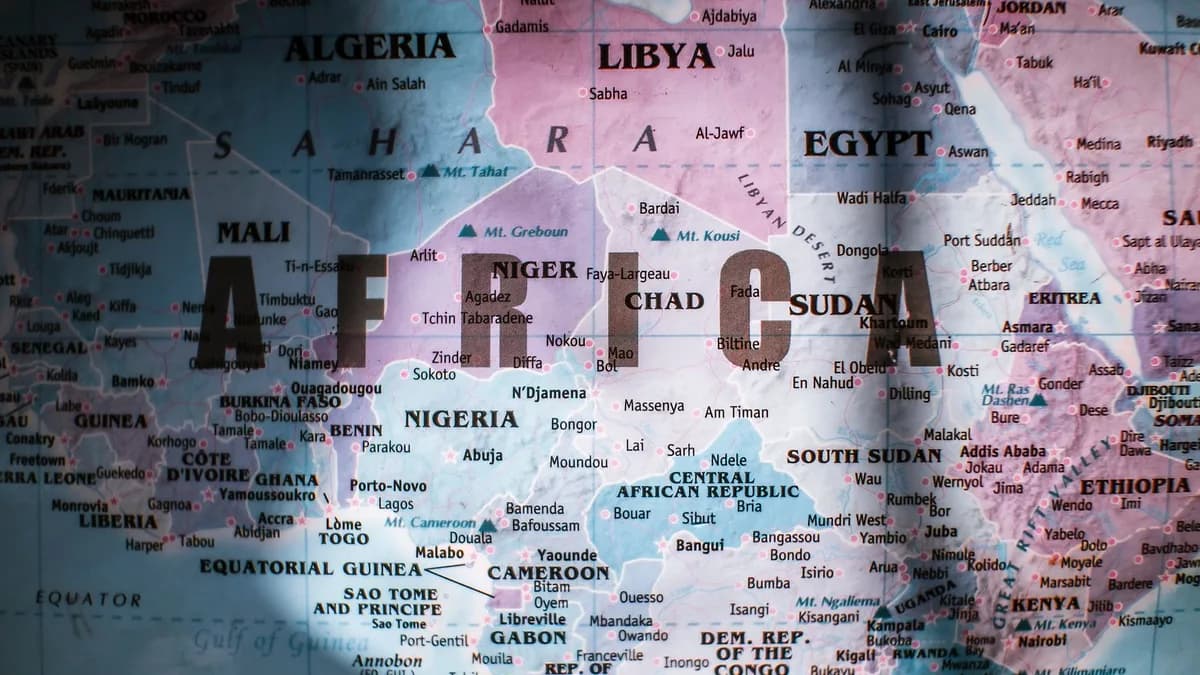
Zambia’s 8.4 million voters are delivering a sharp verdict on President Hakainde Hichilema’s five-year experiment in technocratic, IMF-backed governance. The election today, August 13, 2026, is less about socioecomomic data and more about a visceral, daily reality many Zambians feel: the gap between macroeconomic praise and personal financial pain has become a political chasm according to BBC World.
Global TrendsAugust 13, 2026· 6 min read· By XOOMAR Insights Team
Zambians Vote On Hichilema's Austerity-Fueled Presidency
Updated on August 13, 2026
XOOMAR Intelligence
Analyst Take
58/ 100
4 sources analyzedLow confidenceTrend10Freshness97Source Trust92Factual Grounding90Signal Cluster20
For builders, makers, and foreign investors, this vote is a real-time stress test on whether fiscal discipline can survive democratic pressures in a resource-rich, cash-poor nation.
Builders & Makers: The Austerity-for-Growth Bargain Faces Its Toughest Customer
At its core, Hichilema’s presidency has been a single, high-stakes project: restoring Zambia’s credibility with international finance to unlock investment. He inherited a default, secured a debt restructuring, and completed an IMF program. The international playbook was followed to the letter.
The domestic side of that bargain, however, asked voters to swallow bitter medicine. Subsidy removals on fuel and maize, part of the fiscal consolidation, sent prices soaring. While inflation has cooled to 6.8% and the kwacha has strengthened, "for many of us, it is still hand-to-mouth," as one voter told the African News Agency. This is the builder's dilemma: the very policies that stabilize a nation’s balance sheet can destabilize its politics.
The election is a referendum on patience. Can the promise of future stability from a 3 million metric ton copper production target by 2031 outweigh the present instability of an "unstable electricity supply" and high food costs? The long lines at polls in the chilly Lusaka morning suggest voters are ready to render their judgment.
End Users & Voters: A Coalition of Hope Now Divided by Disappointment
Hichilema’s 2021 coalition was broad: urban youth, the business class, and rural voters desperate for change after a decade of Patriotic Front rule. Five years on, that coalition is fracturing along the fault lines of lived experience.
The urban youth, like the 26-year-old Mwiche Nalupumbwe who told AFP, "Zambians are frustrated," represent a potent bloc of disillusionment. Their patience for "stories about economic progress," as welder Samuel Chitendwe put it, has worn thin. Conversely, a student like 29-year-old James Phiri credits Hichilema with reinstating meal allowances, a tangible benefit. The voter base is now a patchwork of personal economic microclimates.
The opposition strategy, led by Brian Mundubile, is to weaponize this discontent. He promises a "national reset," a stark contrast to Hichilema’s message of staying the course. Mundubile’s appeal is not to a detailed policy platform from the source material, but to the emotion of exhaustion. His challenge is converting widespread economic grievance into a coherent electoral majority across Zambia’s regional divides.
Competitors & Opposition: Weaponizing Grievance in a Narrowing Space
The Patriotic Front (PF) legacy, and the unresolved drama surrounding former President Edgar Lungu’s unburied body, provides a powerful, emotive backdrop. Mundubile’s alliance draws direct support from Lungu’s base, transforming economic discontent into a broader narrative of political grievance.
The opposition’s charge is two-fold: the economy hurts, and democracy is under threat. Mundubile has stated he does "not see the election as being free and fair," alleging campaign restrictions. The government’s arrest of former officials over an alleged election interference plot days before the vote adds to a tense atmosphere.
This creates a precarious scenario for Zambia’s democratic reputation. A peaceful, accepted result is crucial not just for stability, but for the nation’s market status. As we reported in A burial row over Zambia's late president has turned its election into a hot contest, the fusion of personal, political, and economic disputes makes this race uniquely volatile.
The Market Signal: Zambia’s Poster-Child Status Hangs in the Balance
For international partners from Washington to Beijing, Zambia under Hichilema became a case study in how to manage a debt crisis within a democratic framework. His government courted all sides, seeking investment to boost copper output. This election tests whether that model is politically sustainable.
A clear Hichilema victory signals continuity. Investors can expect the debt framework and pro-mining policies to hold. A narrow win or a runoff, however, changes the calculus. A weakened mandate would force Hichilema to placate a restless populace, likely through increased social spending, which could strain the very fiscal discipline creditors reward.
An opposition victory is the ultimate market wildcard. It would trigger immediate volatility. Would a Mundubile government maintain the restructured debt agreements? Would it revise mining royalties or shift bilateral ties? The lack of a detailed opposition economic plan in the sources makes this scenario a cliffhanger for foreign capital. The path from default to success story can reverse far quicker than it was built.
XOOMAR Interpretation: The Day After Scenarios
The source material points to several clear paths once results are in, expected by August 17.
Scenario 1: Hichilema Wins Outright He claims a mandate to continue his economic program. The immediate focus would shift from campaigning to delivery, with intense pressure to show faster, more visible improvements in jobs and costs. The ambitious infrastructure drive he’s betting on would need to accelerate dramatically. International partners breathe a sigh of relief, but domestic politics remain fraught.
Scenario 2: Runoff Required This is a likely outcome given the crowded field and the 50%+1 threshold. A second round within 37 days becomes a brutal, binary choice. Campaign rhetoric would escalate, potentially deepening divisions. The economy stalls as uncertainty lingers. This scenario is the most dangerous for short-term stability and investor confidence.
Scenario 3: Opposition Victory Markets react instantly. The kwacha would face severe pressure. Credit rating assessments would be paused. All eyes would be on the new administration’s first 100 days: Do they affirm the existing debt agreements? Do they clarify mining policy? This scenario represents the highest risk and highest uncertainty, validating the sources' framing of this vote as a critical test of stability.
What to watch for beyond the winner:
- Grain of Salt: Will the loser concede gracefully, respecting Zambia’s history of peaceful transfers? Any challenge could trigger unrest.
- Copper Price: How do mining stocks and copper futures react to the results? They are a pure proxy for investor sentiment on Zambian policy risk.
- The First Budget: The next government’s inaugural budget will be the definitive document revealing whether the technocratic path continues or a new, more populist one begins.
The true impact of Zambia’s election won’t be measured in vote percentages alone, but in the subsequent choices a pressured government makes between the ledger books of global finance and the empty shelves of local markets.
Impact Analysis
- Voters are deciding whether fiscal austerity is worth the personal financial pain, testing if IMF-backed governance can survive democratic pressures.
- The outcome will signal whether resource-rich nations can maintain investor-friendly reforms while keeping domestic stability.
- A leadership change could alter Zambia's debt management strategy, international partnerships, and economic direction.
Comparison of Hichilema's Governance Outcomes
| International Metrics | Domestic Reality |
|---|---|
| Restored credibility with international finance | Subsidy removals sent prices soaring |
| Secured debt restructuring | Hand-to-mouth living persists despite cooling inflation |
| Completed IMF program | Unstable electricity supply & high food costs |
| 3 million metric ton copper target by 2031 (future promise) | Present political instability |
Sources

Written by
XOOMAR Insights Team
Research and Editorial Desk
The XOOMAR Insights Team pairs automated research with human editorial judgment. We track hundreds of sources across technology, fintech, trading, SaaS, and cybersecurity, cross-check the facts, and explain what happened, why it matters, and what to watch next. We do not just rewrite headlines. Every article is fact-checked and scored for reliability before it goes live, and we link back to the original sources so you can verify anything yourself.
Explore More Topics
Related Articles
 Global Trends
Labour Members Shun Welfare for Health, Economy Priorities
A new poll shows Labour Party members overwhelmingly prioritize health and the economy, with nearly half believing the government spends too much on welfare.
Aug 10, 20267 min
 Technology
LLM Cost Gap Widens to 625x in 2026 Pricing War
The cost gap for the same AI task has ballooned to 625x between providers in 2026, turning model selection into a make-or-break budget decision.
Aug 13, 202616 min
 Technology
Local-First Apps Ditch Cloud Spinners for Instant Offline Use
Local-first development tools let apps work instantly offline by treating the user's device as the primary data source, delivering superior speed and privacy.
Aug 13, 202614 min
 Technology
Debug Rust's Biggest Gripe Now Before Hiring Boom Hits
Rust debugging remains a major pain point for developers, even as job demand is projected to jump 25% in 2026. This is your guide to building a workflow that wo
Aug 13, 202614 min
 Technology
Chrome Dev Tools Clash With Firefox for 2026 Developers
The 2026 face-off between Chrome DevTools and Firefox Developer Tools reveals which browser suite gives developers the edge in debugging, network analysis, and
Aug 13, 202610 min
 Technology
Should You Use VS Code or Visual Studio in 2026?
Choosing between a lean, extensible editor VS Code and a full-featured IDE like Visual Studio comes down to your project's scale and your workflow's DNA.
Aug 13, 202612 min
 Technology
Slash the Charger Clutter With a Single Power Hub
A centralized multi-device charging station is the definitive fix for tangled cables and outlet overload, turning your daily power struggle into a single, organ
Aug 13, 202611 min
 Technology
Convertibles Outperform Detachables for Work Laptops
Choose a convertible laptop if your day centers on a keyboard, or a detachable tablet if you start with touch. The 2026 market makes the trade-offs clearer than
Aug 13, 202612 min
 Technology
Haptics Decide Premium Smartphone Feel in 2026
Top-tier haptic feedback is now a major divider between premium and average smartphones, transforming typing and navigation into a precise, physical experience.
Aug 13, 202612 min
 Technology
Beginner Drawing Tablets Unveiled: Go Screen or No-Screen?
You can buy a powerful beginner drawing tablet for under $50. This guide breaks down the critical choice between screen and screenless models using tested 2026
Aug 13, 202613 min
Don't miss the signal
Get our weekly roundup of the stories that matter across tech, fintech, and trading. No noise, just signal.
Free forever. No spam. Unsubscribe anytime.