
Since 1890, U.S. antitrust law has been asked to absorb new industries without changing its core principles, and AI data center antitrust is now testing whether those principles can handle an electricity crunch driven by artificial intelligence.
TechnologyJuly 2, 2026· 8 min read· By XOOMAR Insights Team
Power Crunch Pulls AI Data Center Antitrust Into Fight
Updated on July 3, 2026
XOOMAR Intelligence
Analyst Take
72/ 100
3 sources analyzedMedium confidenceTrend10Freshness99Source Trust88Factual Grounding92Signal Cluster20
That is the core signal from a PYMNTS interview with Ann O’Brien, partner and co-leader of the Antitrust and Competition Practice Group at Sheppard, and Ben Huffman, partner and co-leader of the firm’s Energy and Infrastructure Industry Team. Their argument is not that AI needs a new antitrust regime. It’s that the old one is being pulled into a faster, more operationally tangled market.
“The real beauty of antitrust law is that these are these very old laws, and you’re constantly applying them to new factual scenarios,” O’Brien said. “We’ve been doing that since 1890.”
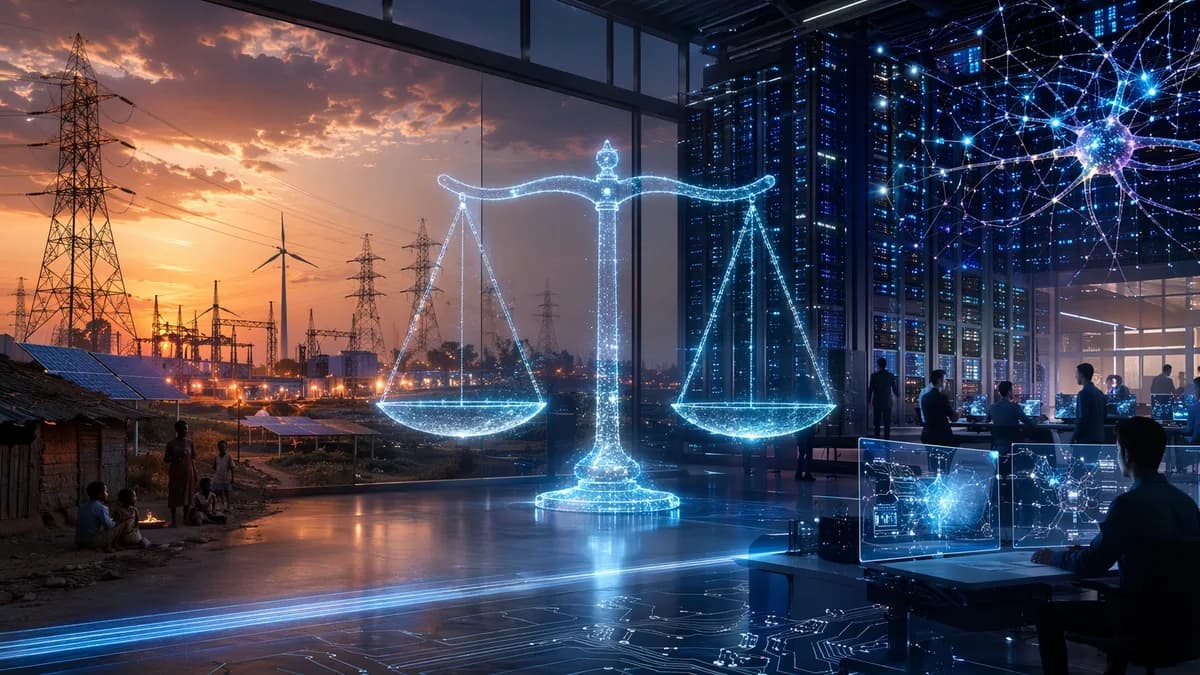
The key shift is simple: the AI race is no longer only about models, chips, and AI talent. It is also about whether power infrastructure can be planned, approved, built, and coordinated fast enough to serve the data centers behind AI demand.
AI data center antitrust starts with electricity moving faster than planning systems
The strongest fact in the PYMNTS piece is not a market share figure or a litigation filing. It’s the mismatch between demand and process.
PYMNTS reports that electricity demand is rising faster than the planning, procurement, and regulatory systems designed for a steadier market. Huffman describes an energy sector used to deliberate planning, careful regulatory review, stakeholder participation, and long-term infrastructure work. AI data centers are pushing against that rhythm.
“The flat demands with a little bit of growth that we’ve seen for decades is being upended by the data center demand, and data centers need power now,” Huffman said.
That sentence captures the antitrust problem better than a technical filing would. When infrastructure cannot scale at the speed buyers want, companies that normally compete may need to coordinate. The legal question then becomes narrower and more practical: is that coordination necessary to build capacity, or does it create channels for competitors to exchange information they should not share?
O’Brien’s framing matters here. She does not present collaboration as inherently suspect. PYMNTS says companies are not joining forces to restrict output or reduce consumer choice. They are trying to assemble enough generation, transmission, construction resources, and equipment to meet demand that is outrunning available infrastructure.
That distinction is the heart of AI data center antitrust. Scale alone is not the issue. The risk is how competitors behave when they coordinate under pressure.
The missing megawatt figure is itself part of the story
The PYMNTS source does not provide megawatt, gigawatt, capital spending, or project count figures. That limits any responsible analysis. It also sharpens the point: this is not yet a story about one disclosed transaction or one published market threshold. It is a story about legal risk forming around operational coordination.
O’Brien puts the pressure in plain language:
“I’ve seen antitrust law as a real bellwether of our economic and consumer demands,” O’Brien said. “Right now, obviously, AI has put energy demand on steroids.”
The supplied source supports three concrete scale markers:
- 1890: O’Brien’s reference point for the age of U.S. antitrust law.
- More than a century: PYMNTS’ framing of antitrust adaptation across industries.
- Decades: Huffman’s description of relatively flat electricity demand being disrupted by data center demand.
What the source does not establish is equally important. It does not quantify AI power consumption. It does not identify specific hyperscaler contracts. It does not say any company has locked up electricity access in a way that blocks rivals. It does not cite a regulator opening an investigation.
XOOMAR analysis: that means the current issue is pre-litigation and process-heavy. The first warning signs may not look like a courtroom fight. They may look like project meetings where competitors share demand forecasts, scheduling information, or commercially sensitive planning details without tight controls.
For adjacent operating context, XOOMAR has also tracked how data center needs are spilling into other sectors in Honda Data Center Batteries Expose the EV Profit Shift, while AI cost discipline is a separate but related pressure point in Runaway AI Spending Forces a Return to Cloud Controls.
Century-old doctrine is being asked to judge real-time collaboration
O’Brien’s position is that the legal framework does not need to be rewritten. The harder job is applying it realistically.
“I don’t think the framework needs to change,” O’Brien said. “But we need a realistic analysis.”
That matters because antitrust law already has tools for judging competitor collaboration. The PYMNTS interview does not walk through doctrines such as monopolization, tying, exclusive dealing, or refusal to deal. It focuses instead on the practical danger inside joint infrastructure work: information exchange.
Companies may need to share sensitive information to complete a defined project. The problem arises when people involved in that project also compete elsewhere. That creates a dual-role problem. In one meeting, they may be collaborators. In another part of the market, they remain rivals.
O’Brien’s warning is operational, not abstract. Participants must separate what they can discuss inside a collaboration from what remains competitively off-limits outside it.
Huffman adds another constraint: staffing.
“There is a big demand for resources, and resources are stretched thin,” Huffman said.
That matters because one common compliance method is separating teams and limiting information flows. If the industry lacks enough experienced personnel, those clean separations become harder to maintain. In that environment, compliance cannot be a template buried in a deal folder. It has to shape who joins calls, what gets shared, and when lawyers step in.
The real divide is between necessary coordination and careless information flow
The PYMNTS article supports a clean contrast.
| Issue | Source-supported reading | Antitrust risk |
|---|---|---|
| Collaboration to build capacity | Companies may need to work together on projects no single participant can complete alone | Not automatically problematic if tied to legitimate project needs |
| Information exchange | O’Brien identifies sensitive information sharing as a major risk once competitors collaborate | High risk if project information spills into competitive decision-making |
| Personnel shortages | Huffman says resources are stretched thin | Harder to create independent teams and clean internal boundaries |
| Legal framework | O’Brien says the framework does not need to change | Courts and regulators still need realistic market analysis |
This is where the story becomes more useful than a generic “AI uses lots of power” narrative. The danger is not that data center operators, utilities, developers, equipment suppliers, and infrastructure firms talk to each other. The danger is that urgent project coordination becomes a back channel for competitive intelligence.
That is also why O’Brien rejects performative compliance.
“I don’t think guardrails are theater,” O’Brien said.
Guardrails, in this setting, mean practical rules: involve antitrust counsel early, define the project purpose, limit who receives sensitive information, record why data is needed, and keep employees comfortable raising questions before a meeting crosses a line.
Startups, utilities, and communities are mostly outside the record for now
The outline of this debate naturally raises broader questions. Do large AI buyers gain an advantage if they can coordinate energy infrastructure faster? Could smaller AI firms or enterprise customers face fewer options if capacity becomes concentrated? Will utilities and local authorities face new pressure as data center demand accelerates?
The PYMNTS source does not answer those questions. It does not discuss startups, local communities, ratepayers, water use, tax revenue, land use, or specific utility cost allocation fights. So any firm conclusion would overreach.
XOOMAR analysis: the stakeholder split still matters, but only as a map of where evidence would need to emerge.
- Large AI infrastructure buyers: The source supports the idea that major demand is forcing collaboration, but not that any buyer is behaving unlawfully.
- Energy and infrastructure companies: PYMNTS directly supports their operational challenge, especially the pressure to assemble resources quickly.
- Competitors inside joint projects: The source strongly supports information-sharing risk as the main antitrust pressure point.
- Regulators and courts: The source supports O’Brien’s view that existing law can apply if decision-makers recognize commercial reality.
That makes this less a story about proven exclusion and more a story about legal exposure forming inside project design.
The first AI power fights may be won or lost in meeting protocols
The most likely near-term battleground, based on the PYMNTS interview, is not a sweeping new statute. It is the paperwork and behavior around collaborations: project scopes, information protocols, counsel review, participant lists, and internal training.
If courts or regulators later examine an AI energy collaboration, they will likely ask whether companies treated compliance as real. O’Brien and Huffman’s message is that firms should answer that question before the collaboration starts, not after a problematic exchange has already happened.
The thesis will be confirmed if more AI data center projects require competitor coordination and if regulators focus on categories of shared operational information. It will weaken if companies can meet demand through tightly controlled collaborations that add capacity without spillover into competitive conduct.
For now, AI data center antitrust is not about punishing companies for building big. It is about whether the race for power forces rivals into the same room, and whether they know where the legal walls are once they get there.
Impact Analysis
- AI growth is turning electricity access into a core competitive issue.
- Antitrust law may be tested by infrastructure bottlenecks rather than traditional market-share disputes.
- Data center power demand could pressure regulators, utilities, and tech firms to coordinate faster.
Traditional Power Planning vs. AI Data Center Demand
| Traditional electricity planning | AI data center demand |
|---|---|
| Built around deliberate planning and regulatory review | Requires power quickly to keep pace with AI growth |
| Designed for flat demand with modest growth | Upending decades of relatively stable electricity demand |
| Relies on long-term infrastructure coordination | Creates faster, more operationally complex antitrust questions |
Sources

Written by
XOOMAR Insights Team
Research and Editorial Desk
The XOOMAR Insights Team pairs automated research with human editorial judgment. We track hundreds of sources across technology, fintech, trading, SaaS, and cybersecurity, cross-check the facts, and explain what happened, why it matters, and what to watch next. We do not just rewrite headlines. Every article is fact-checked and scored for reliability before it goes live, and we link back to the original sources so you can verify anything yourself.
Explore More Topics
Related Articles
 Technology
AI Spending Boom Fails to Boost Corporate Earnings Yet
A Goldman Sachs report reveals a massive disconnect: despite hundreds of billions in AI spending, only 2% of S&P 500 companies have shown any measurable profit
Aug 16, 20268 min
 Technology
Meta Releases Glimmer AI to Spark Personal Superintelligence Race
Meta released its open Glimmer AI model to run powerful agents locally on a consumer GPU, directly challenging the cloud-based models of rivals like OpenAI and
Aug 14, 20269 min
 Technology
Amazon Bulldozes Rare Books for AI-Fueled Data War
Amazon is buying and then destroying rare books in a Las Vegas warehouse to scan their pages and feed text data into its AI training models, a practice uncovere
Aug 17, 20267 min
 Technology
Flock Safety Builds Nationwide Panopticon for Profit
A private corporation is building a nationwide, AI-powered surveillance network that tracks all vehicle movements, shifting policing from targeted investigation
Aug 14, 20265 min
 Technology
Reddit AI Narrates Your Posts as Podcasts to Retain Users
Reddit is using AI voices to turn text posts into short videos and podcasts, a strategic push for passive engagement in a video-first internet.
Aug 18, 20266 min
 Trading
Bitcoin Slides As Trap in July CPI Data Emerges
A market analyst argues July's cooler CPI reading is a head-fake, hiding stubborn underlying inflation that's rattling Bitcoin and could keep the Fed hawkish.
Aug 16, 20266 min
 Trading
Yen Ignores 80% Bank of Japan Rate Hike Odds
Despite an 80% market probability of a September rate hike, the yen remains weak, highlighting the limited power of domestic policy against overwhelming global
Aug 18, 20267 min
 Trading
Canadian Dollar Defies Safe-Haven Crush as Oil Hits $83
The Canadian Dollar is holding near multi-week highs against a strengthening US dollar, as soaring crude oil prices overwhelm the traditional safe-haven currenc
Aug 18, 20268 min
 Fintech
Labour Suspends MP Over Pandemic Loan Eligibility Probe
Labour MP Bayo Alaba is suspended as his party investigates the eligibility and attempted winding-up of a company that received pandemic loans.
Aug 18, 20265 min
 Technology
Indonesia Quake Paralyzes Island As Death Toll Climbs
A powerful shallow earthquake on Flores Island has killed at least 53 people and overwhelmed local response capabilities, highlighting Indonesia's persistent vu
Aug 18, 20269 min
Don't miss the signal
Get our weekly roundup of the stories that matter across tech, fintech, and trading. No noise, just signal.
Free forever. No spam. Unsubscribe anytime.