Does the Anker Soundcore Sleep A20 deal matter more because it’s cheap, or because it makes a niche sleep gadget look practical for normal buyers?
XOOMAR Intelligence
Analyst Take
That’s the thread running through this week’s useful tech discounts: not flashy upgrades, but devices aimed at specific daily annoyances. Bad sleep. Distracting noise. Heat. Weak Wi-Fi. Portable audio that doesn’t depend on a phone speaker. Anker’s Soundcore Sleep A20 have fallen to $99.99, a new all-time low and $80 off, at Best Buy and Target, according to The Verge.
XOOMAR analysis: the appeal here is not that any one gadget changes the category. It’s that the discount makes the trade-off easier to accept. That’s especially true for older or specialized products, where the right price can matter more than the newest spec sheet. We saw the same shopper math around fast-moving promos in Vanishing Amazon Prime Day Deals Punish Slow Shoppers and screen-free audio discounts in 20% Yoto Player Prime Day Deal Cuts Screen-Free Audio.
Is the Anker Soundcore Sleep A20 deal really the standout here?
Yes. The Anker Soundcore Sleep A20 deal is the anchor because it cuts a purpose-built sleep product to $99.99 from $179.99 at two major retailers.
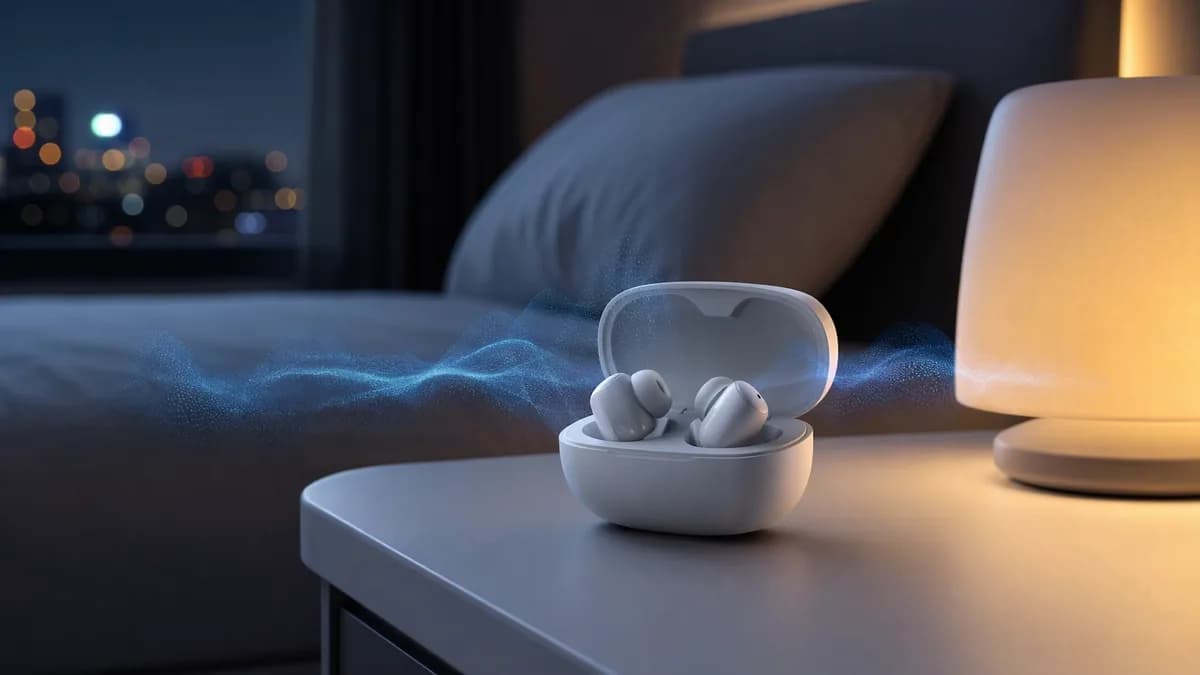
The Sleep A20 are built to muffle distracting sounds at night. They include multiple ear tips and wings, which matters because sleep earbuds have to survive side sleeping, pillow pressure, and hours of wear without becoming the thing that keeps you awake.
The Verge cites reviewer Thomas Ricker’s experience: the model helped him average nearly 30 more minutes of sleep each night over a two-week period compared with wearing AirPods Pro to sleep. Jennifer Pattison Tuohy also had a positive experience, saying her husband’s snoring was still audible but muted enough to fade into the background instead of keeping her awake.
The useful distinction: these are sleep-first earbuds, not standard earbuds pressed into overnight duty.
They don’t replace full active noise cancellation, unlike premium ANC headphones. That’s the compromise. But at this price, the Anker Soundcore Sleep A20 deal makes more sense for buyers who want comfort, passive noise blocking, and overnight battery life without paying for the newer model.
Does the older Sleep A20 beat the newer Sleep A30 in the one spec that matters overnight?
For many sleepers, yes: battery life. The Sleep A20 can last up to 14 hours on a single charge, and the case recharges over USB-C.
That matters because sleep audio is a harsher test than commute audio. A pair of earbuds that dies before morning has failed the job, even if it sounded fine at bedtime.
The feature set is broader than noise masking. The Sleep A20 can play white noise, nature sounds, and meditation tracks. They can also work as Bluetooth earbuds for podcasts or music, while the companion app tracks sleep duration, sleeping position, and nighttime movement. A built-in alarm can wake the wearer without disturbing a partner.
The newer $180 Sleep A30 add active noise cancellation, which The Verge says does a better job of masking unwanted sounds. The cost is battery life. XOOMAR analysis: that makes the A20 the cleaner sale pick for buyers who care more about making it through the night than owning the latest version.
Which cheap portable speaker deal is actually useful?
The JBL Go 5 Portable Bluetooth Speaker is down to $44.95 at Amazon, a $10 discount and its best price to date, per The Verge.
This is the compact-audio deal in the roundup. The useful specs are simple: IP68 dust and water resistance, up to 10 hours of playback on a single charge, and lossless audio support when wired to an audio source over USB-C.
Expectation-setting matters here. The source describes it as a tiny speaker, so the buy case is portability and durability, not replacing a larger home audio setup. If the phone speaker is the fallback, the JBL Go 5 is the upgrade.
| Product | Sale price | Core strength | Main trade-off |
|---|---|---|---|
| Anker Soundcore Sleep A20 | $99.99 | Sleep-focused fit, noise masking, up to 14 hours battery | No active noise cancellation |
| JBL Go 5 | $44.95 | Tiny, IP68, up to 10 hours playback | Compact speaker limits expectations |
| Jisulife Handheld Fan Life8 | $12.32 | Portable cooling, stand, flashlight, backup power | Small battery means brief phone top-ups |
| Eero 6 Wi-Fi Router | $54.99 | Wi-Fi 6, up to 1,500 square feet, Zigbee hub | Not Eero’s newest mesh router |
Is the Jisulife fan more than a heat-wave impulse buy?
The Jisulife Handheld Fan Life8 is on sale for $12.32 at Amazon, which is $14 off.
The Verge frames this around heat in many parts of the US, and that’s the simple use case: portable cooling while on the go. It’s USB-C-powered, foldable, and works either as a handheld fan or as a desktop fan thanks to its built-in stand.
The extra features make the price easier to justify. It can serve as a flashlight in a pinch and as a backup power bank for charging a phone when needed.
The limit is clear. The source says its small size means it’s useful for brief battery top-ups, not full charges. XOOMAR analysis: buy it as a fan first. Treat the power bank feature as insurance, not the reason to click.
Why does an older Eero 6 still belong in this roundup?
The Eero 6 Wi-Fi Router is down to $54.99 at Amazon, a $30 discount and an all-time low.
It is not the company’s latest mesh router. That’s the point. At this price, The Verge still calls it a solid pick for smaller homes.
The listed specs are strong enough for that job: up to 1,500 square feet of coverage, speeds up to 900Mbps, and support for more than 75 connected devices. It also doubles as a Zigbee smart home hub for compatible Alexa devices, which can reduce the need for a separate hub.
XOOMAR analysis: this is the same value pattern as the Sleep A20. The product doesn’t need to be new to be compelling. It needs to solve the buyer’s actual problem at the right price.
The bigger picture
These discounts favor useful tech over premium product churn. The strongest buys here are not about chasing the newest release. They’re about fixing daily friction at prices that make the compromises acceptable.
The Anker Soundcore Sleep A20 deal stands out because sleep gadgets are easy to dismiss until the price drops below the hesitation point. The Eero 6 follows the same logic for small-home networking. The JBL Go 5 and Jisulife Life8 are simpler buys, but they fit the same pattern: small devices, clear jobs, limited downside.
The practical lens for shoppers is blunt:
- Fit: Sleep earbuds are only useful if they stay comfortable overnight.
- Battery life: For sleep gear, endurance can beat newer features.
- Durability: The JBL Go 5 has the stronger case because of IP68 protection.
- Home size: The Eero 6 makes sense if 1,500 square feet is enough.
The next question is whether these prices hold or vanish quickly. Based on the supplied deals, the smarter move is to judge each product by the problem it solves, not by how steep the discount looks in isolation.
The Bottom Line
- The discount makes a specialized sleep gadget more practical for mainstream buyers.
- At $99.99, the Sleep A20 is at a new all-time low at Best Buy and Target.
- The product targets a common problem: improving sleep by muting distractions like snoring and nighttime noise.
Sleep Earbud Comparison
| Product | Use Case | Article Finding |
|---|---|---|
| Anker Soundcore Sleep A20 | Purpose-built sleep earbuds | Sale price is $99.99, down from $179.99. |
| AirPods Pro | General wireless earbuds used for sleep | Reviewer averaged nearly 30 more minutes of sleep per night with the Sleep A20 over two weeks compared with AirPods Pro. |
Anker Soundcore Sleep A20 Price Drop
Primary Sources & Disclosures

Written by
XOOMAR Insights Team
Research and Editorial Desk
The XOOMAR Insights Team pairs automated research with human editorial judgment. We track hundreds of sources across technology, fintech, trading, SaaS, and cybersecurity, cross-check the facts, and explain what happened, why it matters, and what to watch next. We do not just rewrite headlines. Every article is fact-checked and scored for reliability before it goes live, and we link back to the original sources so you can verify anything yourself.