
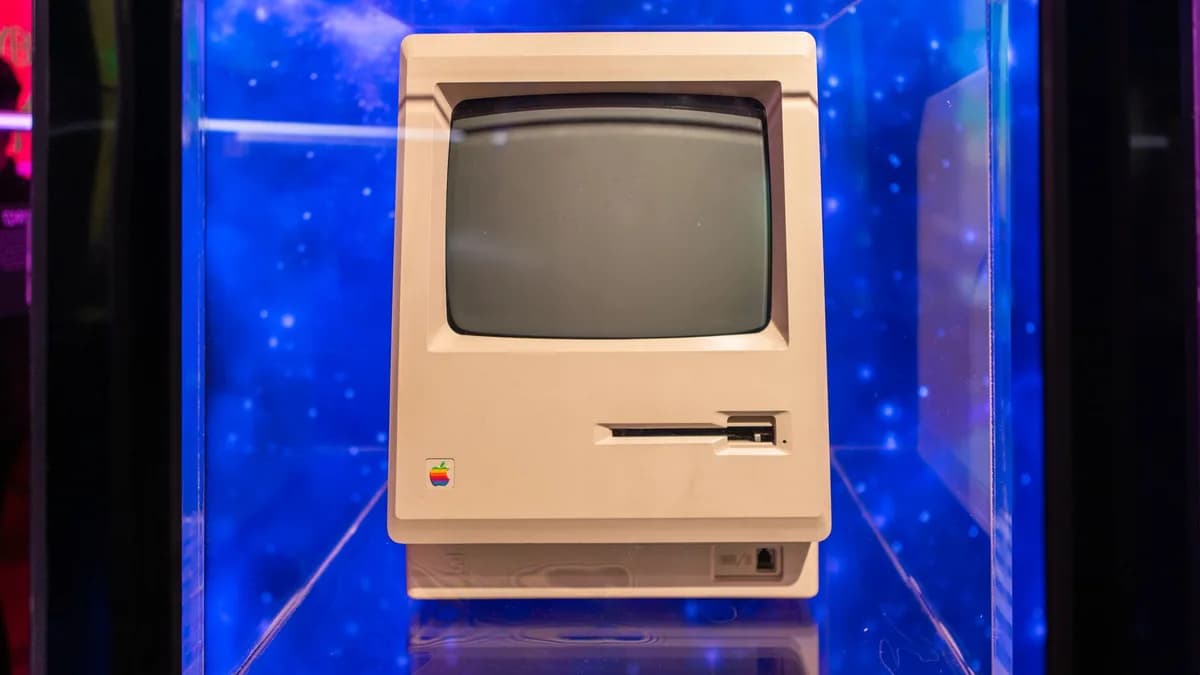
Four years after a landmark court order to open its walled garden, Apple wants to lock a new gate and charge a 15% toll to pass through it. In a new filing with the U.S. District Court of Northern California, Apple has formally proposed taking commissions of up to 15% on purchases users make after clicking an external link inside an iOS app, according to TechCrunch. This isn't a price cut. It's a strategic declaration that Apple believes its platform's value warrants a slice of every transaction, no matter where it occurs.
TechnologyAugust 14, 2026· 5 min read· By XOOMAR Insights Team
Apple Demands 15% Toll on Payments Outside Its Store
Updated on August 14, 2026
XOOMAR Intelligence
Analyst Take
59/ 100
2 sources analyzedLow confidenceTrend10Freshness98Source Trust90Factual Grounding86Signal Cluster40
The Math Behind the New Gate
Forced by the Supreme Court to stop stalling, Apple's proposal carves out a multi-tiered commission structure tied to its existing programs. The filing states a 15% fee for standard apps, 10% for developers in its Video Partner, News Partner, and Mini Apps Partner programs, and a 5% rate for developers enrolled in the Small Business Program. Subscription renewals would also be capped at 10%.
XOOMAR INTERPRETATION: The structure is a masterclass in framing. By anchoring the standard rate at 15%, Apple positions any deviation as a "discount" or a special benefit tied to good behavior (like joining a partner program). This makes a 0% fee the radical, unreasonable position, shifting the entire debate onto Apple's preferred turf: how much it should be paid, not whether it should be paid at all. The company's argument is consistent. It claims these fees are necessary to "recoup its investments in the tools, technology, and services" that comprise the App Store ecosystem.
A Fee Designed to Endure
This proposal is Apple's answer to a prolonged legal battle with Epic Games. The core issue was Apple's initial attempt to impose a new 27% commission on external purchases. A court found that move violated its order and halted it in April 2025. An appeals court later ruled Apple could receive compensation for its intellectual property, sending the question of an appropriate fee back to Judge Yvonne Gonzalez Rogers.
Apple is now offering 15% as that "appropriate" compensation. In its filing, it directly compares its proposed rates to Google Play, which charges 20% link-out rates for standard apps, 15% for apps in special programs, and 10% for subscription renewals. It even notes that Epic agreed to those Google rates.
XOOMAR INTERPRETATION: This comparison is a calculated legal and rhetorical maneuver. By aligning its fees with a dominant competitor, Apple argues its proposal is reasonable and market-based. The goal is clear: to persuade the court that any ruling deviating far from this structure would be punitive and out of step with industry norms, effectively preserving a fee-based model for all in-app economic activity in perpetuity. It's a strategy of normalization, as we have seen before in how other tech giants manage ecosystem control, such as Microsoft Merges Copilot Apps in AI Super App Launch.
The Developer's Next Move: A Hobson's Choice
For most developers, this proposal creates a lose-lose calculus. Leaving the App Store's payment system means handing Apple 15% of revenue anyway, while also incurring the costs and friction of building and maintaining an external payment system, dealing with customer support issues, and likely experiencing lower conversion rates from a disjointed user experience.
The only clear "winners" under this structure are the Small Business Program developers earning under $1 million annually, who would pay just 5%. For everyone else, the financial incentive to use external links is razor-thin at best. A developer paying the standard 30% App Store commission could move to an external link and save 15 percentage points, but they'd lose the seamless checkout and perceived security of Apple's native system. For a developer already paying 15% through Apple's reduced commissions for subscription services, moving outside offers zero financial benefit.
XOOMAR INTERPRETATION: This is the genius, or audacity, of the proposal. It is designed to make the external link option economically unattractive for the vast majority of developers. Apple is betting that inertia, fear of complexity, and the comfort of the known will keep developers inside the garden. The court-mandated "freedom" becomes a burdensome choice most will decline, leaving Apple's control fundamentally intact.
What Judges, Users, and Rivals Watch Next
The immediate next step is for Judge Gonzalez Rogers to review Apple's proposal alongside Epic Games' response before setting the final commission rate. The judge's dilemma is a technical one: does this structure constitute reasonable compensation for Apple's intellectual property, as the appeals court suggested it could collect?
For users, the practical outcome may be minimal. If developers largely shun the external link option due to its complexity and persistent fees, the iOS payment experience will remain unchanged. The "choice" will be theoretical.
For the broader industry, Apple's move is a bellwether. Google will watch closely. Other platforms facing regulatory scrutiny will see a potential blueprint: concede on the mechanism, but hold the line on the economics. The precedent reinforces that, even in a more open model, the platform owner can still claim a significant tithe.
This fight over a percentage point obscures the deeper war, as seen in other conflicts over platform control, like Mac Users Buy Driverless Docks Against Apple's $150 Tax. The battle is less about the commission itself and more about who owns the direct relationship with the customer, their data, their purchase history, their billing information. Apple's fee is a tax on that escaped value.
The likely endgame? The court may tinker with the percentages but will likely accept some fee as lawful. Developers will grumble but mostly stay put. Epic and other large players will use the external links, absorbing the cost as a necessary expense for greater control. And the decades-long war between platform sovereignty and developer independence will simply shift to a new, equally contentious front: data portability, anti-steering rules, and the very definition of what a "platform fee" should cover in a world where the storefront is no longer the only point of sale.
Impact Analysis
- Apple's attempt to impose fees on external transactions could set a precedent for how platform companies monetize third-party links across the tech industry.
- The proposed 15% fee directly impacts developers' revenue models and may influence whether they offer external purchase options, affecting consumer choice.
- This move represents a critical test of antitrust enforcement and the limits of app store regulation following the Epic Games legal battle.
Apple's Proposed Commission Rates (Click-Through Purchases)
Standard Apps
%15
Video/News/Mini Apps Partners
%10
Small Business Program
%5
Subscription Renewals
%10

Written by
XOOMAR Insights Team
Research and Editorial Desk
The XOOMAR Insights Team pairs automated research with human editorial judgment. We track hundreds of sources across technology, fintech, trading, SaaS, and cybersecurity, cross-check the facts, and explain what happened, why it matters, and what to watch next. We do not just rewrite headlines. Every article is fact-checked and scored for reliability before it goes live, and we link back to the original sources so you can verify anything yourself.
Explore More Topics
Related Articles
 Technology
iPhone Arms Users With Weapon Against AI Deepfakes
Apple is building a cryptographic feature called Apple Reference Image to let iPhone users prove their photos are original camera shots, not AI-generated deepfa
Aug 13, 20268 min
 Technology
Apple Splits iPhone 18 Launch, Delays Base Model Until 2027
Apple is fracturing its iconic September launch, planning to debut only iPhone 18 Pro models this fall and holding the standard iPhone 18 until 2027.
Aug 12, 20267 min
 Technology
Android Versus iPhone Decision in 2025
Choosing between Android and iPhone is no longer about hardware; it's about which smart ecosystem fits your digital life, tech comfort, and budget better in 202
Aug 13, 202613 min
 Technology
Mac Users Buy Driverless Docks Against Apple's $150 Tax
A third-party driverless Mac dock uses USB4 to deliver perfect, lag-free dual displays for $150, making Apple's Thunderbolt premium look outdated.
Aug 14, 20266 min
 Technology
Orion Browser Cracks Google's Surveillance Monopoly
The Orion browser, a zero-telemetry alternative built on Apple's WebKit engine, has launched in beta for Linux, offering a direct challenge to Google's data-ext
Aug 14, 20266 min
 Fintech
Tariff Rebates Send $9.6 Billion to Apple, Nike
Corporate giants, led by Apple and Nike, are cashing billions in retroactive tariff refunds, creating an unexpected windfall while consumers get nothing.
Aug 13, 20267 min
 Cybersecurity
Apple's Lock Screen Alert Warns iPhone Users of Spyware Attack
Apple has escalated its spyware warnings by sending high-confidence threat notifications directly to the lock screens of iPhones targeted by sophisticated, stat
Aug 14, 20266 min
 Fintech
Women Inherit $100 Trillion, Trashing Old Wealth Management Playbooks
Women will inherit over $100 trillion by 2048, but most have never met a financial advisor. To win their business, advisors must redesign their practice around
Aug 14, 20265 min
 Technology
Vendor Mortality Scars Businesses Left Without Data
The primary risk in enterprise cloud computing is no longer downtime, but the permanent loss of critical data when a storage vendor goes out of business, a cost
Aug 14, 20269 min
 Global Trends
Zambia Halts Vote Count Amid Ballot Theft And Violence
Zambia has halted its presidential election vote count for 24 hours amidst allegations of ballot paper theft and threats of violence, throwing the country's pol
Aug 14, 20264 min
Don't miss the signal
Get our weekly roundup of the stories that matter across tech, fintech, and trading. No noise, just signal.
Free forever. No spam. Unsubscribe anytime.