
Aseon Labs has raised $10 million to attack a robotaxi problem hiding in plain sight: driverless cars still spend valuable time driving empty to get cleaned, charged and inspected. The quiet question is who services robotaxis close enough to passenger demand that the vehicles don't burn their economics on deadhead miles.
TechnologyJune 26, 2026· 6 min read· By XOOMAR Insights Team
Empty Miles Haunt Robotaxis, Aseon Labs Lands $10M Fix
Updated on June 26, 2026
XOOMAR Intelligence
Analyst Take
61/ 100
4 sources analyzedLow confidenceTrend10Freshness100Source Trust90Factual Grounding95Signal Cluster40
The startup came out of Y Combinator's 2026 spring cohort and raised the round from Crane Venture Partners and others, according to TechCrunch.
Can Aseon Labs cut the empty miles robotaxis burn just to get serviced?
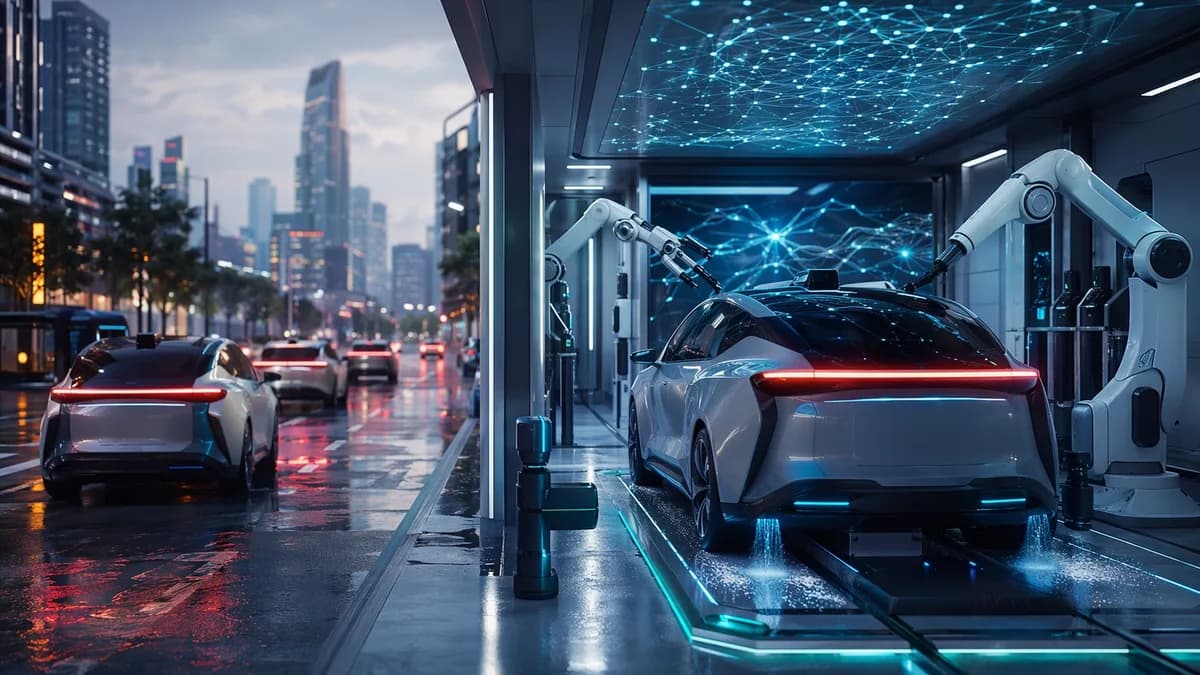
Aseon Labs is positioning itself around a practical part of robotaxi operations: servicing vehicles closer to where rides actually happen. The concept is less glamorous than autonomy itself, but it sits directly in the path of fleet economics.
The broad pitch is direct: fewer trips to distant depots, fewer miles without paying passengers, and more time in service during the day. What remains less clear from the public material reviewed is the exact design of the company’s facilities, how automated they will be at launch, and how quickly they can be deployed.
Those empty trips are known as deadhead miles, an industry term for miles driven without a paying passenger. For robotaxi operators, the issue is not only whether a car can drive itself safely. It is whether that car can stay productive through the demand curve of the day without repeatedly leaving the best service areas.
That is where Aseon Labs’ timing makes sense. As robotaxis expand, the supporting infrastructure around them becomes more important. A vehicle still needs to be charged, cleaned, inspected and returned to service, and each step can either protect or erode utilization.
XOOMAR analysis: the investor interest matters because Aseon Labs is selling a physical operations layer, not just software. That puts it closer to hard-tech infrastructure than a typical SaaS startup, with real estate, hardware reliability and fleet integration sitting between the deck and revenue.
Why are cleaning, charging and inspections turning into a robotaxi margin problem?
Robotaxis don't only need to drive themselves. They need to show up clean, charged, inspected and ready for the next passenger.
That sounds basic. It becomes expensive when the vehicle has to leave a busy service area and travel to a depot outside the city center because real estate is cheaper there. The farther the service point is from passenger demand, the more the fleet risks spending energy, time and vehicle life on non-revenue movement.
This is already becoming a visible operating concern. Uber has separately leaned on Hertz to help clean, charge and repair Lucid Motors robotaxis, according to prior coverage of that arrangement. That kind of partnership points to the same underlying issue: autonomy does not remove the need for day-to-day fleet care.
The larger robotaxi market is also moving from demonstration to operational scale. As TechTarget’s overview of the rise of robotaxis notes, the technology depends on a mix of vehicles, mapping, sensors, software and supporting systems. Servicing infrastructure is part of that broader stack, even if it gets less attention than the self-driving system itself.
| Servicing model | How it works | Aseon Labs' argument |
|---|---|---|
| Central depot | Robotaxis travel to a larger off-site facility for cleaning, charging and inspection | Cheaper real estate can come with wasted miles and downtime |
| Distributed service point | Smaller service locations sit closer to high-demand areas and handle vehicles nearby | Better utilization if locations reduce detours and turnaround time |
The idea sounds simple, but the execution is not. A distributed servicing network has to solve location access, power, labor, scheduling, fleet routing and vehicle handoff. If any of those pieces fail, the service point can become another delay rather than a fix.
That is why Aseon Labs’ challenge is broader than building a clever station. The company has to show that robotaxi servicing can be moved closer to demand without creating new friction for operators that already manage complicated fleets.
For readers tracking how transport companies are attacking cost from the hardware side, recent EV and mobility debates show a different version of the same pressure: fewer expensive assumptions, more attention to unit economics. Aseon’s burden is heavier than pitch momentum. It has to make machines, locations and fleet operations work together.
Can Aseon Labs prove movable pit stops beat distant depots at fleet scale?
The reviewed source material does not establish announced customer contracts, specific deployment sites or detailed operating commitments. That makes the next proof points practical rather than promotional: pilot partners, locations, turnaround times, repeat usage and cost per vehicle serviced.
That is not the same as revenue. Fleet operators will want evidence that a third-party servicing layer can make vehicles more available, not merely shift costs from a central depot to a distributed network.
They will also ask a hard procurement question: why outsource this instead of building their own depot stack? Aseon Labs needs to show that its approach can supplement central depots without adding another brittle layer to fleet operations.
The operational risks are concrete: real estate access, local permitting, labor availability, energy access, hardware uptime and integration with autonomous fleet software. Those are not side issues. They are the business.
The public reporting reviewed here supports the core funding and accelerator milestone: Aseon Labs came out of Y Combinator’s spring 2026 cohort and raised $10 million from Crane Venture Partners and others. More specific claims about prototype counts, staffing plans, automation methods, individual investor names, customer interest, founders’ prior roles or detailed technical design would need additional confirmation before being treated as established.
XOOMAR analysis: if Aseon Labs can cut deadhead miles and vehicle downtime, it could become part of the hidden infrastructure layer that makes robotaxis less expensive to run. If the model proves hard to site, staff or keep reliable, the company risks becoming another operational workaround that sounds cleaner in a demo than it behaves on city streets.
The months ahead should answer the question investors just funded: whether robotaxi servicing can move from far-off depots to city corners without creating a new bottleneck.
The Bottom Line
- Robotaxi economics depend on keeping vehicles in paid service instead of driving empty for maintenance.
- Aseon Labs’ $10 million raise shows investor interest in the physical infrastructure behind autonomous fleets.
- Better charging, cleaning and inspection logistics could become a key bottleneck as robotaxi services scale.
Robotaxi Servicing Models
| Approach | How It Works | Economic Impact |
|---|---|---|
| Distant depots | Robotaxis drive empty to centralized locations for charging, cleaning and inspection. | Adds deadhead miles and reduces time available for paid rides. |
| Aseon Labs pitstops | Services vehicles closer to passenger demand areas. | Aims to cut empty miles and improve fleet utilization. |
Sources

Written by
XOOMAR Insights Team
Research and Editorial Desk
The XOOMAR Insights Team pairs automated research with human editorial judgment. We track hundreds of sources across technology, fintech, trading, SaaS, and cybersecurity, cross-check the facts, and explain what happened, why it matters, and what to watch next. We do not just rewrite headlines. Every article is fact-checked and scored for reliability before it goes live, and we link back to the original sources so you can verify anything yourself.
Explore More Topics
Related Articles
 Technology
Robotaxis Need a Backbone — Moove Just Raised $250M to Build It
Moove raised $250M, pivoting from ride-hailing financing to become the physical backbone for scaling robotaxi fleets, aiming to own the depots and maintenance f
Aug 5, 20265 min
 Technology
AI Hunts for New Chips to Shatter Hardware's Heat Barrier
Discovered Materials is using AI to hunt for new semiconductor materials, aiming to replace a decade-long manual process and smash the heat wall throttling mode
Aug 10, 20267 min
 Technology
Live Shopping Unicorn Whatnot Doubles Valuation to $20 Billion
Live shopping platform Whatnot raised $545 million, doubling its valuation to $20 billion in under a year. The cash will fuel an AI-driven expansion as its sale
Aug 7, 20265 min
 Technology
TechCrunch Disrupt 2026 Tests Endurance Over AI Hype
TechCrunch Disrupt 2026 pivots from startup hype to operational durability, following founders who landed massive investor interest and oversubscribed rounds fr
Aug 7, 20266 min
 Technology
The Brutal ROI on a $12,500 TechCrunch Disrupt Booth
Paying $12,500 for a Disrupt booth isn't an investment, it's a test. This guide shows how to turn that table into qualified leads and meetings.
Aug 6, 20266 min
 Global Trends
Court Cancels Russia's Only Anti-War Party on 'Extremism'
A Moscow court disqualified Russia's only registered anti-war political party from parliamentary elections, using allegations of extremism and copyright infring
Aug 10, 20266 min
 Fintech
Banks Invade Earned Wage Access, Force Fintechs Out
Major banks and credit unions are launching earned wage access to retain customers and gather data, forcing original fintech providers into a defensive scramble
Aug 10, 20264 min
 Fintech
Brazil Aims Pix Payments at Global Payment Giants
Brazil's central bank is pushing its dominant Pix instant payment system onto the global stage, aiming to reshape cross-border payments and challenge establishe
Aug 10, 20267 min
 Technology
Zuckerberg's Personal AI Pitch Betrays Meta's True Motive
Mark Zuckerberg's new AI manifesto, promising universal 'personal superintelligence,' inadvertently exposes the commercial engagement and data-harvesting logic
Aug 10, 20265 min
 Technology
Tech Giants Lose Major Ruling, Face 2,400 Addiction Suits
A federal appeals court refused to let Meta, Google, TikTok, and Snapchat use Section 230 to quickly dismiss thousands of lawsuits accusing them of intentionall
Aug 10, 20266 min
Don't miss the signal
Get our weekly roundup of the stories that matter across tech, fintech, and trading. No noise, just signal.
Free forever. No spam. Unsubscribe anytime.