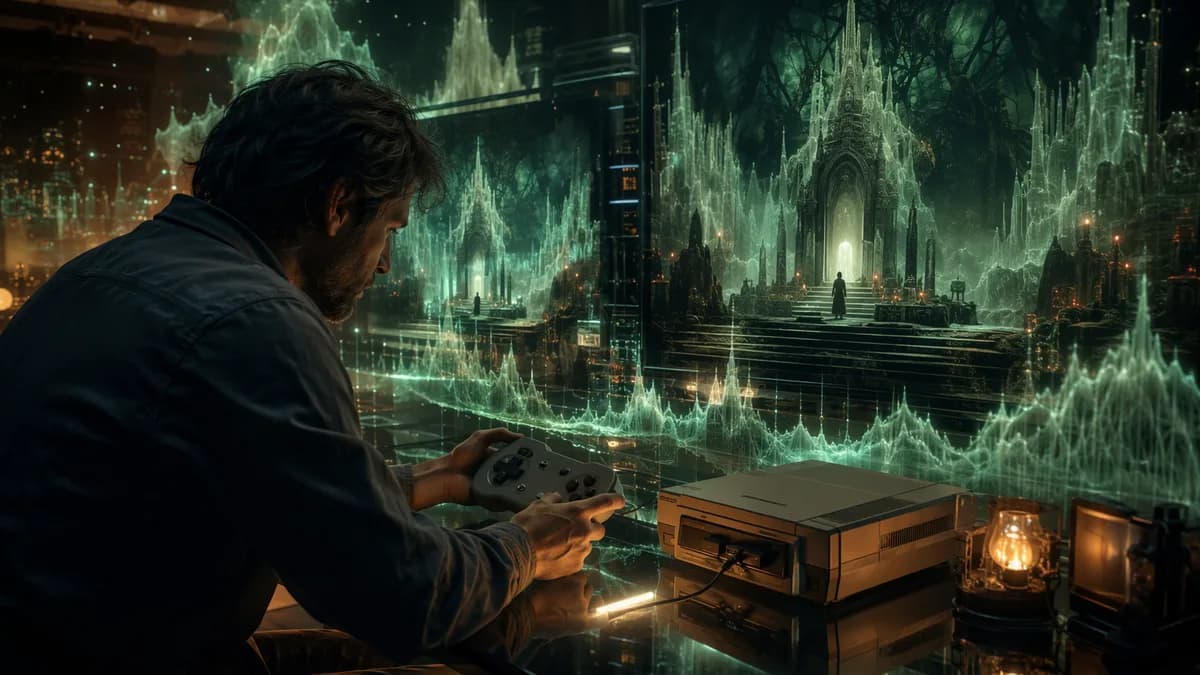
Why does Carter Sherman, a Guardian journalist whose work centers sex, gender, abortion access, and national politics, still remember being terrified by The Legend of Zelda: Ocarina of Time?
XOOMAR Intelligence
Analyst Take
That is the real signal inside a light interview answer. In a Verge Weekend Questionnaire, Sherman named Ocarina of Time as the game she remembers most fondly, according to The Verge. Her reason was precise, and better than a generic nostalgia hit:
“The Legend of Zelda: Ocarina of Time. As a kid, I was terrified of the music that soundtracked the Deku Tree dungeon(s).”
XOOMAR analysis: the Carter Sherman Ocarina of Time anecdote works because it exposes what durable games do. They don't only entertain. They leave emotional residue. Sherman's memory isn't about graphics, completion, or mechanics. It's about sound, fear, and the strange pleasure of being unsettled by a world that still felt worth entering.
Why does Carter Sherman's Ocarina of Time fear land harder than a normal nostalgia answer?
Because Sherman isn't being presented as a gaming personality. She is a journalist with a serious public beat.
The Verge identifies her as a reporter who has covered sex, gender, and the personal and national politics around them for years. She was a senior reporter for Vice, has written for Elle, Ms. magazine, and Los Angeles magazine, and has received a Scripps Howard Award, a National Press Club Journalism Award, and four Emmy nominations.
That professional context changes the texture of the answer. A childhood memory of fear from Ocarina of Time sits beside a career spent reporting on intimate subjects shaped by law, identity, power, and politics. The point isn't that Zelda explains her work. It doesn't. The better reading is narrower and more useful: early media memories can become part of the emotional vocabulary adults carry into serious public life.
Sherman is also the author of The Second Coming: Sex and the Next Generation’s Fight Over Its Future, a book The Verge says examines how the internet and polarized politics have changed sex and relationships, from school board battles over sex ed to abortion access. She told The Verge she interviewed more than 100 people under 30 for the book.
That detail matters. Her work asks people to describe private experiences inside larger systems. Her Zelda memory is private too, but cultural. It shows how a single sensory detail, music in the Deku Tree dungeon(s), can outlast the rest of the childhood context around it.
Which numbers actually support Ocarina of Time's long afterlife?
The safest hard number in the supplied material is 1998, the year The Legend of Zelda: Ocarina of Time was released, according to the related source context provided with the article brief.
The source packet also says a Guardian 20th-anniversary piece was published on December 11, 2018, framing the game as a “melancholy masterpiece” that changed games forever. Another supplied context note says The Guardian described it as commonly regarded as one of the finest games ever made, with a review calling it a game about “curiosity and the joy of discovery” and “the pinnacle of game design.”
Those are strong cultural markers. They are not sales data. They are not a review aggregate. The provided material does not verify claims about lifetime sales, platform-specific release details, or ranking tables, so those claims don't belong here.
What the verified material does support is more interesting anyway:
| Verified detail | What it shows |
|---|---|
| 1998 release year | The game remains culturally discussable decades later |
| December 11, 2018 anniversary framing | Critics still return to it as a reference point |
| Sherman's Verge answer in 2026 | Personal memories of the game still travel through mainstream culture |
| The Deku Tree music memory | The afterlife is emotional, not just technical |
The Carter Sherman Ocarina of Time moment is a reminder that legacy is not only measured by units sold. Sometimes it is measured by whether one piece of music can still make a grown professional remember being small.
How did Ocarina of Time scare a child without being discussed here as horror?
The source gives one specific mechanism: music.
Sherman does not mention monsters, combat, or visual design. She says she was terrified by “the music that soundtracked the Deku Tree dungeon(s).” That wording matters. It keeps the analysis honest. The fear she describes came through atmosphere before explanation.
XOOMAR analysis: this is one reason Ocarina of Time remains so sticky in memory. A game can make danger feel present without announcing itself as horror. Music can turn a space into a threat. A dungeon can feel hostile before anything happens. For a child, that is enough.
This also explains why the anecdote is stronger than “I loved Zelda.” Fondness and fear are fused. Sherman remembers being scared, but she names the game as the one she has the fondest memories of. That contradiction is the point. Childhood play often becomes durable when it mixes desire and discomfort.
The same tension appears across modern screen culture. XOOMAR has covered how devices and displays become emotional battlegrounds in their own right, from LG Gaming Monitors Trigger Revolt Over PC Adware Scare to Sony Bravia 9 II Corners OLED in the Bright-Room Fight. The hardware changes. The core question remains: what does the screen make people feel, and what do they remember afterward?
Why does Sherman's career make this more than a celebrity gaming anecdote?
Because The Verge interview quietly maps a working writer's inner toolkit.
Sherman says her most indispensable tool is her French press. Asked how many tabs she has open, she answers: “The limit does not exist.” When she feels stuck, she scrolls through a Notes app list of evocative writing, including phrases from Shirley Jackson, Carson McCullers, and Katie Kitamura.
That is not random color. It sketches a person who treats language as fuel, structure, and rescue. Her coffee habit, tab overload, quote archive, and Zelda memory all point toward the same thing: attention is emotional before it becomes intellectual.
The Verge also says Sherman is now at The Guardian, where she cohosts Stateside with Kai and Carter. Her public work includes reporting, book writing, and hosting. In that context, the Weekend Questionnaire does what good profile formats do. It humanizes the byline without flattening the expertise.
There is a trap here, and it should be avoided. It would be too neat to say Ocarina of Time shaped Sherman's reporting style or political interests. The source does not support that. What it does support is a smaller claim: formative media memories can sit beside serious professional identity without becoming trivial. A reporter can cover abortion access and still remember the exact childhood terror of dungeon music. Both are part of a person's archive.
Which readings of Ocarina of Time are supported, and which go too far?
The tempting move is to turn one quote into a sweeping theory of Zelda design. That would overreach.
A better approach is to separate what the material supports from what remains interpretation.
| Reading | Status | Why |
|---|---|---|
| Sherman fondly remembers Ocarina of Time | Supported | She directly names it in The Verge questionnaire |
| The music in the Deku Tree dungeon(s) scared her as a child | Supported | This is her direct quote |
| The game has a long critical afterlife | Supported by supplied context | Guardian anniversary and review language are included in the brief |
| The fear shows how atmosphere can outlast mechanics | XOOMAR analysis | Tied to Sherman's quote, but interpretive |
| Nintendo designed it specifically to make children feel brave | Not supported here | No Nintendo source is supplied |
| Parents broadly saw it as family-friendly but unsettling | Not supported here | No parent or caregiver evidence is supplied |
This distinction matters. The Carter Sherman Ocarina of Time answer is useful because it is specific. Making it too broad would weaken it.
Can Zelda's old fear still teach modern media anything?
Yes, but the lesson is not “make everything darker.”
The sharper lesson is that discomfort can deepen attachment when it is tied to curiosity. The supplied Guardian context describes Ocarina of Time as a game about “curiosity and the joy of discovery.” Sherman's memory adds the other half: discovery can be frightening when the player is young enough for atmosphere to feel bigger than the screen.
That is why old games still generate essays, interviews, and personal recollections. They don't just remind adults what they played. They remind them how play felt before they had clean language for fear, uncertainty, and mastery.
For future nostalgic game writing, the best pieces won't treat childhood fear as a flaw to explain away. They will treat it as evidence. The next wave of essays, interviews, and re-releases will be strongest when they preserve what made these memories durable: ambiguity, silence, odd mood, and the sense that the world on screen might be slightly more dangerous than the player expected.
The watch item is simple. If more public figures describe games through emotional fragments rather than brand loyalty, that will confirm the thesis. If the conversation collapses back into rankings and trivia, it will miss what Sherman captured in one line: old games matter because they don't just recall childhood. They recall the feeling of surviving it.
Key Takeaways
- Sherman’s Ocarina of Time memory shows how games can leave lasting emotional impressions beyond gameplay or visuals.
- The anecdote connects childhood media experiences with the emotional vocabulary adults carry into serious professional lives.
- It reinforces Ocarina of Time’s cultural staying power through a specific memory of sound, fear, and atmosphere.
Primary Sources & Disclosures

Written by
XOOMAR Insights Team
Research and Editorial Desk
The XOOMAR Insights Team pairs automated research with human editorial judgment. We track hundreds of sources across technology, fintech, trading, SaaS, and cybersecurity, cross-check the facts, and explain what happened, why it matters, and what to watch next. We do not just rewrite headlines. Every article is fact-checked and scored for reliability before it goes live, and we link back to the original sources so you can verify anything yourself.