If OpenAI puts ChatGPT into a screenless speaker with a camera, who controls the home interface when the phone is not in your hand?
XOOMAR Intelligence
Analyst Take
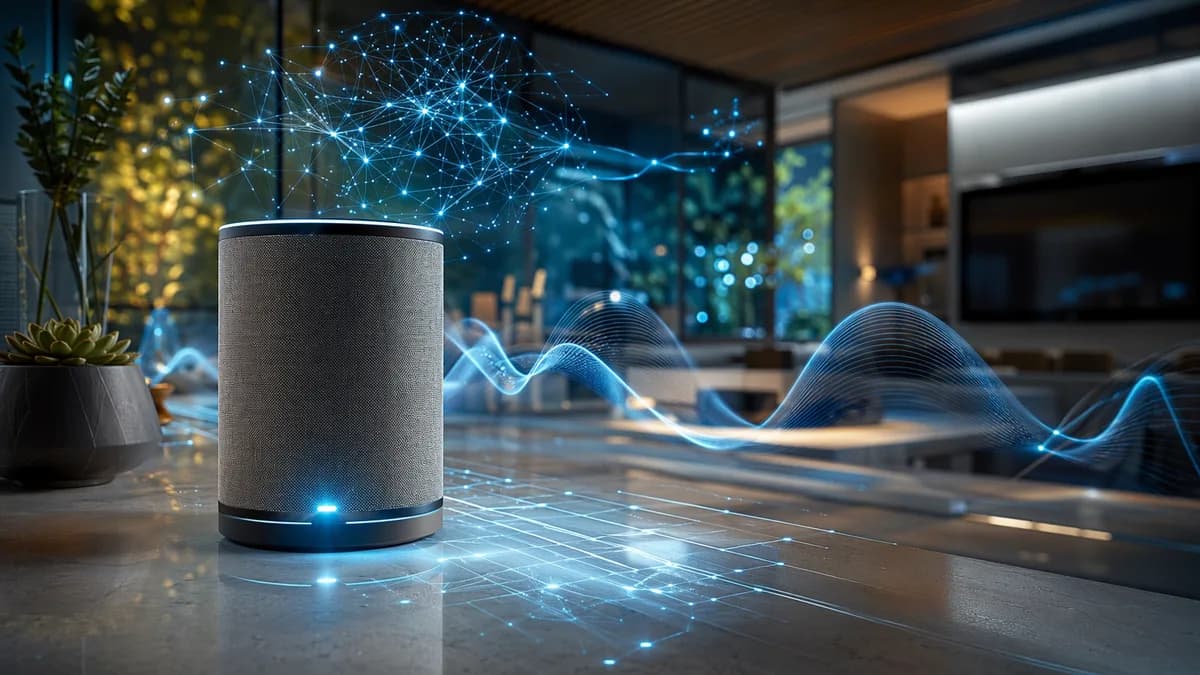
That is the real question behind the reported ChatGPT smart speaker, which OpenAI may unveil this year and aims to release in 2027, according to The Verge, citing Bloomberg. The device would be OpenAI’s first major hardware product, and the design choice matters: no screen, voice-first interaction, a camera, sensors, portability, and ChatGPT as the core interface.
Can a screenless ChatGPT smart speaker beat the app habit?
OpenAI’s reported bet is direct: ChatGPT should stop being a place users visit and become something present in the room.
A screenless ChatGPT smart speaker would push users away from familiar phone controls and toward voice, context, and AI judgment. That’s the bold part. A screen gives people confirmation, menus, settings, and escape routes. Removing it forces the device to earn trust through conversation and action.
XOOMAR analysis: OpenAI does not appear to be chasing old smart speaker nostalgia. The reported camera, sensors, GPT-Live voice model, and “mechanical elements that can move on their own” point to a more ambitious product: an AI object that reacts to the environment, not just a command box or talking Home Depot Skelly that plays music.
That also raises the stakes. A bad app can be closed. A bad ambient device sits in your kitchen, hears your family, sees your room, and asks users to believe it understands enough context to help.
What does the reported hardware stack actually reveal?
The reported device has a clear shape, even if OpenAI has not announced it.
| Reported element | What it suggests |
|---|---|
| No screen | Voice and context become the main interface |
| Camera and sensors | The device may interpret objects, rooms, and surroundings |
| Rechargeable battery | Users could carry it from room to room |
| Smart home controls | OpenAI wants the device to act, not only answer |
| GPT-Live | Real-time voice performance is central to the product |
| Mechanical elements | OpenAI may be trying to make the device feel more physically responsive |
The Verge reports that the device will let users talk with ChatGPT, play media, answer questions, respond to messages, and control smart home products. Bloomberg also says it will use a camera and additional sensors to “understand” the user’s environment.
That makes the product more personal than a fixed speaker. It could follow the user’s daily context across rooms: cooking help in the kitchen, media in another room, messages during chores. The battery matters because portability changes the product from furniture into a companion device.
The risk is just as obvious. People may like ChatGPT on a laptop and still reject a camera-enabled AI speaker in private spaces. Convenience and unease will arrive together.
Which numbers make OpenAI’s hardware push more than a rumor?
The verified numbers are limited, but they are meaningful.
OpenAI is reportedly planning a larger hardware lineup of “roughly” five devices, with the smart speaker expected to launch in 2027. The company is working with former Apple designer Jony Ive after OpenAI’s nearly $6.5 billion acquisition of his design company, io Products.
Another reported data point comes from TechRadar, citing The Information: a possible $200-$300 price range for a ChatGPT smart speaker. That figure should be treated carefully because OpenAI has not confirmed it, but it would position the device above many basic smart speakers and closer to a premium AI appliance.
There is also a nearer hardware marker: OpenAI has teased a Codex Micro gadget made with Work Louder, scheduled to release on July 15th, according to The Verge. That is not the same product. But it shows OpenAI is willing to put AI into dedicated physical devices rather than keeping everything inside chat windows.
XOOMAR analysis: the economics are still opaque. The source material does not provide device margins, expected subscription attachment, smart speaker penetration, or model-serving costs. So the core business question remains unanswered: will this device make money as hardware, as a subscription gateway, or as a way to keep ChatGPT present in daily life?
Why can’t this become another Alexa-style command box?
Because OpenAI’s reported device needs to prove it can do more than answer better.
The source material compares the idea to existing products like Amazon Echo and Google Home, but OpenAI’s challenge is different. A ChatGPT smart speaker would need to combine conversation, memory, action, and safety inside a shared household space.
The real test is not whether ChatGPT can produce a smoother answer than older assistants. It is whether it can reliably respond to messages, control devices, interpret what its camera sees, and avoid confident mistakes when those mistakes affect the home.
Bloomberg’s reported use of GPT-Live, OpenAI’s upgraded voice model announced last week, suggests voice latency and natural interaction are central. That is necessary, not sufficient. A home device also needs permissions, boundaries, and clear failure modes.
XOOMAR analysis: if OpenAI ships a device that mostly answers questions, it will feel like ChatGPT trapped in a speaker. If it can take useful actions while respecting context and consent, it becomes a new kind of household interface.
How will Apple, consumers, and developers judge the same device differently?
Consumers will judge the device by comfort. Does it help enough to justify being present, listening, and seeing?
Apple will judge it through a legal and competitive lens. The report comes days after Apple filed a lawsuit against OpenAI accusing the AI company of stealing hardware secrets. OpenAI responded on Tuesday with a denial framed around evidence:
OpenAI said it is “not aware of any evidence that this complaint has merit.”
That lawsuit now hangs over the hardware push. For readers tracking the legal fight, XOOMAR has covered the dispute in Apple Sues OpenAI, Says Hardware Push Stole Secrets and 400 Apple Defectors Ignite OpenAI Lawsuit Over ChatGPT.
Developers and smart home companies will have a narrower question: can this become a platform worth supporting? They will need stable APIs, reliable device control, clear data policies, and integration rules. None of that is confirmed in the supplied reporting.
Privacy is the hardest consumer issue. A camera, sensors, personal context, and voice create a powerful product surface. They also create questions about retention, consent, family members, children, and who can access environmental context. The sources do not answer those questions yet.
What changes if ChatGPT becomes a household layer?
If the reported device works, ChatGPT shifts from software into an ambient service for search, scheduling, learning, accessibility, media, messages, and home control.
That would pressure AI labs and device makers from opposite directions. AI labs may need hardware to protect distribution. Device makers may need stronger models to keep users from moving daily tasks to third-party AI agents.
XOOMAR analysis: the screenless design is the key tell. OpenAI appears to be testing whether a model can become the interface itself. No app grid. No browser tab. Just voice, context, and action.
But that thesis fails fast if users feel watched, misunderstood, or trapped inside vague AI behavior. A household AI device has less margin for weirdness than a chatbot.
What evidence will confirm OpenAI has a real hardware race on its hands?
The next signals matter more than the leak.
Watch for four things: a formal OpenAI announcement this year, confirmation of the 2027 release target, privacy details for camera and sensor data, and proof that GPT-Live can support reliable real-time actions rather than polished demos.
A premium positioning would fit the reported hardware: camera, sensors, battery, moving parts, and advanced voice. A cheap speaker strategy would be harder to square with that stack.
The product wins if users treat it as genuinely useful at home. It fails if it feels like a better chatbot placed inside a privacy-sensitive gadget. That distinction will decide whether the ChatGPT smart speaker starts the first serious AI hardware race of the ChatGPT era, or becomes another reminder that AI is easier to sell as software than as an object in the room.
The Bottom Line
- OpenAI’s first major hardware product could shift ChatGPT from an app into an ambient home interface.
- A screenless design raises major trust, privacy, and usability questions because the device may see and hear its surroundings.
- If released in 2027, the product could challenge how people interact with AI beyond phones and computers.
ChatGPT Smart Speaker vs. Phone App Habit
| Aspect | ChatGPT Smart Speaker | Phone/App Interface |
|---|---|---|
| Primary interface | Voice-first, screenless interaction | Screen-based controls, menus, and settings |
| Context awareness | Reported camera, sensors, and GPT-Live voice model | Mostly user-driven prompts and app inputs |
| Trust challenge | Always-present device in the home | App can be opened, closed, or ignored |
Primary Sources & Disclosures

Written by
XOOMAR Insights Team
Research and Editorial Desk
The XOOMAR Insights Team pairs automated research with human editorial judgment. We track hundreds of sources across technology, fintech, trading, SaaS, and cybersecurity, cross-check the facts, and explain what happened, why it matters, and what to watch next. We do not just rewrite headlines. Every article is fact-checked and scored for reliability before it goes live, and we link back to the original sources so you can verify anything yourself.