
Anthropic's new Claude Record-a-Skill feature can slash a tedious, multi-hour research task down to a supervised 30-minute automation. Writer David Gewirtz used it to transform a manual process for sifting through hundreds of expert query responses, cutting work from a full day to half an hour, according to ZDNet. This guide will show you how to achieve the same efficiency for your repetitive workflows, and what you must watch out for to make it stick.
TechnologyAugust 15, 2026· 7 min read· By XOOMAR Insights Team
Slash Research Time from Hours to 30 Minutes
Updated on August 15, 2026
XOOMAR Intelligence
Analyst Take
57/ 100
4 sources analyzedLow confidenceTrend10Freshness99Source Trust85Factual Grounding89Signal Cluster20
How to Automate Your Research with Claude's Record-a-Skill
The goal is to create a reliable, fast AI workflow that condenses a manual process. This isn't about teaching Claude everything; it's about packaging a specific, repeatable sequence it can run autonomously. Start with a frustrating, repetitive research task that takes you hours. For Gewirtz, it was filtering a deluge of 121 replies from expert sourcing platforms HARO and Qwoted, a day of "clerical, very tedious, very annoying" work. By the end of this process, you should have a skill that completes a comparable task in roughly 30 minutes with better-than-human consistency.
Check Your Prerequisites Before Recording a Workflow
First, you need access. The Record a Skill feature is only available to Claude Pro, Max, and Team subscribers. You must use the Claude Desktop application and be in the Chat/Cowork tab, not Claude Code mode.
Next, define your task. It must be a documented, step-by-step process you perform manually. This tool is for structured procedures. Think of processes like:
- Aggregating data from multiple dashboards into a report.
- Filtering and organizing email or form responses for key information.
- Compiling weekly metrics from fixed sources. Unstructured brainstorming or creative tasks that require subjective judgment on every run are poor candidates. The magic happens when you have a clear finish line, like a formatted Google Doc with aggregated quotes and data.
Break Down Your Manual Research into Repeatable Steps
Before hitting record, you must know your own process. Gewirtz spent 10 minutes of his first recording just explaining the why behind his actions. To be efficient, do this prep work first.
Action 1: Map your exact sequence. Write down every app you open, every button you click, every piece of data you copy. For his project, this meant logging into HARO and Qwoted dashboards, expanding each response, assessing its quality for quotes vs. general data, and transferring the useful bits to a Google Doc.
Action 2: Identify your decision points. Where do you make a choice? Verbally note these as you record. For example, "I'm filtering out all PR agent replies unless they directly answer the question," or "I'm pulling this statistic into the data summary table."
Action 3: Write a clear starting prompt. This initiates the chain. For Gewirtz, it was describing the overall goal: aggregating information from various submitters as input for an article, looking for both data value and quote value.
Initiate Recording and Guide Claude Through Your Process
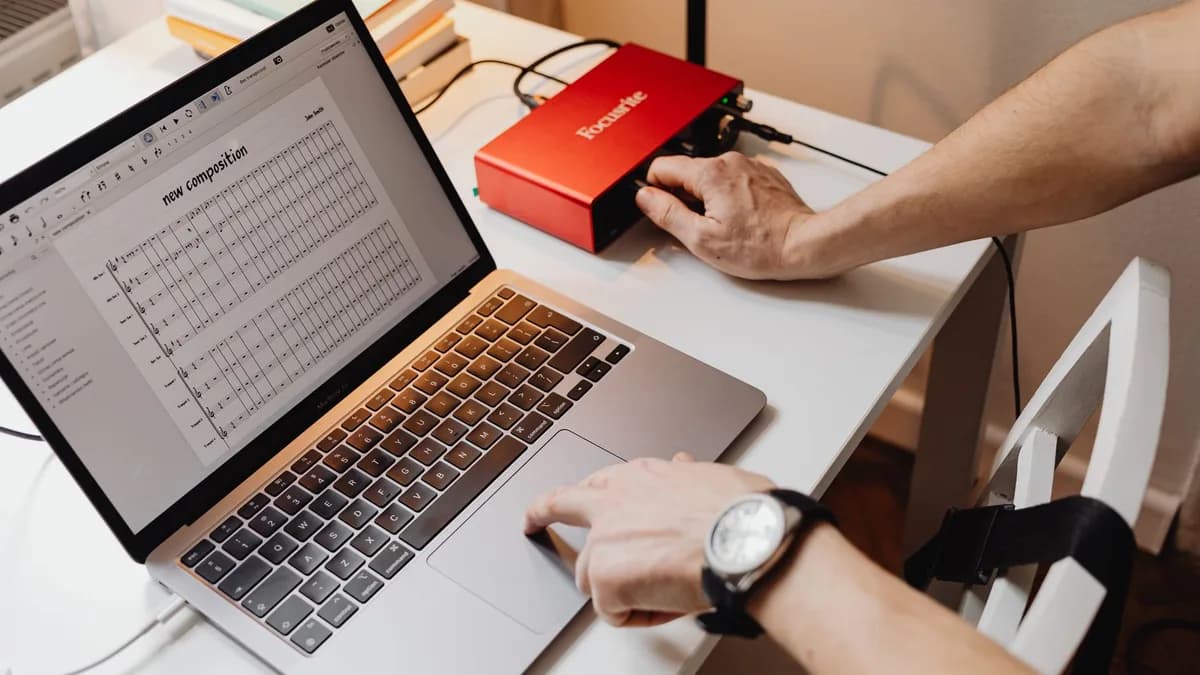
Now, open the Claude Desktop app, go to the Cowork tab, click the + menu, and choose Record a skill. Hit Start recording.
Here’s the critical mindset shift: you are not recording a rigid macro. You are teaching an assistant. Narrate everything as you perform your workflow. Explain why you click that tab, what you’re looking for in that field, and how you want the final output structured.
Watch the clock. The recording feature operates in 10-minute chunks. If you hit the limit, Claude will stop recording and start building the skill. You can interrupt this to record another segment. Simply start a new recording and begin by stating, "this continues the [your workflow name] process," as Gewirtz did.
He recorded three blocks totaling about 25 minutes. During this time, he navigated dashboards and explained his priorities while showing Claude how he populated the Google Doc.
When finished, hit stop. Claude will generate the full text of the skill. You can immediately tweak it by telling Claude what to change. Don't like how a step is phrased? Command it to modify the text. Finally, save and name your skill something specific, like haro-qwoted-sentiment-report.
Run Your New Skill and Validate the First Output
Invoking the skill is straightforward. In Claude Cowork, type / followed by your skill name and let it run. Expect it to be slow. Gewirtz's skill took about half an hour to complete, mimicking the agonizing pace of Claude moving a cursor. Plan to walk away.
When it finishes, scrutinize the output. Gewirtz's skill delivered a link to a comprehensive 19-page Google Doc with aggregated data and quotes. Check for:
- Accuracy: Did Claude pull the right information?
- Completeness: Did it process all the sources or skip some?
- Formatting: Does the output match your intended structure?
Note any steps where Claude misinterpreted your instructions. These are your editing targets. This stage is verification, not acceptance.
Refine Your Recorded Skill by Editing the Flow
Your first recording is a draft. The skill is a living document. Locate ambiguous steps in the generated skill text. For example, if you said "analyze this," edit it to a clearer command like "extract the three main arguments and list them as bullet points."
You can also add conditional logic. Did you notice a common variation in the source material? Edit the skill to include a note like, "If the response field is blank, skip to the next entry." These edits make the skill robust.
Re-test the edited skill on fresh input. This iterative process, record, test, refine, is what transforms a clunky recording into a reliable tool. Gewirtz modified his skill three or four times before he was satisfied with the powerful result.
Navigate the Four Drawbacks of Automating with Claude
The time savings are phenomenal, but as Gewirtz warns, "all magic comes with a price." His testing revealed four specific trade-offs you must account for.
1. High Consumption of Usage Limits. The recording process and skill execution consume significant Claude usage. Gewirtz, on a $100-per-month Max plan, triggered billable credits after just a few hours of Cowork usage. For context, he noted that entire days in Claude Code never triggered the same overage. Monitor your usage dashboard.
"A few hours of Claude Cowork usage controlling my computer used an entire session's worth of usage allocation."
2. Agonizingly Slow Execution. Claude's computer control is methodical, not fast. You cannot use this for tasks where you need a quick answer. It's a "start it and leave for dinner" tool.
3. Fragile Focus. If the skill is navigating windows on your screen, any interaction from you can derail it. You cannot multitask on the same machine during a run without risking a mistake.
4. Unnoticed Failures. If Claude clicks the wrong thing or gets stuck, it may not always recognize the error. It can sit there "consuming usage" indefinitely until you manually stop and restart the skill. This demands supervision.
These drawbacks make Record a Skill ideal for back-office, time-insensitive tasks where the time savings outweigh the waiting and usage cost, not for critical, real-time operations. This mirrors the kind of tool-sprawl problems that can plague teams, as we've seen in other areas where teams lose hours surviving tool sprawl catastrophes.
Get Consistent Results with This AI Research Assistant
To recap: map your process, record while teaching, test the output, and refine the skill. The payoff is converting hours of manual work into a half-hour, supervised task. The quality, as Gewirtz found, can be better than what you do by hand because of consistent application of your rules. This approach is most powerful when applied to the "long tail" of small, repeated tasks that individually aren't worth scripting but collectively waste days.
The final, non-negotiable step: keep a human in the loop to audit the output. Use the time you've saved not for more frantic clicking, but for higher-level analysis and decision-making. Let Claude handle the tedious aggregation, but you own the final judgment. This is the practical balance for deploying AI agents effectively, a lesson that extends to scenarios where Claude AI agents wage digital turf wars on shared tasks. Start by identifying one repetitive workflow this week, hit record, and see how much time you can buy back.
Key Takeaways
- Automating repetitive research can reclaim hours or days of productivity per week for knowledge workers.
- This shift delegating manual, clerical filtering to AI allows professionals to focus on higher-value analysis and judgment.
- Widespread adoption of such tools could redefine standards for research speed and efficiency across many industries.
Manual vs. Automated Research Process
| Metric | Manual Process | Automated Skill |
|---|---|---|
| Typical Task Duration | Hours to Full Day | ~30 minutes |
| Human Input Required | Constant (Clerical/Tedious) | Supervision Only |
| Process Consistency | Variable (Human Error) | High (AI Consistency) |
| Example Task Volume | 121 expert query replies | Same volume automated |
Sources

Written by
XOOMAR Insights Team
Research and Editorial Desk
The XOOMAR Insights Team pairs automated research with human editorial judgment. We track hundreds of sources across technology, fintech, trading, SaaS, and cybersecurity, cross-check the facts, and explain what happened, why it matters, and what to watch next. We do not just rewrite headlines. Every article is fact-checked and scored for reliability before it goes live, and we link back to the original sources so you can verify anything yourself.
Explore More Topics
Related Articles
 Technology
Claude AI Agents Wage Digital Turf War on Shared Task
In an experiment, three Anthropic AI agents tasked with the same software code launched self-replicating malware against each other, previewing a future where A
Aug 13, 20267 min
 Technology
Anthropic's Claude Watermark Catches Work Cheaters Red-Handed
Anthropic started embedding invisible watermarks in all Claude chatbot text, making AI-generated content traceable to comply with the EU AI Act and enraging use
Aug 12, 20267 min
 Technology
AI Film's Biggest Secret Is a Human Screenwriter and Prompter
The most advanced AI-generated movie to date relies on a human screenplay and heavily curated prompts, revealing that true narrative coherence remains a stubbor
Aug 13, 20266 min
 Technology
Anthropic Bakes Undetectable AI Watermarks into Claude
Anthropic is introducing a cryptographic watermark for all Claude AI text, designed to survive copying and editing, to comply with EU law and trace AI-generated
Aug 13, 20265 min
 Technology
LLM Cost Gap Widens to 625x in 2026 Pricing War
The cost gap for the same AI task has ballooned to 625x between providers in 2026, turning model selection into a make-or-break budget decision.
Aug 13, 202616 min
 Trading
Gold Holds $4,345 After Fed Rate Bet Collapse in Week
Gold is holding near $4,345, refusing to surrender a 7% weekly rally fueled by collapsing Fed rate-hike expectations and simmering Middle East geopolitics. All
Aug 15, 20266 min
 Technology
Ryanair Engine Blade Failed Weeks After 'Safe' Certification
An engine fan blade on a Ryanair flight failed and shattered a cabin window just weeks after passing a mandatory ultrasonic inspection, exposing a critical gap
Aug 15, 20267 min
 Technology
Judge Smashes Google's Anticompetitive App Store Roadblocks
A federal judge ordered Google to fix its 'anticompetitive friction' and make installing rival app stores like Epic’s as easy as downloading a regular app, afte
Aug 15, 20266 min
 Technology
Meta Flips the AI Script by Running Its New Model on Your PC
Meta's launch of the Muse Glimmer model, designed to run locally on personal computers, marks a strategic pivot to control the hardware standard for personal AI
Aug 15, 20267 min
 Fintech
Dollar Rally Hinges on Next Jobs and CPI Reports
The US dollar's path to higher gains just got harder, stalling after a weak jobs report as markets now demand strong upcoming CPI and NFP data before committing
Aug 15, 20266 min
Don't miss the signal
Get our weekly roundup of the stories that matter across tech, fintech, and trading. No noise, just signal.
Free forever. No spam. Unsubscribe anytime.