
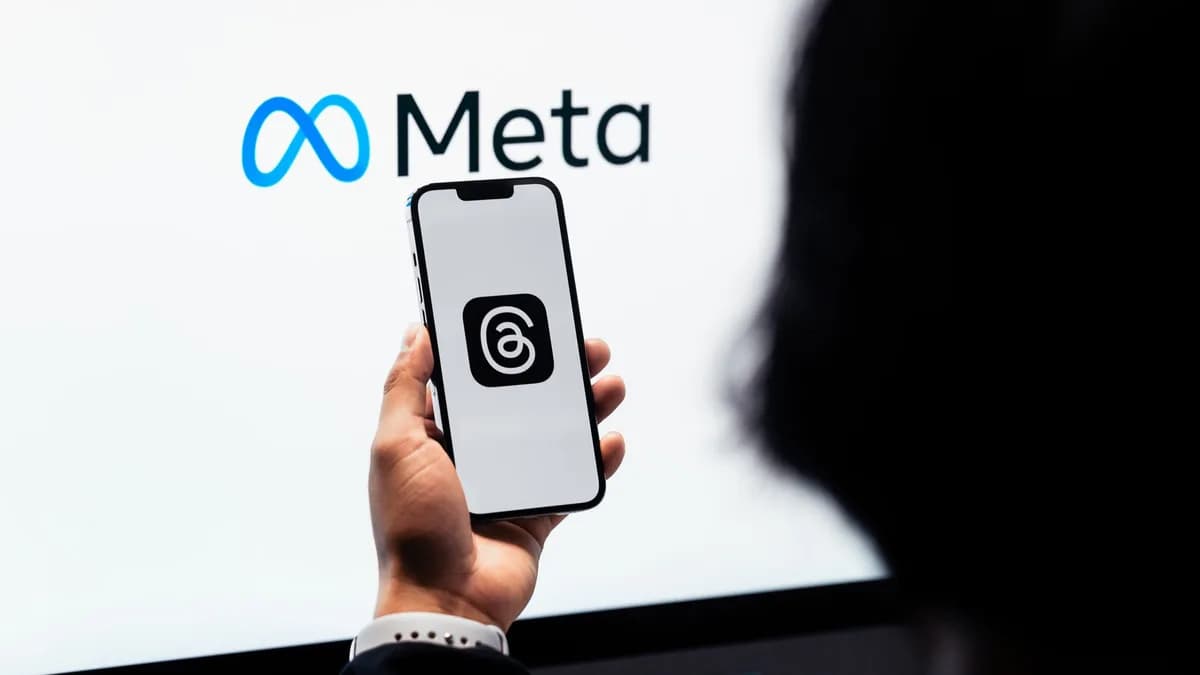
Meta CEO Mark Zuckerberg published a 6,510-word manifesto on August 10, but the product announcement buried within it reveals the company’s real goal: to bypass its rivals and their cloud servers by putting its AI directly onto your personal devices.
TechnologyAugust 15, 2026· 7 min read· By XOOMAR Insights Team
Meta Flips the AI Script by Running Its New Model on Your PC
Updated on August 15, 2026
XOOMAR Intelligence
Analyst Take
71/ 100
4 sources analyzedMedium confidenceTrend10Freshness98Source Trust88Factual Grounding88Signal Cluster20
According to the essay The Future Is for Everyone and reporting from PYMNTS, Zuckerberg’s vision hinges on providing “free or affordable access” to “superintelligence” for billions. The strategic vehicle for this is not a cloud-based chatbot, but Muse Glimmer, a new model Meta open-sourced the same day. This technical detail, more than the philosophical treatise, signals Meta’s play to own the next platform.
XOOMAR Interpretation: The “AI for everyone” rhetoric is a top-level marketing wrapper for a bottom-layer infrastructure gambit. While OpenAI and Anthropic compete on cloud-based, subscription-locked “superintelligence,” Meta is betting that the winning interface will be a local, always-on agent. By open-sourcing a model that runs on a consumer GPU, Meta isn’t just offering an alternative. It’s trying to define the hardware standard for personal AI, ensuring its ecosystem is the foundation.
The Local Agent Play: Muse Glimmer Is the Real News
The essay’s utopian language about balancing power is abstract. The model’s specs are concrete. Muse Glimmer is a 30-billion-parameter model optimized for always-on local agent workflows. Meta’s announcement states it’s “small enough to run on a Mac or PC with a single consumer GPU.”
This makes it a direct challenge to the prevailing AI business model.
| Aspect | Meta's Muse Glimmer Approach | Typical Frontier AI (OpenAI, Anthropic) Approach |
|---|---|---|
| Primary Deployment | Local device (PC, Mac, future hardware) | Cloud servers |
| Access Model | Open-source weights | Proprietary, API or subscription |
| Core Use Case | Persistent personal agents, local coding | Conversational chatbots, cloud-based task execution |
| Business Leverage | Ecosystem lock-in, hardware partnerships, data | Direct subscription revenue, enterprise contracts |
The “always-on” capability is key. A local agent that constantly learns your context is far more valuable, and intimate, than a cloud session you have to summon, and could power assistants capable of saving hours on research. This follows Meta’s historical open-source playbook with Llama, but with a targeted shift from general-purpose LLMs to personal AI agents.
By open-sourcing it, Meta crowdsources development and adoption, hoping Glimmer becomes the default engine for a wave of third-party local AI applications. The goal isn’t immediate SaaS revenue. It’s platform dominance.
“We will offer free versions that will be accessible to billions of people,” Zuckerberg wrote. The “free” version is the open-source model. The “accessible” part requires you to have or buy a device that can run it, a market Meta is keen to shape.
The "AI for Everyone" Vision Is a Data Funnel in Plain Sight
Zuckerberg’s essay frames democratizing AI as a check on institutional power. “Most other labs are focused on building AI for companies, governments, or other institutions. So if those labs lead, then the balance of power will favor larger institutions over individuals,” he argued.
XOOMAR Analysis: This is a brilliant piece of rhetorical jiu-jitsu. It paints Meta’s competitors as tools of the powerful while positioning Meta, one of the world’s largest corporations, as the champion of the individual. The essay claims sharing technology widely will “check and balance the power of institutions.”
But consider what a “personal artificial intelligence agent” entails, especially one built by Meta. To be truly useful, it must understand your goals, preferences, schedule, and relationships. This requires access to a data stream far beyond your social media likes, your documents, communications, location, and purchasing intent.
Meta’s core business is advertising based on behavioral prediction. An always-on AI agent that you trust for daily tasks would be the most potent behavioral prediction engine ever conceived. The vision of “AI for everyone” seamlessly aligns with the historical business model of “data from everyone.”
The essay briefly nods to governance, stating Meta’s board will have authority to set AI safety criteria. “I do not think it is in my, Meta’s, or the world’s best interests for me or anyone else to be a sole decision maker on how superintelligence is deployed,” Zuckerberg wrote. This decentralizes the appearance of control while the architecture of data collection becomes more centralized.
A Hardware Future Anchored in Your Glasses
The vision will manifest in hardware. Zuckerberg specifically mentioned interacting with your agent “through any device, including your glasses to keep you present in the moment.” This isn’t a throwaway line. Meta’s Ray-Ban smart glasses are the vanguard for the always-on, ambient agent.
A local AI model like Muse Glimmer is a prerequisite for this. Cloud-dependent smart glasses are clunky, latency-prone, and privacy-invasive. A device with local AI processing can be responsive and keep sensitive data on-device, at least in theory. This hardware-software combo is Meta’s moat against pure-play AI software companies.
It also creates a clear path to monetization that doesn’t rely on AI subscriptions. The “free” AI drives demand for Meta-curated hardware and deeper integration into its social and messaging apps. The real revenue continues to flow from the targeted advertising that this pervasive AI ecosystem enables.
The Critical Unanswered Question: What Does "Affordable Access" Mean?
The essay’s promise is “free or affordable access.” We’ve seen the “free” part: the open-source Muse Glimmer. The “affordable” part is the looming question.
XOOMAR Interpretation: “Affordable access” likely refers to tiered services around the core model. This could include:
- Premium cloud-connected features that augment the local model.
- Advanced agent capabilities for complex tasks.
- Deep integration with Meta’s business tools for creators and SMBs.
This is where Meta can build direct AI revenue without walling off the core technology. It’s a classic open-core strategy: give away the engine, sell the premium fuel and servicing. This approach lets Meta counter the narrative that it’s struggling to monetize its AI creations while still pushing its open model as the populist alternative.
What to Watch: Adoption, Antitrust, and the Agent Wars
Ignore the 6,510 words. Watch these three signals to see if Meta’s strategy is working.
- Developer Adoption of Muse Glimmer: If independent developers and smaller startups start building personal agent apps on Glimmer instead of OpenAI’s API, Meta’ platform play gains traction. Watch for integration guides and developer kit releases.
- Regulatory Scrutiny of the Agent-Data Link: Privacy and antitrust regulators in the EU and U.S. will eventually dissect the data relationship between a “personal” Meta agent and Meta’s ad business. Zuckerberg’s call for government collaboration on model testing is a pre-emptive move here.
- The Response from Rivals: Will OpenAI, Anthropic, or Google feel pressured to release competitive small, local models? Or will they double down on the cloud-centric, raw-power argument? The competitive dynamics in AI are shifting from a pure performance race to a hybrid architecture war, similar to how Claude AI agents are competing on shared digital tasks.
Meta’s endgame is clear. It’s not trying to win the chatbot popularity contest. It’s attempting to seed the infrastructure for the next computing paradigm, where AI is local, personal, and ubiquitous. If successful, Meta becomes the default. If it fails, the essay will be remembered as a lengthy footnote in the history of AI hype. The release of Muse Glimmer is their first real move on that board.
Why This Changes Everything
- It directly challenges the dominant, subscription-based cloud AI model, potentially making powerful AI free or affordable.
- It shifts competition from software to hardware, aiming to make Meta's ecosystem the foundational standard for personal devices.
- It could democratize access to advanced AI by running locally, reducing costs and dependence on corporate servers.
Meta's AI Strategy vs. Frontier AI Companies
| Aspect | Meta's Muse Glimmer Approach | Typical Frontier AI (OpenAI, Anthropic) Approach |
|---|---|---|
| Primary Deployment | Local device (PC, Mac, future hardware) | Cloud servers |
| Access Model | Open-source | Cloud-based, subscription-locked |
Sources

Written by
XOOMAR Insights Team
Research and Editorial Desk
The XOOMAR Insights Team pairs automated research with human editorial judgment. We track hundreds of sources across technology, fintech, trading, SaaS, and cybersecurity, cross-check the facts, and explain what happened, why it matters, and what to watch next. We do not just rewrite headlines. Every article is fact-checked and scored for reliability before it goes live, and we link back to the original sources so you can verify anything yourself.
Explore More Topics
Related Articles
 Technology
Meta Releases Glimmer AI to Spark Personal Superintelligence Race
Meta released its open Glimmer AI model to run powerful agents locally on a consumer GPU, directly challenging the cloud-based models of rivals like OpenAI and
Aug 14, 20269 min
 Technology
Choosing LLM Paths Could Make Or Break Your Project
The choice between open-source and paid LLM platforms is now a critical strategic decision for developers, directly affecting cost, data sovereignty, and long-t
Aug 13, 202611 min
 Technology
AI Model Showdown: Reasoning Tests Reveal a New Winner
No single AI model reigns supreme in 2026. Our tests reveal Claude, GPT, and Gemini each dominate different reasoning tasks, forcing users to pick based on thei
Aug 13, 202614 min
 Technology
Kog Unleashes GPU Speed for AI Startups
Kog's software approach unlocks latent performance in current GPUs for AI inference, promising 10x to 30x speedups without buying new, expensive chips, attracti
Aug 15, 20267 min
 Technology
LLM Cost Gap Widens to 625x in 2026 Pricing War
The cost gap for the same AI task has ballooned to 625x between providers in 2026, turning model selection into a make-or-break budget decision.
Aug 13, 202616 min
 Trading
Gold Holds $4,345 After Fed Rate Bet Collapse in Week
Gold is holding near $4,345, refusing to surrender a 7% weekly rally fueled by collapsing Fed rate-hike expectations and simmering Middle East geopolitics. All
Aug 15, 20266 min
 Technology
Slash Research Time from Hours to 30 Minutes
Claude's Record-a-Skill feature can cut tedious, hours-long manual research projects down to a single, supervised half-hour by packaging repetitive processes in
Aug 15, 20267 min
 Technology
Ryanair Engine Blade Failed Weeks After 'Safe' Certification
An engine fan blade on a Ryanair flight failed and shattered a cabin window just weeks after passing a mandatory ultrasonic inspection, exposing a critical gap
Aug 15, 20267 min
 Technology
Judge Smashes Google's Anticompetitive App Store Roadblocks
A federal judge ordered Google to fix its 'anticompetitive friction' and make installing rival app stores like Epic’s as easy as downloading a regular app, afte
Aug 15, 20266 min
 Fintech
Dollar Rally Hinges on Next Jobs and CPI Reports
The US dollar's path to higher gains just got harder, stalling after a weak jobs report as markets now demand strong upcoming CPI and NFP data before committing
Aug 15, 20266 min
Don't miss the signal
Get our weekly roundup of the stories that matter across tech, fintech, and trading. No noise, just signal.
Free forever. No spam. Unsubscribe anytime.