
Three weeks before Connor Christou’s lymphoma would have reached stage four, a pre-op exam for swollen-arm surgery found an 11-by-11-by-8 centimeter mass behind his sternum.

TechnologyJune 27, 2026· 7 min read· By XOOMAR Insights Team
Rare Lymphoma Forced Connor Christou Into AI Cancer Fight
Updated on June 28, 2026
XOOMAR Intelligence
Analyst Take
58/ 100
4 sources analyzedLow confidenceTrend10Freshness100Source Trust90Factual Grounding90Signal Cluster20
That timing is the whole story. Christou, a 35-year-old founder who tracked sleep with Whoop, cross-checked it with an Oura ring, and tested nearly 100 biomarkers a year, looked like the last person who would be blindsided by aggressive cancer. His 2025 checkup was clean. “It was the best I’d had in years,” he told TechCrunch.
The Connor Christou AI cancer case punctures the wellness industry’s favorite illusion: optimization is not immunity. His cancer was a rare, aggressive form of non-Hodgkin’s lymphoma, affecting roughly one in 420,000 people, caused by a random genetic mutation with no connection to lifestyle, diet, or stress. The tumor had existed for about three months.
Connor Christou’s AI cancer routine began after two doctors split on chemotherapy
The first shock was the diagnosis. The second was medical disagreement.
Christou’s first oncologist, described by TechCrunch as a renowned specialist, recommended the lighter of two chemotherapy regimens. His first infusion was booked three days out. The night before, he sought a second opinion. That doctor recommended the harder path: continuous in-hospital infusion, cycling every three weeks across six months.
The gap was not subtle.
| Decision point | Lighter regimen | Harder regimen |
|---|---|---|
| Reported success rate for his presentation | Roughly 60% | Around 85% |
| Treatment style | Lighter chemotherapy | Continuous in-hospital infusion |
| Schedule | Not detailed in source | Every three weeks across six months |
Two world-class doctors gave opposite recommendations. Christou then gathered 12 opinions from hematologists and oncologists in the U.S. and abroad. The vote was 11 to one for the harder regimen.
“As founders, we hold the wheel,” Christou said. “You hear many things. You don’t have to follow the first advice.”
XOOMAR analysis: this is where the story stops being a simple “AI helped a patient” anecdote. Christou’s first move was not to ask Claude for a cure. It was to build an evidence loop around human expertise, then use AI as part of that loop.
Labs, scans, wearables, and daily notes became the Claude input layer
During treatment, Christou treated chemotherapy like a sequence of finite operating cycles. He wore his Whoop throughout and said it was “remarkably accurate” at predicting the days his immune system would bottom out, sometimes before symptoms appeared.
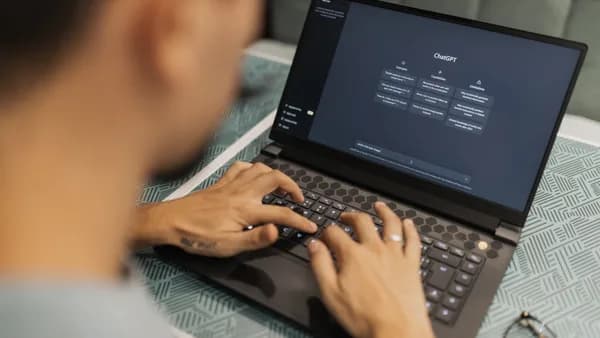
He kept a symptom journal with voice transcription. He tracked side effects, medications, counter-medications, sleep, nutrition, and psychology. Then he fed the material into Claude: blood results, scan data, wearable output, and journal entries.
“It didn’t replace the doctors,” Christou said, but it “helped me ask the right questions.”
That distinction matters. The strongest version of the Connor Christou AI cancer story is not that a chatbot beat oncology. It is that a patient used AI to interrogate a fragmented medical reality with more discipline than the system typically enables.
The limits are real. TechCrunch cites Danielle Bitterman, clinical lead for data science and AI at Mass General Brigham, who told the New York Times that general-purpose chatbots are frequently wrong and “have not been thoroughly evaluated” for personalized diagnoses. Christou did not dispute that warning.
The useful frame is narrower: AI helped him organize his own case well enough to ask better questions of specialists.
The final PET scan showed why AI mattered most at the edge of uncertainty
The most consequential Claude moment came at the end of treatment.
Christou’s final PET scan, used to detect active disease, came back ambiguous. His oncologist began discussing second-line therapy, potentially radiotherapy near his heart and lungs. Christou then found that for his specific lymphoma, the false-positive rate on end-of-treatment PET scans is around 60%.
“It’s 2026,” he said. “Sixty percent.”
He fed all three PET scans and his MRI into Claude. The model flagged a known but easily missed phenomenon: in patients under 40 recovering from this type of lymphoma, the thymus gland can reactivate after chemotherapy and appear on imaging as active disease. Given his age and scan characteristics, Claude put the probability of that explanation at roughly 90%.
Christou sought three more opinions. The fourth doctor confirmed it: thymus rebound. No active disease. No radiotherapy. He was clear.
XOOMAR analysis: this is the practical center of the article. AI did not make the diagnosis final. A doctor did. But Claude appears to have helped Christou surface the right differential question before he accepted a major next step.
From quantified self to AI-assisted self-advocacy
Christou was already deep in the quantified-self world before cancer. He followed protocols from longevity researchers including Peter Attia and Rhonda Patrick, optimized supplements, circadian rhythm, and protein intake, and had four consecutive years of annual bloodwork.
That history made him unusually prepared to gather and interpret data. Many patients do not have that baseline, or the professional network to call in 12 expert opinions. The power in this story is unevenly distributed.
A related pattern appears in another founder case. In an OpenAI Forum talk, GitLab co-founder Sid Sijbrandij described using ChatGPT to track and understand scans, blood tests, and tissue samples during his bone cancer fight, alongside his medical team. The common thread is not miracle software. It is technical people turning personal medical records into an active research process.
That also explains why Claude is central here. The model sits at the intersection of high-stakes personal data and general reasoning, a tension visible far outside medicine. XOOMAR has covered the enterprise side of that tension in $30,000 Claude Habit Exposes Rippling Data Cloud Bet, and the policy pressure around Anthropic in Anthropic Access Ban Drags EU Into White House Fight.
Doctors and patients will not read this case the same way
For patients, Christou’s workflow offers a clear method:
- Collect records: labs, scans, medication changes, symptom notes.
- Build a timeline: when symptoms appeared, when treatment changed, when side effects peaked.
- Ask targeted questions: especially when recommendations conflict.
- Keep doctors central: use AI to prepare, not to self-prescribe.
For clinicians, the case cuts both ways. A prepared patient can sharpen a consultation. A patient overconfident in a chatbot can also waste time, misunderstand uncertainty, or push weak signals too hard. The source does not show doctors reacting broadly to Christou’s workflow, so any claim about profession-wide acceptance would be a stretch.
For AI companies, healthcare is clearly one of the most compelling uses of conversational models. It is also one of the most dangerous if users treat outputs as treatment instructions. Christou’s own framing is the safer one: Claude helped him ask better questions.
For insurers and health systems, TechCrunch does not provide evidence of direct response. The open question is whether AI-assisted patients will drive more second opinions, more testing, and more pressure for personalized navigation.
The next phase is less about heroic prompts and more about safer patient systems
Christou now runs Keragon, an AI-powered platform that helps medical practices automate administrative operations. His experience as a patient changed how he sees the system. He watched nurses and doctors buried in tasks unrelated to care. He received the same chemotherapy protocol as an 80-year-old woman, with side effects managed through chains of additional drugs.
He believes today’s treatment era will look crude in hindsight.
“It’s not happening in 10 years,” Christou said of what AI can already do for patients willing to use it. “It’s happening today.”
The watch item is whether cases like Christou’s move from improvised personal workflows into safer clinical products. Evidence supporting that shift would include patient tools that connect records, imaging summaries, wearable data, medication schedules, and clinician review without pretending a chatbot is an oncologist.
Evidence against it would be just as clear: more patients acting on unsupported model outputs, more confusion in exam rooms, and no improvement in how health systems package information for the people living through the disease.
AI will not make cancer fair. Christou’s case shows something narrower, and still important: for patients with access, discipline, and medical backup, AI can make the information fight less chaotic.
Impact Analysis
- The case shows that intensive wellness tracking cannot eliminate the risk of rare, random diseases.
- Conflicting expert medical opinions can materially change treatment decisions and expected outcomes.
- AI may become a useful tool for patients navigating complex diagnoses, but it does not replace specialist care.
Chemotherapy options considered by Connor Christou
| Decision point | Lighter regimen | Harder regimen |
|---|---|---|
| Reported success rate for his presentation | Roughly 60% | Around 85% |
| Treatment style | Lighter chemotherapy | Continuous in-hospital infusion |
| Schedule | Not detailed in source | Every three weeks across six months |
Reported success rates for Christou’s treatment options
Lighter regimen
%60
Harder regimen
%85
Sources

Written by
XOOMAR Insights Team
Research and Editorial Desk
The XOOMAR Insights Team pairs automated research with human editorial judgment. We track hundreds of sources across technology, fintech, trading, SaaS, and cybersecurity, cross-check the facts, and explain what happened, why it matters, and what to watch next. We do not just rewrite headlines. Every article is fact-checked and scored for reliability before it goes live, and we link back to the original sources so you can verify anything yourself.
Explore More Topics
Related Articles
 Technology
Rivian Bucks Auto Trends With $1B Robotic Labor Bet
Rivian is pivoting from an automaker to a technology conglomerate, betting billions on self-driving software and humanoid robots while its core business sells S
Aug 11, 20265 min
 Technology
Honda's Profit Doubles After Worst Annual Loss Ever
Honda's quarterly profit more than doubled to $2.9 billion in a dramatic recovery, just months after posting its first-ever annual loss, driven by vehicle sales
Aug 9, 20264 min
 Technology
Amazon's Gas Plant Permits 33 Million Tons of CO2
Amazon's planned Texas data center, powered by a dedicated natural gas plant, has a permit to emit 33 million tons of CO2 annually, potentially making it the la
Aug 8, 20267 min
 Technology
Apply for a Prime TechCrunch Disrupt Side Event
You can host a free, focused side event at TechCrunch Disrupt 2026 to directly connect with over 10,000 high-value founders and investors in San Francisco.
Aug 7, 20267 min
 Technology
TechCrunch Disrupt 2026 Tests Endurance Over AI Hype
TechCrunch Disrupt 2026 pivots from startup hype to operational durability, following founders who landed massive investor interest and oversubscribed rounds fr
Aug 7, 20266 min
 SaaS & Tools
Stranded SMBs Strike Gold in Social Media Sales
Sales growth via social media has surged for 46% of SMBs, but smaller businesses earning under $150K are being left behind in the fractured recovery.
Aug 12, 20266 min
 Trading
Yen Slump Erases Half of Joint Japan-US Intervention Gains
The Japanese yen fell to a fresh two-week low, erasing over half the gains from last month's historic U.S.-Japan joint FX intervention as global dollar strength
Aug 12, 20265 min
 Global Trends
Secret Service Decoy Lures Assassins Away From Trump
The Secret Service protects presidents through a constant, high-stakes shell game of decoy limousines, fake motorcades, and secret aircraft swaps designed to ma
Aug 12, 20267 min
 Fintech
Goldman Sachs Buys Income ETF Rival For $2.3 Billion
Goldman Sachs will pay up to $2.3 billion for ETF firm Neos, signaling a strategic shift to buy growth engines instead of building them.
Aug 12, 20265 min
 Fintech
Crypto.com Now Lets You Bet on Tesla After Hours
Crypto.com is blurring the line between crypto and legacy finance by offering 24/7 trading of tokenized U.S. stocks and ETFs to European customers, starting at
Aug 12, 20266 min
Don't miss the signal
Get our weekly roundup of the stories that matter across tech, fintech, and trading. No noise, just signal.
Free forever. No spam. Unsubscribe anytime.