
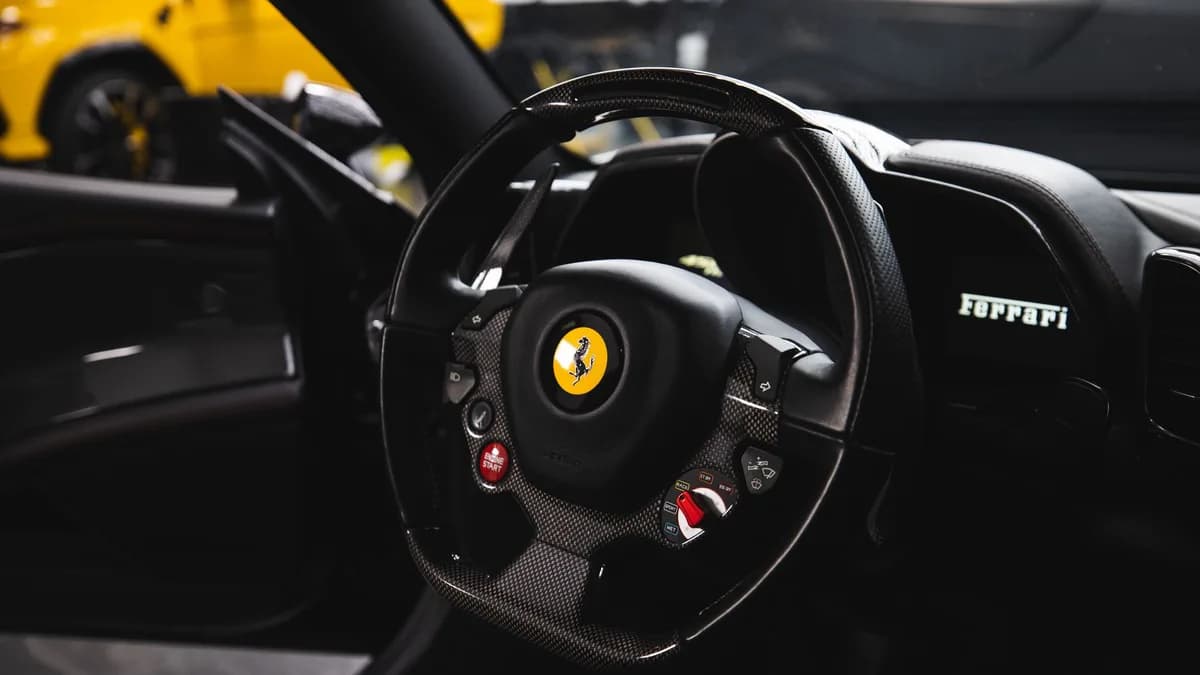
A specially customized version of Ferrari's first all-electric car, the Luce, has just sold at auction for $40 million, a staggering sum that is more than 35 times its typical price tag. According to BBC World, the record-breaking sale at Sotheby’s in California sends a powerful counter-signal to anyone who thought the brand’s pivot to electric power would dilute its value.
TechnologyAugust 17, 2026· 6 min read· By XOOMAR Insights Team
Ferrari Sells First Electric Car for Record $40 Million
Updated on August 17, 2026
XOOMAR Intelligence
Analyst Take
58/ 100
4 sources analyzedLow confidenceTrend10Freshness96Source Trust92Factual Grounding90Signal Cluster20
For Ferrari, this isn't just a charity windfall. It's a masterstroke of market positioning. The launch in May was divisive, causing the company's shares to drop as critics, including former chairman Luca Cordero di Montezemolo, argued the battery-powered, five-seat Luce strayed too far from the marque's soul. Yet this single auction result, with all proceeds funding the Ferrari Foundation's education programs, rewrites the narrative. It proves that within the rarefied world of ultra-luxury, controversy and collectibility can be the same asset.
Why Purists Protested the Luce's Departure
The backlash was swift and came from the highest levels. The source material notes that Italy's deputy prime minister, Matteo Salvini, joined the chorus of disapproval. The core grievance was twofold. First, the car is electric, stripping away the theatrical roar that is a hallmark of the Ferrari experience. Second, its design, the brainchild of iPhone designer Sir Jony Ive, presented a more minimalist, perhaps less overtly dramatic, aesthetic compared to the brand's legendary lineage of mid-engine V12 screamers.
When the Luce debuted, it was one of the biggest car launches in years, with Italian President Sergio Mattarella and Pope Leo in attendance. The fanfare, however, couldn't shield it from traditionalist critique. Ferrari's identity is intrinsically linked to the combustion engine’s emotional theater; the Luce represented a fundamental break from that heritage, priced at a base of €550,000. The immediate stock drop reflected market anxiety over this new direction, highlighting a critical challenge for all legacy supercar makers entering the EV market: can you build a dreadnought in an era of silent speed?
How a $40 Million Bid Validates Ferrari's Electric Strategy
The auction result is Ferrari’s emphatic answer. The $40 million sale didn't just beat the previous record for a new Ferrari sold at auction, a bespoke Daytona SP3 that raised $26m in 2025. It utterly demolished it.
XOOMAR Analysis: This transaction functions on multiple strategic levels far beyond a simple sale.
- Market Signal: It establishes a new, almost unimaginable price ceiling for an electric luxury vehicle, creating a halo effect that makes the standard €550,000 Luce seem almost accessible by comparison.
- Narrative Control: By generating a record price through a prestigious charity auction, Ferrari reframes the conversation from "Has Ferrari lost its way?" to "Ferrari's new direction is historically significant and wildly valuable."
- Scarcity Engine: This particular car was the first production model, featuring a unique white finish, special wheels, and custom brakes. It embodies the "Tailor Made" program, which crafts one-of-a-kind vehicles. The auction was, as Sotheby's stated, an "unbeatable opportunity" to own a definitive piece of automotive history.
This financial validation matters because it shows that for the wealthiest collectors, the narrative of pioneering a new era, amidst controversy, can be worth more than tradition alone. The driving emotion is shifting from engine notes to the story of ownership, scarcity, and being first. This pivot is not unique to autos; we see similar dynamics where tech acquisitions, like Stripe's $7 billion move to become AI's payment brain, are bets on controlling a foundational narrative in a new market.
The New Collector Logic: Controversy as a Feature
Who pays $40 million for a car that just months ago was being panned by purists and politicians? While Sotheby's did not name the buyer, the logic of this new collector class is becoming clear. In the transition to electric power, the "first" of any legendary line becomes an instant artifact. When that first model also carries the weight of a heated public debate, its cultural significance, and therefore its collectible value, is magnified.
Ferrari CEO Benedetto Vigna said in May the Luce was drawing orders from both old and new customers. This auction is the ultimate extension of that claim. A collector has voted with millions of dollars not just for a car, but for the specific vision Vigna defended: "The Ferrari Luce has nothing to do with electric cars you have seen from other players... it wasn't copied, not the interiors, not the exterior, not the performance." This stance against imitation echoes the strategy seen in Lenovo's heist of MacBook Neo aesthetics for its IdeaPad, where blending heritage with borrowed design cues can define a new market position.
The sale redefines authenticity for electric supercars. Authenticity is no longer solely derived from a legacy formula of noise and drama. It can now be built through narrative scarcity, pioneering technology, and the sheer audacity to redefine a brand's boundaries. The loudest statement a modern hypercar makes might be the price someone pays to claim its story.
The Ripple Effect on Luxury Rivals and the Future of Drama
This moment sends a shockwave through the boardrooms of Lamborghini, McLaren, and Aston Martin. These brands are also navigating their own electric transitions while clinging to visceral, combustion-era identities. The Luce's auction provides a potential playbook: embrace the tension of the new, court the conversation, and then use ultra-exclusive, record-setting instruments to validate the entire project.
The secondary auction market, as shown here, can now pre-validate a production car strategy. It creates a feedback loop where a multi-million dollar charity sale generates headlines that fuel demand for the series-production models. This isn't just carmaking. It's the theatrical curation of value, similar to how generating media buzz and collector validation are becoming crucial metrics for tech companies long before traditional financial returns materialize.
The supercar game’s primary metrics are changing. Top speed and Nürburgring lap times still matter, but the metrics that secure a brand's future in the EV age are increasingly about media buzz, collector validation, and the ability to command unprecedented prices for a new vision. Ferrari’s electric gambit shows that in the age of silent speed, the drama has simply moved from the exhaust note to the auction podium. The final question for rivals is not if they can build an electric supercar, but if they can craft a story compelling enough to make someone pay eight figures for the first one.
The Bottom Line
- This $40 million auction sale dramatically reverses the negative market narrative around Ferrari's pivot to electric vehicles, proving their luxury value remains intact.
- The sale funds the Ferrari Foundation's education programs, linking the brand's high-stakes market move to social impact.
- It demonstrates that controversy and ultra-luxury collectibility can coexist, setting a precedent for other heritage brands navigating technological transitions. As seen in the broader AI spending boom that has yet to translate to corporate earnings, the market often rewards strategic vision and narrative control long before the bottom line reflects the investment.
Ferrari Luce Auction vs. Typical Ferrari Luce Price
| Aspect | Auction Luce | Typical Luce |
|---|---|---|
| Sale Price | $40 million | $1.14 million |
| Purpose | Funding Ferrari Foundation education programs | Consumer purchase |
| Perceived Narrative | Validates luxury/collectible value of Ferrari EV | Faced traditionalist backlash |
Ferrari Luce Sale Price Comparison
Auction Sale
$40,000,000
Typical Base Price
$1,140,000
Sources

Written by
XOOMAR Insights Team
Research and Editorial Desk
The XOOMAR Insights Team pairs automated research with human editorial judgment. We track hundreds of sources across technology, fintech, trading, SaaS, and cybersecurity, cross-check the facts, and explain what happened, why it matters, and what to watch next. We do not just rewrite headlines. Every article is fact-checked and scored for reliability before it goes live, and we link back to the original sources so you can verify anything yourself.
Explore More Topics
Related Articles
 Technology
Nostalgia’s Last Stand Sells for 72 Dollars
Polaroid's second-gen Go camera, bundled with a free film pack for $71.99, offers the tangible ritual of instant photography for less than the hardware alone.
Aug 16, 20266 min
 Technology
OpenAI Sells ChatGPT 'Premium' Seats for $125 a Month
OpenAI's new "Premium ChatGPT Business" tier sells five times the unspecified "usage" for five times the price ($125/user/month), turning AI access into a ratio
Aug 13, 20267 min
 Global Trends
Crown Prince’s Protest Exposes Imperial Monarchy Rift
Japan’s Crown Prince Akishino broke royal protocol by publicly opposing the government’s new male-only succession law, exposing a deep rift within the imperial
Aug 17, 20265 min
 Global Trends
Met Police Chooses Victims Who Matter, Mother Says
Mina Smallman, a mother who lost two daughters to murder and witnessed police corruption, declares the Metropolitan Police incapable of reform after seeing how
Aug 17, 20265 min
 Future Fiction
Stream Hit Point Free Legally From Any Country
You can legally stream the entire 'Hit Point' box set for free from anywhere by accessing UK-based ad-supported platforms, using a simple method to bypass geogr
Aug 17, 20266 min
 Trading
Kiwi Dollar Breaks Key Ceiling as Greenback Careens
The New Zealand dollar has staged a sharp rally, but its surge to highs above 0.5900 is largely a function of significant, broad-based US dollar weakness driven
Aug 17, 20264 min
 Fintech
Food Inflation Buried in India's 'Benign' CPI Data
India's central bank is likely to delay rate hikes until late 2026 as surging food inflation presents a problem that interest rates can't directly solve.
Aug 17, 20266 min
 Global Trends
Farage Burns £10K Fighting UK's 'Binface' Bizarre Election
Facing a parliamentary ethics investigation, Nigel Farage is spending over £10,000 on ads to win a forced by-election against a candidate dressed as a garbage c
Aug 17, 20266 min
 Trading
Gold Surges Past $4,395 as Fed Rate Bets Collapse
Gold prices soared as weak U.S. economic data slashed the probability of a Fed rate hike, making the non-yielding metal more attractive than the dollar.
Aug 17, 20264 min
 Global Trends
Trump Slashes Key Korea Drills Overriding Generals
President Trump has ordered a substantial reduction in a major joint military exercise with South Korea, personally overriding commanders who designed the drill
Aug 17, 20267 min
Don't miss the signal
Get our weekly roundup of the stories that matter across tech, fintech, and trading. No noise, just signal.
Free forever. No spam. Unsubscribe anytime.