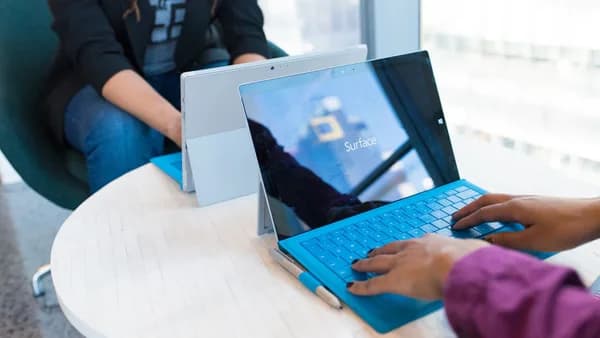
Firefox vs Edge is no longer just a browser fight. It’s a test of how far Microsoft can bend Windows 11 around Edge before “choice” becomes a setting users technically have, but practically struggle to keep. A Mozilla-commissioned report accuses Microsoft of using “harmful design” across Windows 11 and Windows 10 to steer users toward Edge and away from rivals such as Firefox, according to TechRadar Pro.
XOOMAR Intelligence
Analyst Take
The report, Over The Edge 2.0, was written by independent researchers Harry Brignull and Cennydd Bowles, the same pair behind Mozilla’s first browser-choice report two years ago. Their new investigation examines browser-choice journeys across the United States, United Kingdom, India, and Germany, with Germany used as a representative country inside the European Economic Area, according to Mozilla Research.
“Microsoft continues to deploy harmful design to undermine people's browser choice.”
That is the report’s blunt thesis. XOOMAR’s read: Mozilla is not just complaining about Edge promotion. It is arguing that Microsoft’s control of the operating system lets it turn small interface choices into a distribution advantage.
Windows 11 makes browser choice feel like a fight Microsoft expects users to lose
Mozilla’s core allegation is that Windows 11 browser choice is compromised at multiple points, not only at the moment a user installs Firefox or another browser. The report says Microsoft interferes when people try to download an alternative browser, set it as default, or keep using it as default.
The claimed tactics include Trick Wording, Obstruction, Visual Interference, Preselection, Nagging, and Forced Action. That list matters because it frames the issue as a design system, not a one-off ad. A prompt here, a reset there, a preselected box somewhere else. Each action may look minor in isolation, but the cumulative effect is what Mozilla wants regulators to see.
The strongest counterpoint is obvious: Mozilla funds Firefox, and Firefox competes with Edge. This is not a neutral party floating above the browser market. TechRadar also notes that browser rivals have their own promotional tactics, including Google with Chrome.
Still, that does not erase the platform issue. Microsoft owns Windows. Mozilla’s claim is that Microsoft is using that position to tilt the browser funnel at the operating-system layer, where most browser rivals cannot respond on equal terms.
The Windows 11 design tactics Mozilla says keep pulling users back to Edge
The report highlights several mechanisms that allegedly favor Microsoft Edge. Edge is pre-pinned to the Windows taskbar. Windows prompts encourage users to keep or return to Edge. Edge users visiting the Chrome download page may see a banner saying Edge uses the same technology as Chrome with the “added trust of Microsoft.” Mozilla also points to default browser settings and Windows surfaces that keep pushing Microsoft’s own browser.
The most consequential example involves migration from Windows 10 to Windows 11. Mozilla Research says that when researchers backed up a Windows 10 machine with an alternative browser installed and set as default, then restored it to a new Windows 11 device, the alternative browser was not transferred and Edge was silently set as default. That turns an upgrade into a browser-choice reset.
Mozilla also extends the argument into Copilot. The report says Microsoft’s AI assistant opens links in Edge instead of respecting a user’s chosen default browser. It also says a sequence of consent requests across Windows and Edge may create a “pipeline” that funnels browsing data, potentially including data from rival browsers, into Microsoft’s advertising and personalization systems.
| Area tested | Mozilla’s criticism | Why it matters |
|---|---|---|
| Browser downloads | Edge messaging appears when users seek rival browsers | The user is interrupted at the switching point |
| Defaults | Edge can regain default status during migration | A prior choice may not survive a Windows transition |
| Taskbar and Windows prompts | Edge is made visible and repeatedly promoted | The default gets more surface area than rivals |
| Copilot links | Copilot opens links in Edge | AI becomes another route back to Microsoft’s browser |
| Regional settings | EEA users see fewer harmful patterns | Regulation appears to change product behavior |
XOOMAR analysis: legitimate product promotion tells users why a product is good. Manipulative design makes leaving feel risky, tedious, or temporary. Mozilla’s report puts Microsoft’s behavior closer to the second category.
Mozilla’s numbers are about reach and testing, not browser share
The supplied sources do not provide current browser market-share figures for Chrome, Safari, Edge, or Firefox. That limits any hard claim about how much share Edge has gained from Windows integration, or how much Firefox has lost because of it.
The report does provide other numbers that matter. It was published two years after the original Over The Edge report. It tested four regions. Mozilla Research also says that with Windows 10 support having ended in October 2025, more than 1 billion people have PCs running Windows 11.
That reach is the real stake in Firefox vs Edge. Browser choice is not only about which app opens a webpage. It affects which search engine gets queries, which AI assistant captures intent, which identity system sits in front of the user, and which browser engine developers must prioritize.
XOOMAR analysis: even without market-share data in the source material, the migration finding is enough to explain why defaults matter. If a browser preference can be undone during a system transition, Microsoft does not need to win every user through Edge features. It only needs enough users to stop fighting the default.
Microsoft changed the packaging around Edge, Mozilla says the leverage is still Windows
The report does not rest on a claim that Edge is a bad browser. Its argument is about packaging and control. Windows is the distribution layer, Edge is the Microsoft browser, Bing and Copilot sit nearby, and the user encounters all of them inside the same operating-system experience.
That creates a structural asymmetry. Firefox can ask users to install it. Microsoft can place Edge on the taskbar, show prompts in Windows, route Copilot links through Edge, and shape migration flows during a Windows 10 to Windows 11 move. Mozilla’s accusation is that Microsoft is competing through Windows design as much as through Edge itself.
The European comparison strengthens that argument. The report says Germany, as the EEA test country, avoids some of the worst examples, including the Chrome download page banner. Mozilla’s blog adds that Copilot data toggles default to “On” in the US and India, but default to “Off” in the EEA and the UK.
For separate XOOMAR coverage of Microsoft’s broader platform and AI decisions, see Windows 11 Secure Boot Update Hits a Firmware Wall and Microsoft AI Models Turn on OpenAI in Risky Sales Push. The browser dispute sits in the same broad category of questions about how much control Microsoft should exercise through products users rely on every day.
Regulators now have a live A/B test in the European Economic Area
Mozilla’s sharpest evidence is regional variation. The report says the Digital Markets Act has had a measurable effect in the EEA, though Mozilla also says harmful patterns persist there. In plain terms: Microsoft appears capable of offering a less coercive browser-choice experience when the rules require it.
That is why the report’s regulatory message lands harder than a normal competitor complaint. Mozilla is not only saying Microsoft should behave differently. It is saying Microsoft already does behave differently in at least one regulated region.
The strongest counterpoint is that regional compliance does not automatically prove bad intent elsewhere. Companies often adapt product flows to local legal requirements. Different rules produce different designs.
But that counterpoint only goes so far. If users in one region can avoid certain nags, defaults, or preselected data choices, users elsewhere can reasonably ask why the same restraint is not global. Mozilla’s answer is simple: pressure works.
What Windows 11 browser friction means for Firefox, users, and IT teams
For users, the practical issue is control. If they choose Firefox, Chrome, or another browser, the setting should stick across normal Windows use, AI interactions, and device migration. Mozilla’s report says that is not consistently happening without interference.
For Firefox, the stakes are sharper. Mozilla frames Firefox as an independent browser built around user interests rather than platform lock-in. That is Mozilla’s position, not an independently tested market outcome in the supplied sources, but it explains why the company treats Windows defaults as more than a cosmetic fight.
For IT teams, the report suggests a practical check rather than a broad conclusion: test Windows 10 to Windows 11 migration flows, default browser persistence, and Copilot link behavior in managed environments before assuming user or organizational preferences will survive. The supplied report does not test every enterprise configuration, so broader compliance claims would go beyond the evidence.
The evidence that would weaken Mozilla’s thesis is clear: Microsoft could preserve alternative browser defaults during migration, make Copilot honor the system default browser, reduce Edge prompts globally, and publish a consistent browser-choice experience across regions. Until then, Windows 11 browser choice remains a live competition issue.
AI gives Microsoft a new browser-war incentive
The next phase of Firefox vs Edge will likely revolve around AI surfaces as much as browser settings. Mozilla’s report already points to Copilot opening links in Edge and to consent flows that may route browsing data into Microsoft advertising and personalization systems.
That makes the browser more valuable than a standalone app. It becomes a front door for search, AI assistance, productivity flows, and user data. Default placement grows more strategic when the browser connects to the assistant.
XOOMAR analysis: the cleanest watch item is whether Microsoft exports the EEA-style browser-choice experience more widely, or keeps regional compliance as the ceiling. If Microsoft softens prompts, preserves defaults during Windows 11 migrations, and lets Copilot respect user-selected browsers, Mozilla’s case loses force. If the split persists, regulators outside the EEA will have a ready-made comparison to ask why users in their markets get more friction.
Impact Analysis
- The report raises competition concerns about whether Windows design gives Edge an unfair advantage over rival browsers.
- If users face friction changing defaults, browser choice may be weaker in practice than it appears in settings.
- The findings could intensify scrutiny of Microsoft’s control over Windows and its treatment of competing software.
Browser Choice Dispute: Microsoft Edge vs Firefox
| Aspect | Microsoft Edge / Windows | Firefox / Rival Browsers |
|---|---|---|
| Platform position | Built into Windows 11 and Windows 10, giving Microsoft control over key user journeys. | Dependent on users being able to download, set, and keep an alternative browser. |
| Mozilla allegation | Accused of using harmful design to steer users toward Edge. | Presented as being disadvantaged by Windows interface choices. |
| Reported tactics | Trick Wording, Obstruction, Visual Interference, Preselection, Nagging, and Forced Action. | Faces friction when users try to choose or retain it as default. |
| Core issue | Microsoft can turn operating-system design into a distribution advantage. | Browser choice may exist technically but be difficult to maintain in practice. |
Primary Sources & Disclosures

Written by
XOOMAR Insights Team
Research and Editorial Desk
The XOOMAR Insights Team pairs automated research with human editorial judgment. We track hundreds of sources across technology, fintech, trading, SaaS, and cybersecurity, cross-check the facts, and explain what happened, why it matters, and what to watch next. We do not just rewrite headlines. Every article is fact-checked and scored for reliability before it goes live, and we link back to the original sources so you can verify anything yourself.