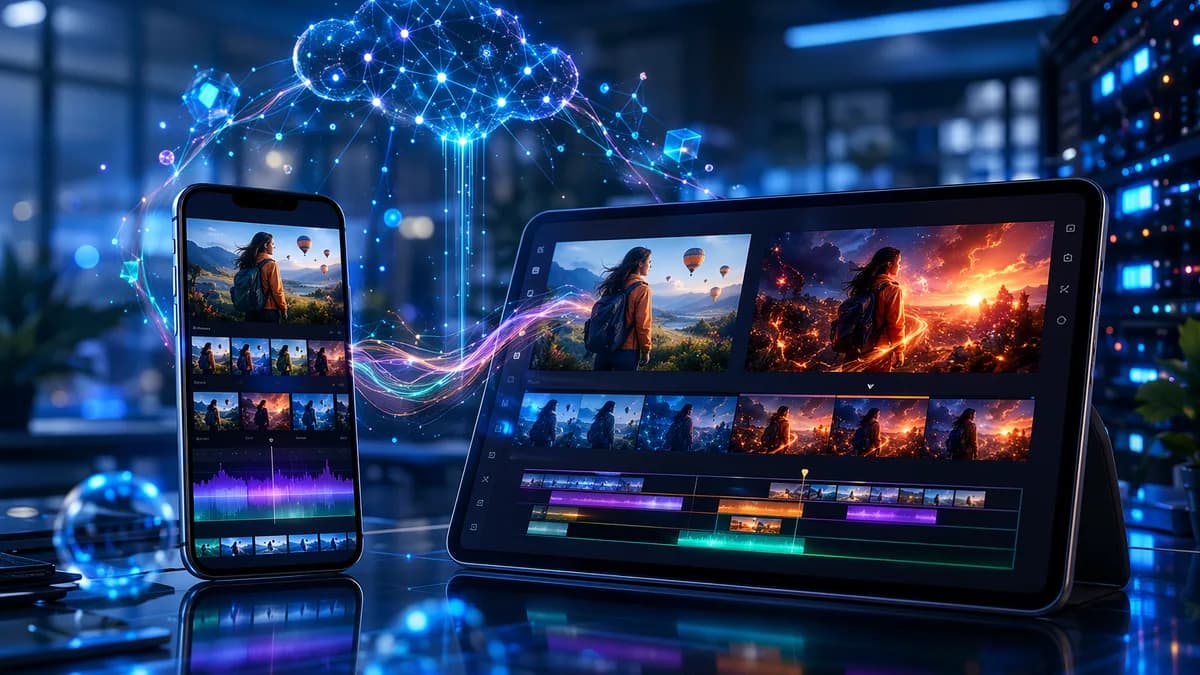
Google Photos Video Remix is bringing Gemini Omni video editing directly into Google Photos, giving subscribers a way to relight, restyle, and alter clips without opening a dedicated editor. The new AI tool, announced Wednesday, starts rolling out to eligible Google AI Plus, Pro, and Ultra subscribers across the U.S. and 13 other countries, according to TechCrunch.
XOOMAR Intelligence
Analyst Take
For everyday users, the pitch is blunt: fix or transform a video in a few taps. For Google, it’s another move to make Photos less of a storage vault and more of an AI creation app.
Google Photos Video Remix gives subscribers fast edits inside Photos
Video Remix lives in the Create tab in Google Photos. Google says it can edit and transform videos in seconds using Gemini Omni, the company’s recently released model that promises to “create anything from any input.”
The confirmed tools focus on visual transformation rather than timeline editing. Users can apply cinematic relighting to brighten a dark clip, swap a plain background for something more playful, or add artistic treatments such as watercolor, raw sketchbook, and oil painting effects.
Google frames Video Remix as a way to quickly transform ordinary videos into more shareable clips inside Google Photos, using a few taps rather than a separate editing workflow.
Who gets it first?
Google says Video Remix starts rolling out today to eligible Google AI Plus, Pro, and Ultra subscribers in:
- U.S.
- Argentina
- Bangladesh
- Brazil
- Colombia
- Egypt
- India
- Indonesia
- Japan
- Mexico
- Pakistan
- Philippines
- South Korea
- Turkey
The key access question: will this behave like a true consumer tool, or like an AI demo with subscription and regional friction? Google has named the subscription tiers and countries, but the source material does not specify supported devices, clip length limits, export resolution, or whether rollout timing differs by platform.
| Video Remix capability | Confirmed example from Google | Practical use |
|---|---|---|
| Cinematic relighting | Relight a video with a morning glow | Rescue dark phone footage |
| Background replacement | Make a clip appear shot in a greenhouse | Add a stylized setting |
| Artistic effects | Watercolor, raw sketchbook, oil painting | Turn casual clips into social-ready edits |
That puts Google Photos Video Remix in a different lane from traditional editing software. It does not ask users to cut tracks, tune color curves, or stack effects. It offers preset transformations inside the app where the videos already live.
Google Photos makers get another reason to stay inside the app
Google Photos has been moving steadily from passive storage into active AI editing. Video Remix extends that push from still images into video, where casual users often hit a wall because even simple edits can take more time than a photo touch-up.
The new tool follows other Google Photos AI features, including touch-up tools for subtle edits such as removing blemishes, refining skin texture, brightening eyes, and whitening teeth. Google also announced an AI-powered feature that turns photos of clothes into a digital closet for outfit ideas and virtual try-ons.
The pattern is clear. Google is putting small, fast creative tools in front of users who may never open a pro editor. That matters because the hardest part of consumer video editing isn’t always technical skill. It’s motivation. If the edit takes too long, the clip often stays buried.
For makers, the practical question is simple: can Google Photos Video Remix make ordinary phone footage feel polished enough to share? The examples Google gave point to three high-frequency use cases:
- Bad lighting: Brighten a dark clip without manual color work.
- Plain backgrounds: Replace a dull scene with something more expressive.
- Stylized posts: Turn a standard video into watercolor, sketchbook, or oil painting visuals.
This also lands as Google competes with Apple, OpenAI, and Adobe, which TechCrunch cited as part of the broader generative AI fight in consumer apps. The source material does not provide details on TikTok, Instagram, CapCut, or Apple Photos feature comparisons, so the clean read is narrower: Google is using Photos distribution to push AI editing closer to the camera roll.
That strategy has echoes across consumer video. As we reported in Stolen Clips Push X Video Editor Into the Spotlight, video tools can gain attention fast when they sit close to where people already publish or store media. Google’s advantage here is different: Photos is where the raw material already sits.
End users should test quality, limits, and AI disclosure before relying on it
The first wave of Google Photos Video Remix users should look past the demo examples and test the hard cases. Faces, hands, fast movement, reflective surfaces, low light, and busy backgrounds usually expose whether an AI video edit is production-ready or just fun for one-off posts.
The unanswered user question: what happens when Video Remix edits a clip with people in motion? The source material confirms the feature can apply lighting, backgrounds, and artistic styles, but it does not say how well it preserves identity, motion consistency, or scene details across frames.
Users should verify several limits once they get access:
- Clip length: Google has not specified how long supported videos can be.
- Export quality: The source material does not state resolution or compression details.
- Processing location: Google has not said whether edits run on-device or in the cloud.
- Processing time: Google says edits happen in seconds, but real-world timing may vary.
- Watermarking: The Video Remix source material does not specify disclosure labels or watermarks for this new feature.
That last point matters. Google previously said, in a 2025 Photos update, that AI-generated content from Photo to video and Remix would include an invisible SynthID digital watermark, and that videos generated in Photos would also include a visual watermark. But the supplied material for this new Video Remix launch does not explicitly confirm the same watermarking rules.
AI-altered personal video sits in a sensitive zone. Relighting a birthday clip feels like enhancement. Replacing a background or applying a painterly style moves closer to synthetic media. Metadata, visible labels, and watermarking will shape whether users see these edits as transparent creativity or as quietly altered records.
Google’s broader consumer hardware and app calendar is already crowded, including the upcoming Pixel cycle covered in Prime-Time Slot Jolts Google's Pixel 11 Launch Event. Video Remix gives the company another AI feature to point to, but its staying power will depend on the basics: speed, visual consistency, clear limits, and honest disclosure.
If Google Photos Video Remix proves fast, convincing, and easy to find in the Create tab, it could become the default AI video editor for casual users who don’t want another app. If the output breaks on faces, motion, or exports, it will stay a novelty. The next signal is real user footage, not Google’s examples.
Key Takeaways
- Google Photos is becoming more of an AI creation app, not just a place to store media.
- Subscribers can apply quick AI video transformations like relighting, background swaps, and artistic effects without a separate editor.
- The rollout is limited to eligible Google AI Plus, Pro, and Ultra subscribers in the U.S. and 13 other countries.
Primary Sources & Disclosures

Written by
XOOMAR Insights Team
Research and Editorial Desk
The XOOMAR Insights Team pairs automated research with human editorial judgment. We track hundreds of sources across technology, fintech, trading, SaaS, and cybersecurity, cross-check the facts, and explain what happened, why it matters, and what to watch next. We do not just rewrite headlines. Every article is fact-checked and scored for reliability before it goes live, and we link back to the original sources so you can verify anything yourself.