
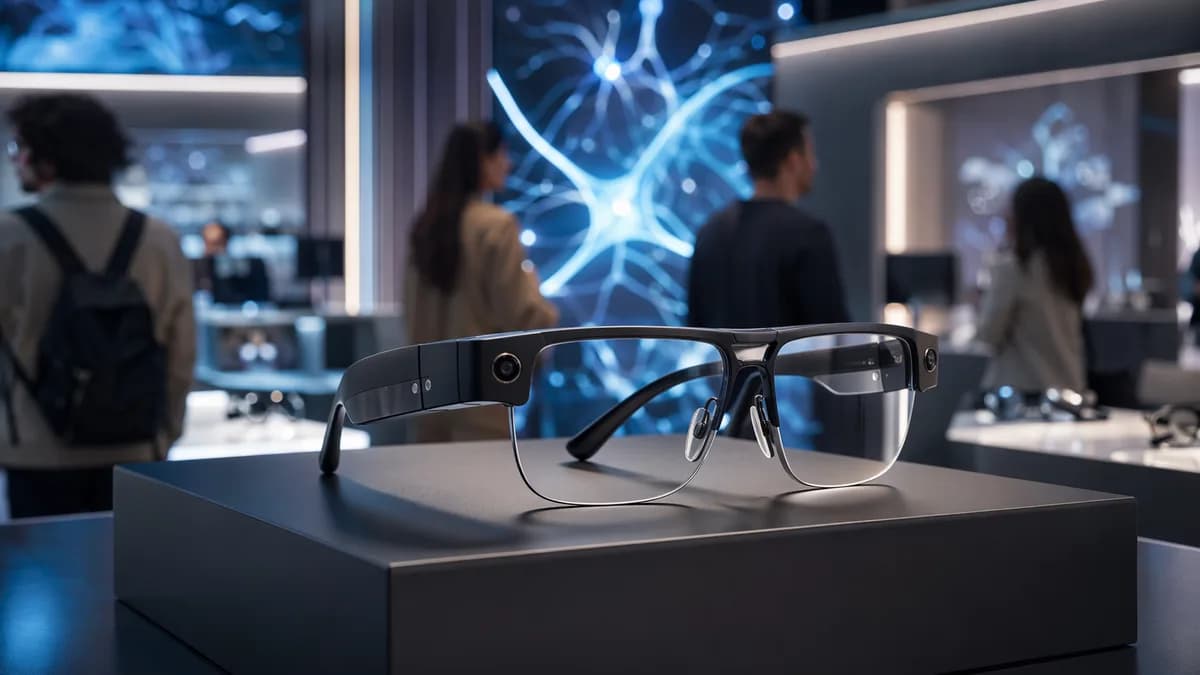
On Tuesday, Meta smart glasses became a cleaner test of Meta’s own hardware brand: the company put three Meta-branded frames on sale starting at $299, without the Ray-Ban or Oakley name doing the style work.
TechnologyJune 23, 2026· 9 min read· By XOOMAR Insights Team
$299 Meta Smart Glasses Ditch Ray-Ban's Style Shield
Updated on June 23, 2026
XOOMAR Intelligence
Analyst Take
60/ 100
4 sources analyzedLow confidenceTrend10Freshness99Source Trust88Factual Grounding92Signal Cluster40
The launch, reported by Wired, is not about a radically new device. The new Meta Glasses keep much of the same core stack as Ray-Ban Meta Gen 2: a 12-megapixel camera, 3K video, a five-microphone array, speakers in the arms, touch controls, and access to Meta AI.
That makes the move more revealing. Meta is asking whether people will wear its hardware because the product is useful and attractive, not because a legacy eyewear brand has softened the pitch.
Tuesday’s $299 Meta smart glasses remove Ray-Ban from the pitch
Meta revealed three models on Tuesday: Adventurer, Fury, and Starfire. They go on sale today. The price starts at $299, matching the original price of Meta’s first-generation smart glasses but coming in below the Ray-Ban Gen 2 glasses Meta launched last year, according to Wired.
The cheaper price has a simple explanation. These are not Ray-Bans. They are just called Meta Glasses.
That matters because smart glasses live or die on social acceptance. A phone can be ugly and still sell if the screen is good enough. Glasses sit on your face all day. They signal taste, identity, and intent before anyone asks about the chipset.
Meta’s vice president of industrial design, Peter Bristol, framed the adoption problem bluntly:
“People will use it when it's good enough.”
XOOMAR analysis: “Good enough” here does not mean better specs alone. It means light enough, normal-looking enough, comfortable enough, and socially acceptable enough that people don’t feel strange wearing a camera and AI assistant at eye level.
Meta is still working with EssilorLuxottica to manufacture and distribute the glasses. Buyers can get them through glasses shops such as LensCrafters, with or without prescription lenses. Wired reports prescription support from -12 to +2.25.
That keeps the retail muscle of the eyewear world in place while removing the Ray-Ban badge from the frame. It’s a calculated half-step away from fashion dependency.
Today’s on-sale test puts Meta smart glasses into a sharper price bracket
The new Meta smart glasses lineup is built around one technical platform, then split into three visual identities.
| Model | Design cue | Customization and positioning |
|---|---|---|
| Meta Adventurer | Classic rectangular shape | Standard and large sizes, with customization options |
| Meta Fury | Similar to Adventurer, less boxy | Part of the 26 customization options across Adventurer and Fury |
| Meta Starfire | Fashion-led statement frame | Codesigned with Kylie Jenner, with model-specific details |
The Adventurer and Fury designs include 26 customizations, including tinted lenses and frame colors such as Racing Green and Sandstone. That turns one device into multiple buying decisions. Meta is not only selling a camera and chatbot. It is selling the idea that face-worn computing can match personal style.
The Starfire model is the clearest expression of that strategy. Designed with Kylie Jenner, it includes a tiny gemstone on the lens, a metal nose pad meant to avoid absorbing makeup, a case with a built-in mirror, and a note from Jenner. Its Meta AI voice assistant also gets an AI-generated version of Jenner’s voice, along with custom sounds unique to the model.
That is not a minor celebrity flourish. It is a way to pull a privacy-sensitive device toward lifestyle retail. The more Starfire feels like an accessory, the less buyers may think first about the camera.
Meta is using the same playbook it applies elsewhere: put software into daily habits and familiar surfaces. We’ve seen that logic in its media push through Instagram for TV Grabs Samsung TVs in Living-Room Push and Instagram TV App Barges Into Streaming's Living Room. Glasses are more intimate than a TV app, but the strategic instinct is similar: get closer to where users already spend attention.
The immediate hardware fix is comfort, but trust is still the harder sale
Meta says it made three comfort changes. The glasses now have adjustable nose pads that can tilt in three directions by a millimeter, adjustable temple tips using a core wire, and overextension hinges that let the arms flare slightly when the glasses go on.
Those details sound small. On eyewear, they are not. A product that pinches, slips, or feels uneven becomes a drawer item fast.
The hardware specs are familiar:
- Camera: 12-megapixel photos and 3K video
- Audio input: Five-microphone array for voice commands
- Audio output: Speakers in the arms for music or podcasts
- Controls: Touch controls and a physical button for capture
- Battery: Around 8 hours on a single charge
- Case: Adds an extra 40 hours of charge
Meta is also selling a new Meta Glasses Charging Stand, compatible with Ray-Ban Meta, Oakley Meta HSTN, and Meta Glasses models.
The problem is not whether Meta can build usable hardware. The problem is whether people nearby trust what that hardware is doing.
Pressing the button on the arm takes a picture. A long press records video. An LED indicates capture. Wired notes that on previous models, people found ways to disable or block the light. Meta CTO Andrew Bosworth said the new Meta Glasses use the same tamper-detection technology as Ray-Ban Gen 2, which can block camera access if it detects interference.
He also described the privacy fight as a continuing one:
“cat and mouse game with bad actors”
That line is more candid than reassuring. Meta can improve safeguards generation by generation, but public comfort depends on more than tamper detection. In offices, schools, gyms, venues, and public transit, the question will be simple: who knows they are being recorded, and who gets to object?
Last week’s Snap AR Specs backlash sharpened Meta’s design lesson
Wired draws a direct contrast with Snap AR Specs, announced last week. Those glasses were described as “comically huge and bulky,” and Snap drew criticism for expensive, oversized hardware, even though the glasses are more powerful and capable than Meta’s.
Bosworth said competition helps customers and gives Meta more to learn from:
“When someone takes different choices in weight and comfort, we get to learn from that and see how people respond to it. I've said too much.”
That comment lands because Meta’s new glasses avoid the most obvious trap in wearable AI: making the technology too visible. The Ray-Ban Meta formula worked because the glasses looked normal first and smart second. Meta’s new in-house branding revives the central question: do buyers want smart glasses, or do they want stylish glasses that happen to be smart?
XOOMAR analysis: Fashion partnerships are not decoration in wearables. They supply legitimacy. They also reduce the cognitive friction of wearing new technology in public. By stripping away Ray-Ban from this line, Meta is testing how much legitimacy it can carry on its own.
The answer will shape how aggressively Meta pushes its own name in future face-worn devices.
Buyers, retailers, and bystanders will grade the same glasses differently
Creators may see obvious utility in hands-free photos, short video capture, and AI assistance tied to what they are looking at. The device can capture media from eye level without pulling out a phone. That is the cleanest use case.
Everyday buyers may care more about convenience: music or podcasts through the arms, quick photos, voice access to Meta AI, and a frame that fits their face. Wired’s demo unit had trouble hearing “Hey Meta” in a loud environment, which is a reminder that ambient AI has to work in the real world, not only in controlled demos.
Bystanders will judge the product differently. They are not buying the glasses. They are living around them. For them, the LED, the camera placement, and Meta’s privacy reputation will matter more than battery life.
The facial recognition issue adds another pressure point. Earlier this month, Wired found code in the public-facing Meta AI app suggesting Meta was preparing a face recognition feature for consumer smart glasses. After the report, Meta deleted the code. Wired says none of that technology is present in the new Meta Glasses.
Ankit Brahmbhatt, senior director of Product Management for AI Glasses at Meta, told Wired there are “no plans for facial recognition.”
That statement narrows the current product. It does not end the debate over what smart glasses could become once more people are wearing cameras and AI assistants on their faces.
The next decision point is whether Meta can make face-worn AI feel ordinary
The new glasses run the latest version of Meta’s Muse Spark multimodal model, already rolled out to existing devices via software update in select markets. Meta says it enables more natural conversations with Meta AI, smarter answers, and more translation languages, including Japanese, Chinese, Hindi, and Korean.
A new Dynamic Photo feature captures multiple frames and recommends the best shot. Turn-by-turn directions are also coming soon for glasses without displays, letting users hear when to make a left.
Bosworth also acknowledged that some people want audio-only glasses without cameras:
“There's a market demand for that product for sure.”
Then he added:
“one thing at a time.”
That is the watch item. If buyers accept Meta smart glasses at $299 without Ray-Ban branding, Meta gains evidence that it can build its own eyewear identity. If the Starfire model draws attention, expect more celebrity and fashion experiments because culture can soften concerns that specs cannot.
If privacy objections intensify, or if buyers treat the Meta-branded frames as less desirable than Ray-Bans, the signal cuts the other way. The glasses don’t need to replace Ray-Ban Meta soon. They need to answer a narrower question first: whether Meta has enough brand power to put AI on people’s faces under its own name.
The Bottom Line
- Meta is testing whether its own hardware brand can sell without Ray-Ban’s fashion credibility.
- The $299 price lowers the entry point for smart glasses with camera, audio, and Meta AI features.
- Social acceptance remains the key challenge because glasses are worn visibly on the face all day.
Meta Glasses vs. Ray-Ban Meta Gen 2
| Feature | Meta Glasses | Ray-Ban Meta Gen 2 |
|---|---|---|
| Branding | Meta-branded, without Ray-Ban or Oakley | Ray-Ban co-branded |
| Starting price | $299 | Above $299; exact price not stated |
| Models mentioned | Adventurer, Fury, Starfire | Not specified |
| Core hardware | 12-megapixel camera, 3K video, five microphones, speakers, touch controls, Meta AI | Much of the same core stack |
Sources

Written by
XOOMAR Insights Team
Research and Editorial Desk
The XOOMAR Insights Team pairs automated research with human editorial judgment. We track hundreds of sources across technology, fintech, trading, SaaS, and cybersecurity, cross-check the facts, and explain what happened, why it matters, and what to watch next. We do not just rewrite headlines. Every article is fact-checked and scored for reliability before it goes live, and we link back to the original sources so you can verify anything yourself.
Explore More Topics
Related Articles
 Technology
Kmart Smart Glasses Sell Out Despite Major Security Risks
Budget smart glasses selling out at retailers like Kmart often lack basic tamper protections, risking covert recording and data leaks, making them a dangerous p
Aug 9, 20266 min
 Technology
Meta Claims Zuckerberg Yacht Crew Missed Distress Call
Meta says the crew aboard Mark Zuckerberg's superyacht didn't hear a Coast Guard radio call to assist a stranded boat, sparking outrage over wealth and duty.
Aug 10, 20266 min
 Technology
Meta Fined $567 Million Over 'Public Nuisance' Youth Harm
A New Mexico judge ordered Meta to pay $567 million specifically to treat youth mental health, ruling its social media platforms are a 'public nuisance' akin to
Aug 7, 20266 min
 Technology
Meta Punished $1bn for Addict Design in Child Safety Suit
A New Mexico court has ordered Meta to pay an additional $567 million, bringing total penalties to nearly $1 billion, and mandated changes to core product featu
Aug 7, 20267 min
 Technology
Judge Orders Meta to Pay $942 Million Over Youth Harm
A New Mexico court ordered Meta to pay an additional $567 million, finding its platforms are a significant cause of a teen mental health crisis and a public nui
Aug 7, 20268 min
 SaaS & Tools
ApartmentIQ Seals $25 Million Bet on Real-Time Rental Data
ApartmentIQ raised $25 million in growth funding led by Susquehanna Growth Equity to scale its AI-driven, real-time data platform, which now covers over 8 milli
Aug 12, 20267 min
 Technology
Automattic Deploys Android CRM to Slash Clunky Legacies
Automattic's free, AI-enhanced Mesh CRM has launched on Android, targeting a massive user base to directly challenge clunky, legacy customer relationship softwa
Aug 12, 20265 min
 Global Trends
Drones Cripple Russian Grain Hub In Black Sea Attack
Ukrainian drone strikes have knocked major Russian grain export terminals offline at the Novorossiysk port, escalating a campaign of economic sabotage that thre
Aug 12, 20266 min
 Global Trends
Gen X Most At Risk as Grocery Bills Trap Tipping-Point Households
A majority of U.S. households remain stuck in a 'cutback economy,' where falling gas prices are no match for the relentless rise in essential costs like rent an
Aug 12, 20266 min
 Technology
ICE Plans Deploy $20M Electric Shock Gloves
ICE is pursuing a contract worth up to $20 million to arm agents with electrified gloves that deliver painful shocks to 'achieve compliance in less than three s
Aug 12, 20266 min
Don't miss the signal
Get our weekly roundup of the stories that matter across tech, fintech, and trading. No noise, just signal.
Free forever. No spam. Unsubscribe anytime.