Can the Pixi iOS app make AR feel like texting instead of a demo?
Pixi has launched a new iOS app that turns iMessage into a delivery channel for AI-powered augmented reality characters, raising a sharper question than the usual AR pitch: can camera-based messages become a habit, or will they stay a clever one-off?
XOOMAR Intelligence
Analyst Take
The Pixi iOS app arrived on the App Store on Wednesday and lets users send interactive AR characters through iMessage, according to TechCrunch. Instead of landing as a sticker, GIF, or emoji reaction, the message opens through the recipient’s iPhone camera, where the character can respond to the room, interact with people, and react in real time.
That last part is Pixi’s core bet. AR has been a consumer feature for years, especially through Snap-style filters and lenses. Pixi is trying to move it from a camera effect into a message format.
The launch details matter because messaging tools die when they add friction.
- Availability: The app is on iOS through the App Store.
- Messaging path: Users send Pixi characters inside iMessage by tapping the plus button in the lower-left corner.
- Recipient setup: No installation is required to receive a Pixi message.
- Device support: Pixi initially supports iPhone 11 models and newer.
- Pricing: The app is free for users, while brands can charge for characters if they choose.
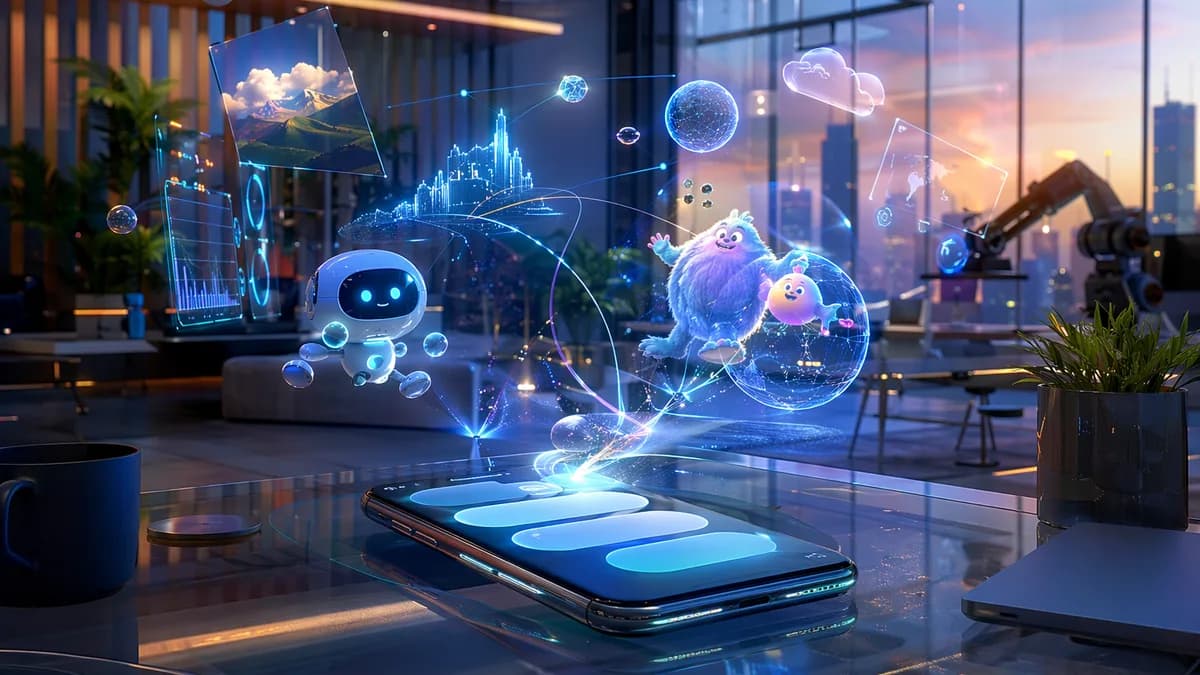
At launch, Pixi includes a robot, a cat, and an animated envelope character. The envelope can react to voice and “attack” friends in a playful way. If they move, it chases them. The app also includes games such as tic-tac-toe and whack-a-mole.
Pixi founder Mark Drummond, who previously worked at DreamWorks Animation and Apple, frames the product as a more expressive form of digital gifting.
“The consumer problem we’re solving is thinking of a friend when they’re not present,” he told TechCrunch. “Sometimes the psychology is called pebbling or creative gifting. You’re sharing tokens of affection, basically cards, e-cards, and gifts. That’s your dad, or, in some cases, your granddad’s media. We can do better. We can do something that’s digitally native, and that uses everything we learned about AR on the iPhone.”
Why does Pixi think iMessage needs camera-first AR characters?
Pixi is aiming at the habits that already dominate casual messaging: reaction taps, stickers, GIFs, Bitmoji-style avatars, and quick visual replies. Those formats are fast. They’re lightweight. They don’t ask much from the sender or the recipient.
The Pixi iOS app asks for more attention. That’s both the opportunity and the problem.
A Pixi message can behave more like an event than a file. During a demonstration earlier this week, Drummond selected the cat character, which performed stand-up jokes on his desk. The cat appeared to respond to his facial expressions, and the experience ended when he smiled.
That gives Pixi a different emotional texture than a static reaction. The company says its characters combine AR with on-device AI, allowing them to understand the surrounding scene and behave accordingly. TechCrunch gives one example: a virtual cat reacting when a real dog walks past.
Pixi also says all visual and audio processing remains on the device to protect user privacy. That claim is central because camera-based messaging can feel invasive fast if users don’t trust where the data goes.
| Messaging format | What it sends | Pixi’s attempted upgrade |
|---|---|---|
| Sticker or emoji reaction | Static response | A character that reacts in the recipient’s space |
| GIF | Short loop | A real-time scene tied to the camera view |
| AR lens | Camera effect | A message-native interaction through iMessage |
| Short video reply | Recorded moment | Live behavior that can respond to people and surroundings |
XOOMAR analysis: Pixi’s hardest fight is not technical novelty. It’s speed. Messaging is an impulse behavior, and users won’t tolerate a long handoff if a GIF can do the job in one tap. We’ve seen the same friction problem in different contexts, including workflow-heavy software decisions like Mac Technical Analysis Software Traders Shouldn't Buy Blind, where features only matter if they fit the user’s actual routine.
There’s also a platform constraint. Launching on iOS gives Pixi direct access to the iPhone camera and the iMessage sharing path, but it also puts the company inside Apple’s mobile rules and distribution channel. Pixi says it plans to expand later to Android, WhatsApp, and Instagram.
Can AR messaging become a daily habit after the novelty fades?
Novelty can push downloads. Messaging apps need repetition.
Pixi’s product will live or die on whether people send these experiences more than once, and whether recipients reply with their own AR messages instead of treating the first one as a demo. Social graph density matters. If only one friend uses it, Pixi becomes a trick. If groups start trading characters, it becomes a format.
Practical issues will decide a lot. The app needs to load quickly, run without draining patience, and behave well in ordinary settings: a desk, a kitchen, a couch, a noisy room, a moving friend. It also needs content controls if brands, studios, independent creators, and eventually users can publish characters.
Pixi is already pointing in that direction. The company wants to build a marketplace where studios, brands, and independent creators can offer characters. Drummond gave examples tied to movie premieres, product launches, and a possible M&Ms flavor release.
He also mentioned Alice in Wonderland as a future character option because it is open intellectual property. The point is not just recognizable branding. Pixi wants characters to act in ways that fit their identities.
“our Alice character needs to react to objects that she sees on your desktop in an ‘Alice-consistent’ way,” Drummond said.
That raises a deeper product challenge. A branded AR character that ignores context is just a mascot. A character that understands the room and responds believably starts to feel closer to interactive media.
Still, this is early proof of concept. It is not proof that AR has become a mainstream messaging layer.
Which Pixi signals will show whether this is a product or just a launch moment?
The next signals are simple: App Store ranking, retention, sharing frequency, and whether Pixi spreads beyond early adopters who enjoy trying new app formats.
Creator tools may matter more than the launch characters. Pixi says it eventually wants users to generate their own characters and personalities with prompts.
“Part of our plan is to open up those generative AI capabilities to our [users], so they can prompt their way to say something, like, ‘I want a blue blob that threatens my friend and growls at them and keeps chasing them on the phone,’” Drummond explained.
Brands will also test the model. Drummond said Pixi will encourage free branded characters because users can become “brand ambassadors” by placing those characters into their own messages.
That business logic depends on distribution. If Pixi stays mostly inside iMessage on newer iPhones, growth may be narrower. If Android, WhatsApp, and Instagram support arrive in usable form, the product has a better shot at becoming a repeatable format.
XOOMAR’s read: Pixi is asking the right question for consumer AR, which is how to make it useful without asking people to buy new hardware. The same uncertainty theme shows up in markets when unclear communication changes behavior, as we covered in Fed Hike Odds Leap as Warsh Turns Policy Into a Black Box. For Pixi, the uncertainty is behavioral: can it make AR feel like texting, not like opening a separate show?
Key Takeaways
- Pixi is trying to make AR feel like a normal messaging behavior rather than a standalone demo.
- No recipient install requirement could reduce friction, which is critical for social sharing apps.
- Brand-paid characters hint at a possible business model beyond free consumer use.
Pixi AR messages vs. typical messaging media
| Format | How it appears | Interactivity | Recipient setup |
|---|---|---|---|
| Stickers, GIFs, emoji reactions | Flat media inside the chat | Limited or preset reactions | No special setup mentioned |
| Pixi AR characters | Opens through the recipient’s iPhone camera | Responds to the room, people, voice, and movement in real time | No app installation required to receive |
Primary Sources & Disclosures
- [1]TechCrunch
- [2]Pixi AR iOS App Transforms Text Messages into Interactive Experiences: The Future of Messaging in 2026 - Coaio
- [3]Pixi’s new iOS app turns text messages into interactive AR experiences
- [4]Pixi’s latest iOS app transforms ordinary text messages into immersive AR interactions – GSM Nation

Written by
XOOMAR
Data desk
XOOMAR is a capital markets software and data company. Every brief on this site starts from a dataset the company collects itself from primary sources (CFTC, SEC EDGAR, FINRA, the Federal Reserve, exchange APIs) and names the numbers it is built on, with a link to the data page so you can check them. Briefs are reviewed before they go out and corrected in place when the data is revised.