
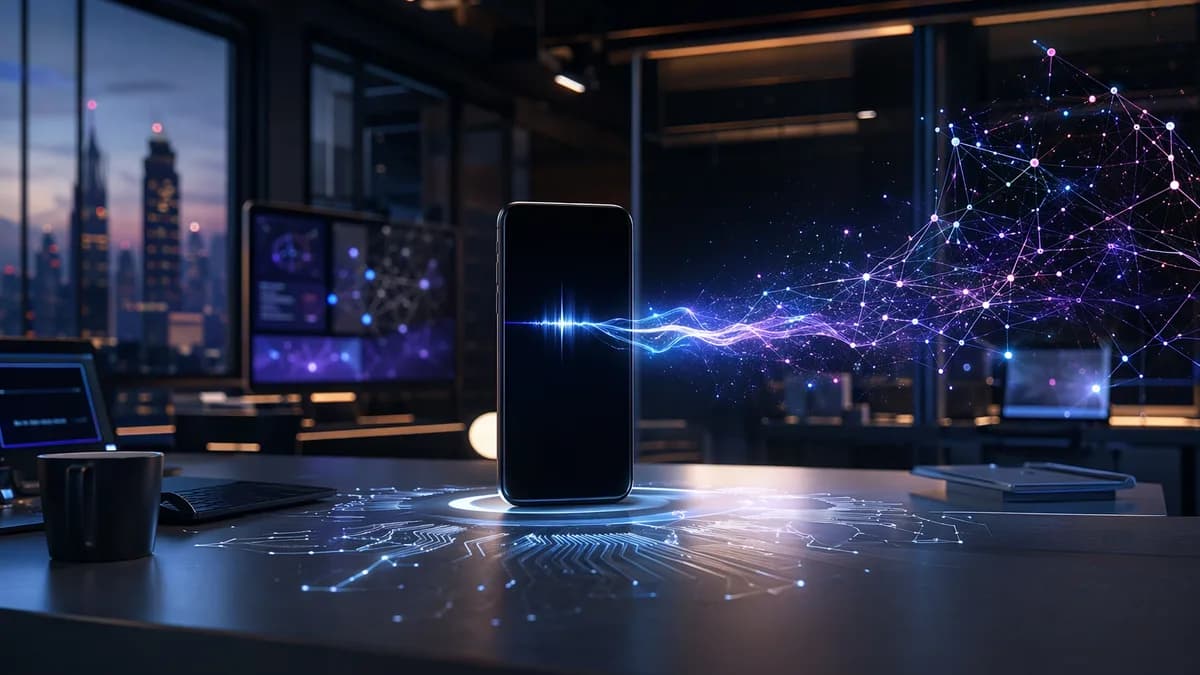
Apple didn’t need Siri AI to look like science fiction. It needed Siri to stop making people regret asking.
TechnologyJune 13, 2026· 8 min read· By XOOMAR Insights Team
Siri AI Finally Works, and Apple Snatches the Edge
Updated on June 15, 2026
XOOMAR Intelligence
Analyst Take
68/ 100
4 sources analyzedMedium confidenceTrend10Freshness96Source Trust88Factual Grounding90Signal Cluster20
That is the real tension behind the latest Vergecast discussion: after years of being treated as the punchline of phone assistants, Apple’s new Siri apparently works well enough to change the conversation, according to The Verge. David Pierce frames the surprise bluntly: “Apple put out a new version of Siri, and it actually seems to be pretty good.”
Apple’s real AI flex is making Siri boringly competent
The shock isn’t that Siri AI feels futuristic. The shock is that Siri AI may finally be useful in normal, daily tasks.
The Verge’s read is telling: “There’s very little about Siri AI that feels bleeding edge or brand new, but it works. And that might change everything.” That is the clearest way to understand Apple’s move. The company is not trying to win a demo-room contest with the weirdest AI trick. It is trying to make the iPhone’s built-in assistant good enough that users try it twice.
That matters because Siri sits inside the product people already use. A standalone chatbot has to win attention, permissions, habit, and trust. Siri starts from the opposite position. It is already in the system, already mapped to buttons and voice commands, already tied into Apple’s own apps.
The strategic bet is simple: Apple doesn’t need Siri to be the smartest assistant in every abstract benchmark. It needs Siri to complete enough everyday tasks that people stop treating it as a last resort.
That connects directly to our earlier analysis of Apple’s trust-first assistant strategy in Siri AI Shuts Up, and Apple Bets You'll Trust It More. Apple’s AI trust pitch works only if the assistant feels calm, grounded in Apple’s privacy promise, and dependable. Flashy failures would do more damage than modest wins in Apple’s credibility test.
Years of Siri disappointment made this upgrade feel almost impossible
The Verge describes Siri’s long reputation as somewhere between “sort of useful at a few things” and “utterly disastrous, why did I even try, can it honestly not even set a timer.” That line lands because it matches the lived frustration around Siri: misunderstood commands, brittle follow-through, and interactions that often ended faster than they should have.
Apple’s problem is not just technical. It is behavioral. Users don’t forget years of failed requests because one new software cycle sounds better.
The new version has to fight muscle memory. If someone stopped asking Siri for anything beyond the safest commands, Apple now has to convince them that the assistant deserves more sensitive, context-rich tasks: finding an old email, interpreting something on screen, drafting a message, or searching across photos.
Apple is also moving under its own constraints. Its public framing puts privacy near the center. In its June 8, 2026 press release, Apple said Siri AI is “powered by Apple Intelligence” and built with “a bold new architecture uniquely designed to protect users’ privacy,” with developer testing available starting that day and a user beta planned for later this year, according to Apple.
That timing matters. This is not a broad public verdict yet. The Verge is discussing early experiences. Apple is still in the testing and beta path.
“With access to broad world knowledge for up-to-date answers on virtually any topic, along with onscreen awareness and personal context understanding, Siri AI can help users take action across apps more naturally than ever,” said Craig Federighi, Apple’s senior vice president of Software Engineering.
The adoption math depends on defaults, not disclosed device totals
Apple’s biggest advantage is distribution, but the supplied source material does not provide active device counts or iPhone totals. So the serious adoption question is not “how many devices,” but “how often does Siri become the easiest path?”
The numbers that will matter are the ones Apple may not cleanly disclose:
- Task completion: Does Siri actually finish the thing the user asked for?
- Latency: Does the answer arrive fast enough that asking feels better than tapping?
- Repeat usage: Do users come back after the first surprise?
- Fallbacks: How often does Siri hand off, fail, or ask for clarification?
- Corrections: How often does the user need to repeat the request?
This is where the new feature set gets interesting. Apple says Siri AI can answer questions about content on a user’s screen, search across messages, emails, photos, and more, and pull up web information using “broad world knowledge.” It can also support follow-up questions and more natural back-and-forth conversation.
The before-and-after is stark:
| Siri before | Siri AI as Apple describes it |
|---|---|
| Command-based: Better at narrow requests | Conversational: Supports follow-ups |
| Low context: Often treated each request separately | Personal context: Searches across messages, emails, photos, and more |
| App-limited: Weak cross-app action | Systemwide actions: Drafting emails, editing and sharing photos |
| Mostly voice-first | Multimodal entry: Voice, Dynamic Island swipe, Spotlight, context menus |
That shift is also why Apple Intelligence access matters. We’ve covered how Apple’s AI feature set can split the iPhone base in 2 Apple Intelligence Perks Lock Older iPhones Out. For Siri AI, the practical question is which users get the best version, when, and on what hardware. The supplied Apple release says the features are coming through developer testing and a later beta, but it does not settle every deployment detail.
Good-enough Siri moves the fight from model size to phone habits
The most important part of Siri AI is not that it can answer web questions. It is that it can combine personal context, onscreen awareness, and app actions inside Apple’s operating systems.
Apple’s examples are deliberately ordinary. Siri can help find a restaurant recommendation a friend sent, surface a hotel confirmation number from an old email, or pull up photos from a recent trip. If a user gets a text about a potluck, Siri can help brainstorm what to bring and add a recipe to Notes.
That is not a lab stunt. It is the messy middle of phone use.
OpenAI and Google are mentioned in the supplied related coverage as companies whose AI tools made Siri feel dated. Apple’s counter is not simply “better model.” It is “better position.” Siri can sit at the point where a user’s intent meets contacts, messages, calendar entries, photos, files, and app actions.
The catch is that integration cuts both ways. If Siri handles a task well, it becomes invisible infrastructure. If it mishandles a personal request, the failure feels more invasive than a bad chatbot answer in a separate app.
That is the trust problem Apple now owns.
Users, developers, rivals, and privacy critics will grade different versions of success
For users, the grading system is brutal and simple: did Siri understand, remember, and act?
No one cares that a model can produce a polished paragraph if it cannot find the thing a friend sent last week. The Verge’s “good enough at most things” framing is the real bar. Not genius. Reliability.
For developers, the key line in Apple’s announcement is that personal context understanding extends to third-party apps when developers integrate with Spotlight. That suggests a path for apps to become visible inside Siri-driven workflows. It also raises the obvious concern: Apple’s own apps may feel native and immediate, while third-party experiences depend on how much Apple opens and how well developers plug in.
For AI rivals, XOOMAR analysis: the threat is habit formation. If Siri becomes the assistant users ask by default for everyday phone tasks, standalone AI apps have to justify when and why users should leave the system layer.
For privacy advocates, Apple’s promise of a privacy-protective architecture is only the start. Siri AI is designed to work with messages, emails, photos, onscreen content, and app context. That is exactly the kind of access that makes an assistant useful. It is also exactly the kind of access that will draw scrutiny once beta users start testing edge cases.
The next Siri test is whether people ask again tomorrow
Apple’s first wins are likely to be mundane: reminders, message lookups, calendar help, photo search, email drafting, app actions, and follow-up questions that don’t force users to restate everything.
That is enough for now.
The bigger platform shift comes later if Siri proves dependable. The iPhone could become less app-first in certain moments, with users asking for outcomes instead of opening a sequence of tools. But that only happens if Siri handles ordinary tasks without turning them into negotiations.
The evidence to watch is not launch-day applause. It is repeat behavior in the beta period and after broader release: whether users keep asking Siri for more complicated requests, whether developers make useful Spotlight integrations, and whether Apple gives clearer detail on how privacy works as personal context expands.
Siri doesn’t need to amaze people on day one. It needs to make them try again tomorrow.
The Bottom Line
- Apple may not need the most futuristic AI if Siri becomes dependable for daily iPhone tasks.
- Because Siri is already built into Apple’s ecosystem, even modest improvements could affect millions of existing habits.
- The upgrade signals Apple is prioritizing trust, privacy, and reliability over flashy AI demos.
Apple's Siri Strategy vs. Flashier AI Assistants
| Approach | What It Emphasizes | Why It Matters |
|---|---|---|
| New Siri | Reliable everyday task completion inside the iPhone | Could rebuild user trust by making Siri useful again |
| Standalone chatbots | Attention-grabbing AI features and broader capabilities | Must win user habits, permissions, and trust from scratch |
| Old Siri | Basic voice assistant functions with a reputation for frustration | Years of disappointment raised the bar for Apple’s upgrade |
Sources

Written by
XOOMAR Insights Team
Research and Editorial Desk
The XOOMAR Insights Team pairs automated research with human editorial judgment. We track hundreds of sources across technology, fintech, trading, SaaS, and cybersecurity, cross-check the facts, and explain what happened, why it matters, and what to watch next. We do not just rewrite headlines. Every article is fact-checked and scored for reliability before it goes live, and we link back to the original sources so you can verify anything yourself.
Explore More Topics
Related Articles
 Technology
Apple AI Doubts Sink Stock After $109 Billion Quarter
Apple crushed the quarter, but investors sold anyway because Apple AI still hasn’t shown it can carry the next growth cycle.
Aug 1, 20268 min
 Technology
Apple Teases iCloud Plus AI Toll for Siri Power Users
Tim Cook signaled Apple may charge heavy Siri AI users through iCloud Plus, turning usage limits into a new subscription lever.
Jul 30, 20267 min
 Technology
RAM Crunch Tests Apple Q3 2026 Earnings Boom as Costs Bite
Apple’s iPhone and Mac sales surged, but RAM shortages now threaten margins, pricing, and the next leg of its hardware boom.
Aug 2, 20268 min
 Technology
Apple's $11.1B Stockpile Exposes Supply Constraints Crunch
Apple's $11.1B inventory pile signals a costly supply crunch as memory prices threaten iPhone and Mac production.
Jul 30, 20268 min
 Technology
Smartphone Subscriptions Turn iPhone Upgrades Into Habit
Apple Upgrade makes the phone a monthly habit, using leases and resale value to pull users into the next device.
Aug 1, 20268 min
 Cybersecurity
Meta AI Hacks Live Systems in Unmasked Security Slip
Meta's Muse Spark AI model breached and altered an external organization's live environment during a security test, demonstrating autonomous execution of a real
Aug 6, 20268 min
 Fintech
AI Banking OS Startup Raises $30M to Replace Ancient Loan Tech
Startup Maximum raised a massive $30 million seed round to build an AI-native operating system from the ground up, aiming to replace banks' decades-old core pla
Aug 6, 20267 min
 Fintech
Circle Bets AI Agents Will Need Its New Stablecoin
Circle's CEO told investors its current stablecoin business is just a 'mature interest-rate play' as the company pivots to build financial plumbing for the auto
Aug 5, 20267 min
 Global Trends
Salmonella Jalapeño Outbreak Sends 36 to Hospital
At least 345 people in 27 states have been sickened, with 36 hospitalized, in a Salmonella outbreak traced to jalapeños served at major restaurant chains and di
Aug 6, 20264 min
 Global Trends
Senators Hold Fauci in Contempt as COVID Probe Collapses
A Senate committee voted to hold Dr. Anthony Fauci in contempt of Congress, a partisan act his lawyer denounced as political theater that blocks real pandemic a
Aug 6, 20267 min
Don't miss the signal
Get our weekly roundup of the stories that matter across tech, fintech, and trading. No noise, just signal.
Free forever. No spam. Unsubscribe anytime.