
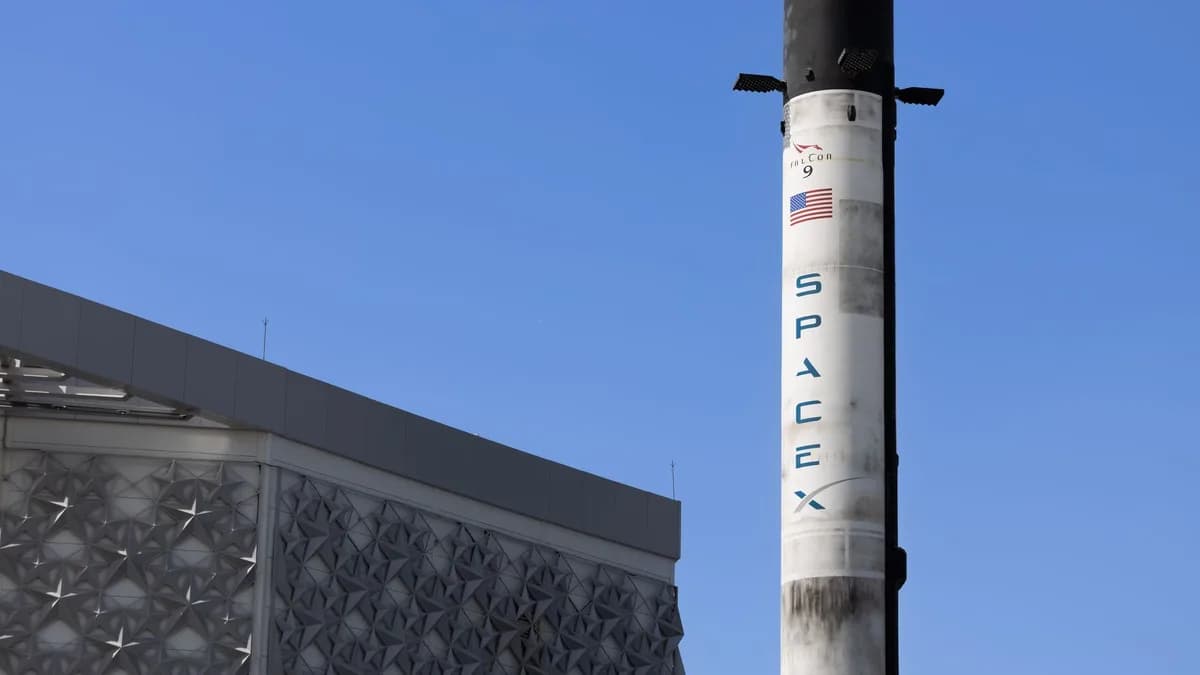
SpaceX has just paid $60 billion to put one of the world's leading AI coding tools directly inside its own engineering shop. This isn't a partnership. The acquisition of Cursor by Elon Musk’s aerospace giant has officially closed, moving the AI startup from an external partner to an internal team named alongside Grok Build, Grok Bot, and the Grok API. For millions of developers who use Cursor daily, the immediate question is simple: does the tool they rely on now serve a new master?
TechnologyAugust 15, 2026· 6 min read· By XOOMAR Insights Team
SpaceX Pays $60 Billion to Lock Away Premier AI Coding Tool
Updated on August 15, 2026
XOOMAR Intelligence
Analyst Take
61/ 100
3 sources analyzedLow confidenceTrend20Freshness92Source Trust90Factual Grounding85Signal Cluster40
The New Power User: A Rocket Company's Codebase
Cursor's stated mission shifts instantly from serving a broad developer community to serving a specific, high-stakes customer: SpaceX itself. The August 14 closing post declares Cursor will join "the @SpaceXAI team to help make Grok the world's most useful AI." The strategic logic is clear in the deal's structure. This was a $60 billion all-stock purchase, the largest acquisition of a venture-backed startup ever, executed just months after SpaceX's historic $75 billion IPO.
SpaceX paid a space-program premium. Cursor was reportedly raising a round at a $50 billion valuation weeks before; SpaceX paid a 20% premium to own it outright. The price tag reveals how the market now values an "agentic AI software" product that is deeply embedded in professional workflows.
The integration was operational before the paperwork finalized. Grok 4.6 access was live inside Cursor two days before the deal closed, a signal that engineers were already working as one team. Now, Cursor gets "access to the largest fleet of GPUs in the world" via SpaceX's computing infrastructure, which the company rents to clients like Anthropic and Google. This creates a unique, vertically integrated loop: SpaceX provides the compute to train frontier AI models, then uses its own AI coding tool, tuned on its own proprietary code, to build the software that flies its rockets.
The Developer's Dilemma: Choice Versus Default
For the professional engineers who live in Cursor for hours each day, the closing triggers concrete product worries, not abstract corporate anxiety. The community reaction, as captured in external analysis, splits into two clear concerns.
First, will Claude vanish as a model option? One widely-liked reply put it plainly: "If Grok becomes the default and my Sonnet slot quietly disappears, that is a downgrade for me, not an upgrade." This isn't paranoia. Cursor's new owner, via its xAI unit, builds Grok, a direct competitor to Anthropic's Claude. The incentive to nudge defaults is obvious.
The worry is about a future default shift that hasn't happened, not a reported one.
As of now, Cursor Router, launched July 22, 2026, automatically routes coding requests across Claude, GPT, and Grok models based on task type. Nothing in the closing announcement changes that. But the balance of power has. Developers must now watch for subtle shifts in system prompts, default model selections, and tuning that favors the in-house AI.
Second, will the Cursor brand survive? The other top community reply was a direct plea: "Congratulations, please keep the Cursor branding." The closing post listing Cursor alongside three Grok-branded products as siblings raises the specter of a future rebrand to "Grok Build" or similar, dissolving a trusted standalone tool into a feature of a larger suite. For now, Cursor continues to operate under its own name.
The Strategic Reshuffle: AI's New Vertical Stack
This acquisition redefines what a "moat" looks like in advanced engineering. SpaceX is no longer just a launch provider or satellite operator. It now controls a stack that spans:
- Hardware & Infrastructure: Rockets, satellites, and the Colossus supercomputer.
- Foundational AI: The xAI/Grok model family.
- Application Layer: Cursor, the tool that puts AI into the hands of its own builders.
This vertical integration creates a feedback loop competitors cannot easily replicate. Code written for Starship or Starlink can refine Cursor's understanding of complex systems engineering. A better-tuned Cursor accelerates the next iteration of flight software. The speed of this cycle becomes a competitive advantage.
The move also creates a strange new market dynamic. Anthropic, a primary rival to Grok, is both a compute customer of SpaceX and now sees its Claude API consumed by a tool owned by that same rival. This blurs the lines between infrastructure partner, competitor, and customer in a way that may attract regulatory attention, as the deal already faces potential antitrust scrutiny.
The Ripple for Startup Tooling
The signal to the broader tech ecosystem is unmistakable: foundational AI tools are strategic assets worth planetary prices. When a company like SpaceX buys a category-leading coding assistant instead of building its own, it validates the entire space of AI-native developer tools. This accelerates investment and competition, forcing every other major engineering-driven company, from automotive to chip design, to evaluate their own AI toolchain strategy. It’s a dynamic we've seen in other specialized software races, where startup rival tools rapidly outrun free alternatives.
The Unanswered Questions on the Pad
The deal is closed, but its real-world impact is just launching. Several critical questions remain unanswered, dictating what happens next.
Will Cursor remain a multi-model platform? This is the single biggest watch item for its user base. Any move to restrict or deprioritize Claude or GPT access would trigger immediate backlash and likely migration. The integrity of Cursor Router is the first test.
How will Cursor's culture survive inside SpaceX? Folding a nimble, product-focused startup into a sprawling aerospace and AI conglomerate carries inherent friction. The pace of Cursor's own product releases (like Cursor for iOS and Cursor Start for India, shipped after the deal was signed) will be a key indicator of autonomy.
What does "making Grok the most useful AI" actually look like? The mandate is clear, but the roadmap isn't. Will Cursor's team work on Grok's underlying model, its API, or its integration into the IDE? Or all three? Elon Musk's one-word reply, "Welcome!", is the only signal from leadership so far.
XOOMAR Interpretation: The lack of a detailed roadmap or fanfare is itself a signal. This acquisition wasn't a marketing splash; it was treated as an operational necessity. SpaceX bought Cursor for the same reason it builds its own engines: to control a critical path technology that dictates its own velocity. The next milestone to watch isn't a press release. It's the first mention in a SpaceX technical update or launch webcast of AI-assisted development for a flight-critical system. When that happens, the $60 billion price tag will start to pay off not in stock valuation, but in the sheer speed of building the future.
Impact Analysis
- This vertical integration gives SpaceX control over a critical AI development tool, potentially accelerating its internal software engineering for rockets and spacecraft.
- The record $60B price signals how strategically valuable tightly integrated, 'agentic' AI tools have become for high-stakes, complex engineering firms.
- Cursor's shift from serving the public developer community to primarily serving SpaceX could alter its product roadmap and availability for external users.
SpaceX Cursor Acquisition Financials
Cursor Valuation
$50,000,000,000
SpaceX Acquisition Price
$60,000,000,000
SpaceX IPO (Context)
$75,000,000,000
Sources

Written by
XOOMAR Insights Team
Research and Editorial Desk
The XOOMAR Insights Team pairs automated research with human editorial judgment. We track hundreds of sources across technology, fintech, trading, SaaS, and cybersecurity, cross-check the facts, and explain what happened, why it matters, and what to watch next. We do not just rewrite headlines. Every article is fact-checked and scored for reliability before it goes live, and we link back to the original sources so you can verify anything yourself.
Explore More Topics
Related Articles
 Technology
Cloud IDE Rivals War Over Zero-Second Coding Startups
Gitpod's prebuilds nearly erase the dreaded cloud IDE cold start, Codespaces ties you into Github's world, and Replit offers pure simplicity. Speed, ecosystem,
Aug 13, 202612 min
 Technology
CodeRabbit Breaks $1.5B Betting on AI Control
CodeRabbit landed $143 million at a $1.5 billion valuation because venture investors believe managing the flood of AI-generated code isn't just a tooling issue,
Aug 15, 20265 min
 Technology
IBM Trains OpenAI's Global Sales Army In Major Pivot
IBM pivoted from building its own AI models to becoming OpenAI's primary enterprise integration partner, training an army of consultants to sell the tech global
Aug 15, 20267 min
 Technology
Your AI Agent's Biggest Threat Isn't Its Mind
The most critical flaw in enterprise AI isn't hallucination. It's agents executing technically correct actions they were never authorized to take, which require
Aug 15, 20267 min
 Technology
Meta Flips the AI Script by Running Its New Model on Your PC
Meta's launch of the Muse Glimmer model, designed to run locally on personal computers, marks a strategic pivot to control the hardware standard for personal AI
Aug 15, 20267 min
 SaaS & Tools
Databricks Raises $5 Billion as Investor FOMO Floods AI
Databricks planned a $1 billion raise but settled on taking $5 billion due to $15 billion in investor demand, revealing the immense capital pressure fueling the
Aug 15, 20266 min
 Fintech
Mastercard Snubs $2.5B Coinbase Bid to Win BVNK
Mastercard's $1.8B acquisition of stablecoin firm BVNK concluded a frenzied bidding war, where it won not with the highest bid but with strategic alignment, as
Aug 15, 20267 min
 Future Fiction
Her Fans Flooded a Welsh Street with Song
Thousands of fans lined a Welsh street, erupting into an impromptu singalong of her songs as her hearse passed, transforming her funeral into a defiant celebrat
Aug 15, 20268 min
 Technology
Claude's Secret Watermark Sparks AI Payout Boycott
Anthropic's new watermark, aimed at compliance, sparked a user revolt due to its undetectable nature and secret method, highlighting a rift between AI policy an
Aug 15, 20266 min
 Technology
Mia Goth Torments as Horror Icon in Hulu Hit ‘Pearl’
Mia Goth delivers a chilling, iconic performance in 'Pearl,' the standout of three critically acclaimed horror films newly streaming on Hulu.
Aug 15, 20265 min
Don't miss the signal
Get our weekly roundup of the stories that matter across tech, fintech, and trading. No noise, just signal.
Free forever. No spam. Unsubscribe anytime.