
Trump Mobile’s T1 Phone appears to be far closer to an HTC U24 Pro clone than a new American hardware project, and that matters most for buyers being asked to treat a political badge as product differentiation.
TechnologyJune 11, 2026· 7 min read· By XOOMAR Insights Team
Teardown Catches Trump Mobile T1 in HTC Clone Pitch
Updated on June 11, 2026
XOOMAR Intelligence
Analyst Take
66/ 100
4 sources analyzedLow confidenceTrend20Freshness92Source Trust83Factual Grounding91Signal Cluster20
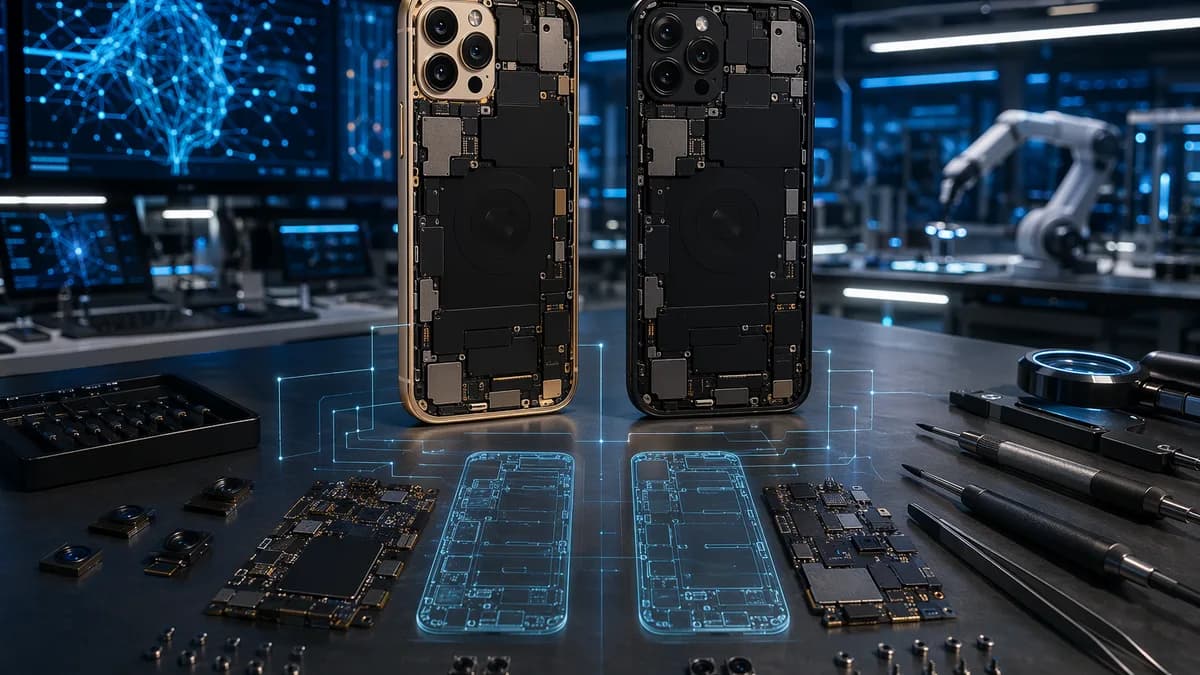
A teardown by iFixit, covered by Engadget, found that the Trump Mobile T1 is “practically identical” to the HTC U24 Pro, with the only real functional difference being the battery. That turns the story from a phone launch into a transparency test.
Trump Mobile’s patriotic phone pitch runs into the teardown bench
The T1 was initially presented with “made in the USA” language, according to Engadget. Trump Mobile now says the phone is “proudly assembled in the US” and uses phrases such as “American-proud design,” “shaped by American innovation,” and “designed with American values in mind.”
The teardown makes those phrases do a lot of work.
iFixit found the phone’s internals line up closely with the HTC U24 Pro. The cosmetic differences are limited: gold paint, a slightly altered camera array position, and a different speaker-hole pattern. The hardware story is much less distinct.
So what is the buyer actually paying for: original engineering, American manufacturing, or a branded shell?
That question now sits at the center of the $499 Trump phone. A phone can be a rational rebrand and still be a weakly disclosed product. The problem isn’t that existing hardware was reused. The problem is that the marketing invited a much bigger claim than the teardown supports.
iFixit concluded the T1 is “a phone designed in China, made in China, with the vast majority of parts sourced from China.”
That is the sentence Trump Mobile now has to answer.
Builders and suppliers see a familiar shortcut: same core phone, different badge
The technical comparison is blunt. The Trump Mobile T1 and HTC U24 Pro share the same basic platform, according to iFixit’s teardown findings cited by Engadget.
| Area | Trump Mobile T1 | HTC U24 Pro | Teardown read |
|---|---|---|---|
| Chipset | Snapdragon 7 Gen 3 | Snapdragon 7 Gen 3 | Fundamentally the same |
| RAM | 12GB LPDDR5 | 12GB LPDDR5 | Same spec |
| Storage | 512GB | 512GB | Same spec |
| Battery | Slightly larger capacity, made in the Philippines | Different battery | Main functional difference |
| Charging | 30W | 60W | T1 charges slower |
| Board housing supplier | Micron | SK Hynix | Different supplier |
| Exterior | Gold finish, small cosmetic changes | HTC design | Minor visible changes |
The battery is the one real functional split. A larger cell can matter for runtime, but the source does not provide battery capacity, endurance testing, heat data, charging-cycle data, or safety test results. So the only grounded conclusion is narrower: the T1 has a slightly larger battery and slower 30W charging, while the HTC supports 60W charging.
Could that battery change justify calling this a different phone?
Only in a very limited sense. XOOMAR’s analysis: battery substitution can affect user experience, but it doesn’t turn a shared chassis, shared board design, shared processor class, shared memory spec, and shared storage spec into a newly engineered handset. The teardown points to a modified variant, not a clean-sheet device.
This is also where the broader hardware lesson shows up. Smartphones are mature, modular products. A new backplate, new paint, and a different supplier choice can produce a sellable SKU quickly. They don’t automatically produce a new device.
Buyers face the hard part: brand loyalty does not replace support terms
For end users, the teardown changes the buying calculus. If someone wants the T1 because it carries the Trump Mobile identity, the teardown probably won’t matter much. Affinity products often sell on belonging.
But phones aren’t hats or mugs. They hold private messages, banking apps, photos, identity documents, and location history. That raises the bar.
What should a buyer verify before paying for a politically branded phone?
Start with the basics:
- Software updates: Trump Mobile’s public promises around Android version updates and security patches matter more than the gold finish.
- Warranty support: Buyers need to know who handles defects, repairs, replacements, and battery issues.
- Carrier compatibility: FCC filings and real network support should beat marketing copy.
- Parts and repairs: If the phone mirrors the HTC U24 Pro, independent repair knowledge may help, but official parts and warranty rules still decide the practical experience.
- Privacy posture: Buyers should read the software and account terms, not just the hardware spec sheet.
For readers thinking more broadly about phone buying behavior, our guide to battery drain and the best phones for hotspot use is a useful reminder that spec sheets don’t always answer real-world use questions. And for anyone tightening personal-device privacy, email alias services that stop spam before it finds you is relevant because the phone is only one layer of the privacy stack.
The T1 teardown doesn’t prove the phone will perform poorly. It proves the hardware identity is less original than the branding suggested.
HTC and Trump Mobile now sit in different kinds of ambiguity
The HTC angle is delicate. The Verge reported that HTC previously said it “does not design or manufacture phones for third parties,” but would not confirm details about manufacturing the U24 Pro, according to The Verge.
That leaves several possibilities open. The similarity could reflect a shared manufacturer, a reference design, a supplier arrangement, or another commercial path that has not been confirmed publicly. The teardown establishes resemblance and component overlap. It does not establish the contract chain behind the device.
Where does that leave Trump Mobile?
In a worse spot than HTC. HTC can say little and let the product comparison sit as a curiosity. Trump Mobile has to reconcile patriotic manufacturing language with a teardown that points heavily toward China-based design and sourcing.
iFixit’s own phrasing is pointed:
“the only place the T1 could have been made in the very short time the brand has existed, in the limited quantities it's being produced, and at the same price point as the U24 Pro, is at the factories with preexisting tooling and production lines for this phone.”
That’s a supply-chain argument, not just a visual comparison. It says speed, quantity, price, tooling, and similarity all point in the same direction.
Political hardware brands get a warning: vague origin claims are fragile
The T1 fits a recurring pattern in identity-driven hardware: the brand arrives before the engineering evidence. The pitch is values, affiliation, access, or ideology. The teardown asks a simpler question: what is actually inside?
That doesn’t make affinity-based electronics impossible. It does make them harder to sell with fuzzy language.
A branded phone can compete honestly if it says: this is an existing hardware platform with custom styling, service packaging, community features, or a specific support promise. That would be clear. Buyers could decide whether the bundle is worth it.
But if the marketing implies domestic manufacturing or unique hardware capability, teardown culture will test it. FCC filings, CT scans, component labels, charging specs, and board layouts are hard to spin.
What evidence would weaken the current read?
Trump Mobile could publish clear manufacturing details, supplier disclosures, warranty terms, software update commitments, and certification documentation. It could also explain exactly what “assembled in the US” means in practice. Engadget says that phrasing suggests a US team may be putting together around 10 components, while most components are from China and the battery is made in the Philippines.
The next fight over the Trump Phone won’t be about whether gold paint photographs well. It’ll be about price, sourcing, software trust, and whether buyers believe the slogan still fits after the screws come out.
Key Takeaways
- Buyers paying $499 may be getting a rebranded HTC handset rather than a newly engineered American phone.
- The teardown raises transparency questions around patriotic product marketing and manufacturing claims.
- The issue is less about reusing hardware and more about whether the branding accurately reflects the product.
Trump Mobile T1 vs. HTC U24 Pro
| Aspect | Trump Mobile T1 | HTC U24 Pro |
|---|---|---|
| Core hardware | iFixit found it is practically identical to the HTC U24 Pro | Reference handset matched closely in teardown |
| Functional difference | Battery is the only real functional difference noted | Uses the original HTC U24 Pro configuration |
| Cosmetic differences | Gold paint, slightly altered camera array position, different speaker-hole pattern | Original exterior design |
| Marketing claim | Now described as proudly assembled in the US with American-proud design language | Not positioned in the summary as a patriotic US-made product |
Sources

Written by
XOOMAR Insights Team
Research and Editorial Desk
The XOOMAR Insights Team pairs automated research with human editorial judgment. We track hundreds of sources across technology, fintech, trading, SaaS, and cybersecurity, cross-check the facts, and explain what happened, why it matters, and what to watch next. We do not just rewrite headlines. Every article is fact-checked and scored for reliability before it goes live, and we link back to the original sources so you can verify anything yourself.
Explore More Topics
Related Articles
 Technology
Big Tech Fight Pulls Trump Into EU Digital Rules Clash
Sixteen lawmakers want Trump to punish EU digital rules as a trade barrier, turning the Big Tech fight into a transatlantic showdown.
Jul 21, 20269 min
 Technology
Chris Fall Resignation Throws CAISI Into Fresh Chaos
Chris Fall quit CAISI after three months, deepening turmoil at the federal office meant to set AI standards and test frontier models.
Jul 20, 20267 min
 Technology
Refunds Hit Xtra Muse 2 Pro After $20 Preorder Push
Xtra pulled Muse 2 Pro preorders and will refund $20 deposits, leaving its DJI-style camera launch without a timeline.
Jul 24, 20266 min
 Technology
Rivian Drags Trump Tariffs Back to Court for Cash Refund
Rivian wants a full refund on Trump-era tariffs, turning a Supreme Court win into a cash fight as its R2 spending climbs.
Jul 25, 20267 min
 Technology
466% CXMT Stock Debut Mints Chinese $484B RAM Giant
CXMT's 466% Shanghai debut turned a RAM maker into a $484B chip heavyweight overnight.
Jul 27, 20267 min
 Global Trends
Tariff Detours Crush the US Manufacturing Jobs Pitch
Tariffs haven't sparked a US factory jobs boom. Chinese inputs are taking longer routes, with higher costs and more automation.
Jul 27, 20268 min
 Trading
Brent Crude Sinks 7.5% on US-Iran De-Escalation Bet
Brent crude plunged 7.5% as traders priced a US-Iran pause, not peace. Hormuz is still shut, so the relief trade looks fragile.
Jul 27, 20266 min
 Trading
Japanese Yen Reprieve Cracks Near USD/JPY's 164 Line
The yen's pause below 164 is fragile. Without hawkish BoJ guidance, a firm Fed could put USD/JPY back on breakout watch.
Jul 27, 20268 min
 Global Trends
Zippy Puppeteer Ronnie Le Drew Dies at 78 After Illness
Ronnie Le Drew, the puppeteer behind Zippy and Labyrinth goblins, has died at 78 after a short illness.
Jul 27, 20266 min
 Global Trends
Logo Revolt Haunts Cracker Barrel CEO Masino's Exit
Julie Masino is leaving after Cracker Barrel's logo revolt became a culture-war test. David Deno inherits the bruised brand.
Jul 27, 20266 min
Don't miss the signal
Get our weekly roundup of the stories that matter across tech, fintech, and trading. No noise, just signal.
Free forever. No spam. Unsubscribe anytime.