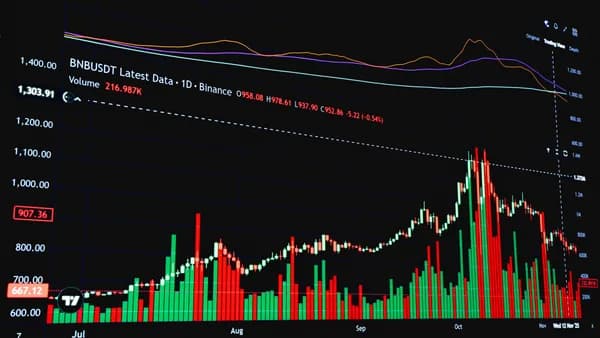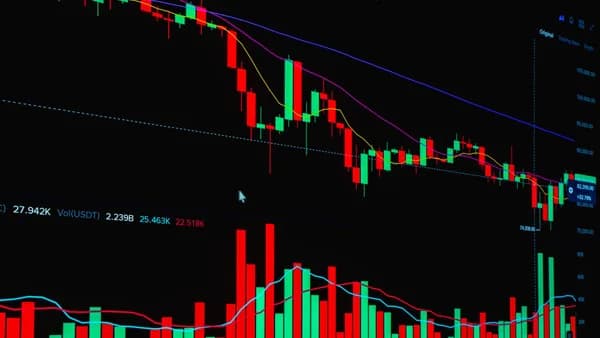
A fall to $82.50 in STRC and below $93 in SATA exposed the digital credit market’s borrowed-money problem faster than any white paper could. The rebound mattered, but it didn’t erase the warning: if Matt Cole is right, this was not a classic credit scare, it was a financing machine forcing sellers out at bad prices, according to CoinDesk.
XOOMAR Intelligence
Analyst Take
Cole, CEO of Strive Asset Management, called it “the most difficult day in the history of Digital Credit.” His explanation was direct. Investors had piled into relatively high-yielding digital credit assets, used borrowed money to lift returns, then got hit with margin calls when prices slipped.
“What happened today was a leverage liquidation event, not a deterioration in underlying credit quality,” Cole wrote.
That distinction is the whole story. It’s also the problem.
STRC and SATA exposed a digital credit market fragility around $100 par
Both STRC and SATA are designed to trade close to their $100 par value. That makes the Thursday move jarring. Strategy’s STRC preferred stock dropped as low as $82.50 before recovering to $89. Strive’s SATA fell below $93 before rebounding to $97.
Those are not routine wobbles for instruments built around par stability and double digit yields. STRC’s low was 17.5% below par, based on XOOMAR’s calculation from the reported prices. Even after the bounce to $89, it remained 11% below par. SATA’s rebound looked stronger, but the intraday break below $93 still showed how fast the market can gap when sellers lose control of timing.
Cole’s message was meant to separate price action from issuer credit quality. He said Strive’s dividend reserves remain intact and that “Our company is not under stress.” If true, that shifts the focus from balance-sheet solvency to market plumbing.
XOOMAR analysis: that’s not a comforting distinction by itself. A product can avoid credit impairment and still punish holders if its ownership base is too levered, liquidity is thin, and liquidation systems convert a modest price move into forced supply.
Forced liquidations turned the STRC and SATA selloff into a cascade
The likely sequence is familiar to anyone who has watched income trades crack under financing pressure.
- Price slip: STRC and SATA moved lower from levels intended to sit near par.
- Margin pressure: Leveraged holders faced calls for more collateral.
- Forced sale: Investors had to sell, not because they wanted to exit, but because financing terms demanded it.
- Weak bid: Sales hit a market already under stress.
- Feedback loop: Lower prices triggered more pressure, which created more selling.
Cole described that loop as detached from issuer fundamentals. He said investors were drawn to assets with relatively high yields and then used borrowing to enhance returns. When the trade moved against them, margin calls triggered forced selling.
That dynamic matters because carry trades often look safest right before financing becomes the risk. The yield feels steady. The mark-to-market risk looks tolerable. Then the lender, not the investor, decides the exit point.
The rebound shows buyers did step in. Cole said both STRC and SATA saw “significant buying interest off their intraday lows.” That supports his claim that demand did not disappear entirely.
But a bounce can mean two different things. It can mean forced sellers were flushed out and long-term buyers saw value. It can also mean the same unstable structure remains in place, waiting for the next price break.
The numbers digital credit investors need after an $82.50 STRC low
Price is the easiest data point to see. It is not the most important one.
The reported figures give a sharp snapshot:
| Instrument | Reported low | Reported rebound level | Par reference | XOOMAR read |
|---|---|---|---|---|
| STRC | $82.50 | $89 | $100 | Deep break from par, partial recovery |
| SATA | Below $93 | $97 | $100 | Smaller break, stronger recovery |
A price collapse on thin liquidity means something different from the same move on heavy volume with orderly market-making. The source reporting does not provide the figures that would settle that question.
The missing data matters more than the closing print:
- Trading volume: Was the move driven by a small number of forced sellers or broad risk reduction?
- Bid-ask spreads: Did liquidity vanish, or did prices fall through a still-functioning order book?
- Liquidation levels: Where did financing desks or platforms force exits?
- Leverage ratios: How much borrowed money sat behind STRC and SATA positions?
- Collateral haircuts: Did lenders raise requirements during the selloff?
- Counterparty concentration: Were liquidations spread across many holders or concentrated in a few funds?
- Outstanding supply: How large was the forced-sale wave relative to the market?
For investors building models around these instruments, the lesson is blunt: backtests that assume continuous liquidity can mislead. That is the same failure mode we covered in Backtesting Tools Compared Before Bad Data Burns You, where bad inputs make risk systems look smarter than they are.
XOOMAR analysis: digital credit investors should compare STRC and SATA not only against their par values, but against the funding conditions that support those prices. If the financing layer is opaque, a high yield is not enough compensation by itself.
Why borrowed money can overpower fundamentals in digital credit market stress
Borrowed money turns a price decline into a deadline.
An unlevered investor can choose to wait. A levered investor may not have that option. If the financing provider demands more collateral and the investor cannot post it, the position gets cut. That sale may happen into the worst part of the market, precisely when patient buyers are still deciding whether to step in.
That is why Cole’s credit-versus-liquidation distinction matters. A credit event points to trouble with an issuer’s ability to meet obligations. A liquidation event points to trouble with holders’ ability to finance positions.
“A liquidation event and a credit event are not the same thing,” Cole said.
STRC and SATA may not need a fundamental credit collapse to suffer violent price moves. If enough holders finance similar positions in similar ways, the holder base itself becomes a source of volatility.
Digital credit can be especially vulnerable because trading is fast, information travels instantly, and liquidation mechanics can be mechanical. The source material does not provide enough detail to say which venues, lenders, or counterparties drove the move. But the reported pattern fits a market where the financing stack can dominate the asset story.
The reflexive loop is simple. Falling prices weaken confidence. Weaker confidence widens spreads. Wider spreads pressure financing. Financing pressure forces selling. Then the price action starts looking like a credit signal, even when the issuer says credit quality has not changed.
Strive, leveraged funds, retail buyers, and market makers saw different failures
Cole’s incentive is clear. Strive needs investors to see the SATA drop as technical, not as a verdict on the company or the digital credit format. His public argument was that reserves remain intact, the company is not under stress, and the underlying credit profile remains largely unchanged.
Leveraged investors probably read the day differently. For them, the issue was not philosophy. It was collateral. A trade built to harvest yield can become unmanageable if prices gap faster than financing can be repaired.
Retail buyers face another problem: product identity. If an instrument is sold around par behavior and income, but trades like high-beta crypto exposure during stress, the investor experience changes. A rebound to $97 or $89 does not erase the memory of the fall.
That retail psychology matters because digital assets already attract traders who move quickly between platforms and products. The risks around access, execution, and product structure are visible in our coverage of how 80% Lose as Trading 212 vs XTB vs Plus500 Fight for Traders, where trading friction and user behavior can shape outcomes as much as the asset itself.
Market makers, lenders, and risk desks may respond in the most practical way. XOOMAR analysis: if they view Thursday as evidence of crowded leveraged positioning, they may widen spreads, cut advance rates, raise haircuts, or demand better disclosure before supporting similar products at scale.
Cole’s Treasury comparison cuts both ways for STRC and SATA
Cole’s broader comparison was to the growth pains seen in large fixed-income markets before they mature. His point was that market stress caused by overextended investors does not automatically mean the underlying credit has weakened.
That comparison helps his argument, but only up to a point.
Large fixed-income markets have deep dealer networks, long operating history, and massive institutional infrastructure. Digital credit is still proving how it behaves when par-like instruments meet crypto-speed risk transfer. The source reporting does not provide enough detail to rank this episode against earlier digital asset credit shocks, stablecoin depegging scares, or exchange-driven liquidation cascades. It does, however, show the same broad pattern investors have seen before: calm periods invite financing, financing builds fragility, and liquidity gets tested when everyone tries to reduce exposure at once.
The stronger takeaway is not that STRC and SATA are broken. It is that digital credit’s promise and weakness come from the same place. Faster markets can attract capital quickly. They can also turn financing stress into a fire sale before fundamental investors finish their analysis.
Cole said he remains confident in the long-term opportunity in digital credit. That confidence now has a market test attached to it.
The STRC and SATA rebound sets the next digital credit market test
The practical lesson is simple: don’t judge digital credit products only by yield.
Ask who owns them. Ask how those owners finance positions. Ask where liquidations happen. Ask whether market makers are contractually committed or merely present until volatility spikes. Ask how quickly a product can fall below par before a stated income profile stops mattering to real holders.
For issuers, disclosure becomes part of the product. XOOMAR analysis: transparency around holder concentration, financing assumptions, liquidity support, redemption mechanics, and counterparty exposure could become a competitive edge. Investors may accept volatility. They are less forgiving when the source of volatility is invisible.
For lenders and trading venues, the next move may be tighter risk controls. That could mean lower permitted borrowing, higher collateral requirements, more conservative market-making, or clearer stress dashboards. None of those changes are confirmed in the supplied reporting, but they are the logical response if risk desks decide Thursday revealed more leverage than the market can absorb.
The digital credit market now has a clean test.
If STRC and SATA keep holding their rebound, Cole can argue the selloff was a painful but useful stress event: forced sellers exited, real buyers emerged, and issuer credit held. If volatility returns without clearer data on leverage, liquidity, and counterparty exposure, the rebound will look less like validation and more like a pause before tougher standards arrive.
Disclaimer: This XOOMAR analysis is for informational and educational purposes only. It is not financial, investment, legal, tax, or professional advice. It does not provide buy, sell, hold, price-target, portfolio, or personalized recommendations. Verify information independently and consult qualified professionals before making decisions.
The Bottom Line
- The selloff showed how leverage can turn modest price declines into forced liquidation events.
- STRC and SATA were designed to trade near $100 par, making the sharp breaks a warning sign for digital credit stability.
- If underlying credit quality was not the issue, market structure and financing risk are the key concerns for investors.
STRC vs. SATA During the Digital Credit Selloff
| Instrument | Reported Low | Reported Rebound | Par Value | Key Takeaway |
|---|---|---|---|---|
| STRC | $82.50 | $89 | $100 | Fell 17.5% below par and remained 11% below par after rebounding. |
| SATA | Below $93 | $97 | $100 | Recovered closer to par but still showed vulnerability to forced selling. |
Reported Rebound Prices vs. $100 Par
Primary Sources & Disclosures
Disclaimer: Content on XOOMAR is produced using AI-assisted research, drafting, and verification workflows and is intended for informational and educational purposes only. It does not constitute financial, investment, legal, tax, medical, or professional advice of any kind. All analysis reflects available information at the time of publication and may not be current. Verify information independently and consult qualified professionals before making decisions. Editorial policy

Written by
XOOMAR
Data desk
XOOMAR is a capital markets software and data company. Every brief on this site starts from a dataset the company collects itself from primary sources (CFTC, SEC EDGAR, FINRA, the Federal Reserve, exchange APIs) and names the numbers it is built on, with a link to the data page so you can check them. Briefs are reviewed before they go out and corrected in place when the data is revised.