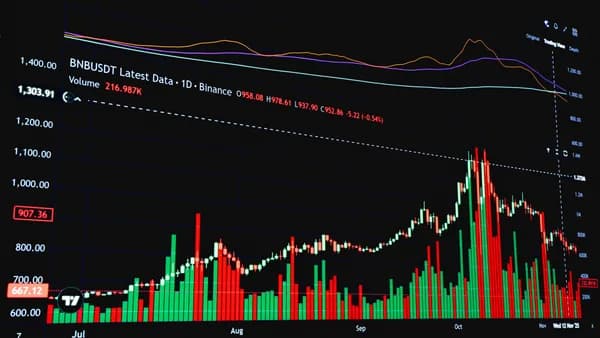
A $75 billion SpaceX raise with more than $250 billion of reported investor interest now has a crypto-side warning label: its most active synthetic pre-IPO market has dropped 27% in three weeks.
XOOMAR Intelligence
Analyst Take
The contract, SPCX on Hyperliquid, traded near $157 on Wednesday, down from a mid-May launch price around $216 after briefly touching $230, according to CoinDesk. That slide doesn’t show traders abandoning SpaceX. It shows them cutting the premium they were willing to pay for a possible first-day pop.
SPCX’s 27% fall is a repricing of hype, not a SpaceX rejection
SPCX still sits above SpaceX’s fixed $135 offer price. That matters. Traders are not pricing a broken deal or a discount to the offer. They’re pricing less upside than they were in May.
In May, the contract implied SpaceX could trade roughly 60% above the offer. By Wednesday, that implied first-day premium had compressed to about 16%. The direction is the story. The market has moved from “pay almost any premium for synthetic SpaceX exposure” toward “SpaceX may still pop, but not like that.”
That is a cleaner read than treating SPCX as a referendum on SpaceX’s operating prospects. The source material gives no new SpaceX business data here. No fresh launch metrics. No Starlink financials. No defense contract update. The price action is happening in the derivative, not in confirmed company fundamentals.
XOOMAR analysis: this selloff says more about the limits of synthetic pre-IPO enthusiasm than about SpaceX itself. When a derivative surges before a stock opens, the premium can become the product. SPCX’s recent move shows how quickly that premium can deflate when traders start marking down the first-day upside.
The $135 anchor makes the premium compression hard to ignore
SpaceX set the offer price at $135 per share, with no range for investors to push higher or lower during the bookbuild. In a typical IPO, bankers gather orders and adjust pricing around demand. Here, the source describes a fixed-price route: investors take the price or walk.
That makes SPCX unusually visible. It is one of the few SpaceX-linked prices moving before the stock opens.
| Reference point | Reported level | Signal |
|---|---|---|
| SpaceX fixed offer price | $135 | The official anchor |
| SPCX mid-May launch price | Around $216 | Implied premium near 60% |
| SPCX brief high | $230 | Peak speculative heat |
| SPCX Wednesday price | Near $157 | Implied premium near 16% |
| Reported investor interest | More than $250 billion | Demand for a $75 billion raise |
The official book still looks huge. Reuters reported that SpaceX drew more than $250 billion in investor interest for the $75 billion raise, making the deal several times oversubscribed, according to the CoinDesk report. But oversubscription and aftermarket premium are not the same thing.
Large investors can ask for more shares than they expect to receive. A synthetic perp, by contrast, forces traders to attach a live price to their conviction. That makes SPCX useful, but also dangerous. It is a market price with money at risk, not a clean forecast.
Hyperliquid turns SpaceX’s private valuation into a tradable proxy
SPCX is not SpaceX equity. That point can’t be softened.
“The SPCX perp is one of the few places where a SpaceX-linked price is actually moving before the stock opens, but it doesn't give holders any claim on the shares. It's a cash-settled bet on where the equity should trade.”
It is a cash-settled derivative. Traders are betting on where SpaceX’s equity value should trade, but they are not receiving shareholder rights, tender access, voting power, or a direct claim on registered shares.
That structure explains both the appeal and the risk. The appeal is obvious: traders get a moving SpaceX-linked price before public trading begins. They don’t need to wait for an allocation. They don’t need to own private shares. They can express a view immediately.
The risk is just as plain. A synthetic market can drift from real private-market transactions because it is not exchanging the underlying shares. Its price can reflect positioning, crypto-market weakness, and cash needs around the IPO as much as genuine views on SpaceX’s value.
CoinDesk notes two possible pressures: crypto has weakened into the IPO, and some investors may be raising cash to fund SpaceX allocations. That matters because SPCX trades inside the same risk-taking environment that may be supplying some of the cash.
XOOMAR analysis: SPCX is price discovery, but it is noisy price discovery. It shows what crypto-native traders will pay for SpaceX-linked exposure today. It does not prove where SpaceX should be valued by long-term shareholders.
From gated private access to public synthetic betting
SpaceX is the ideal test case for this kind of product because access is scarce and attention is extreme. A fixed $135 offer price gives traders a clean benchmark. A heavily oversubscribed book gives them a demand story. Hyperliquid gives them a venue where that story can trade before the first share changes hands.
That combination changes the function of pre-IPO speculation. Historically, private-company exposure has moved through controlled channels: negotiated allocations, secondary transactions, and structures where access is limited. SPCX strips that down to a reference price and lets the market argue in public.
The result is uncomfortable for traditional gatekeepers. A private company can have a live market attached to its name even though the contract gives no claim on its shares. Brokers, underwriters, and private-market platforms no longer fully control the visible narrative around demand.
But traders should not mistake visibility for accuracy. A public price can be useful and still distorted. In this case, the useful part is the premium compression from about 60% to roughly 16%. The distorted part is any attempt to treat SPCX as a direct substitute for actual SpaceX stock.
Different players see the SPCX drop through different lenses
For active traders, the decline may look like a reset after an overheated May run. A contract that touched $230 against a $135 offer price was pricing a very rich first-day outcome. Near $157, it still prices upside, just less euphoria.
For actual SpaceX holders, XOOMAR analysis suggests SPCX is probably more sentiment gauge than valuation tool. It can show how outside traders feel about the IPO premium, but it doesn’t replicate negotiated private transactions or shareholder rights.
For Hyperliquid supporters, SPCX is evidence that on-chain venues can create liquid attention around assets traditional finance keeps gated. For skeptics, it is speculative exposure wrapped around an illiquid private asset with limited transparency.
Retail traders should focus on the second view. A premium over $135 is not free alpha. It is a bet on liquidity, timing, and demand after public trading begins. Synthetic pre-IPO products can make rare assets feel easy to trade while still carrying basis risk against actual share prices.
That lesson applies beyond SPCX. Retail traders already face similar wrapper problems in products that look simple but carry hidden mechanics, as we’ve covered in CFD Platforms Tempt Beginners. Investing Apps Are Safer and Copy Trading Fees Hide the Real Cost of Free Trades.
The next signal is whether the 16% premium holds
SPCX’s next move will depend on more than SpaceX headlines. The key evidence will be whether traders keep paying a premium to the $135 offer as allocations firm up, crypto risk appetite shifts, and the market gets closer to seeing where actual shares trade.
A further premium squeeze would support the thesis that May’s pricing was too hot. A renewed move higher would suggest traders still believe the official offer price leaves meaningful first-day upside.
The cleanest read is this: SPCX is becoming a live scoreboard for pre-IPO demand, but it is not a clean window into SpaceX’s true value. Treat it as a volatile sentiment market tied to a historic offering, not as a substitute for owning the stock.
Disclaimer: This XOOMAR analysis is for informational and educational purposes only. It is not financial, investment, legal, tax, or professional advice. It does not provide buy, sell, hold, price-target, portfolio, or personalized recommendations. Verify information independently and consult qualified professionals before making decisions.
The Bottom Line
- SPCX’s 27% drop shows traders are repricing hype around SpaceX’s potential IPO upside.
- The contract still trades above the $135 offer price, suggesting expectations of a pop remain intact but smaller.
- The move highlights the volatility and risk of synthetic pre-IPO markets that trade separately from company fundamentals.
SPCX Premium Compression
| Metric | Mid-May | Wednesday |
|---|---|---|
| SPCX price | About $216 | Near $157 |
| Implied premium to $135 offer price | Roughly 60% | About 16% |
| Market signal | High demand for synthetic SpaceX upside | Reduced willingness to pay for first-day pop |
SpaceX Synthetic Pre-IPO Pricing
Primary Sources & Disclosures
Disclaimer: Content on XOOMAR is produced using AI-assisted research, drafting, and verification workflows and is intended for informational and educational purposes only. It does not constitute financial, investment, legal, tax, medical, or professional advice of any kind. All analysis reflects available information at the time of publication and may not be current. Verify information independently and consult qualified professionals before making decisions. Editorial policy

Written by
XOOMAR
Data desk
XOOMAR is a capital markets software and data company. Every brief on this site starts from a dataset the company collects itself from primary sources (CFTC, SEC EDGAR, FINRA, the Federal Reserve, exchange APIs) and names the numbers it is built on, with a link to the data page so you can check them. Briefs are reviewed before they go out and corrected in place when the data is revised.