The U.S.-Iran deal has knocked crude about 5% lower, lifted global equities, and pushed bitcoin briefly above $66,000, but the relief trade still has to survive Middle East follow-through and the Fed’s June 17 rate decision.
XOOMAR Intelligence
Analyst Take
Diplomacy gives markets a calmer start to June 15
Markets opened the week trading the same core idea across oil, equities, crypto, and gold price moves: a lower probability of immediate Gulf escalation.
President Donald Trump signaled over the weekend that the U.S. and Iran had made diplomatic progress, with markets focused on whether the breakthrough could ease pressure around the Strait of Hormuz, according to CoinDesk. That was enough to cool crude, lift equities, and spark a risk bid in crypto.
The catch is obvious. The U.S.-Iran ceasefire remains conditional while talks on a final deal proceed. CoinDesk also flags the recent pattern of ceasefires, breakdowns, and renewed agreements, which means markets are cheering progress rather than declaring the conflict solved.
XOOMAR analysis: This is a classic relief trade with a short fuse. The first move prices out worst-case energy disruption. The second move depends on whether the deal survives contact with the details.
U.S.-Iran breakthrough trims the Middle East risk premium
The first-order market reaction is coming through oil. Crude oil fell 5% to around $80 per barrel, leaving it roughly 33% below its early March high of $120.
That move makes sense. A reduced threat to Strait of Hormuz traffic lowers the immediate fear of disrupted flows through one of the market’s most sensitive chokepoints. It also reduces the need for traders to pay up for near-term geopolitical protection in energy.
But the risk premium won’t vanish just because one announcement changed the tone. The diplomatic track still needs to hold, and the final settlement remains under negotiation while the details and timeline stay fluid.
For related context on how this oil move fed into crypto, the connection is direct: cheaper oil eases one source of macro stress, while calmer geopolitical headlines give risk assets room to bounce.
Oil cools, but one headline doesn’t reset inflation math
Lower crude helps the inflation narrative, but it doesn’t rewrite it by itself.
Markets are no longer pricing any interest-rate increases this year after the sharp oil decline, according to CoinDesk. Expectations for the next 25 basis-point increase have been pushed back to January 2027.
That’s the key transmission channel from the U.S.-Iran deal into broader markets. If energy pressure fades, investors can justify fewer hawkish surprises from the Fed. If the Middle East picture darkens again, that repricing can reverse quickly.
| Market signal | Source-backed move | Read-through |
|---|---|---|
| Crude oil | Down 5% to around $80 | Gulf supply fears eased |
| Invesco QQQ ETF | Up 2% pre-market | Tech-led risk appetite improved |
| Bitcoin | Briefly above $66,000 | Crypto joined the relief bid |
| Gold | Up nearly 3% above $4,330 | Protection demand did not disappear |
| Fed pricing | 97% odds of no change | Rates still anchor the day-ahead setup |
The odd signal is gold. If investors were fully dumping protection, gold would not be rising nearly 3% over 24 hours to trade above $4,330 per ounce. That tells you the market is relieved, not relaxed.
Equities catch a relief bid while investors keep one hand near the exit
Equity markets liked the news immediately. Indexes advanced worldwide, except in Tel Aviv, and U.S. stocks rallied in pre-market trading.
The Invesco QQQ ETF, which tracks the Nasdaq 100, added 2% in pre-market trading. That is the cleanest equity signal in CoinDesk’s day-ahead note: growth and tech exposure got a lift as the oil shock eased.
Still, this is not the same as a durable trend confirmation. The source points to repeated shifts in negotiations over recent months, including ceasefires, breakdowns, and renewed agreements. Markets can jump on a diplomatic headline, then quickly refocus on whether the text, timeline, and enforcement actually hold.
For the oil credibility angle, the negotiation window matters because it gives diplomats room, but it also gives markets a countdown clock.
Bitcoin clears $66,000, but the chart still needs confirmation
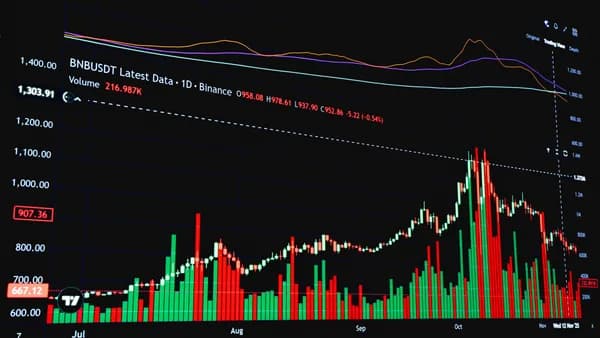
Bitcoin briefly topped $66,000 and was recently 2.7% higher over 24 hours, with most of the advance occurring on Sunday shortly after Trump’s announcement.
CoinDesk’s technical signal is more cautious than the headline price move. Bitcoin rebounded from $60,000 support, marked at the 0.618 Fibonacci retracement, but at around $65,600 it still sits within a broader downtrend marked by lower highs.
The RSI is weak at 37. A weekly close above $66,000 would signal a tentative reclaim, while failure to reach that level leaves $60,000 exposed. If bitcoin breaks higher, CoinDesk identifies the next resistance levels at $68,900, then $80,000-$82,500.
That makes bitcoin a useful gauge for whether the relief trade has legs. A brief spike says traders responded to the U.S.-Iran deal. A weekly close above the relevant level would say buyers are willing to stay.
Fed pricing keeps the rally on a leash
The second driver is the Fed. On June 17, Federal Reserve Chair Kevin Warsh presides over his first FOMC meeting.
Markets are pricing a 97% probability that the Fed leaves the federal funds rate unchanged at 3.50%-3.75%. That pricing matters because it sets the ceiling for the relief rally. If the Fed stays cautious, lower oil alone may not be enough to unlock a bigger move across risk assets.
XOOMAR analysis: The market has two separate questions to answer this week. First, whether the Middle East risk premium should shrink. Second, whether Fed expectations should move with it. The first question changed after Trump’s announcement. The second still depends on the Fed’s own message.
A softer crude tape can support the case for less pressure on headline inflation. But CoinDesk’s framing is clear: if the Middle East situation becomes murkier, rate expectations may change again.
The bigger picture: markets want diplomatic relief, but the Fed still sets the ceiling
The U.S.-Iran deal gives markets what they wanted most on June 15: lower immediate Gulf risk, cheaper crude, firmer equities, and a cleaner path for risk appetite.
It doesn’t give them certainty. The diplomatic path remains conditional, final terms are still unresolved, and recent negotiation shifts argue against treating this as a finished settlement. Gold’s rise alongside bitcoin is the tell. Investors are buying relief, but they’re not abandoning protection.
The practical watch list is tight: crude near $80, bitcoin’s weekly close around $66,000, the Fed’s June 17 decision, and any fresh language from Washington or Tehran as talks continue. If those signals line up, the relief trade can extend. If they split, June 15 may look less like a turning point and more like another fast repricing in a market still ruled by oil, rates, and headline risk.
Disclaimer: This XOOMAR analysis is for informational and educational purposes only. It is not financial, investment, legal, tax, or professional advice. It does not provide buy, sell, hold, price-target, portfolio, or personalized recommendations. Verify information independently and consult qualified professionals before making decisions.
The Bottom Line
- Lower oil prices suggest traders are pricing in reduced risk of immediate Gulf supply disruption.
- The rally in equities and bitcoin shows investors are responding to a short-term easing of geopolitical fear.
- The market rebound remains fragile because the U.S.-Iran deal is conditional and the Fed’s June 17 decision is still ahead.
Market reaction to U.S.-Iran diplomatic progress
| Asset | Reaction | Reported figure |
|---|---|---|
| Crude oil | Fell as Middle East risk premium eased | Down 5% to around $80 per barrel |
| Global equities | Rose on relief trade | No figure given |
| Bitcoin | Gained on risk appetite | Briefly above $66,000 |
Crude oil price: March high vs. post-breakthrough level
Primary Sources & Disclosures
Disclaimer: Content on XOOMAR is produced using AI-assisted research, drafting, and verification workflows and is intended for informational and educational purposes only. It does not constitute financial, investment, legal, tax, medical, or professional advice of any kind. All analysis reflects available information at the time of publication and may not be current. Verify information independently and consult qualified professionals before making decisions. Editorial policy

Written by
XOOMAR
Data desk
XOOMAR is a capital markets software and data company. Every brief on this site starts from a dataset the company collects itself from primary sources (CFTC, SEC EDGAR, FINRA, the Federal Reserve, exchange APIs) and names the numbers it is built on, with a link to the data page so you can check them. Briefs are reviewed before they go out and corrected in place when the data is revised.