
On Sunday, the US-Iran ceasefire gave the Gulf what it needed most after 15 weeks of conflict: a pause, not a settlement. That timing matters because the agreement has been described as a memorandum expected to be signed on Friday, while the hardest disputes appear likely to be deferred rather than solved immediately, according to Guardian World and Al Jazeera.
Global TrendsJune 16, 2026· 12 min read· By XOOMAR Insights Team
US-Iran Ceasefire Buys 60 Days as Gulf Peace Slips
Updated on June 16, 2026
XOOMAR Intelligence
Analyst Take
71/ 100
4 sources analyzedMedium confidenceTrend10Freshness96Source Trust90Factual Grounding91Signal Cluster40
The immediate relief is real. So is the weakness of the deal. The memorandum of understanding stops hostilities for now, reopens the path for shipping through the Strait of Hormuz, and commits Washington and Tehran to talks on sanctions, frozen Iranian assets, and Iran’s nuclear programme. But it does not settle Iran’s regional role, Israel’s security demands, Gulf fears, ballistic missiles, or the long trail of mistrust left by earlier diplomacy.
XOOMAR analysis: this is crisis management dressed as diplomacy. It lowers the temperature, but it doesn’t remove the fuel.
Sunday’s US-Iran ceasefire stops the shooting, but Friday’s signing won’t settle the war
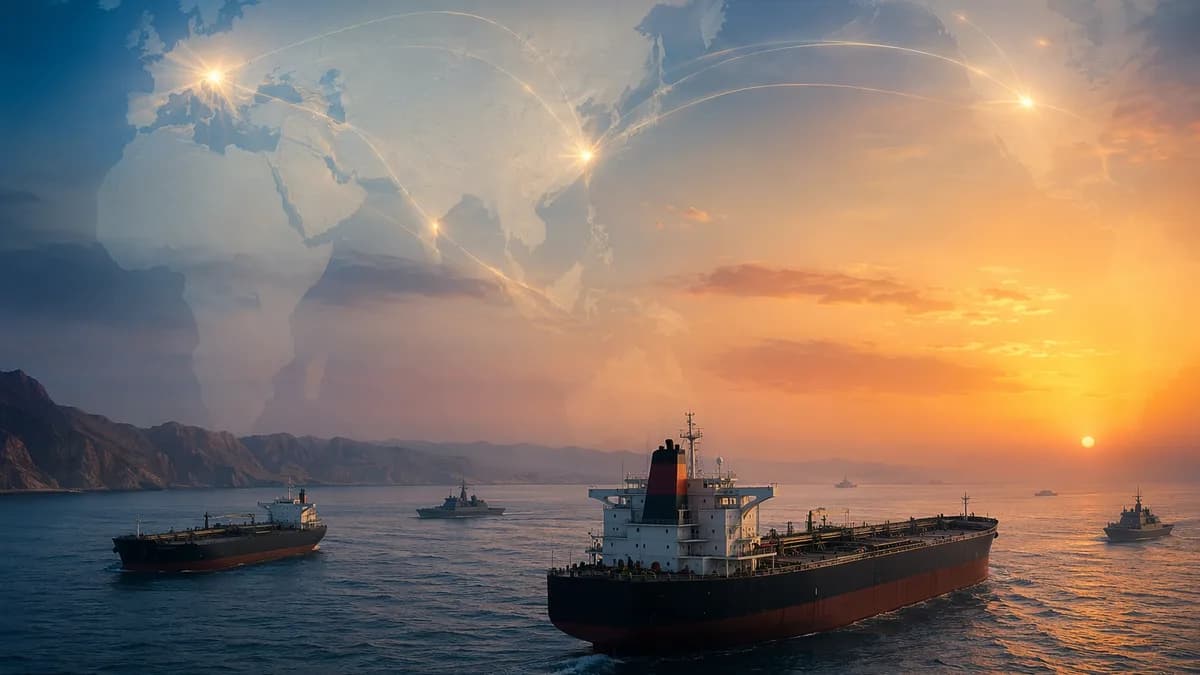
The ceasefire’s central bargain is narrow. The United States lifts its naval blockade of Iran, while Tehran allows free passage through the Strait of Hormuz, which usually carries a fifth of the world’s oil and liquid gas supplies. That alone explains why the deal drew relief across the region.
But the same structure also shows why the US-Iran ceasefire is fragile. It trades immediate de-escalation for deferred decisions in the agreement. The most toxic issues remain on the table: Iran’s enriched uranium stockpile, the future of its nuclear programme, sanctions relief, billions of dollars of frozen Iranian assets, maritime security, and the military activity of Iran-aligned groups.
Neil Quilliam, a Middle East expert at Chatham House, put it bluntly:
“It’s just a big Band-Aid and future conflict is like to come at some point,”
The deal is also a test of discipline. Washington must ease pressure without looking as if it rewarded Tehran. Iran must accept constraints without giving hardliners a surrender narrative. Israel and Gulf states must decide whether to live with a US-Iran bargain that may not answer their own security concerns.
That is why the Friday signing is only the first pressure point. The real test comes when negotiators move from ceasefire language to sequencing, verification, and enforcement.
After 15 weeks of conflict, Gulf states are relieved, rattled, and exposed
The 15-week conflict changed the risk calculation for Gulf states. Kuwait was described by the Guardian as a frequent target of Iranian drone strikes during the war. Bahrain, the United Arab Emirates, Qatar, and Kuwait also face the broader problem of living near a conflict that has shown how quickly Gulf security, shipping, and civilian life can be exposed.
For residents, the relief is practical before it is strategic. Iyad Joumma, a 37-year-old Jordanian engineer in Kuwait, captured the mood: the deal may let the region catch its breath, but its success
“will depend on the ability of the parties involved to address the root causes of the tensions”.
That sentence is the whole problem. A ceasefire can stop launches, alarms, and retaliatory strikes. It cannot quickly restore confidence for ports, airlines, energy companies, or households that just lived through months of direct risk.
Pressure channels now facing Gulf governments and businesses:
- Shipping: Hormuz reopening reduces immediate disruption, but the war showed how vulnerable passage can become when Iran holds leverage over the waterway.
- Energy: The strait’s role in moving a fifth of oil and liquid gas supplies keeps every maritime incident globally relevant.
- Infrastructure: Reported strikes and regional disruption raise the cost of assuming the crisis is over.
- Business planning: Companies may resume activity, but XOOMAR analysis says they will price in the possibility that a drone strike or maritime clash resets the crisis.
The absence of open war does not equal normality. Governments, insurers, airlines, and port operators tend to react to demonstrated capability, not diplomatic optimism. Iran has shown it can hit Gulf states and threaten Hormuz. That fact will outlast the signing ceremony.
The next negotiation phase is built on nuclear limits, sanctions, and unresolved proxy wars
The memorandum gives Washington and Tehran a narrow opening to address the issues that produced the crisis. That is an aggressive diplomatic challenge. Analysts cited by the Guardian pointed back to the 2015 nuclear agreement with Iran, which traded economic benefits for restrictions on Tehran’s nuclear programme before Donald Trump tore it up during his first term.
This round is harder because it is not just nuclear. The durable deal would need to cover several tracks at once.
| Negotiation track | Why it is politically toxic |
|---|---|
| Nuclear programme | Any settlement would need to reconcile monitoring demands with Tehran’s claim to civilian nuclear rights. |
| Sanctions and frozen assets | Iran wants economic benefits, while Washington would face pressure to link relief to Iranian follow-through. |
| Hormuz and shipping | Tehran has demonstrated disruption power. The US and much of the world want toll-free passage. |
| Regional militias | Israel and Gulf states see Iran-aligned groups as a direct threat. Tehran sees them as strategic depth. |
| Ballistic missiles | Missiles remain a likely unresolved concern for Israel and Gulf states if the ceasefire stays narrowly focused. |
Iranian public opinion also complicates the process. Al Jazeera reported deep skepticism in Tehran, including residents who doubt the agreement will improve daily life or survive the next round of pressure. One Tehran university student, Parisa, said:
“It might work for now, but both sides will jeopardise it based on their own interests.”
That is not a fringe concern. Any negotiator who concedes too much risks being attacked at home. We have already seen how Iranian hardliners are framing the agreement, a dynamic we covered in Iran Hardliners Turn US Peace Deal Into Surrender Fight.
XOOMAR analysis: the ceasefire can hold only if both sides gain enough to justify restraint, while losing little enough to survive domestic politics. That is a tight corridor.
Washington, Tehran, Gulf capitals, and Israel are not reading the same deal
The ceasefire means different things depending on where you sit.
For Washington, the goal is de-escalation without appearing to accept Iranian leverage over shipping, nuclear policy, or regional security. Time’s related reporting described conflicting accounts around the emerging deal, a reminder that even the language of the framework is politically contested before implementation begins.
For Tehran, the deal must look like resilience. Iranian state television said:
“the US was forced to sign the understanding to end the war with the Islamic Republic and the axis of resistance”.
That messaging is aimed at a domestic audience still absorbing the costs of war, sanctions, and the death of Ayatollah Ali Khamenei, who Al Jazeera said is slated to be buried in July after his February 28 killing.
For Gulf states, calm is welcome but not enough. H.A. Hellyer of the Royal United Services Institute said the common lesson is that they cannot rely fully on Washington, even if their preferred strategies differ:
“The realisation that they can’t rely on the US is the point of consensus but otherwise [Gulf states] have all got different views of the best strategy going forward,”
For Israel, the deal looks incomplete. The Guardian reports dismay in Israel because the ceasefire does not appear to address Iran’s ballistic missiles or funding of the so-called Axis of Resistance, including Hezbollah, Hamas, the Houthis, and militia groups in Iraq.
Lebanon remains a flashpoint around the wider diplomacy. Israeli bombing of Beirut suburbs has been reported as a threat to the agreement, as we noted in Israel Defies US-Iran Deal with Lebanon Troop Pledge. The risk is clear: one party may treat the ceasefire as a pause, while another treats it as cover for continuing its own military objectives.
From the 2015 nuclear deal to the new memorandum, diplomacy keeps outrunning trust
The 2015 nuclear agreement is the obvious comparison, but it also shows why this moment is more brittle. That deal required a long diplomatic process. The current framework starts from a wartime ceasefire and asks Washington and Tehran to move quickly toward issues that have resisted resolution for years.
The historical damage is not procedural. It is psychological. US officials doubt Iranian compliance. Iranian leaders doubt American continuity across administrations. Regional actors doubt any bargain made above their heads. Israel doubts a ceasefire that leaves missiles and militias untouched. Gulf capitals doubt a security order in which Hormuz can be shut and civilian infrastructure struck before diplomacy catches up.
Danny Orbach, a military history professor at the Hebrew University, Jerusalem, said Israel’s thinking changed after the October 2023 Hamas raid that triggered the Gaza war:
“The structural change [Israel wants] is that the ‘Axis of Resistance’ must no longer be allowed to threaten Israel with destruction. Israel’s destabilising instinct is to tell all regional actors you will not have stability until you solve our problem, and that problem is Iran. This will not change until the memory of [the] 7 October [attack] fades and that will take years and years.”
That makes verification, sequencing, and enforcement more important than the public language of the ceasefire. A vague promise to talk can calm markets for a few days. It cannot convince adversaries that the next violation will carry a known cost.
The Gaza comparison is a warning. The Guardian cited experts who said ceasefires increasingly count for little, pointing to the danger that fighting can continue under the political cover of a truce. Alia Brahimi of the Atlantic Council said:
“It’s almost as if … you can use the cover of a ceasefire to continue to achieve your aims, including military ones.”
That fear now hangs over the Gulf.
Hormuz reopening cools markets, but companies won’t drop the risk premium yet
For energy traders and shipping companies, the ceasefire offers immediate relief because Hormuz is the critical choke point in the deal. The memorandum obliges Tehran to allow free passage, while Washington lifts its naval blockade.
That should help oil and gas flow again, as Quilliam suggested. But the market issue is not only whether ships can move this week. It is whether companies believe the route will stay open through the next provocation.
XOOMAR analysis for industry readers:
- Energy traders may react quickly to ceasefire headlines, especially where Hormuz access is restored.
- Shippers and insurers will focus on demonstrated risk, including Iran’s ability to threaten tankers and Gulf infrastructure.
- Airlines and logistics firms will likely keep contingency planning active until violations are rare and enforcement is credible.
- Gulf businesses may resume delayed operations, but large capital decisions need more than a short diplomatic calendar.
The vulnerability extends beyond tankers. Ports, power systems, desalination plants, and civilian infrastructure become part of the strategic balance when states exchange strikes. Even where damage claims remain uneven, the conflict has pushed the ceasefire into boardrooms, not just foreign ministries.
Quilliam described the new reality sharply:
“We know that Hormuz can be closed again, the Iranians have carried out strikes on Gulf states, and we have seen that whatever Israel and the US can do, Iran will take it. All the previous thresholds have been passed now.”
That is the market lesson. A ceasefire can reduce volatility. It cannot erase a newly proven playbook.
After the first talks, three paths define whether the US-Iran ceasefire survives
The next decision point is not abstract. The coming phase will show whether the ceasefire has become a political process or remains a temporary truce with better headlines.
Scenario 1: The ceasefire holds and talks widen
Best case, Washington and Tehran keep shipping open, avoid direct attacks, and agree on limited confidence-building steps. That could mean phased sanctions relief, tighter nuclear monitoring, and quiet understandings on regional restraint. Gulf states and Israel would still demand proof, but a lower tempo of violations would give negotiators room.
Scenario 2: Low-level pressure becomes the new normal
Middle case, the US-Iran ceasefire survives on paper while indirect pressure continues. Maritime warnings, militia activity, denials, and retaliatory threats keep the region tense, but neither Washington nor Tehran chooses full escalation. This is the gray zone: enough calm for oil and gas to move, not enough trust for investment and diplomacy to deepen.
Scenario 3: One strike collapses the frame
Worst case, a drone strike, tanker incident, militia attack, Israeli operation, or political provocation forces retaliation before safeguards are locked in. The Lebanon track is especially sensitive after concern that Beirut strikes could derail diplomacy, a risk we analyzed in Beirut Strikes Threaten to Blow Up Iran Peace Deal.
XOOMAR judgment: this pause is valuable because it stops a war that had already crossed major thresholds. But without a broader bargain on Iran’s nuclear programme, sanctions, Hormuz, Israel’s red lines, and Gulf security, it is not peace. The evidence to watch is simple: whether the next phase produces verified concessions and regional buy-in, or just another document that lets every side prepare for the next round.
Impact Analysis
- The ceasefire reduces the immediate risk of wider regional conflict after 15 weeks of fighting.
- Reopening the Strait of Hormuz matters because it carries about a fifth of global oil and liquid gas supplies.
- The deal remains fragile because the hardest issues, including sanctions and Iran’s nuclear programme, are still unresolved.
What the US-Iran ceasefire does and does not resolve
| Immediate effect | Unresolved disputes |
|---|---|
| Stops hostilities for now | Does not settle the broader conflict |
| Reopens shipping through the Strait of Hormuz | Leaves maritime security concerns unresolved |
| Commits both sides to talks on sanctions, frozen assets and Iran’s nuclear programme | Defers disputes over enriched uranium, ballistic missiles, Iran’s regional role and Israel’s security demands |
Strait of Hormuz share of world oil and liquid gas supplies
Strait of Hormuz
%20
Sources

Written by
XOOMAR Insights Team
Research and Editorial Desk
The XOOMAR Insights Team pairs automated research with human editorial judgment. We track hundreds of sources across technology, fintech, trading, SaaS, and cybersecurity, cross-check the facts, and explain what happened, why it matters, and what to watch next. We do not just rewrite headlines. Every article is fact-checked and scored for reliability before it goes live, and we link back to the original sources so you can verify anything yourself.
Explore More Topics
Related Articles
 Global Trends
Trump Shelves Iran Strikes Unless a Deal Lands Fast
Trump says Iran strikes are shelved only if a rapid deal opens Hormuz and ends the nuclear threat. The pressure hasn't vanished.
Aug 2, 20265 min
 Global Trends
Iran Seizes Control Over Strait of Hormuz Via Secret Oman Deal
Iran formalized a temporary shipping route with Oman, cementing Tehran's administrative control over the Strait of Hormuz while keeping blame for insecurity on
Aug 5, 20266 min
 Global Trends
Oil Shock Exposes Germany Energy Drag Behind Ifo Jump
Germany’s Ifo jump may be stale. Commerzbank sees oil costs capping 2026 growth at just 0.6%.
Jul 28, 20267 min
 Global Trends
Trump Iran Talks Turn Paused U.S. Strike Into Leverage
Trump paused U.S. strikes to force Iran back to talks, but the threat could deepen the Hormuz and nuclear standoff.
Aug 3, 20267 min
 Global Trends
US-Escorted Tankers Hit as Strait of Hormuz Shuts Down
Iran says it struck two US-escorted tankers, nearly closing Hormuz and forcing Trump to weigh war strategy as energy prices jump.
Jul 31, 20267 min
 Trading
Iran Demands Shipping Toll To Reopen Oil Chokepoint
Global markets rallied on news of the Strait of Hormuz reopening, but the deal would grant Iran unprecedented control to collect transit tolls.
Aug 6, 20266 min
 Trading
Gold's Lockstep Surge Hints at Dollar Replay
Gold is rallying alongside oil, breaking its traditional inverse relationship. This reveals a market shift—bullion is pricing a tangible inflation premium from
Aug 6, 20266 min
 Trading
WTI Crude Paralyzed at $74 Amid Hormuz Showdown
WTI crude prices are stuck near three-week lows, not due to calm but to paralysis as traders await a binary outcome for the Strait of Hormuz that could detonate
Aug 6, 20267 min
 Global Trends
Trump Slaps 15% Tariff on China's Chip Silicon
A new US policy levies a 15% tariff and minimum price on imported polysilicon, directly targeting Chinese control over the foundational material for chips and s
Aug 7, 20268 min
 Technology
Streamer’s Death Earns Convictions, But No Prison
Two men received suspended sentences for violence and incitement tied to the live-streamed death of Kick streamer Raphaël Graven, but no one was held legally re
Aug 7, 20266 min
Don't miss the signal
Get our weekly roundup of the stories that matter across tech, fintech, and trading. No noise, just signal.
Free forever. No spam. Unsubscribe anytime.