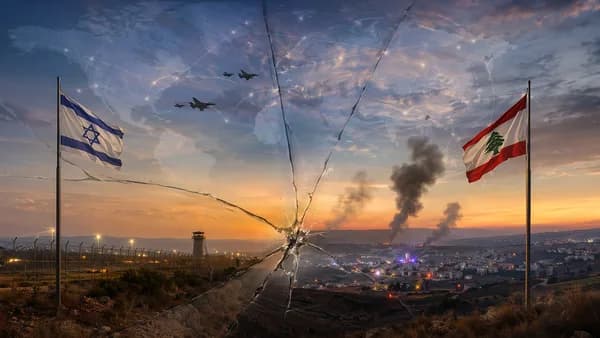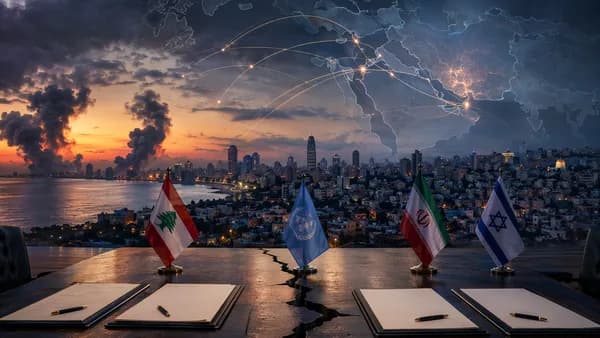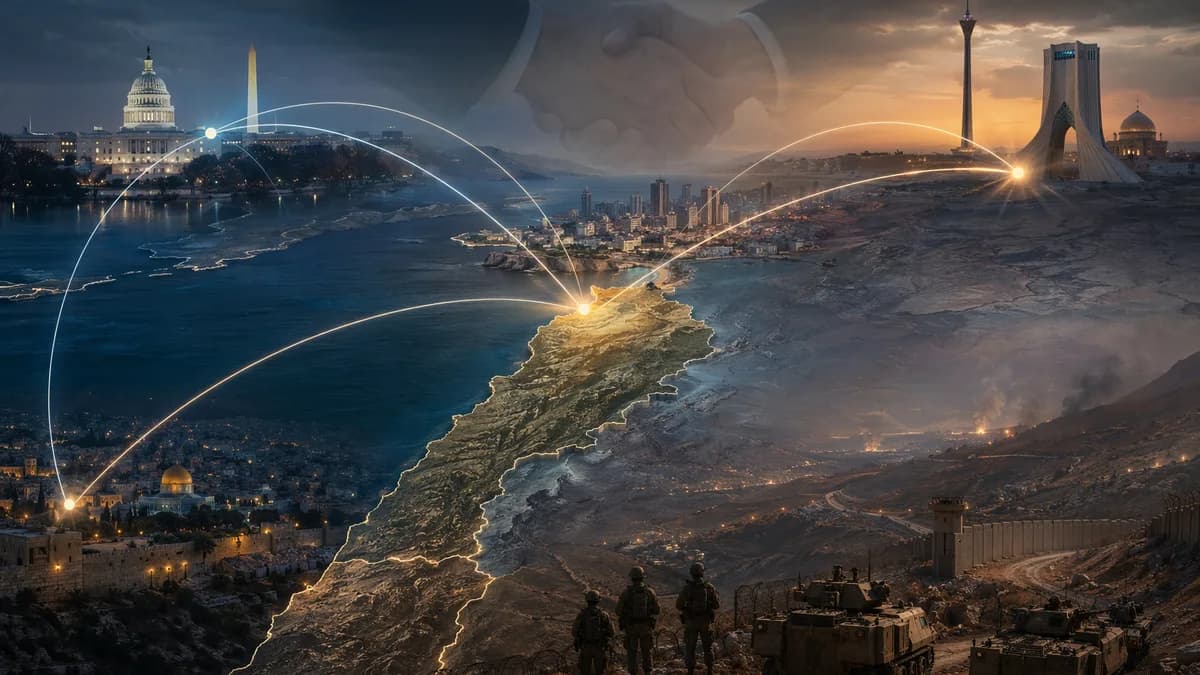
On June 15, 2026, Israel’s first public reaction to the Trump Iran ceasefire turned the Lebanon clause from diplomatic language into the agreement’s first hard test.
XOOMAR Intelligence
Analyst Take
The deal includes an end to "military operations" in Lebanon, but Israel says its forces will remain in the country indefinitely, according to BBC World. That contradiction is the story. The US-Iran deal Lebanon Israel question is not whether diplomats can announce a ceasefire formula. It is whether the armed actors on the border believe the formula changes their incentives.
June 15 puts Lebanon inside a US-Iran bargain it did not control
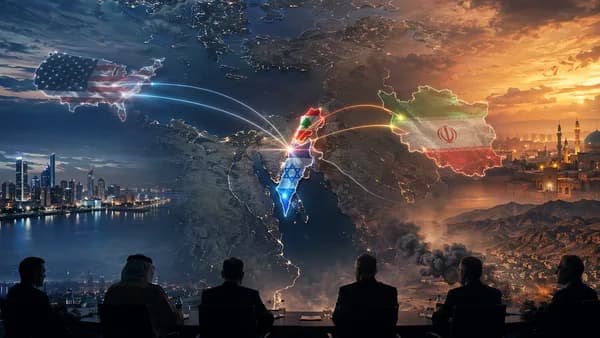
Lebanon does not get to choose whether the US-Iran deal matters. The country is being written into a settlement driven by Washington, Tehran, Israel, and mediators including Pakistan, with Qatar also described as helping mediation efforts in the related reporting.
The announced framework is meant to end the war between the US and Iran. It also reaches into Lebanon by calling for an end to military operations there. That makes Lebanon a test case for whether a bilateral Washington-Tehran bargain can cool a conflict involving Israel and Hezbollah, even when Israel is not part of the talks.
BBC’s framing is blunt: Beirut residents are trying to return home after previously fleeing, while Israel says its forces will stay indefinitely. The gap between those two realities is where the risk sits.
The deal includes an end to "military operations" in Lebanon, but Israel says its forces will remain in the country indefinitely.
XOOMAR analysis: this is less a peace settlement for Lebanon than a pressure test for Lebanese sovereignty. If the deal holds, Beirut may get a narrow window of calm. If it looks weak, temporary, or unenforceable, Lebanon can again become the arena where larger powers send messages without formally reopening the US-Iran war.
For related XOOMAR context on how the Lebanon file has already threatened the diplomatic track, see Beirut Strikes Threaten to Blow Up Iran Peace Deal, Trump’s 60-Day Iran Deal Stakes Oil and Credibility, and gold price Fed fears.
The available numbers point to a fragile deal, not a settled front
The supplied record does not substantiate figures on Hezbollah’s arsenal, Lebanon’s debt, refugees, or banking losses, so those should not be treated as verified here. The hard numbers that are available still show why the Lebanon clause is exposed.
| Deal element or battlefield fact | Source-grounded detail | Why it matters for Lebanon and Israel |
|---|---|---|
| Lebanon evacuation orders | Israel ordered people to leave about 20 locations before strikes in south Lebanon, Lebanese state media said | The border front can heat up even while diplomacy advances |
| Casualties in Marrakeh | At least one person was killed in a strike on Marrakeh, according to Lebanon’s National News Agency | Civilian harm can undercut confidence in any ceasefire language |
| War start date | The war began with US and Israeli strikes across Iran on 28 February | The Lebanon clause is tied to a wider conflict, not a local truce alone |
| Ceasefire reference point | The US and Iran had agreed a ceasefire in April, but exchanged intermittent fire afterward | A ceasefire can exist on paper while violence continues |
| Nuclear negotiation window | US officials described a 60-day negotiation period focused on Iran’s enriched uranium | Israel may judge the deal by enforcement and timing, not by the signing ceremony |
| Alleged deal text dispute | Iranian media published details from an alleged 14-point deal, which Trump said had "nothing to do with the terms that were agreed to" | Public disagreement over terms can weaken deterrence and compliance |
The US-Iran deal Lebanon Israel problem is that Lebanon’s security exposure is immediate, while the deal’s enforcement mechanisms remain partly unresolved. The Strait of Hormuz can reopen quickly in theory. A border involving Hezbollah, Israeli forces, and displaced civilians is harder to reset.
Hezbollah’s room to move depends on what Tehran protects next
The deal reportedly calls on Iran to stop funding proxy groups in the region, a reference that includes Hezbollah and other Iranian-aligned groups. US officials also said economic benefits for Iran would depend on verified implementation, not promises.
That creates two opposing pressures.
First, if Iran gains sanctions relief, diplomatic recognition, or staged reintegration into the global economy, its regional network could benefit over time. The source material does not prove that cash will flow to Hezbollah, and US officials stressed there would be no up-front money. Still, the structure matters: economic benefits are tied to performance, which gives Washington a compliance lever.
Second, Tehran may have reason to restrain allied groups if escalation in Lebanon threatens the deal. The Iranian foreign minister, Seyed Abbas Araghchi, said the agreement includes reopening the Strait of Hormuz and lifting a US blockade of Iran. If those are Tehran’s early gains, renewed fighting in Lebanon could put them at risk.
XOOMAR analysis: Hezbollah is not simply a switch Iran flips. The supplied material does not detail Hezbollah’s internal calculations, but the Lebanon clause assumes Hezbollah behavior can be influenced by a US-Iran framework. That is the agreement’s most ambitious claim.
Israel’s June 15 response turns the Lebanon clause into a sovereignty dispute
Israel’s first public response, through National Security Minister Itamar Ben-Gvir, was to reject any idea that the Trump-brokered agreement restricts Israeli action.
“Trump’s agreement does not bind us. Israel is not subject to the United States, and we are an independent and sovereign nation!"
He also wrote:
“We emphasize: We love the USA and are grateful to President Trump. And yet, the State of Israel is not a banana republic"
Ben-Gvir’s message was not subtle. Israel may welcome US pressure on Iran, but it does not accept a Lebanon settlement that limits Israeli operations while Hezbollah remains armed.
He said Israel “must not compromise on anything less than the dismantling of Hezbollah" and warned:
“Every launch of a drone, UAV, or missile toward Israel from Lebanon will lead to an Israeli strike in Dahiya"
That is the central Israeli objection. A deal that halts military operations without dismantling Hezbollah’s capabilities may look to Washington like de-escalation, but to Israeli hardliners it looks like a pause that benefits the wrong side.
February 28, April, and the failed comfort of ceasefire language
The timeline matters. The war began with US and Israeli strikes across Iran on 28 February, followed by Iranian attacks on Israel and US-allied Gulf states, and the effective closure of the Strait of Hormuz. A ceasefire was agreed in April, yet the US and Iran still exchanged intermittent fire, including two rounds of tit-for-tat strikes in the week covered by the reporting.
That history weakens the confidence value of the word “ceasefire.”
Israel has also continued to strike Lebanon during periods described as ceasefires in related BBC material. One BBC headline in the supplied record says there is a ceasefire in Lebanon, but “the fighting hasn’t stopped.” Another says verified videos showed Israeli strikes on densely populated neighbourhoods in southern Lebanon.
This is why Beirut residents returning home face a different reality from diplomats announcing clauses. A ceasefire can lower the tempo. It does not automatically remove the trigger.
The Strait of Hormuz gets a mechanism. Lebanon gets ambiguity
The Hormuz piece is clearer than the Lebanon piece. US officials said the deal would reopen the Strait of Hormuz in return for the US lifting its blockade on Iranian shipping. Trump claimed on Truth Social that oil-loaded ships were “starting to move” out of the strait, though shippers reportedly still viewed transit as unclear and risky.
The nuclear file also has a stated process: a 60-day negotiation period over Iran’s enriched uranium, with US officials saying economic benefits would be staged and tied to verified implementation.
Lebanon has no comparable clarity in the supplied material.
There is no confirmed mechanism for Israeli withdrawal. There is no verified sequencing for Hezbollah restraint. There is no sign Israel has accepted the Lebanon clause. News18’s supplied reporting says the deal is expected to be formally signed in Switzerland on Friday, June 19, while implementation would not begin until the document is signed, according to Iranian Deputy Foreign Minister Kazem Gharibabadi.
That leaves Lebanon exposed between announcement and execution.
Evidence that will decide whether Lebanon gets calm or another crisis
The next test is not the photo opportunity. It is behavior on the border.
Three scenarios now dominate the US-Iran deal Lebanon Israel track:
- Managed calm: Iran protects the agreement, Hezbollah limits activity, and Israel reduces operations in Lebanon while reserving the right to respond.
- Shadow escalation: Israel and Iran avoid direct war but probe each other through Lebanon, Syria, shipping routes, or rhetoric.
- Open crisis: A strike, assassination, drone launch, or border incident breaks the rhythm before the June 19 signing or during the 60-day negotiation window.
The signals are specific. Watch Israeli force posture in Lebanon, Hezbollah statements, any renewed strikes on southern Lebanon or Dahiya, US sanctions enforcement, Iranian compliance claims, and whether ships actually resume normal movement through Hormuz.
The realistic upside for Lebanon is not immediate rescue. The source material does not support claims of rapid economic recovery, donor flows, or banking stabilization. The nearer-term gain is simpler: fewer strikes, fewer evacuations, and a little more room for political bargaining.
The deal may lower the temperature. It will not settle the Lebanon-Israel front unless it changes the calculations of the armed actors sitting on that border.
Impact Analysis
- The deal’s Lebanon clause will test whether a US-Iran bargain can influence conflicts involving Israel and Hezbollah.
- Israel’s refusal to withdraw creates an immediate challenge to the agreement’s credibility.
- Lebanon risks remaining an arena where regional powers project pressure without directly restarting a wider war.
Lebanon Clause vs. Israel’s Position
| Issue | US-Iran Deal | Israel’s Response |
|---|---|---|
| Military activity in Lebanon | Calls for an end to "military operations" in Lebanon | Says Israeli forces will remain in Lebanon indefinitely |
| Control over outcome | Framework driven by Washington, Tehran, and mediators | Israel was not part of the talks but directly affects implementation |
| Risk for Lebanon | Could create a narrow window of calm | Could keep Lebanon as a flashpoint despite the agreement |
Primary Sources & Disclosures

Written by
XOOMAR
Data desk
XOOMAR is a capital markets software and data company. Every brief on this site starts from a dataset the company collects itself from primary sources (CFTC, SEC EDGAR, FINRA, the Federal Reserve, exchange APIs) and names the numbers it is built on, with a link to the data page so you can check them. Briefs are reviewed before they go out and corrected in place when the data is revised.