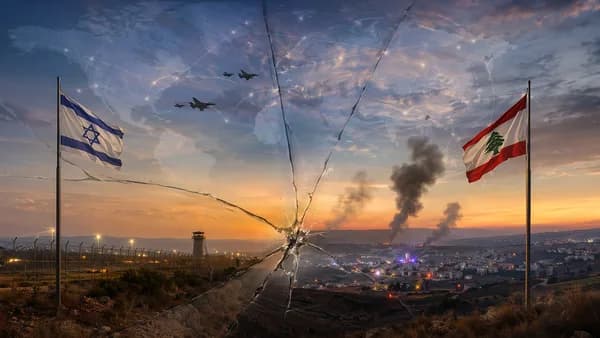
A claimed Israel Hezbollah ceasefire is already being tested by reports of new Israeli strikes in Lebanon, leaving Washington’s wider effort to protect US-Iran talks exposed within hours of the announcement.
XOOMAR Intelligence
Analyst Take
US says Israel and Hezbollah agreed to a ceasefire after new Lebanon strikes
A US official says Israel and Hezbollah have agreed to a ceasefire after a sharp escalation in southern Lebanon, where Lebanon’s government said Israeli air strikes killed 47 people, according to BBC World.
The claimed Israel Hezbollah ceasefire came after clashes that also killed four Israeli soldiers in Lebanon. The timing matters: the truce was announced after intense overnight Israeli strikes, but rescue officials in Nabatieh told the BBC there had been at least 12 air strikes since the ceasefire began at 16:00 local time (13:00 GMT).
That gap between diplomatic claim and battlefield reality is the story. Washington says a ceasefire exists. The ground picture is messier.
No public account in the supplied material lays out detailed ceasefire terms, monitoring arrangements, enforcement steps, or geographic limits. Hezbollah also had not confirmed the ceasefire itself, though its secretary general, Sheikh Naim Qassem, declared Friday:
"The project to eliminate Hezbollah has failed."
Israel’s military is not presenting the truce as a full stop. Israeli military spokesperson Effie Defrin said Israel will “continue to remove immediate threats, respond to Hezbollah's violations, and do whatever is necessary to protect our civilians”.
That language leaves room for continued strikes if Israel judges Hezbollah activity to be an immediate threat. For a ceasefire, that’s a narrow lane.
Fresh attacks in Lebanon put the Israel Hezbollah ceasefire under immediate pressure
The immediate stress point is clear: a ceasefire claim landed while Lebanon was still reporting strikes and casualties.
Lebanon’s health ministry said Israeli air strikes killed 47 people including women and children and wounded 97. In the Nabatieh district, the ministry said nine people were killed in Harouf, seven in Haboush, and six in al-Duweir, including a child.
The country’s state news agency had described the overnight bombardment across Nabatieh on Thursday as one of the most intense of the war. That matters because ceasefires often fail first at the edge, in places where commanders still see threats, civilians are still moving, and retaliation pressure has not cooled.
Hezbollah said the latest clashes erupted after it ambushed an Israeli group in southern Lebanon, destroyed three tanks with guided missiles, and targeted troops with rocket and artillery fire. Israel said a battalion commander was among the four troops killed.
The reaction inside Israel also signals how fragile the deal is. Far-right National Security Minister Itamar Ben Gvir responded by saying:
"Lebanon must burn... For every tear shed by an Israeli mother, 1,000 Lebanese mothers must weep"
That statement does not make policy by itself, but it shows the political pressure around Israeli decision-making. Prime Minister Benjamin Netanyahu has been under domestic pressure to continue military operations against Hezbollah, while the Iran-backed group has said it would continue attacks as long as Israel’s invasion of southern Lebanon persists.
For civilians, the ceasefire’s value depends on whether strikes stop now, not whether diplomats say they should. Around a million people remain displaced, and dozens of communities in southern Lebanon have been completely destroyed, according to the BBC’s account of Lebanon’s health ministry figures and local reporting.
One displaced Lebanese man told Reuters:
"The agreement is good, and we all want an agreement, but the Israelis don't abide by it.
"How many times have they made agreements? More than once, they don't commit."
That skepticism is the practical test for the Israel Hezbollah ceasefire. If residents do not believe roads, homes, and villages are safe, the truce has not yet changed daily life.
Lebanon front now threatens Trump’s US-Iran deal
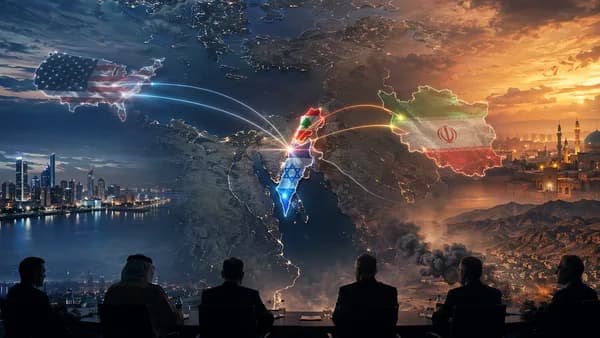
The Lebanon ceasefire is tied directly to the broader US-Iran arrangement. The Memorandum Of Understanding (MoU) declared a ceasefire in Lebanon as well as between the US and Iran, according to the BBC. The fighting in southern Lebanon raised fears that a secondary front could undermine the deal to end the war between Washington and Tehran.
That is why Hezbollah matters beyond Lebanon. It is an Iran-backed armed and political force, and its conflict with Israel can pull Tehran, Washington, and Jerusalem back into escalation even after a formal de-escalation document is signed.
The diplomatic track was already under strain. This follows the disruption XOOMAR covered in JD Vance Scraps Swiss Trip as Iran Talks Drift Off Course, and it deepens the bind described in Scrapped US-Iran Talks Trap Trump Between Iran, Israel.
Iranian Foreign Minister Abbas Araghchi accused Israel of wanting “permanent war” and said any breach of the commitments set out in the memorandum of understanding “will be attributed to the US”.
That is a direct challenge to Donald Trump’s claim of control over the ceasefire architecture. The BBC’s analysis says the deadly escalation is another sign that Trump is not necessarily in control of the fate of his deal with Iran. The facts support that reading: Washington says the ceasefire is in place, while Israeli strikes are still being reported and both Israeli and Hezbollah leaders are using language that preserves military options.
The US incentive is straightforward. Stop Lebanon from reigniting while the larger regional deal is still fragile. If Israel and Hezbollah resume open fighting, pressure could build on Iran to answer through its allies or directly, and on the US to defend the agreement or its regional partners.
That is the spiral Washington is trying to avoid.
The ceasefire now depends on verifiable silence, not statements
The next signals are concrete.
First, whether Israeli strikes actually halt in southern Lebanon, especially around Nabatieh. Rescue officials’ report of at least 12 air strikes after the ceasefire start time is the first credibility problem for the deal.
Second, whether Hezbollah stops rocket, drone, artillery, or anti-tank attacks on Israeli forces. Hezbollah has not confirmed the ceasefire in the supplied material, and Qassem’s statement focused on survival and Israeli withdrawal, not compliance terms.
Third, whether Israel narrows or expands its definition of “immediate threats”. Defrin’s statement gives Israel a stated basis for continued action, but every strike under that rationale risks being treated by Lebanon, Hezbollah, or Iran as a violation.
Fourth, whether US mediators can communicate violations quickly enough to prevent retaliation cycles. The source material does not identify a public monitoring mechanism, a verification body, or a clear process for handling alleged breaches.
The unanswered practical questions are the ones that decide whether this holds: who verifies compliance, what counts as a violation, whether humanitarian access expands, and when displaced residents can safely return.
The announcement lowers the temperature on paper. Its credibility now depends on something much harder to produce: hours of quiet in southern Lebanon, restraint from Hezbollah, and Israeli decisions that match the ceasefire Washington says already exists.
The Stakes
- The reported strikes raise immediate doubts about whether the ceasefire can hold on the ground.
- Continued fighting could undermine Washington’s broader effort to protect US-Iran de-escalation.
- Unclear ceasefire terms and enforcement leave civilians in southern Lebanon and northern Israel exposed to renewed violence.
Positions on the claimed Israel-Hezbollah ceasefire
| Actor | Stance or reported action |
|---|---|
| US official | Says Israel and Hezbollah agreed to a ceasefire. |
| Hezbollah | Had not confirmed the ceasefire in the supplied material; its leader said efforts to eliminate Hezbollah had failed. |
| Israel military | Says it will continue removing immediate threats and responding to Hezbollah violations. |
Reported casualties and strikes around the ceasefire
Primary Sources & Disclosures

Written by
XOOMAR
Data desk
XOOMAR is a capital markets software and data company. Every brief on this site starts from a dataset the company collects itself from primary sources (CFTC, SEC EDGAR, FINRA, the Federal Reserve, exchange APIs) and names the numbers it is built on, with a link to the data page so you can check them. Briefs are reviewed before they go out and corrected in place when the data is revised.