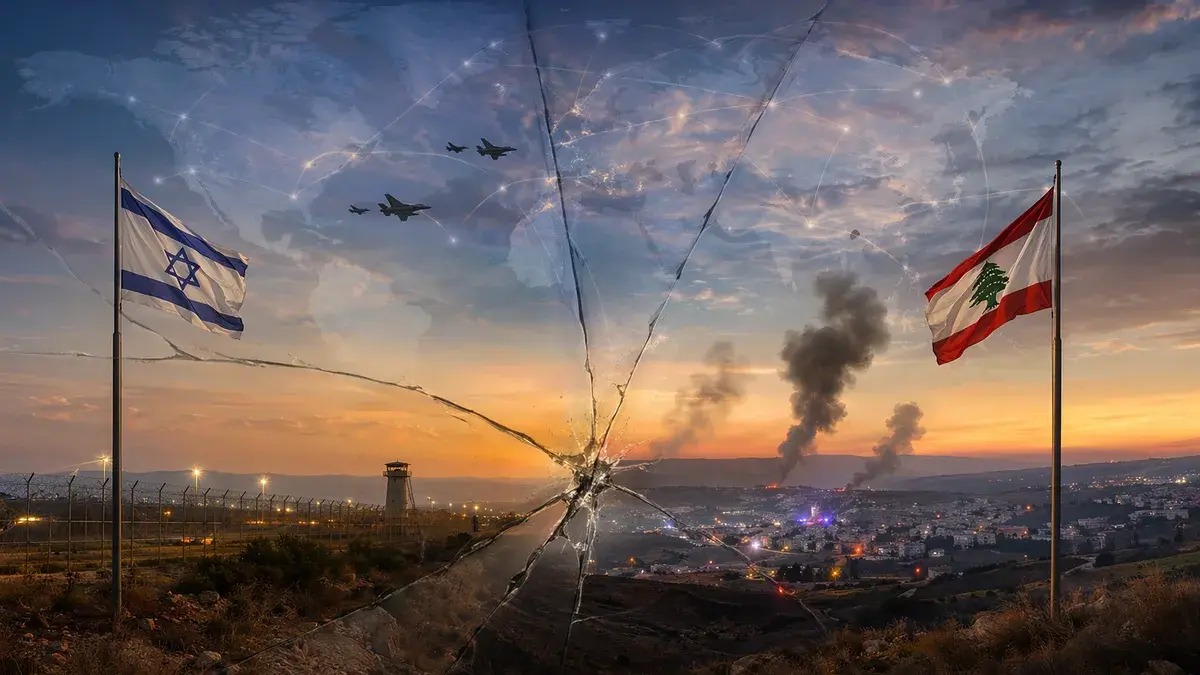
Israeli strikes across southern Lebanon killed at least 16 people, including two children, Saturday morning, according to Lebanese civil defense and media, jolting a new Israel Lebanon ceasefire only one day after Washington said it had taken effect.
XOOMAR Intelligence
Analyst Take
The attacks hit a series of towns in Lebanon’s south, according to NBC World, after the U.S. said Israel and Hezbollah had implemented a fresh ceasefire at President Donald Trump’s request. The timing is the story: a truce announced as active on Friday was already under lethal strain by Saturday morning.
Israeli strikes hit southern Lebanon hours after Trump-backed ceasefire claim
Lebanon’s state-run NNA reported early Saturday that multiple areas in southern Lebanon were hit. Lebanese civil defense and local media reported that the strikes killed at least 16 people, including two children, as rescue crews and officials continued to assess the damage.
The reported toll may still change as emergency teams work through damaged areas and authorities update casualty figures. For residents in the south, the ceasefire’s first test came not through diplomatic language, but through renewed airstrikes and fresh reports of civilian deaths.
Israel framed the strikes as a response to an alleged Hezbollah violation, while Hezbollah denied breaching the ceasefire. The dueling accounts emerged almost immediately after Washington said the arrangement had taken effect, leaving the truce exposed to competing versions of what happened on the ground.
That split matters because the Israel Lebanon ceasefire now rests on claims made within hours of its launch. Washington says a ceasefire exists. Israel says it is responding to threats from Hezbollah. Hezbollah says Israel is using a pretext.
Civilian deaths put Washington’s ceasefire credibility on the line
The Saturday strikes immediately undercut the central promise of the ceasefire: that the latest round of fighting in Lebanon could be contained long enough to support wider U.S.-Iran diplomacy. Instead, Lebanese authorities and media are reporting children among the dead less than a day after the U.S. said the truce had begun.
For communities in southern Lebanon, the ceasefire is being judged by explosions, not statements. The reported deaths of two children make the political language around “offensive operations” look thin on the ground.
Trump had said he asked Israel to halt its strikes on Lebanon, NBC reported. Israel’s ambassador to the U.S. had also said the country would cease “offensive operations.”
That creates a direct credibility test for the White House. If Washington says it brokered a ceasefire, but Israeli strikes continue and Hezbollah denies breaking it, U.S. officials will face a basic question: what counts as compliance?
The pressure is not new. Earlier Israeli and Hezbollah exchanges had already strained the ceasefire claim, as XOOMAR covered in New Strikes Shake Israel Hezbollah Ceasefire Claim. The latest reported deaths make the problem harder to manage because they arrived after the U.S. public position was already on record.
The broader numbers add weight. The BBC reported that more than 3,800 people have been killed in Lebanon during the conflict, citing Lebanon’s health ministry, whose figures do not separate combatants from civilians. Israeli authorities say 30 soldiers and four civilians have been killed on both sides of the border, according to the BBC.
XOOMAR analysis: The ceasefire’s biggest weakness is visible already. Neither side is treating the other’s version of events as legitimate, and the U.S. has tied its diplomatic capital to a deal whose enforcement mechanisms remain opaque.
Israel, Hezbollah and Washington face a rapid test over enforcement
The next few hours and days hinge on three things: whether Israel provides more detail on the stated Hezbollah targets, whether Hezbollah retaliates, and whether U.S. officials still describe the Israel Lebanon ceasefire as active.
Ceasefires survive early violations only when parties agree on reporting channels, verification, and limits on response. The public record in this case is thinner. The U.S. says the deal was implemented. Israel says it acted after an alleged Hezbollah breach. Hezbollah says it did not violate the agreement.
That leaves Washington in a narrow lane. If it pressures Israel too openly, it risks deepening the rift with Prime Minister Benjamin Netanyahu’s government. If it does little, the U.S.-backed ceasefire could become a label attached to ongoing strikes.
The immediate challenge is enforcement. Without clear public details on how violations are verified, each side can frame the next incident in its own terms. That gives the ceasefire less room to absorb an early shock and makes Washington’s role harder to define.
The Lebanon front is also tied to postponed U.S.-Iran negotiations. Officials from Tehran and Washington had been expected to sign a memorandum of understanding on Friday in Bürgenstock, Switzerland, but that step was delayed. XOOMAR previously examined that diplomatic squeeze in Scrapped US-Iran Talks Trap Trump Between Iran, Israel.
Iran has warned that Israeli strikes would count as a violation of the terms, even though Israel was not a direct party to the U.S.-Iran memorandum of understanding. That makes every Israeli operation in Lebanon a potential trigger not just for Hezbollah, but for the wider diplomatic track.
XOOMAR analysis: The practical watch item is not whether leaders repeat support for a ceasefire. It’s whether the next alleged violation produces a managed response or a new exchange of fire. If more strikes or retaliation follow, the fresh truce could collapse almost as soon as it was announced, pulling southern Lebanon back into the same cycle Washington says it is trying to stop.
The Stakes
- The strikes put a newly announced Israel-Lebanon ceasefire under immediate pressure.
- Civilian deaths, including children, raise the humanitarian cost of renewed fighting.
- Conflicting claims from Israel and Hezbollah complicate Washington’s ability to sustain the truce.
Competing Accounts of the Ceasefire Strain
| Party | Position |
|---|---|
| Washington | Said Israel and Hezbollah had implemented a fresh ceasefire on Friday. |
| Israel | Said the strikes were a response to an alleged Hezbollah violation. |
| Hezbollah | Denied breaching the ceasefire and accused Israel of using a pretext. |
Reported Death Toll in Southern Lebanon Strikes
Primary Sources & Disclosures

Written by
XOOMAR
Data desk
XOOMAR is a capital markets software and data company. Every brief on this site starts from a dataset the company collects itself from primary sources (CFTC, SEC EDGAR, FINRA, the Federal Reserve, exchange APIs) and names the numbers it is built on, with a link to the data page so you can check them. Briefs are reviewed before they go out and corrected in place when the data is revised.