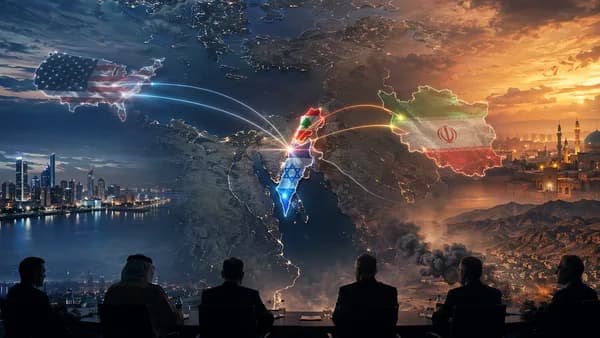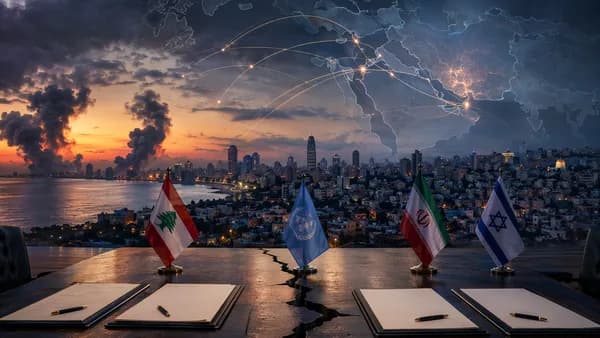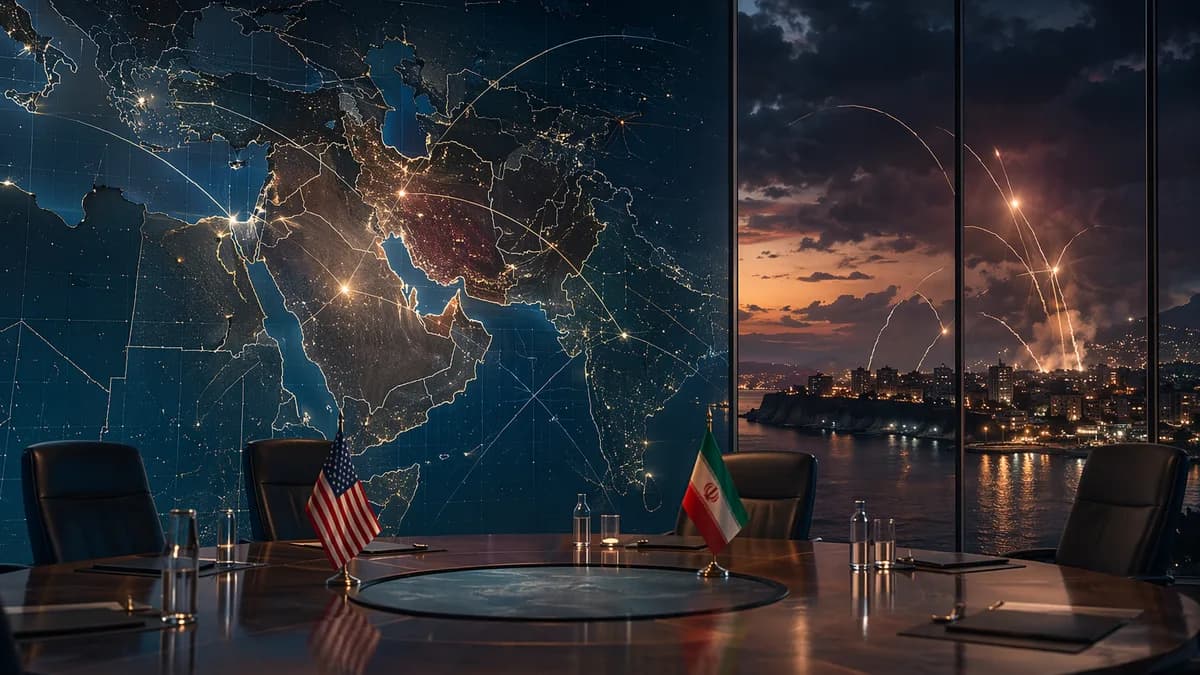
US-Iran talks in Switzerland were called off just as Israel expanded strikes in Lebanon, turning a fragile memorandum with Tehran into a live test of whether Washington can restrain the region before a 17 August deadline.
XOOMAR Intelligence
Analyst Take
The connecting thread is pressure. A preliminary US-Iran deal has opened a 60-day window for a final agreement, but the facts on the ground are moving faster than the diplomacy, according to Guardian World. Israel is striking Hezbollah targets. The Switzerland event has been stripped back. Hormuz is reopening, but Iran is already preparing new shipping fees.
| Pressure point | What happened | Why it matters |
|---|---|---|
| Lebanon | Israel says it struck Hezbollah targets after ceasefire violations | The fighting challenges Trump’s demand for a wider ceasefire |
| Switzerland | The signing ceremony was canceled after remote signing, while talks were called off or postponed | Diplomacy continues, but without the public momentum of a summit |
| Hormuz | The US ended its blockade, while Iran plans maritime fees after 60 days | The waterway remains a gas-price bargaining chip |
Middle East ceasefire diplomacy collides with fresh fighting and hard deadlines
The US-Iran talks now sit inside a narrow calendar. Vice President JD Vance said the 60-day period for reaching a final agreement started on Thursday, setting 17 August as the deadline.
That deadline is doing heavy work. Washington is trying to convert a memorandum of understanding into a final settlement while Israel, Hezbollah, Iran and European officials are all pushing their own red lines.
XOOMAR analysis: The memorandum may have paused a broader escalation, but it hasn’t created discipline across the region. The next phase will be judged less by statements and more by whether parties act as if the deal binds them.
Israel expands strikes on Hezbollah targets in southern Lebanon after ceasefire accusations
Israel’s military said it was attacking Hezbollah in several areas across southern Lebanon and had continued strikes through Thursday night. The IDF said the operations followed repeated ceasefire violations by the Iran-backed group.
That directly undercuts Donald Trump’s call for a wider pause in fighting.
Trump said the US expected “a complete ceasefire on all fronts, including Lebanon, Hezbollah and Israel”.
Lebanon is now the first major field test for the US-Iran framework. Hezbollah sits at the center of Iran’s regional network, so renewed fighting there pressures Tehran’s diplomacy and Washington’s credibility at the same time.
US-Iran Switzerland talks stall after remote memorandum signing
The planned signing ceremony in Switzerland, due Friday, was canceled because the memorandum of understanding between Washington and Tehran had already been signed remotely, Pakistan’s foreign ministry said. Separately, the planned Switzerland talks were described as called off or postponed.
That distinction matters. A canceled ceremony does not mean diplomacy has collapsed. It does mean the optics changed from public breakthrough to private crisis management.
For more on how Vance’s travel plans became part of the diplomatic signal, see XOOMAR’s earlier report on JD Vance scrapping his Swiss trip as Iran talks drifted off course. The US-Iran talks are still alive as a process, but they have lost the kind of staged moment that governments use to show control.
JD Vance warns Israeli critics that Trump is Israel's strongest remaining backer
JD Vance delivered the bluntest message from Washington to Israeli critics of the Iran deal. He said Trump was Israel’s only major supporter left in global leadership, while also referencing the billions in US defense aid Israel receives.
Trump “is the only head of state in the entire world who is sympathetic to the nation of Israel at this moment in time”, Vance told reporters.
That was not subtle diplomacy. It was a warning aimed at Israeli political voices attacking the deal, and it landed while Vance’s own Switzerland trip was canceled.
XOOMAR analysis: The Trump administration is trying to sell restraint to Israel while selling pressure to Iran. That is a hard balance. Vance’s remarks show Washington is willing to remind Israel that US backing carries political conditions, even if the underlying alliance remains intact.
Khamenei approves the US deal while warning against American demands
Ayatollah Mojtaba Khamenei approved the memorandum with the US despite saying he had a “different view”. His message, read on state television, said he gave permission after receiving assurances from President Masoud Pezeshkian and other officials about protecting Iran’s rights and the “resistance front”.
“In principle, I had a different view [about the memorandum of understanding], but I issued my permission due to the commitment that the honourable [Iranian] president, as the chairman of the Supreme National Security Council, gave me on behalf of himself and other members to protect the rights of the Iranian nation and the resistance front.”
Khamenei also warned that future face-to-face negotiations would not mean accepting the enemy’s view. He said the deal would not be accepted “if the American side wants to make excessive demands”.
Both sides are selling the same document as victory. Trump has claimed the agreement is a win for Washington and averts a “worldwide depression”. Khamenei claimed Trump used “all kinds of levers” to secure it “out of desperation”.
Hormuz blockade ends as Iran prepares maritime fees for ships in the strait
US Central Command said it ended its blockade in the Strait of Hormuz, which had been in effect since 13 April. Marine Traffic data showed at least seven ships crossed the strait on Thursday.
Iran, meanwhile, announced plans for maritime fees in the strait after the 60-day negotiation period. Tehran said the waterway was under its control and rejected a European plan for a naval escort mission.
That makes Hormuz a second negotiating table. Ships moving again helps the deal look functional, but Iran’s fee plan keeps pressure on the final talks.
XOOMAR covered that chokepoint dynamic in US-Iran Deal Bets Hormuz Shipping on 60 Fragile Days. The same logic still applies: the memorandum depends on traffic continuing without either side turning shipping rules into a new confrontation.
Washington keeps military pressure on Iran despite the new diplomatic track
US defense secretary Pete Hegseth said the US would restart military action and reimpose a blockade if Iran failed to meet its commitments under the signed agreement. He made the warning at a meeting with Nato defense ministers in Brussels.
That is the US two-track strategy in plain language: negotiate, but keep coercion close. The deal is not being treated as trust. It is being treated as a probation period.
XOOMAR analysis: The credibility problem cuts both ways. Washington needs to show it did not reward Iran without enforceable commitments. Tehran needs to show it did not accept US terms under pressure. That tension will shape every public statement until 17 August.
EU-Israel rupture deepens after diplomatic break with bloc's foreign policy chief
Kaja Kallas, the EU foreign policy chief, said she was representing the bloc’s position on the Middle East after Israel announced it was severing diplomatic relations with her. The dispute followed allegations that she had compared Israel to apartheid South Africa.
This adds another diplomatic rupture at the exact moment Washington is calling for restraint. Israel is now managing conflict with Hezbollah, pressure from the Trump administration, and a public break with a senior EU figure.
The EU dispute also gives Vance’s remarks sharper context. When the US vice president says Trump is Israel’s only sympathetic head of state, he is not describing a calm diplomatic environment.
The bigger picture: a fragile Iran deal is carrying too many conflicts
The US-Iran talks are now burdened by Lebanon, Hormuz, US-Israel strain, Iranian domestic positioning and EU-Israel friction. That is too much weight for a preliminary memorandum to carry without visible discipline from the parties involved.
The deal may have paused a wider escalation. It has not settled the conflicts that produced it.
The practical test is simple. Ships need to keep moving through Hormuz. Missiles and strikes need to stop widening the Lebanon front. Washington and Tehran need to keep their own partners from turning the 60-day window into a countdown to the next crisis.
Impact Analysis
- The 60-day US-Iran window puts urgent pressure on diplomacy before the 17 August deadline.
- Israeli strikes in Lebanon risk undermining efforts to contain a wider regional conflict.
- Hormuz reopening eases immediate shipping pressure, but planned Iranian fees keep the waterway central to negotiations.
Regional pressure points in the Middle East crisis
| Pressure point | What happened | Why it matters |
|---|---|---|
| Lebanon | Israel says it struck Hezbollah targets after ceasefire violations | The fighting challenges Trump’s demand for a wider ceasefire |
| Switzerland | The signing ceremony was canceled after remote signing, while talks were called off or postponed | Diplomacy continues, but without the public momentum of a summit |
| Hormuz | The US ended its blockade, while Iran plans maritime fees after 60 days | The waterway remains a bargaining chip |
Primary Sources & Disclosures

Written by
XOOMAR
Data desk
XOOMAR is a capital markets software and data company. Every brief on this site starts from a dataset the company collects itself from primary sources (CFTC, SEC EDGAR, FINRA, the Federal Reserve, exchange APIs) and names the numbers it is built on, with a link to the data page so you can check them. Briefs are reviewed before they go out and corrected in place when the data is revised.