Updated: This analysis has been refreshed with current market and political context following the announcement's initial implementation phase.
XOOMAR Intelligence
Analyst Take
Trump has announced a US-Iran deal before the hard parts are public, putting oil flows, nuclear verification and his own political standing on the same 60-day clock. The immediate winners are the White House and anyone exposed to energy prices. The risk sits with everyone who has to act on the announcement before the terms prove real, including traders watching the gold price and Fed reaction.
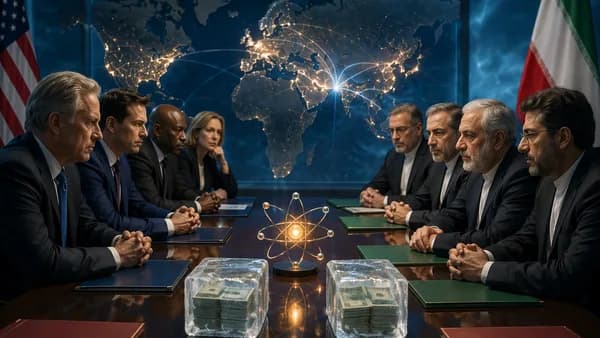
The US-Iran ceasefire, reported by BBC World, would end hostilities between the US and Iran, keep the Strait of Hormuz open to commercial shipping and see the US lift its naval blockade. Trump sold it in familiar maximalist language.
"Let the oil flow!"
That line captures the political pitch. It does not answer the operational question: what, exactly, has Iran agreed to do, and who gets to verify it?
Trump gets the optics, but negotiators inherit the risk
The announcement gives Donald Trump a diplomatic trophy at a useful moment, ahead of the final sprint of the presidential campaign. The BBC framed it as a welcome present for the president, but also one wrapped in uncertainty. That distinction matters more than ever as the 60-day implementation window progresses.
Trump said he had secured a "great deal" that would bring "peace and security to the whole region". The BBC noted that he used similarly sweeping language about last year's Gaza War agreement, calling it "a peace for all eternity". The Iran deal now faces the same credibility test. Is this a settlement, or a pause dressed up as victory?
XOOMAR analysis: The announcement was politically useful immediately, but is strategically useful only if follow-up talks produce terms that survive contact with Tehran, Israel, and—critically—energy markets before the November election. Trump has claimed the win. Now the implementation machinery has to carry it.
For context on how the Strait became central to the negotiating pressure, see XOOMAR’s earlier coverage of Trump Torches Iran Deal Leak as Hormuz Risk Spikes.
The nuclear clauses are still doing the heavy lifting
Vice-President JD Vance told Fox News that Iran never possessing a nuclear weapon was "built into this agreement" and that the US would be able to verify compliance. That is the core promise. The public record supplied so far does not show how it works.
The unresolved issues in Trump's agreement are not minor drafting points. The BBC reported that questions remain over:
| Issue | Why it decides the deal |
|---|---|
| Enrichment restrictions | The deal’s nuclear value depends on what Iran can still enrich, at what level and under what limits. |
| Highly enriched uranium stockpile | The agreement needs a path for what happens to the material Iran already has. |
| Verification | Vance says compliance can be verified, but the source did not provide inspection terms. |
| Follow-up talks | "Technical" talks during a 60-day extension of the current ceasefire are expected to settle at least some details. |
The danger is that vague language helps both sides sell the arrangement at home, while leaving the hardest disputes unresolved. What does "compliance" mean if the enrichment limits are not public?
Iran’s own statement pointed to that gap. Its Supreme National Security Council said "final negotiations will be postponed until after the implementation of the other party's commitments under the memorandum". That shifts attention from Trump’s announcement to sequencing. If each side thinks the other must move first, the deal can stall while both claim the other is violating its spirit—a dynamic already playing out in early technical meetings.
The available numbers point to a fragile implementation window
The strongest hard number in the source is the 60-day extension of the ceasefire. That is not a long runway for a nuclear file, a shipping restart and a regional de-escalation process.
Other figures show why Trump needs quick economic proof. Recent polling shows the economy remains a central vulnerability for the incumbent administration. Vance acknowledged the strain from higher energy prices and their knock-on effects, then promised that energy prices would start coming down.
Can voters feel a difference before political pressure hardens ahead of November?
The answer depends partly on Hormuz. Energy market experts cited by the BBC warned that oil movement through the strait is unlikely to return immediately to pre-war levels. Clearing a backlog of tankers, removing mines and restoring regular oil shipping and production takes time. Initial shipping data shows a gradual increase in tanker traffic, not a sudden flood.
That gives the deal an awkward timeline. Trump can announce "Let the oil flow!" but consumers may not see instant relief at the pump. If fuel prices ease slowly, the political benefit also arrives slowly.
Hormuz is open on paper, not necessarily normal in practice
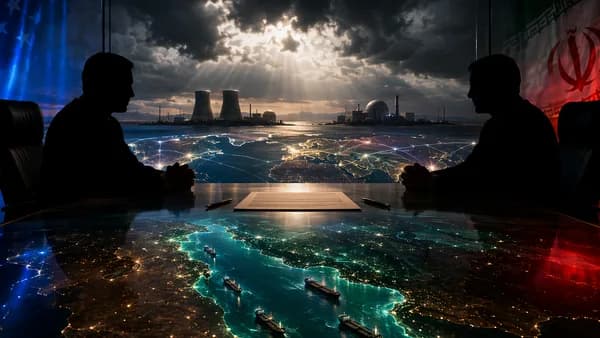
The Strait of Hormuz is the deal’s visible economic test. Trump said it would be open to commercial shipping and that the US would lift its naval blockade. The market signal is obvious: lower immediate war risk should ease some pressure, and oil prices have retreated from recent peaks.
But the BBC’s operational caveat is crucial. Backlogged tankers do not vanish because leaders issue statements. Mines do not remove themselves. Production and shipping schedules do not reset overnight. Insurers remain cautious, keeping war risk premiums elevated until sustained safe passage is demonstrated.
XOOMAR analysis: This is where the deal’s politics and logistics collide. Trump needs the public to see lower costs. Energy traders and shipping operators need physical proof that routes are safe and reliable. Those are related, but not identical. The initial market reaction was a "sell the rumor, buy the news" pattern: prices dipped on the announcement but have since stabilized, awaiting tangible proof of increased flows.
The timing also links back to prior stress points around the negotiations. XOOMAR covered the regional fragility in Beirut Strikes Push Iran Peace Deal to the Brink, and the BBC reported that Israel remains a wildcard.
Israel can still turn a bilateral announcement into a three-party crisis
The BBC was blunt: this was always a three-party war. Trump told the Wall Street Journal he was furious at Benjamin Netanyahu for ordering strikes on Lebanon over the weekend, because he believed they might torpedo the almost-completed Iran deal.
The agreement survived long enough to be announced. That is not the same as being insulated from future strikes. Netanyahu's government has been conspicuously silent on the deal's nuclear specifics, a silence analysts interpret as deep skepticism.
If Israel begins new military operations in Lebanon or against Iranian proxies in Syria, Iran could decide to close Hormuz again or resume harassment of shipping. That makes Israel’s military posture one of the practical enforcement variables, even if it is not written into the US-Iran memorandum.
What happens if Israel judges the nuclear terms too weak and acts unilaterally?
That question hangs over the deal. Trump can pressure Israel politically, but the BBC’s reporting shows the risk is active, not theoretical. The deal’s durability depends on more than Washington and Tehran keeping their own promises; it requires a de facto regional understanding that remains fragile.
Iran’s memorandum language is the warning sign
The phrase "memorandum of understanding" matters because it sounds less final than Trump’s victory lap. The BBC noted there were several days before the official signing, which left time to settle details, or for the agreement to fall apart.
Iran’s statement that final negotiations come after the other party implements commitments is a flashing procedural light. It suggests Tehran may view the memorandum as conditional, sequenced and dependent on US action, such as the swift lifting of secondary sanctions on oil exports.
That does not mean collapse is inevitable. It does mean the deal is not self-executing.
XOOMAR analysis: The most important near-term evidence will not be another celebratory statement. It will be whether both sides describe the same obligations in the same order, and whether tangible actions—like the departure of the first fully insured, non-escorted oil tanker through Hormuz, or the arrival of international monitors at declared nuclear sites—occur. If Washington says Iran must move first on verification and Tehran says the US must move first on sanctions relief, the 60-day extension becomes a countdown to blame allocation.
The next phase decides whether this is a bargain or a headline
Three paths are visible from the supplied facts and early implementation signals.
First, an enforceable freeze. The technical talks define enrichment restrictions, clarify the fate of highly enriched uranium, establish verification and allow shipping through Hormuz to normalize over weeks. This provides Trump a tangible pre-election win.
Second, a muddle-through deal. Both sides keep the ceasefire alive but dispute sequencing, verification and regional actions. Oil flows improve modestly, but uncertainty lingers, keeping a risk premium in the market and providing limited political boost.
Third, a sharper break. A suspected violation, an Israeli operation in Lebanon, or a public disagreement over the memorandum’s commitments pushes Iran to threaten Hormuz again, collapsing the deal and spiking prices before November.
The strongest evidence supporting Trump’s thesis would be concrete inspection terms, public clarity on enrichment and visible progress reopening shipping. The strongest evidence weakening it would be dueling US-Iran interpretations stalling progress. The announcement gave Trump his moment. The next 60 days decide whether anyone else can safely rely on it.
Impact Analysis
- Oil markets have priced in initial optimism but remain volatile, awaiting proof of sustained, secure shipping flows through the Strait of Hormuz.
- The agreement's credibility hinges entirely on the yet-to-be-publicized verification regime for Iran's nuclear commitments.
- Trump gains an immediate political headline, but failure to demonstrate clear implementation progress before November could quickly turn it into a liability, underscoring a pattern of announced deals lacking substance.
Trump's Deal Rhetoric Versus Implementation Risk
| Issue | Trump's Claim | Unresolved Risk |
|---|---|---|
| Iran deal | A "great deal" bringing "peace and security to the whole region" | Terms, nuclear verification, and Iran's commitments remain unclear |
| Strait of Hormuz | "Let the oil flow!" | Shipping stability depends on whether hostilities truly stop and the blockade is lifted |
| Gaza War agreement | Described as "a peace for all eternity" | Conditions on the ground fell short of the rhetoric |
Primary Sources & Disclosures

Written by
XOOMAR
Data desk
XOOMAR is a capital markets software and data company. Every brief on this site starts from a dataset the company collects itself from primary sources (CFTC, SEC EDGAR, FINRA, the Federal Reserve, exchange APIs) and names the numbers it is built on, with a link to the data page so you can check them. Briefs are reviewed before they go out and corrected in place when the data is revised.