
Updated July 16, 2026: This article has been refreshed to clarify the latest public record, tighten Hormuz energy-flow statistics, and distinguish confirmed reporting from disputed claims about alleged US-Iran deal terms.
Global TrendsJune 13, 2026· 9 min read· By XOOMAR Insights Team
Strait of Hormuz Risk Surges as Trump Torches Iran Leak
Updated on July 16, 2026
XOOMAR Intelligence
Analyst Take
60/ 100
4 sources analyzedLow confidenceTrend10Freshness93Source Trust92Factual Grounding94Signal Cluster40
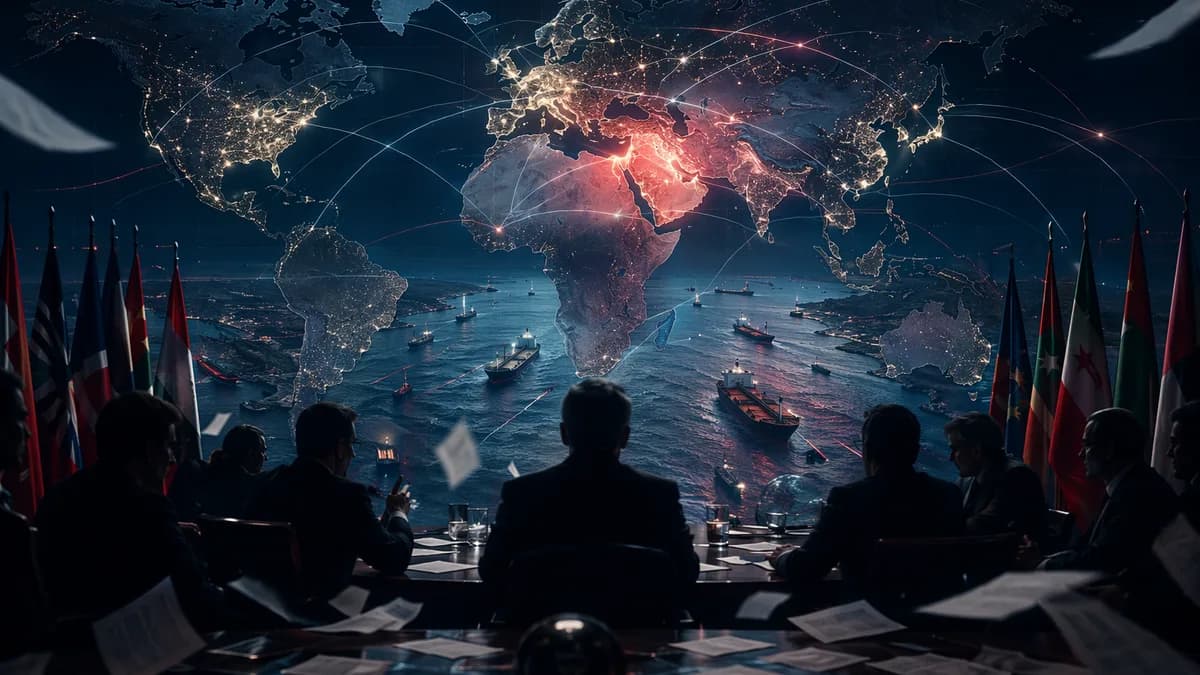
The Strait of Hormuz, the narrow Gulf waterway that normally carries about one-fifth of global petroleum liquids consumption and roughly one-fifth of global LNG trade, remains the pressure point in any US-Iran deal risk, oil market reaction, and EUR/USD reaction.
That is the real signal beneath Donald Trump’s attack on Iranian media reports. The fight is not only about whether Washington and Tehran can extend a ceasefire or stabilize Gulf shipping. It is about who gets to define the deal before it is signed, according to BBC World.
Trump's Iran leak accusation turns diplomacy into a credibility fight
A negotiation can survive disagreement. It struggles when both sides start arguing over what the supposed agreement even says.
US President Donald Trump said Iranian media reports about an alleged 14-point deal had “nothing to do with the terms that were agreed to” and “bears no relation to the truth”. He also said he had cancelled “scheduled attacks” against Iran because negotiators had “just made a great settlement”.
“What they said, including their weak and pathetic statement on having a deal, bears no relation to the truth. Very dishonorable people to deal with. With them, there is no such thing as dealing in good faith.”
That language does two things at once. It denies the substance of the leak, and it warns Tehran that Trump will not let Iranian outlets frame the agreement as a US climbdown.
The timing still matters, but in the narrower sense supported by the reporting: the public dispute comes as negotiators are trying to extend a ceasefire, restore reliable passage through Hormuz, and move toward a possible MOU while both governments face pressure over how any compromise is described.
XOOMAR analysis: the leak episode shows how fragile this channel remains. The source reporting supports cautious optimism, but it also shows that the deal is still vulnerable to public messaging, factional resistance, and unresolved terms.
For broader context on the regional pressure surrounding these talks, see XOOMAR’s coverage of US Iran Strikes Drag Gulf Allies Into Trump's Ultimatum, Iran Gamble Wrecks Trump and Netanyahu's Middle East Plan, Beirut strikes and Iran talks, and Tyre's Christian Quarter warning.
The leaked version reads more like Tehran's sales pitch than Washington's red lines
The disputed Iranian media reports appeared to describe terms closer to what Tehran has been demanding than what Washington says it will accept.
The BBC reports that Iranian outlets published details from an alleged 14-point deal. US officials later confirmed some elements of the emerging framework, but pushed back on the idea that Iran would receive major economic benefits up front.
Here is the split that matters:
| Issue | Iranian-facing emphasis in reports | US officials' stated position |
|---|---|---|
| Strait of Hormuz | Reopening or normalization included in the deal | Maritime steps would be tied to US action on Iranian shipping restrictions |
| US pressure on shipping | Relief presented as central | Relief tied to immediate maritime commitments |
| Economic relief | Reports suggested assets could be unfrozen early | No money up front; benefits depend on verified performance |
| Nuclear talks | To begin later | A 60-day period would focus on enriched uranium |
| Regional proxies | Iran says the MOU also envisages an end to the Israel-Hezbollah conflict | US officials say Iran must stop funding proxy groups |
Selective leaks can pressure the other side. They can also reassure hardliners at home that negotiators are not surrendering. In this case, the leak gave Trump every incentive to reject it loudly before critics could brand the agreement as a concession.
Readers should separate three questions. Are talks happening? Yes, based on the reporting. Has a memorandum been agreed in final form? Pakistani Prime Minister Shehbaz Sharif said the Memorandum of Understanding had been agreed and awaited finalising, while Iran’s Seyed Abbas Araghchi said Iran’s top security body had not reached a collective decision. Does the leaked description match the deal? Trump says no.
The hard mechanics: Hormuz first, uranium later, relief only after performance
The most concrete structure in the reporting is not the alleged 14-point leak. It is the US description of sequencing.
US officials told journalists the deal would reopen or normalize passage through Hormuz in return for Washington lifting pressure on Iranian shipping. Those steps would happen more or less immediately. Then a 60-day negotiation period would focus on Iran’s enriched uranium.
Officials said the intended result would be that all of that material is destroyed on site and then removed from the country. The mechanism has not been worked out publicly.
That unresolved mechanism is not a footnote. In nuclear diplomacy, sequencing is the deal. A pledge to destroy or remove enriched uranium is only meaningful if inspectors, logistics, timing, and enforcement are nailed down.
On economics, US officials stressed there would be no money provided up front. Instead, they described staged reintegration into the global economy, including possible sanctions relief and asset unfreezing over time.
The key word from Washington is “performance”. Iran would receive benefits only when it could be verified that it had implemented its commitments.
XOOMAR analysis: this architecture is designed to answer the political problem created by the leak. Trump can argue the deal is not based on trust, and Tehran can argue it extracted immediate movement on Hormuz and shipping pressure. Both claims can be true only if the text is tight enough to survive the first dispute over compliance.
Tehran's internal split may matter more than Trump's post
Iran’s public posture is not unified.
Araghchi said there are “supporters and opponents” of the latest terms inside Iran’s Supreme National Security Council. He also said no collective decision had been reached.
“For now, we must wait. If approved, the agreement will be signed remotely,” Araghchi said.
That is a narrow but important opening. Tehran is signaling that the deal is close, while preserving room to reject or revise it. Araghchi also said: “This could happen in the coming days. I am very hopeful.”
Trump’s denial grabs attention, but Iran’s internal approval process may be the bigger constraint. If the Supreme National Security Council cannot align around the terms, a remotely signed MOU remains theoretical.
Pakistan and Qatar’s roles add another layer. Pakistan helped mediate, and Qatar has also supported mediation efforts. Their involvement suggests both sides still see value in an indirect channel, even while trading public accusations.
Israel sits outside the room, but not outside the consequences
Israel is not involved in the talks, according to the BBC. That does not make it irrelevant.
The proposed agreement is meant to extend the ceasefire and begin negotiations on key issues, including Iran’s nuclear programme. The BBC also reports that Iran says the MOU envisages an end to the conflict between Israel and Hezbollah in Lebanon, while previous US reports suggested Lebanon may not be part of the deal.
That gap is serious. Israel’s prime minister has said Israel will strike Hezbollah if it continues attacks against northern Israel. If the MOU tries to touch Lebanon without Israeli participation, enforcement becomes harder from the start.
The deal also calls on Iran to stop funding proxy groups in the region, a reference to Hezbollah and other Iranian-backed groups across the Middle East. That is a broad demand. The source reporting does not specify how it would be verified.
For readers tracking escalation channels, XOOMAR’s earlier related coverage on Iran Missiles Drag US Host Nations Into Firing Line helps frame why Gulf security and US basing exposure remain tied to the outcome of these talks.
Markets care less about the rhetoric than the shipping sequence
The source material does not provide oil prices or market moves, so the useful analysis is about transmission channels, not claimed price impact.
The first channel is shipping. Hormuz is critical because it links Gulf producers to global buyers. Energy data from recent years show roughly 20 million barrels per day of crude, condensate, and petroleum products have moved through the Strait in normal conditions, alongside a major share of global LNG exports from Qatar and the UAE. Any restriction raises freight, insurance, and supply-risk premiums quickly.
The second channel is sanctions exposure. US officials described a staged path that could include lifting sanctions and potentially unfreezing assets, but only incrementally. Banks, insurers, traders, and companies with Iran-linked risk do not need a signed deal to face uncertainty. Rumor-driven diplomacy can alter counterparty decisions before policy changes.
The third channel is conflict risk. If talks fail after both sides publicly raise expectations, the chance of renewed military pressure becomes a live concern. The source already says Trump cancelled “scheduled attacks” after negotiators made what he called a settlement.
Three paths after Trump's “no relation to the truth” denial
The first scenario is tactical theater. Trump rejects the leak, Tehran manages its internal critics, and negotiators keep moving toward a limited bargain: Hormuz normalization, shipping relief, then a 60-day uranium track.
The second scenario is hardening. Trump refuses any terms that resemble the Iranian media version, while Tehran raises its demands to avoid appearing cornered after the leak fight. That would fit the BBC’s warning that versions of this agreement have been expected several times over the past month or two, only to fall away.
The third scenario is a controlled reset. Washington uses the leak to force tighter confidentiality and narrower terms, with the agreement focused on verifiable nuclear steps and maritime access rather than broad normalization.
The next evidence to watch is not another social media post. It is whether Iran’s Supreme National Security Council approves the MOU, whether Hormuz passage is restored or protected on the stated terms, and whether the 60-day uranium negotiation begins with a clear verification mechanism. If those pieces move, Trump’s denial may have been positioning. If they stall, the leak may have exposed a deal that was never as close as both sides wanted it to look.
Impact Analysis
- The Strait of Hormuz is critical because it normally carries about one-fifth of global petroleum liquids consumption and roughly one-fifth of global LNG trade.
- Public disputes over deal terms could weaken efforts to extend the ceasefire and stabilize Gulf shipping.
- The episode shows how fragile US-Iran diplomacy remains when both sides are fighting to control the narrative.
Competing Narratives Around the Possible US-Iran Deal
| Issue | Trump/US Position | Iranian Media Reports |
|---|---|---|
| Deal terms | Trump said the reported terms had “nothing to do with the terms that were agreed to.” | Reports described an alleged 14-point deal. |
| Credibility | Trump said the reports “bear no relation to the truth” and accused Iran of bad faith. | The reports appeared to frame the agreement before it was signed. |
| Diplomatic status | Trump said he cancelled scheduled attacks because negotiators had made a “great settlement.” | The public reporting suggested a deal narrative that Washington rejected. |
Strait of Hormuz Share of Global Oil and LNG Flows
Oil and LNG carried through Strait of Hormuz
%20
Sources

Written by
XOOMAR Insights Team
Research and Editorial Desk
The XOOMAR Insights Team pairs automated research with human editorial judgment. We track hundreds of sources across technology, fintech, trading, SaaS, and cybersecurity, cross-check the facts, and explain what happened, why it matters, and what to watch next. We do not just rewrite headlines. Every article is fact-checked and scored for reliability before it goes live, and we link back to the original sources so you can verify anything yourself.
Explore More Topics
Related Articles
 Global Trends
Iran Vows Eye-for-Eye Strikes if Trump Hits Tehran
Iran says any US strike on its infrastructure will be met in kind, risking a wider energy crisis around the Strait of Hormuz.
Jul 23, 20266 min
 Global Trends
Red Sea Tanker Attacks Drag Saudi Oil Into Iran Fight
Two Saudi tankers turned a Houthi claim into a shipping risk, with US strikes on Iran adding pressure on oil routes.
Jul 23, 20267 min
 Global Trends
Oil Shock Exposes Germany Energy Drag Behind Ifo Jump
Germany’s Ifo jump may be stale. Commerzbank sees oil costs capping 2026 growth at just 0.6%.
Jul 28, 20267 min
 Global Trends
Houthi Attacks Turn Saudi Oil Escape Route Into Trap
Houthi attacks are squeezing Saudi Arabia’s Red Sea oil route just as Hormuz falters, raising the risk of wider supply shocks.
Jul 26, 20268 min
 Global Trends
Trump’s $1.15tn NDAA Squeaks Through Bitter House Revolt
A $1.15tn NDAA barely cleared the House as Democrats turned Trump’s Iran war and voting agenda into a Senate showdown.
Jul 23, 20266 min
 Trading
Safe-Haven Premium Cracks as Silver Price Slides Before Fed
Silver fell near $57.55 as geopolitical fear cooled, but the Fed decision and a stronger dollar keep XAG/USD exposed.
Jul 28, 20266 min
 Trading
War Risk Bet Unwinds as Brent Crude Crashes 8.7% in a Day
Brent crude’s 8.7% plunge shows traders dumping war-risk premium, not proof that Gulf energy flows are out of danger.
Jul 28, 20265 min
 Trading
Oil Shock Traps Gold Price Near $4,000 Before Fed Decision
Gold is pinned near $4,020 as Middle East risk supports haven demand, but Fed hike pricing keeps buyers from chasing the rally.
Jul 29, 20267 min
 Technology
Fast Metals Mines Toxic Red Mud for Critical Minerals
Fast Metals raised $4.3M to mine critical minerals from red mud. Now it has to prove the leftover waste is safer.
Jul 29, 202612 min
 SaaS & Tools
Nearly 60 Webinar Tools Expose the Best Webinar Software
Webinar platforms are now judged by pipeline, not polish. Zapier’s 2026 picks show marketers which tools turn attendance into action.
Jul 29, 20268 min
Don't miss the signal
Get our weekly roundup of the stories that matter across tech, fintech, and trading. No noise, just signal.
Free forever. No spam. Unsubscribe anytime.