
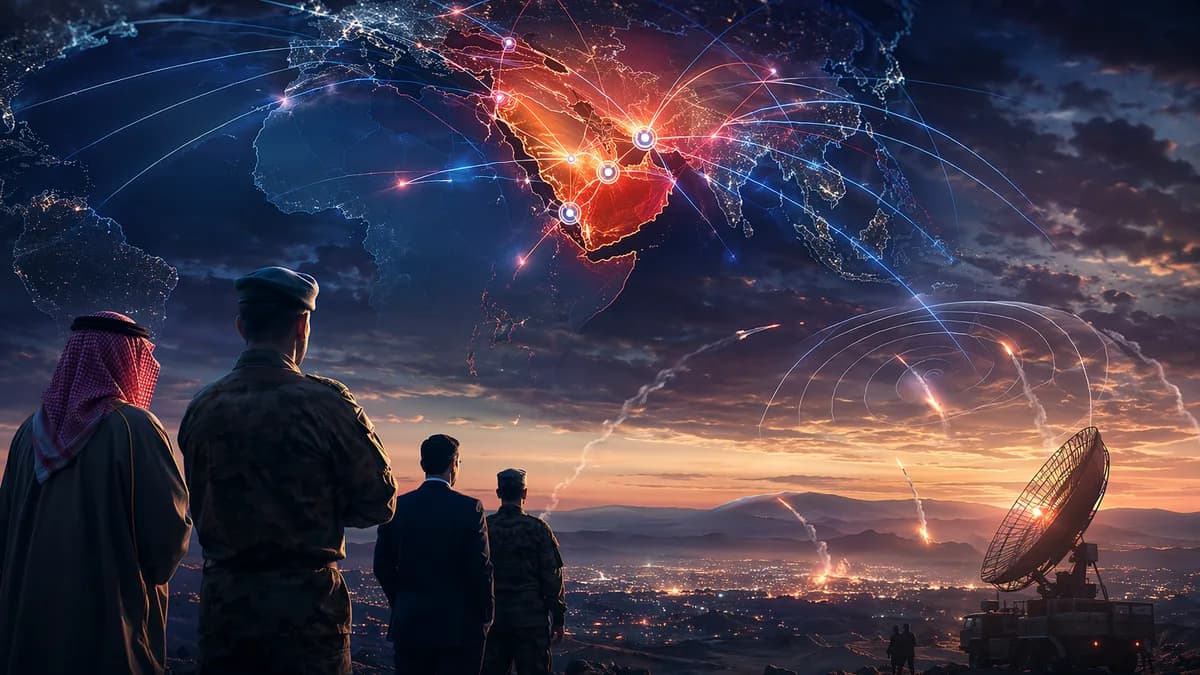
The United States has launched a second round of airstrikes on Iran, and Tehran has answered by targeting Bahrain, Kuwait and Jordan, pulling three US-linked regional partners deeper into a crisis that was supposed to be moving toward talks.
Global TrendsJune 11, 2026· 6 min read· By XOOMAR Insights Team
US Iran Strikes Pull Gulf Allies Into Trump’s Ultimatum
Updated on June 13, 2026
XOOMAR Intelligence
Analyst Take
85/ 100
4 sources analyzedMedium confidenceTrend10Freshness95Source Trust90Factual Grounding92Signal Cluster100
The renewed exchange came after Donald Trump warned that Iran was taking “too long to negotiate a deal” and that “now they will have to pay the price,” according to Guardian World. The immediate problem is now bigger than Washington and Tehran. Airspace, US-hosting states, Gulf military sites and emergency diplomacy are all in play at once.
US hits Iran again as Trump turns stalled talks into a threat
The latest US action marks the second consecutive day of direct strikes on Iran, according to the supplied reports. US fighter jets targeted air defence, ground control stations and surveillance radar sites, US Central Command said in the related account provided.
Iran acknowledged strikes around Bandar Abbas and Qeshm Island, but did not give damage details. No confirmed casualty figures from the latest US strikes were provided in the source material.
Trump’s public message sharpened the military pressure. He said Iran was taking “too long to negotiate a deal” and that “now they will have to pay the price.”
That wording matters because it links the strikes to the negotiating track, even if the precise operational rationale for the second round remains partly unclear from the available material. The US has previously described related strikes as responses to Iranian actions, including threats to regional waters and US assets.
“Iran really wants to make a deal, and it will be a good one for the U.S.A. and those that are with us.”
That earlier Trump line, from the related NBC material, now sits awkwardly beside the new warning. The diplomatic door has not been described as closed, but the public posture has hardened fast.
The ceasefire effort was already fragile. The supplied material says the US and Iran have traded strikes several times since agreeing to a ceasefire in early April, while Iran peace deal talks have dragged over Iran’s nuclear and missile programs, Strait of Hormuz risk and linked regional conflicts.
Iran targets Bahrain, Kuwait and Jordan as US host nations move into the line of fire
Iran’s response widened the crisis across the Gulf and Jordan. Tehran announced attacks involving Bahrain, Kuwait and Jordan, all of which are strategically tied to Washington and host US forces or US-linked military activity, according to the supplied context.
Kuwait was among the Gulf states pulled into the latest exchange. The supplied context supports that Kuwait intercepted incoming fire, but it does not provide further confirmed detail on flight diversions, airport damage or casualties there.
The aviation risk is therefore a major concern rather than a fully documented casualty picture in the available material. What is confirmed is that incoming fire reached the airspace of US-linked partners, forcing regional states to respond defensively.
Bahrain also came under Iranian fire and intercepted incoming fire, according to the supplied context. That puts another important US-linked Gulf partner back near the center of the escalation, even without confirmed details in the source material about sirens or a specific claimed target.
Jordan reported direct defensive action as well. Jordan said it shot down five incoming missiles, which Iran said had targeted Muwaffaq Salti Air Base. The base has hosted American F-35 fighter jets and other aircraft, according to the supplied material. Jordan’s state-run Petra news agency reported no injuries.
| Location | Immediate development | Confirmed response in source material |
|---|---|---|
| Kuwait | Iran announced new attacks | Incoming fire intercepted |
| Bahrain | Came under Iranian fire | Incoming fire intercepted |
| Jordan | Iran said Muwaffaq Salti Air Base was targeted | Five incoming missiles shot down, no injuries reported |
The pattern puts renewed attention on US partners that can become targets even when Washington is the direct combatant.
Twenty-two countries accuse Iran of overseas plots using criminal gangs
Before the latest US strikes, 22 countries, including the United States, Australia and European nations, jointly warned Iran to stop attacking people “on our soil.”
The statement accused Iranian security services of using international and local criminal gangs for plots in Europe, North America and Australia. The countries called that conduct “deplorable.”
“Attempts to kill, kidnap, harass, intimidate, or otherwise attack people on our soil, undermines national sovereignty and international norms. These actions must stop immediately.”
The timing does not prove the statement caused the US strikes. The source material only says it was released before the second round of US action.
Still, it adds a second diplomatic track to the crisis. The military fight is centered on Iran, US forces and regional bases. The joint statement broadens the accusation to Iranian activity inside allied countries, including alleged plots against people abroad.
That matters for coalition politics. Governments backing Washington can frame pressure on Tehran around both regional attacks and alleged transnational operations. That does not mean they have agreed on the next military step.
Ceasefire pressure now runs through Gulf airspace, US bases and Qatar’s shuttle talks
Emergency diplomacy has not stopped, but the available material does not confirm a specific new Qatar delegation arriving in Tehran after consultations with the US. For now, the clearest confirmed diplomatic signals are coming from Iranian officials responding to the latest American strikes.
Iranian Foreign Minister Abbas Araghchi condemned the American attacks as a violation of Iranian sovereignty in calls with counterparts from Turkey and Saudi Arabia. His office said he emphasized Iran’s “inherent right of self-defence, including reciprocal action.”
Foreign Ministry spokesperson Esmail Baghaei said Iran would review its stance on negotiations in light of the new attacks. That is the clearest sign in the source material that the latest strikes may directly affect the talks.
The next verified signals matter more than rhetoric now:
- US posture: Whether Washington confirms more strikes or pauses after the second round.
- Iranian response: Whether Tehran continues targeting US-linked sites in Bahrain, Kuwait and Jordan.
- Regional containment: Whether Gulf states report further interceptions, raise alerts or request more protection.
- Diplomacy: Whether regional mediation produces a pause, or only documents how far the ceasefire has slipped.
For markets and security desks, the practical read is simple: watch airspace warnings, base alerts and official military statements first. Public threats are moving fast, but the hard evidence is in interceptions and whether the next wave actually launches.
The Stakes
- The conflict is widening as Iran targets US-linked partners beyond direct US-Iran confrontation.
- Trump’s comments tie military pressure to stalled negotiations, raising the risk of further escalation.
- Airspace, Gulf military sites and emergency diplomacy are now central to regional stability.
Latest Escalation: US and Iran Actions
| Actor | Action | Targets/Areas | Context |
|---|---|---|---|
| United States | Launched a second round of airstrikes on Iran | Air defence, ground control stations and surveillance radar sites; strikes reported around Bandar Abbas and Qeshm Island | Trump warned Iran was taking too long to negotiate and would “pay the price” |
| Iran | Answered by targeting US-linked regional partners | Bahrain, Kuwait and Jordan | Expanded the crisis beyond Washington and Tehran into Gulf and regional security |
Sources

Written by
XOOMAR Insights Team
Research and Editorial Desk
The XOOMAR Insights Team pairs automated research with human editorial judgment. We track hundreds of sources across technology, fintech, trading, SaaS, and cybersecurity, cross-check the facts, and explain what happened, why it matters, and what to watch next. We do not just rewrite headlines. Every article is fact-checked and scored for reliability before it goes live, and we link back to the original sources so you can verify anything yourself.
Explore More Topics
Related Articles
 Global Trends
Houthi Attacks Turn Saudi Oil Escape Route Into Trap
Houthi attacks are squeezing Saudi Arabia’s Red Sea oil route just as Hormuz falters, raising the risk of wider supply shocks.
Jul 26, 20268 min
 Global Trends
Red Sea Tanker Attacks Drag Saudi Oil Into Iran Fight
Two Saudi tankers turned a Houthi claim into a shipping risk, with US strikes on Iran adding pressure on oil routes.
Jul 23, 20267 min
 Global Trends
Iran Vows Eye-for-Eye Strikes if Trump Hits Tehran
Iran says any US strike on its infrastructure will be met in kind, risking a wider energy crisis around the Strait of Hormuz.
Jul 23, 20266 min
 Global Trends
Trump’s $1.15tn NDAA Squeaks Through Bitter House Revolt
A $1.15tn NDAA barely cleared the House as Democrats turned Trump’s Iran war and voting agenda into a Senate showdown.
Jul 23, 20266 min
 Global Trends
Saudi Arabia Uranium Enrichment Puts Trump in a Bind
A new U.S.-Saudi nuclear pact could open the door to Saudi uranium enrichment, complicating Trump's hard line on Iran.
Jul 22, 20267 min
 Trading
US Dollar Index Sheds War Premium After Iran Pause
DXY slipped near 101.20 after the US-Iran strike halt dented safe-haven demand, though Red Sea threats keep dollar bears cautious.
Jul 27, 20267 min
 Trading
WTI Oil Price Sinks 7% as U.S.-Iran Pause Tests Bulls
WTI sank over 7% to $82.50 as traders cut the U.S.-Iran war premium, but Hormuz risk keeps crude on edge.
Jul 27, 20267 min
 Trading
War Pause Sends Bitcoin Back Above $65K as Oil Sinks
Bitcoin reclaimed $65,000 as the U.S. and Iran held fire, sparking a risk rally while oil dropped 5%.
Jul 27, 20266 min
 Global Trends
Double Exit Forces ACTU Test as McManus, O'Neil Quit
McManus and O'Neil are quitting the ACTU, ending a historic duo and forcing a fast succession test for Australia's union movement.
Jul 28, 20268 min
 Fintech
Apple Upgrade Grabs Control of Your Next iPhone Cycle
Apple Upgrade would replace iPhone financing with leases, giving Apple and Klarna more control over when customers swap devices.
Jul 28, 20267 min
Don't miss the signal
Get our weekly roundup of the stories that matter across tech, fintech, and trading. No noise, just signal.
Free forever. No spam. Unsubscribe anytime.