
Updated: This article has been refreshed to clarify that the reported text remains a draft ceasefire framework rather than a final peace treaty, and to distinguish claims made by Iranian officials, hardline critics, and media outlets from confirmed terms.
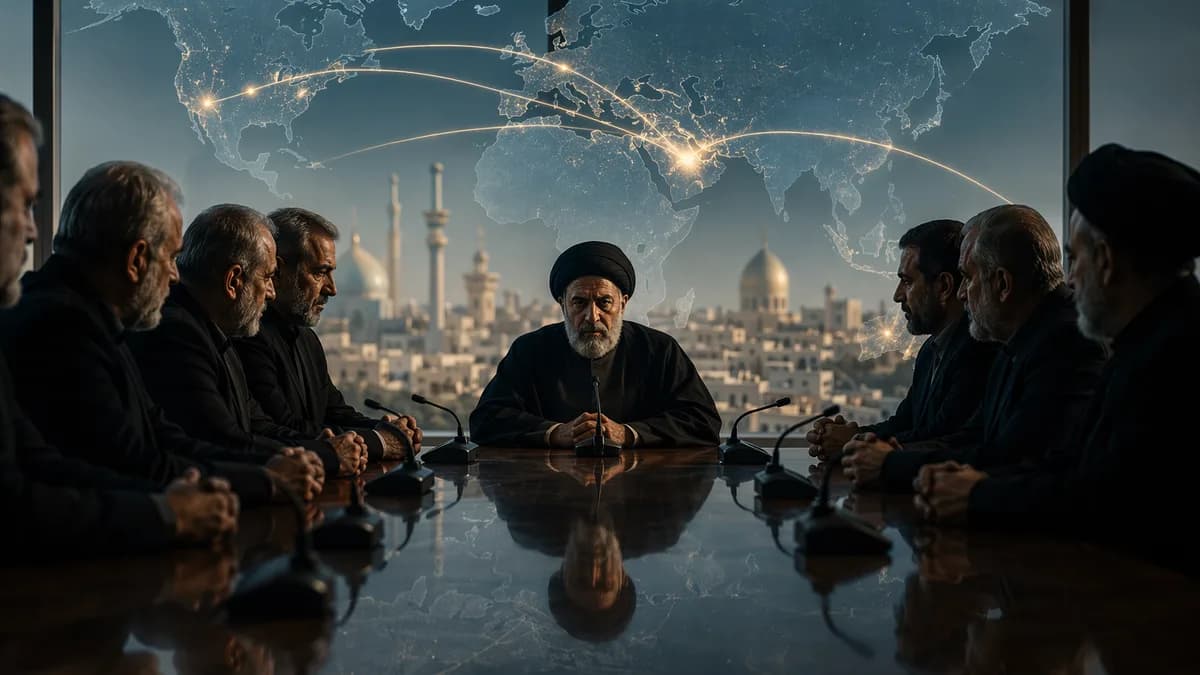
Global TrendsJune 14, 2026· 8 min read· By XOOMAR Insights Team
Iran Hardliners Turn US Peace Deal Into Surrender Fight
Updated on July 26, 2026
XOOMAR Intelligence
Analyst Take
71/ 100
4 sources analyzedMedium confidenceTrend10Freshness96Source Trust90Factual Grounding92Signal Cluster40
Can Tehran sell a US peace proposal as victory when its own hardliners are calling it capitulation?
That is the political test behind the draft agreement now being fought over inside Iran. The dispute is not only about clauses. It is about who gets to define strength after the US-Iran ceasefire, sanctions pressure, maritime threats, and negotiations with Washington, according to Guardian World.
Can the regime call this a win if hardliners call it surrender?
Iranian hardliners are trying to turn the proposed US peace deal into a loyalty test.
Their strongest weapon is not technical criticism. It is the word capitulation. Once that label sticks, negotiators are no longer arguing about sanctions relief, shipping rules, or frozen assets. They are defending themselves against the charge that they traded away revolutionary leverage.
Iranian MP Kamran Ghazanfari framed the attack bluntly:
“The fact that they say we won and America has retreated is a blatant lie.”
Meysam Nili, managing director of Rajanews and brother-in-law of the late hardline former president Ebrahim Raisi, went further. He called the draft a catastrophic capitulation and urged Iranians not to remain silent.
That framing matters because it forces supporters of the agreement into a narrow lane. They must argue that Iran extracted concessions from Washington while explaining why several core issues remain unfinished. That is a difficult sell.
XOOMAR analysis: the draft may survive or fail less on diplomatic wording than on whether Iran’s power centers can package it as strength. If hardliners succeed in making it look like retreat, the text itself becomes secondary.
Which terms made sanctions, money, and Hormuz the center of the fight?
The backlash is concentrated around three pressure points: sanctions relief, compensation, and the Strait of Hormuz.
Critics say the proposal does not guarantee sanctions relief. Supporters say it goes further than past agreements because, in their telling, Washington has accepted wider concessions in a second phase. The sharpest claim comes from Mehdi Mohammadi, an adviser aligned with the negotiating camp. He said the US had agreed to lift primary sanctions for the first time.
That claim is politically powerful, but the reported draft still leaves room for dispute. A promise of future sanctions relief is not the same as an executed removal of sanctions, and hardliners are exploiting that gap.
The money question is even weaker for the deal’s defenders. Mohammadi acknowledged that language on releasing half of Iran’s frozen money held abroad, about $12bn (£9bn), had not been finalised.
That gives opponents room to attack. If compensation is vague, they can portray the agreement as a promise without payment.
| Disputed issue | Hardline attack | Supporters' defense |
|---|---|---|
| Sanctions | Relief is not guaranteed | Mohammadi says primary sanctions would be lifted in a second phase |
| Frozen funds | Compensation is incomplete | About $12bn (£9bn) is under discussion, but wording is unfinished |
| Hormuz | Iran gives up leverage | Supporters say “Iranian arrangements” preserve control over fees and access |
The Strait of Hormuz is the most politically charged piece. Hardliners see it as a direct symbol of sovereignty and deterrence. Mohammadi leaned into that logic, not away from it.
“The strait is in our hands, we can close it any time we want at an hour.”
That line is meant to neutralize the surrender charge. It says Iran is not giving up leverage; it is converting leverage into terms.
Why does Mohammadi’s defense create its own political problem?
Mohammadi’s rebuttal is detailed, but it also exposes the fragility of the proposal.
He said the draft would end the war, including Israel’s offensive in Lebanon. He said Iran would make no new commitments on its nuclear programme. He said the only nuclear statement in the text is that Iran would not build or purchase nuclear weapons, which he described as “what we have been saying for years”.
On Iran’s highly enriched uranium, he said disposal methods, including down-blending inside Iran, would be left to future discussions lasting 60 days.
That is not a final settlement. It is a staged process.
For supporters, staging is useful. It lets Iran avoid immediate nuclear concessions while testing whether Washington follows through. For critics, staging is proof that Tehran is being asked to release pressure now for uncertain benefits later.
This is why the 2015 nuclear pact comparison is so politically loaded. Mohammadi argued the current proposal is better for Iran than the agreement struck under Barack Obama, because Iran has demonstrated that it can control Hormuz. Guardian World notes that the comparison is limited: the 2015 deal was a detailed arms control agreement, while the current memorandum is closer to a ceasefire framework with preconditions for later talks.
That distinction helps Tehran’s negotiators. It also helps critics. If this is only a framework, they can ask why Iran should reopen commercial space before sanctions, money, and nuclear questions are fully locked down.
How much pressure can the Paydari Front generate inside Iran?
The hardline campaign is not just noise from the edges.
Critics are clustered around the Paydari Front, with figures including Mahmoud Nabavian, a hardline member of the national security committee, and Hossein Shariatmadari, editor-in-chief of Kayhan. Guardian World also cites a senior Islamic Revolutionary Guard Corps commander who worked alongside Russia in Syria.
The opposition has moved into the streets and online. Hardliners mounted protests outside the foreign ministry in Tehran and promoted a “we will not accept” hashtag. News18 reported protests in Tehran, Mashhad, and other locations, with demonstrators directing anger at Foreign Minister Abbas Araghchi and Mohammad-Bagher Ghalibaf.
Government supporters are pushing back by challenging the legitimacy of that pressure. Khorosan newspaper argued that if critics are allowed to gather and chant against negotiations, supporters should be allowed to march for ending the war, signing the agreement, and even resuming relations with the US.
It claimed:
“The majority of the Iranian people support the regime’s will for the agreement, and the minority cannot impose its will on the regime and the nation through shouting, using the national radio and television, abusing the gatherings.”
That is a newspaper’s claim, not a verified national poll. Still, it captures the core domestic fight: hardliners are trying to prove intensity equals authority. Deal supporters are trying to prove the loudest faction is not the country.
Why does Trump need Iranian hardliners to hate the deal?
The hardliner backlash may help Donald Trump sell the agreement in Washington.
Guardian World reports that Trump needs evidence the proposal is superior to the Obama-era nuclear deal, especially because he faces accusations that he reached through a disruptive, costly, and legally contested war what he could have pursued through diplomacy. If Iranian hardliners attack the text as too generous to America, that gives Trump a political argument: Tehran dislikes the deal because Washington extracted more.
That does not prove the deal is better. It proves the optics are useful.
The domestic mirror is striking. Trump needs to say America won. Iranian negotiators need to say Iran won. Hardliners on both sides can shape perception by attacking the same document from opposite directions.
This is where recent XOOMAR coverage matters. The cash dispute tracks with the pressure points examined in Trump Torches Iran Peace Deal Leak as Cash Fight Erupts. The Hormuz provisions connect directly to the maritime leverage at the center of Iran Claims Strait of Hormuz Ship Hits, Oil Flinches.
How does this argument move beyond Tehran?
The external stakes flow through Hormuz, sanctions, and ceasefire sequencing.
If the proposal reopens commercial movement through the strait while leaving nuclear issues to a 60-day process, shipping firms, Gulf governments, insurers, and energy traders will have to judge whether the political bargain is durable. The public reporting does not establish final oil-price effects or insurance-rate changes, so the cleanest read is this: the risk is not only whether a deal is signed, but whether factions with power accept the deal after signing.
For regional diplomacy, the same issue applies. Mohammadi says the agreement would end the war and Israel’s offensive in Lebanon. Hardliners say the terms release pressure too soon. If they keep enough pressure on negotiators, they could force tougher language on Hormuz, sanctions, or frozen funds.
That would not automatically kill the proposal. It could push it into renegotiation.
Which path keeps the proposal alive now?
Three paths are visible.
Rebranding is the easiest near-term route. Tehran’s negotiators keep the text largely intact but sell it harder as a victory: no new nuclear commitments, retained Hormuz leverage, possible primary sanctions relief, and future talks on uranium disposal.
Renegotiation is the pressure valve. Hardliners force tougher language on sanctions guarantees, frozen money, or shipping rules. That could buy domestic cover, but it may also slow the ceasefire framework.
Collapse comes if critics make “capitulation” the dominant label. In that scenario, every unfinished clause becomes evidence of betrayal.
The evidence to watch is specific: whether the frozen-funds language moves beyond Mohammadi’s unfinished $12bn (£9bn) formulation, whether the 60-day nuclear process is described as a constraint or a delay, and whether “Iranian arrangements” over Hormuz survive public scrutiny. If supporters can show visible economic guarantees and a sovereignty story hardliners cannot easily puncture, the proposal stays alive. If not, the diplomatic text may matter less than the fight over who gets to define victory.
The Stakes
- The deal’s fate may depend more on Iran’s internal power struggle than on its diplomatic language.
- Hardliners are using the charge of capitulation to pressure negotiators and shape public perception.
- Disputes over sanctions relief, compensation, and the Strait of Hormuz could determine whether Tehran can sell the proposal as a victory.
Iranian factions split over proposed US peace deal
| Faction | Position on deal | Core argument |
|---|---|---|
| Hardliners | Reject or resist the proposal | They frame it as capitulation and accuse negotiators of falsely claiming victory. |
| Deal supporters/negotiators | Try to defend the proposal | They must present the agreement as extracting concessions from Washington despite unresolved issues. |
Sources

Written by
XOOMAR Insights Team
Research and Editorial Desk
The XOOMAR Insights Team pairs automated research with human editorial judgment. We track hundreds of sources across technology, fintech, trading, SaaS, and cybersecurity, cross-check the facts, and explain what happened, why it matters, and what to watch next. We do not just rewrite headlines. Every article is fact-checked and scored for reliability before it goes live, and we link back to the original sources so you can verify anything yourself.
Explore More Topics
Related Articles
 Global Trends
Iran Seizes Control Over Strait of Hormuz Via Secret Oman Deal
Iran formalized a temporary shipping route with Oman, cementing Tehran's administrative control over the Strait of Hormuz while keeping blame for insecurity on
Aug 5, 20266 min
 Global Trends
Trump Iran Talks Turn Paused U.S. Strike Into Leverage
Trump paused U.S. strikes to force Iran back to talks, but the threat could deepen the Hormuz and nuclear standoff.
Aug 3, 20267 min
 Global Trends
Trump Shelves Iran Strikes Unless a Deal Lands Fast
Trump says Iran strikes are shelved only if a rapid deal opens Hormuz and ends the nuclear threat. The pressure hasn't vanished.
Aug 2, 20265 min
 Global Trends
US-Escorted Tankers Hit as Strait of Hormuz Shuts Down
Iran says it struck two US-escorted tankers, nearly closing Hormuz and forcing Trump to weigh war strategy as energy prices jump.
Jul 31, 20267 min
 Global Trends
Bread and Fear Push Iran Internal Crises to the Brink
Iran’s war narrative is cracking as inflation, executions and public defiance turn daily life into Tehran’s most dangerous front.
Jul 30, 202611 min
 Trading
Iran Demands Shipping Toll To Reopen Oil Chokepoint
Global markets rallied on news of the Strait of Hormuz reopening, but the deal would grant Iran unprecedented control to collect transit tolls.
Aug 6, 20266 min
 Trading
Gold's Lockstep Surge Hints at Dollar Replay
Gold is rallying alongside oil, breaking its traditional inverse relationship. This reveals a market shift—bullion is pricing a tangible inflation premium from
Aug 6, 20266 min
 Trading
WTI Crude Paralyzed at $74 Amid Hormuz Showdown
WTI crude prices are stuck near three-week lows, not due to calm but to paralysis as traders await a binary outcome for the Strait of Hormuz that could detonate
Aug 6, 20267 min
 Fintech
Chime Crushes Banks with Fee-Free Profitability
Chime's profitable, fee-free model, powered by debit card spending, proves neobanks don't need to act like traditional banks to succeed.
Aug 7, 20269 min
 Technology
OpenAI's Doughnut Speaker Builds Moving AI Personality
OpenAI's first hardware is a portable, $300 'doughnut' speaker with moving parts, engineered to be an 'AI-first computer' that learns your personality, not just
Aug 7, 20265 min
Don't miss the signal
Get our weekly roundup of the stories that matter across tech, fintech, and trading. No noise, just signal.
Free forever. No spam. Unsubscribe anytime.