
Can Gulf host states absorb Iranian strikes without becoming direct belligerents now that Iran has reportedly fired missiles and drones at Jordan, Kuwait and Bahrain?
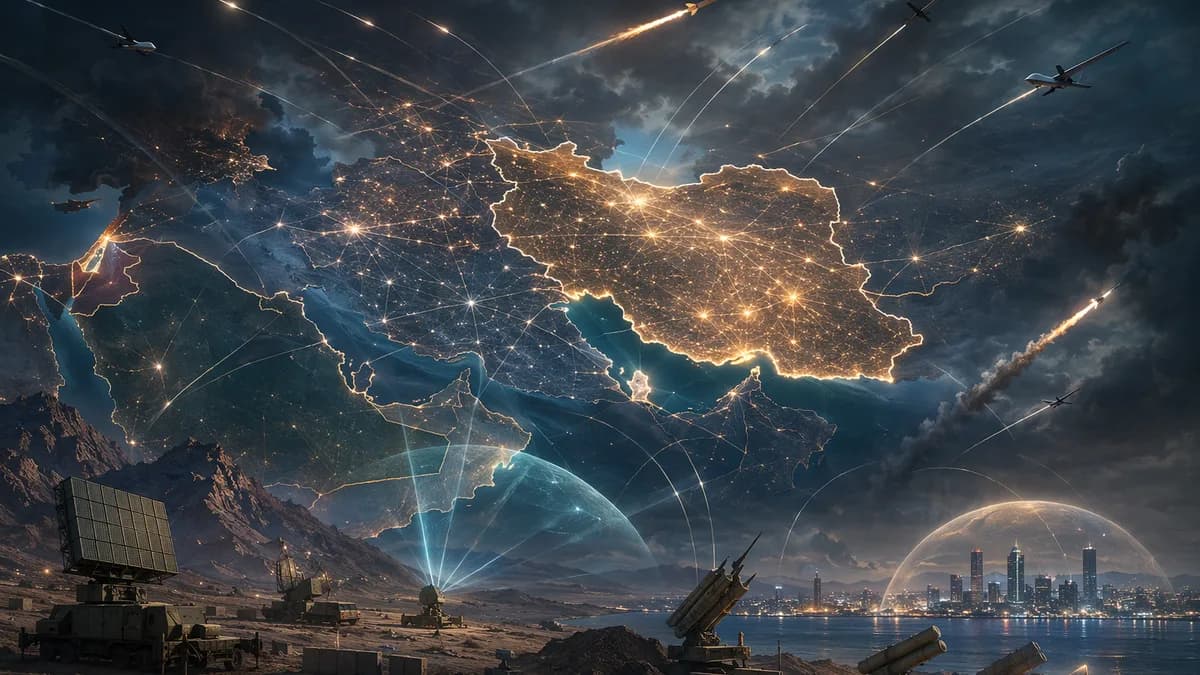
Global TrendsJune 11, 2026· 7 min read· By XOOMAR Insights Team
Iran Missiles Pull US Gulf Hosts Into the Crossfire
Updated on June 11, 2026
XOOMAR Intelligence
Analyst Take
74/ 100
4 sources analyzedMedium confidenceTrend20Freshness98Source Trust82Factual Grounding91Signal Cluster20
The latest wave targeted US-linked military assets across three countries, including Jordan's Muwaffaq Salti Air Base, while Kuwait and Bahrain moved air defences into active interception mode, according to Forexlive.
Did Iran just turn a US-Iran fight into a Gulf-wide defence emergency?
Yes. The sharp change is geographic.
Iran reportedly fired ballistic missiles at Muwaffaq Salti Air Base in eastern Jordan, a facility that hosts US forces. Forexlive reported that the base had already been targeted in an earlier salvo the previous night, which was fully intercepted.
Kuwait's Armed Forces General Staff said its air defence systems were intercepting hostile aerial targets from Iran, including UAVs and ballistic missiles. That places Kuwait not just near the conflict, but inside its active defensive perimeter.
Bahrain also sounded air raid sirens again. Authorities told citizens and residents to stay calm, move to the nearest safe location and follow official channels for updates.
Reports cited in the source material said Bahrain, Jordan and Kuwait intercepted Iranian missiles and drones aimed at US military assets. That marks a wider regional phase of the conflict, with multiple host countries now forced to shoot down inbound threats over or near their own territory.
The reported targets line up with earlier regional strike claims. A US official told Axios reporter Barak Ravid that Iran launched at least four ballistic missiles and several drones at US military bases in Bahrain, Kuwait and Jordan. Iran's Revolutionary Guards also claimed attacks on 21 US military targets across the region, including the Fifth Fleet headquarters in Bahrain, Al-Azraq Air Base in Jordan and Ali Al Salem Air Base in Kuwait.
That broader claim follows the pattern XOOMAR tracked in 21 US Targets Hit as Iran Strikes Gulf Bases Overnight, where Iran's messaging was as important as the projectiles themselves: show range, show intent and force US partners into visible defensive action.
| Country | Reported Iranian attack profile | Key US-linked asset or role | Reported response |
|---|---|---|---|
| Jordan | Ballistic missiles | Muwaffaq Salti Air Base, hosts US forces | Earlier salvo reportedly fully intercepted |
| Kuwait | UAVs and ballistic missiles | US military assets, regional logistics relevance | Air defence systems intercepting hostile aerial targets |
| Bahrain | Missiles and drones | US Fifth Fleet presence | Sirens sounded, authorities urged residents to seek safe locations |
Is Iran probing missile defences or just keeping pressure spread across the map?
That is the harder question. The available facts support two readings, and both are dangerous.
One possibility is that Iran is testing regional missile defence coverage after earlier strikes were intercepted. Repeated salvos across different countries force defenders to track, prioritize and fire under pressure.
The other possibility is simpler: Iran may be sustaining pressure across several fronts even if most projectiles are destroyed. In that scenario, interception rates matter less than operational strain, public alarm and the risk that one missile, drone or piece of debris lands in the wrong place.
Forexlive framed the renewed attacks as raising questions over whether Iran is looking for gaps in regional missile defences or trying to maintain pressure regardless of interception outcomes. That distinction matters for Washington and Gulf capitals because it changes the response calculus.
If Iran is probing, then every interception offers data. If Iran is saturating, then the immediate burden is endurance: crews, radar coverage, munitions stocks and civilian warning systems.
Bahrain's renewed sirens show the civilian side of that problem. Even when projectiles are intercepted, governments still have to move populations, manage debris risk and prevent panic.
Kuwait's statement that its systems were intercepting hostile aerial targets "in line with established operational procedures" signals discipline, but it also confirms active combat posture. Gulf states that host US forces are no longer watching an exchange from the sidelines.
That shift also connects to our earlier coverage of Iran Drones Target US Fifth Fleet as Hormuz War Risk Jumps, where Bahrain's military role made it a central pressure point. The latest sirens and interceptions suggest that role is now translating into domestic security risk.
Can oil traders treat this as contained if Kuwait and Bahrain are now in the firing line?
Not comfortably.
Kuwait and Bahrain matter to regional oil, gas and military logistics. The source material does not report confirmed damage to energy infrastructure from this latest wave, but it does point to a larger risk: a missed missile, failed interceptor or falling debris could hit a base, civilian site or critical facility.
Markets are likely to read the widening attacks as escalation rather than de-escalation. That supports the case for continued strength in oil prices and safe-haven assets, with volatility staying elevated while new salvos remain possible.
The Gulf risk also compounds existing concern around the Strait of Hormuz. The additional context supplied to XOOMAR says the latest attacks followed US strikes near the Strait of Hormuz, described by Washington as a self-defence operation. In that setting, attacks on Kuwait and Bahrain do not need to shut infrastructure to rattle positioning. They only need to widen the perceived attack map.
Al Jazeera's supplied report said all projectiles were intercepted without casualties in Bahrain, Kuwait and Jordan, according to their authorities. That is a crucial stabilizer, if confirmed across all sites. But "intercepted" is not the same as "risk removed."
A prior Gulf News report in the supplied material said Bahrain described attacks on Bahrain and Kuwait as "blatant aggression" and a "flagrant violation" of sovereignty. It also reported falling shrapnel and temporary aviation disruption in Kuwait during earlier incidents. Those details show how even successful defence can still spill into civilian and commercial operations.
For energy markets, the immediate signals are narrow and concrete:
- Damage reports: Any confirmed hit on a base, port, storage site or power facility would reset risk pricing.
- Casualties: A casualty event in Jordan, Kuwait or Bahrain would increase pressure for a direct response.
- US military action: Any new US strike could trigger another Iranian salvo.
- Airspace and shipping disruptions: Temporary closures or diversions would show the conflict leaking into logistics.
- Further interceptions: Repeated overnight attacks would suggest a sustained campaign, not a one-off retaliation.
How long before Gulf states know whether this is a campaign or a signal?
That won't be clear from one night of interceptions.
Iran's Revolutionary Guards, in the supplied Al Jazeera context, warned they remained ready to deliver a "crushing and decisive" response to any US military actions. US President Donald Trump, also cited in that report, wrote that Iran had taken too long to negotiate and said: "Now they will have to pay the price."
Those statements point in opposite directions from de-escalation. Still, rhetoric alone doesn't settle the next phase. The test is whether Iran keeps launching at Gulf host states after demonstrating it can reach them.
For decision-makers, the key question is not whether regional air defences worked during this wave. The sharper question is how many times they can be forced to work before the conflict produces a miss, a misread or a strike on infrastructure that pulls Kuwait, Bahrain or Jordan deeper into the fight.
The next few reporting cycles matter. Watch for official confirmation of damage or casualties, any US response, fresh interception claims and signs of disruption to Gulf energy operations. If those stay limited, markets may treat the episode as severe but contained. If they spread, the conflict's center of gravity moves from US-Iran retaliation to regional exposure across the Gulf.
Impact Analysis
- The strikes widen the conflict beyond direct US-Iran confrontation into multiple host countries.
- Jordan, Kuwait and Bahrain now face pressure to defend US-linked assets without becoming direct belligerents.
- Repeated interceptions raise the risk of miscalculation across a region packed with military and energy infrastructure.
Reported Iranian Attacks Across Gulf Host States
| Country | Reported Target/Threat | Response or Impact |
|---|---|---|
| Jordan | Ballistic missiles aimed at Muwaffaq Salti Air Base, which hosts US forces | Earlier salvo reportedly fully intercepted |
| Kuwait | UAVs and ballistic missiles from Iran | Air defence systems moved into active interception |
| Bahrain | Missiles and drones reportedly aimed at US military assets | Air raid sirens sounded and residents were told to seek safe locations |
Sources

Written by
XOOMAR Insights Team
Research and Editorial Desk
The XOOMAR Insights Team pairs automated research with human editorial judgment. We track hundreds of sources across technology, fintech, trading, SaaS, and cybersecurity, cross-check the facts, and explain what happened, why it matters, and what to watch next. We do not just rewrite headlines. Every article is fact-checked and scored for reliability before it goes live, and we link back to the original sources so you can verify anything yourself.
Explore More Topics
Related Articles
 Global Trends
Iran Vows Eye-for-Eye Strikes if Trump Hits Tehran
Iran says any US strike on its infrastructure will be met in kind, risking a wider energy crisis around the Strait of Hormuz.
Jul 23, 20266 min
 Global Trends
Red Sea Tanker Attacks Drag Saudi Oil Into Iran Fight
Two Saudi tankers turned a Houthi claim into a shipping risk, with US strikes on Iran adding pressure on oil routes.
Jul 23, 20267 min
 Global Trends
Saudi Arabia Uranium Enrichment Puts Trump in a Bind
A new U.S.-Saudi nuclear pact could open the door to Saudi uranium enrichment, complicating Trump's hard line on Iran.
Jul 22, 20267 min
 Global Trends
Houthi Attacks Turn Saudi Oil Escape Route Into Trap
Houthi attacks are squeezing Saudi Arabia’s Red Sea oil route just as Hormuz falters, raising the risk of wider supply shocks.
Jul 26, 20268 min
 Global Trends
Houthis Drag Red Sea Tankers Into US-Iran Firestorm
Houthi tanker claims and fresh US strikes on Iran put Red Sea and Hormuz shipping risk back at the heart of the Gulf crisis.
Jul 23, 202610 min
 Trading
US Dollar Index Sheds War Premium After Iran Pause
DXY slipped near 101.20 after the US-Iran strike halt dented safe-haven demand, though Red Sea threats keep dollar bears cautious.
Jul 27, 20267 min
 Trading
WTI Oil Price Sinks 7% as U.S.-Iran Pause Tests Bulls
WTI sank over 7% to $82.50 as traders cut the U.S.-Iran war premium, but Hormuz risk keeps crude on edge.
Jul 27, 20267 min
 Trading
War Pause Sends Bitcoin Back Above $65K as Oil Sinks
Bitcoin reclaimed $65,000 as the U.S. and Iran held fire, sparking a risk rally while oil dropped 5%.
Jul 27, 20266 min
 Fintech
Apple Upgrade Grabs Control of Your Next iPhone Cycle
Apple Upgrade would replace iPhone financing with leases, giving Apple and Klarna more control over when customers swap devices.
Jul 28, 20267 min
 Fintech
Upstart Bank Charter Throws AI Lending Into Hot Seat
Upstart won OCC conditional approval, but its bank charter still needs FDIC and Fed signoffs before its AI lending model faces the real test.
Jul 27, 202610 min
Don't miss the signal
Get our weekly roundup of the stories that matter across tech, fintech, and trading. No noise, just signal.
Free forever. No spam. Unsubscribe anytime.